Swiss Chard Plant Spacing: Spacing Is a Harvest Decision
By the Windchime Walker editorial team
Photo: Magda Ehlers / Pexels
Swiss chard spacing looks like an argument until you see what the arguers are harvesting. Guides that say 4 inches are growing cut and come again leaves. Guides that say 12 inches are growing full plants with thick white ribs. The University of Illinois Extension, whose chard guidance this site follows and which was read in full for this page, gives both ends of the truth in one method: thin seedlings to 4 to 6 inches for the standard row, or run the staged system, thinning first to 2 to 3 inches, harvesting whole young plants when they reach 6 to 8 inches tall, and leaving the survivors at a final 9 to 12 inches. Spacing chard is therefore not a measurement question. It is a harvest decision made at thinning time, and this page lays out both systems so you can pick yours on purpose.
Our plant spacing chart owns the multi crop table. This page owns the chard row, and our beet and leafy green pages own their crops; chard sits between them in habit and gets its own numbers here.
Interactive tool
Plant Spacing Planner: The Chard Row
Swiss chard is in the crop list below at the University of Illinois Extension spacing of 6 inches between plants in rows 24 inches apart for full size plants. Enter your bed size and count your plants before you thin.
8 tomato plants fit this bed
4 plants per row across 2 rows, on a 24 inch grid. Extension spacing for this crop: 24 in between plants, 48 in between rows.
The grid uses the in-row spacing in both directions, the standard square foot layout for raised beds. In open ground, keep the wider row spacing in the note above so you can walk and weed between rows.
Spacing figures: University of Georgia Cooperative Extension, Circular 963, Vegetable Planting Chart, source.
The Standard: Thin to 4 to 6 Inches, Rows 18 to 30
For the main crop system, sow seed 1/2 to 3/4 inch deep at 8 to 10 seeds per foot of row, per Illinois, and thin the seedlings to 4 to 6 inches apart once they are up and growing. Rows run 18 to 30 inches apart; Minnesota's figures agree with the Illinois thinning and put the rows in that same band, and the planner on this page uses 6 inches between plants in 24 inch rows as the working standard, the generous end of the thinning range at a mid band row width, because home garden chard is usually picked as outer leaves over a long season and the extra room keeps air moving through the row. Chard seed is actually a dried fruit cluster containing several seeds, so a single planted seed routinely produces two or three seedlings shoulder to shoulder. Thinning is therefore not optional tidiness; it is the spacing itself, and a chard row that is never thinned becomes a thicket of stunted plants competing for the same inch of soil.
The Staged Method: Thin Twice, Eat the Thinnings
The Illinois staged method is the better system for small gardens, because it turns thinning from waste into a first harvest. Thin the row first to 2 to 3 inches. When the plants reach 6 to 8 inches tall, pull every other plant whole and eat it, baby chard and all, which leaves the row at roughly 6 inches. Let the stand grow on, and if you want full exhibition plants with heavy ribs, thin once more toward the final 9 to 12 inches, eating those thinnings too as cooking greens. Each stage matches the plant's size to the space it has earned, the row never stands empty, and the total yield from the same row of seed runs well ahead of a row thinned once and left. The discipline the method asks is timing: the pulls have to happen when the plants reach the stage size, not a fortnight later when the roots have knitted together and pulling one tears its neighbor.
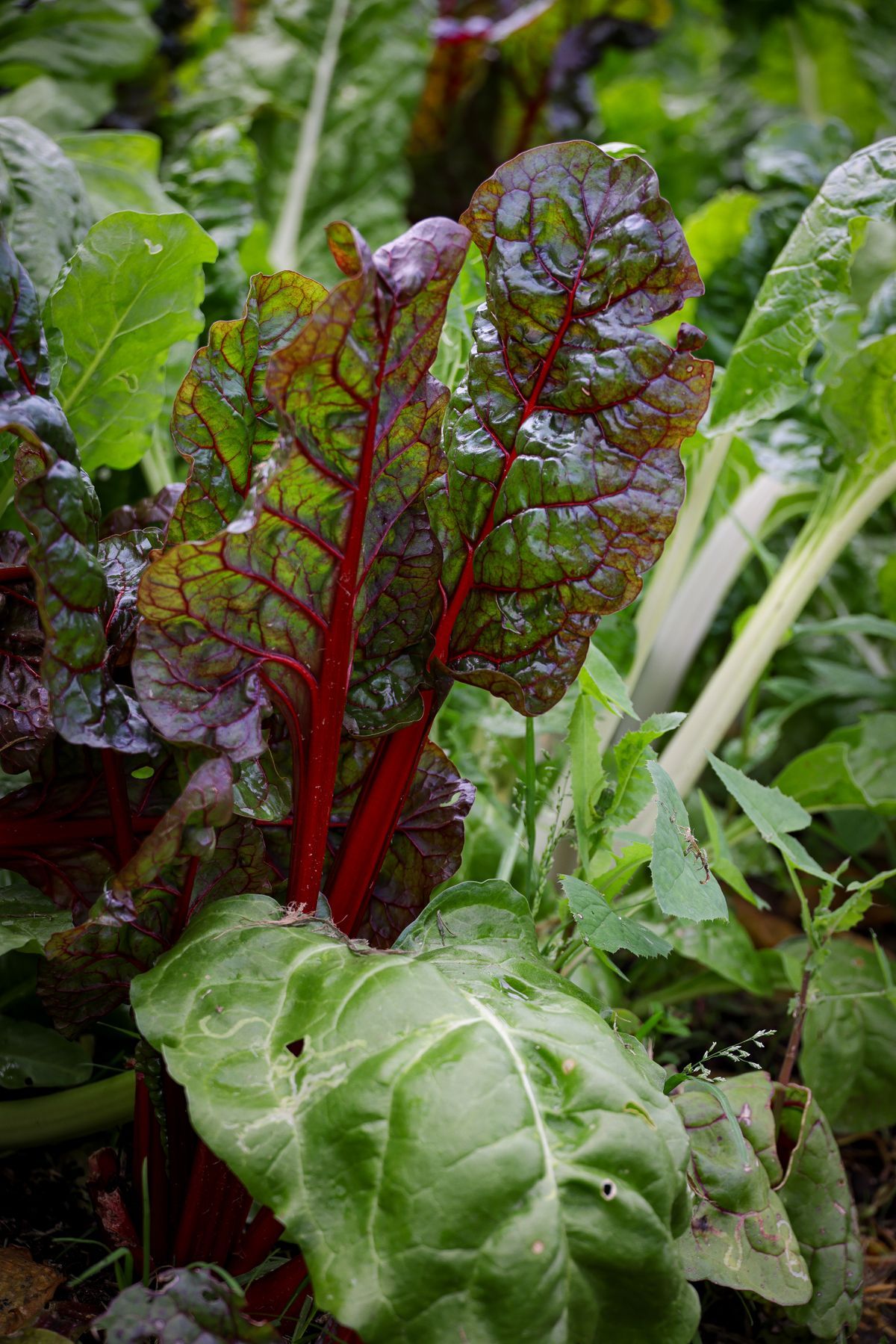
Swiss chard growing among leafy greens in a garden bed
The Sprawl, Flagged: 4 to 12 Inches and Why
Because gardeners will meet other numbers, here is the published range with its logic attached, none of it averaged into our standard. Maryland Extension thins chard to 4 inches, or 8 to 12 inches for large plants, which is the same harvest logic as Illinois stated as endpoints. Colorado State's block planting guidance runs 7 to 9 inches in all directions, a square foot style layout that trades row access for density in raised beds. Utah State runs tighter, 6 inches in rows 12 inches apart, a compact system for small beds picked young. A Wisconsin guide lands near a foot apart for full plants. Every one of these is defensible for its harvest goal, and every one fails if borrowed for a different goal: 4 inch plants picked at full size crowd, shade, and stall, and 12 inch plants picked as baby leaf waste two thirds of the bed. Choose the harvest first, then let the spacing follow, and use the planner above to count plants for your bed at the spacing your harvest needs.
Sowing, Water, and the Season Around the Spacing
Chard is a cool season crop that tolerates heat better than spinach, which is its real garden value: sow in spring a few weeks before the last frost and again in late summer for a fall crop that sweetens after light frost. Germination is slow and uneven compared with lettuce, often 7 to 14 days, and the row wants even moisture through that window. Once established, chard asks for about an inch of water a week and a nitrogen steady diet, because a leaf crop is a nitrogen crop; a side dressing of compost or a balanced feed a month after thinning keeps the leaves coming. The spacing interacts with feeding: a staged row that is being eaten as it is thinned exports a lot of leaf, and the survivors repay a feed after each thinning stage. In hot weather some plants will try to bolt, especially spring sown plants of older varieties; cut the seed stalk out promptly and the plant often returns to leaf production, and shade cloth over the row buys time.
Harvesting at the Spacing You Chose
Harvest is where the spacing decision pays out. For full size plants at 4 to 6 inches and wider, pick the outer leaves: cut or snap them 1.5 inches above the ground, per Illinois, taking the oldest leaves and leaving the center growing point, the terminal bud, untouched, because damaging that bud ends the plant. A plant harvested this way produces for months, which is the entire economic case for the wider spacing. For staged plants pulled whole at 6 to 8 inches, the harvest is the thinning itself. One caution from the same source: cut chard leaves keep only 2 to 3 days in the refrigerator, so pick close to the meal, a little and often, rather than stripping plants ahead. Rainbow and Bright Lights mixes make the spacing visible, since the stem colors show the row's pattern as it fills in, which is a genuine planning aid disguised as an ornament: gaps and doubles in the row announce themselves early, while you can still fix them.
Raised Beds, Blocks, and Succession
In a raised bed the row geometry changes shape: beds are worked from the sides, so chard is planted in blocks or in two or three short rows across the bed rather than one long row down it. Colorado State's block figure, 7 to 9 inches in all directions, was written for exactly this situation and suits a bed picked for full leaves; for the staged system in a bed, set the grid at 3 inches, eat it to 6, and finish at 9 to 12, the same stages wearing a grid instead of a row. The planner counts blocks as readily as rows: enter the bed's inside dimensions and it returns the count at the spacing you set. Succession keeps the bed honest across the season: chard is a cut and come again crop that produces from one sowing for months, so it rarely needs resowing the way lettuce does, but a second sowing in late summer replaces the spring plants just as they tire and bolt, and the fall crop, sweetened by cool nights, is the one growers remember. In mild winter climates the fall plants stand through winter and give the earliest spring greens of the year, which is the final argument for the generous end of the spacing range: a plant you keep for ten months earns its 6 inches.
Frequently Asked Questions
How far apart should Swiss chard be planted?
Thin seedlings to 4 to 6 inches apart in rows 18 to 30 inches apart for full size plants, per University of Illinois Extension. For the staged method, thin to 2 to 3 inches, harvest whole plants at 6 to 8 inches tall, and leave a final 9 to 12 inches. The planner on this page uses 6 by 24 inches as the working standard.
Why does chard spacing advice range from 4 to 12 inches?
Because the sources are harvesting different products. Four inches suits cut and come again leaf picking; 9 to 12 inches suits full plants with heavy ribs. Maryland gives 4 inches, or 8 to 12 for large plants; Colorado State block planting runs 7 to 9 inches. Pick your harvest first and the spacing follows.
How deep and thick should I sow chard seed?
Sow 1/2 to 3/4 inch deep at 8 to 10 seeds per foot of row, per Illinois Extension. Each chard seed is a cluster that can sprout several seedlings, so thinning to the final spacing is a required step, not a refinement.
Can I eat the chard thinnings?
Yes, and the staged method is built on it. Plants pulled at the second thinning, 6 to 8 inches tall, are tender whole plant eating, and the later thinnings make cooking greens. Eating the thinnings is what makes the wide final spacing affordable in a small bed.
How do I harvest chard without killing the plant?
Cut the outer leaves about 1.5 inches above the ground and never damage the central terminal bud. The plant keeps producing from that growing point for months. Pick little and often, because cut leaves keep only 2 to 3 days refrigerated.
Photo credits: Magda Ehlers (Pexels); Magda Ehlers (Pexels). Photos are served from this site; follow the credit to the library page for the original.