There is no national date for starting seeds indoors, and any guide that gives you one is guessing with your garden. The right date depends on two things only: the last frost date where you live, and the crop in your hand. A pepper needs a long, slow start indoors. A cucumber needs almost none. Sow both on the same February weekend, because a catalog told you spring is coming, and one of them will fail: the pepper will be fine and the cucumber will be a leggy, root bound vine by the time the soil is warm enough to receive it.
This guide gives you a method instead of a date. You will find your average last frost date, count back a set number of weeks for each crop using one credited source, North Dakota State University Extension publication H1139, and land on a sow date and a transplant date you can write on a calendar. The same method works in Minnesota and in Georgia. Only the frost date changes.
To skip the hand math for a full plant list, use the SeedStartPlanner on this page. Type in your last frost date once, and it returns the indoor sow date and the outdoor transplant date for each crop from the same H1139 figures used in the table below, so the tool and the text never disagree.
Interactive tool
Seed Starting Date Planner
Type your average last spring frost date, pick a crop, and the planner counts backward and forward using the week offsets extension services publish for that crop. Your frost date is the one number every seed calendar hangs on.
Sow tomato indoors: Fri, March 20, 2026
Move seedlings outdoors: Fri, May 15, 2026.
Sow indoors 6 weeks before last frost; set out 2 weeks after last frost.
Week offsets: North Dakota State University Extension, H1139, garden seed starting chart, source. Frost dates are averages: in any given year the last frost can land two weeks either side of the date you type, so keep an eye on the forecast as transplant day approaches.
Why Timing Is the Whole Skill
Starting seeds indoors buys time. Tomatoes, peppers, and many flowers need more warm growing weeks than a short summer provides outdoors, so you grow the first weeks inside, where you control warmth and light, and move the young plants out when the weather allows. Done at the right moment, an indoor start gives you sturdy transplants that take off quickly in the garden.
Done too early, the same skill hurts you. Seedlings that wait too long indoors outgrow their cells, run short of light, and stretch into tall, thin, weak plants that gardeners call leggy. They also become root bound, with roots circling the bottom of the pot, and they can yellow and stall. A compact, younger transplant usually outperforms an oversized older one once both are in the ground. Done too late, you simply lose the head start you were trying to buy, and heat loving crops may not ripen before fall frost.
So the goal is not to start as early as possible. The goal is to start each crop so that it reaches a healthy transplant size exactly when your garden is ready for it. That is a counting problem, and counting is something you can do exactly.
Step 1: Find Your Last Frost Date
Your anchor is your average last spring frost date, sometimes called the last frost date or the frost free date. It is a long term average for your area: the date after which frost becomes unlikely, not impossible. Late cold snaps still happen, which is why tender crops carry a safety margin in Step 3.
Find the date from a local source, in this order of trust. First, your local or state cooperative extension office, which publishes planting calendars for your state and often for your county. Second, a regional almanac frost table for your town or a nearby town. Third, your seed packet and local garden center advice, which are usually tuned to the region they sell in. If two sources give dates a week apart, use the later date for tender crops such as tomatoes, peppers, and basil. A week of patience costs little. A frosted transplant costs the plant.
Write the date down as a real calendar date, for example May 10. Every calculation in this guide hangs off that one date. Also note what the date is not: it is not your hardiness zone. Zones describe winter cold for perennial plants. Seed starting runs on frost dates, not zones, which is why two gardeners in the same zone can correctly sow weeks apart.
Step 2: Count Back the Weeks for Each Crop
Each crop needs a set number of weeks of indoor growth before it is ready to transplant. The table below uses the figures from North Dakota State University Extension H1139, the garden seed starting chart, which is the source our planner uses. The sow date is your last frost date minus the sow weeks. The transplant timing is given relative to the same frost date, because crops differ: hardy crops go out before the last frost, tender crops go out after it.
Crop
Sow indoors, weeks before last frost
Set out, relative to last frost
Tomato
6 weeks
2 weeks after
Pepper
8 weeks
2 weeks after
Broccoli
10 weeks
3 weeks before
Cabbage
10 weeks
3 weeks before
Lettuce
8 weeks
4 weeks before
Kale
10 weeks
3 weeks before
Onion
10 weeks
2 weeks before
Basil
3 weeks
2 weeks after, once nights are warm
Marigold
6 weeks
3 weeks after
Read the pattern in the table, because it teaches you how to judge any crop not listed. Slow, hardy crops such as broccoli, cabbage, kale, and onions start earliest, a full 10 weeks before last frost, and they also go outside earliest, while frost is still possible, because they tolerate cold. Fast or cold sensitive crops start late. Basil starts only 3 weeks before last frost and still waits until 2 weeks after it to go outside, because basil is damaged by cold nights that a kale plant shrugs off. Peppers start early, at 8 weeks, not because they are hardy but because they grow slowly and need warmth to germinate and size up. Tomatoes sit in the middle at 6 weeks.
Two crops from the same source family deserve a note because beginners often start them indoors by default. Cucumber and zucchini are most often direct sown outdoors after last frost, once the soil reaches about 70 degrees Fahrenheit. An indoor start for them is optional and short, only about 3 to 4 weeks of seedling growth before transplanting, because they grow fast and dislike root disturbance. If your season is long, skip the indoor start for both and sow them in the garden. Lettuce can also be direct sown in the garden in early spring if you prefer.
Step 3: A Worked Example With the Arithmetic Shown
Work one crop by hand and you will trust the method for every crop. Suppose your average last frost date is May 10, and you want tomatoes and broccoli.
Tomatoes first. The chart says sow indoors 6 weeks before last frost. Six weeks is 42 days. Count back 42 days from May 10: May 10 minus 10 days is April 30, minus another 30 days is March 31, minus the last 2 days is March 29. Your tomato sow date is March 29. The chart says set tomatoes out 2 weeks after last frost. Two weeks is 14 days, so May 10 plus 14 days is May 24. Your tomato transplant date is May 24. Between those dates your seedlings get about 8 weeks of growth in total, 6 weeks to the frost date and 2 more while the garden warms, which is exactly the sturdy size you want.
Broccoli next, same frost date. The chart says sow indoors 10 weeks before last frost. Ten weeks is 70 days. Count back 70 days from May 10: May 10 minus 10 days is April 30, minus 30 more is March 31, minus the last 30 is March 1. Your broccoli sow date is March 1. The chart says set broccoli out 3 weeks before last frost. Three weeks is 21 days, so May 10 minus 21 days is April 19. Your broccoli transplant date is April 19, while nights can still frost lightly, which broccoli tolerates.
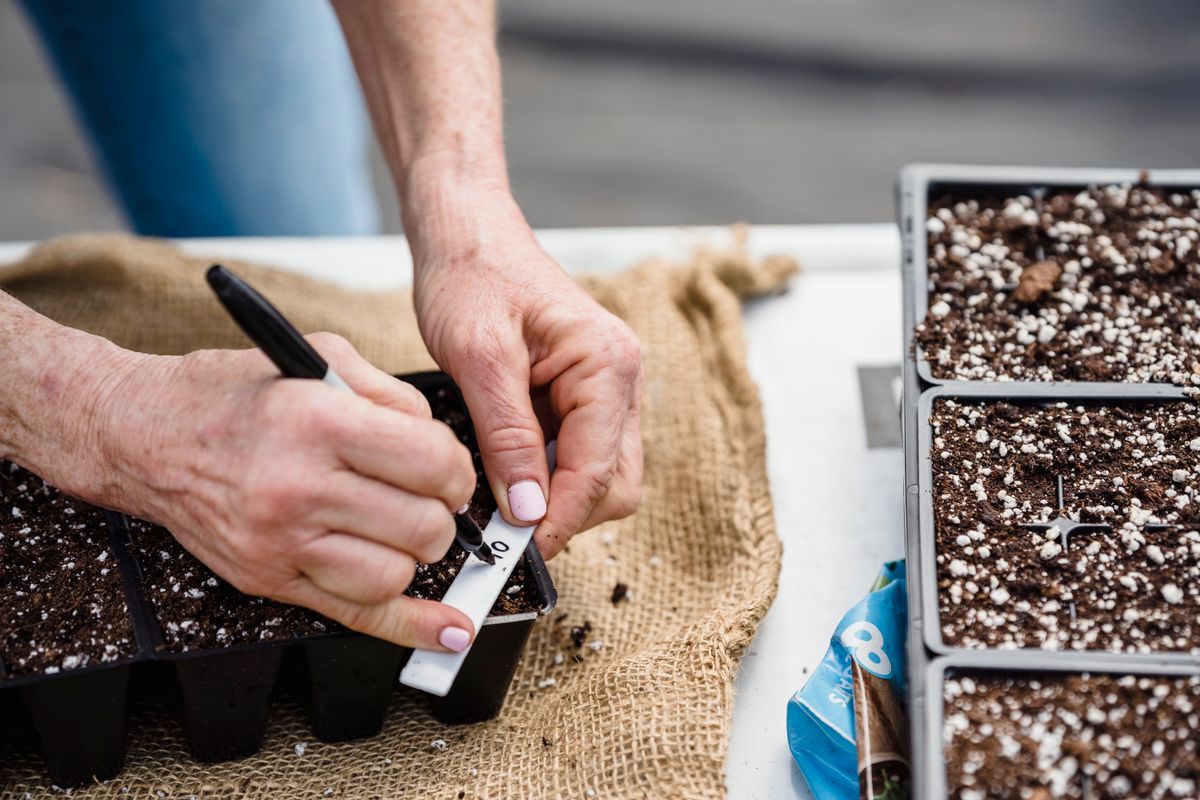
Notice what the example proves. Two crops in the same garden, sown almost a month apart and planted out more than a month apart, both correct. A single start everything date would have failed one of them. Run the same arithmetic for each crop on your list, or enter May 10 in the planner above and read the dates off. Either way, write the sow dates on a calendar and the transplant dates beside them, and label every tray with the crop and the sow date the day you sow it.
Hands labeling a seedling tray with a plant marker while preparing seeds for indoor starting
How to Sow, Once the Date Arrives
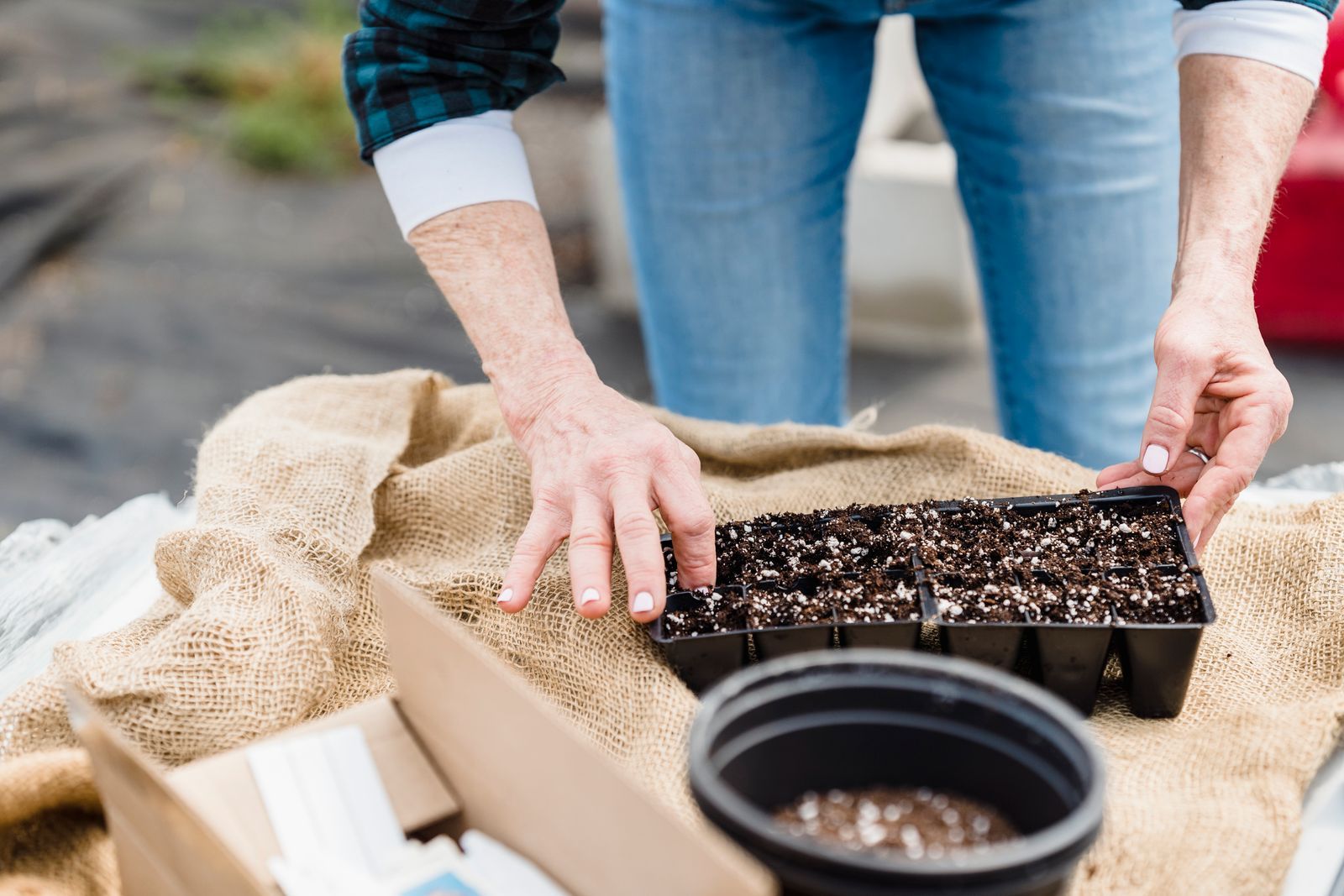
Timing gets you to the right day. A short, careful routine gets you from seed to seedling. Use a sterile seed starting mix, not garden soil and not heavy potting soil. Seed starting mix is fine, light, and free of weed seeds and the pathogens that attack seedlings, and young roots move through it easily. Fill clean containers or trays with drainage holes to near the top with mix, moisten the mix before you sow so it is damp like a wrung out sponge, and sow at the depth printed on the packet. When a packet is missing, a general guide is a hole about four times as deep as the seed is wide, but the packet always wins, and a few seeds need light rather than covering to germinate.
Cover trays with a clear lid or plastic to hold humidity until seeds sprout, venting daily, then remove the cover at germination so seedlings do not sit in stagnant damp air. Keep the air in a general germination range of about 65 to 75 degrees Fahrenheit for most seeds, with the understanding that heat lovers such as peppers germinate slowly in a cool room and faster in a warm spot. Water gently, with a mister or from below by standing the tray in shallow water, keeping the mix moist but never soggy, because seeds and seedlings rot in wet, airless mix.
Light decides whether your timing work pays off. Seedlings need strong light for about 12 to 16 hours a day. A bright south facing window can work, but most windowsills deliver weak light in late winter, and seedlings stretch toward it and lean. A simple fluorescent or LED shop light hung a few inches above the seedlings, raised as they grow, gives straighter, sturdier plants. Rotate trays on a windowsill every day or two so plants grow evenly. Once seedlings have one or two sets of true leaves, the leaves after the first seed leaves, you can move crowded seedlings into their own pots and begin a weak liquid feed if your mix carries no fertilizer. Thin crowded cells by snipping the weaker seedlings at the soil line rather than pulling them, so you do not tear the roots of the plant you keep.
Hardening Off: The Week Beginners Skip
A seedling grown indoors has never met wind, direct midday sun, or a cold night. Moving it straight from a light shelf to a garden bed can scorch leaves, wilt stems, and set the plant back by weeks, undoing your careful timing. Hardening off is the gradual introduction that prevents that shock, and it belongs in your calendar from the start: plan about 7 to 10 days of hardening off before each transplant date in the table.
Work like this. About 10 days before the transplant date, on a mild day, set the plants outside in a sheltered spot with light shade for a few hours, then bring them back in. Each day, add time outside and add sun: a little more morning sun, then a longer day, then a full day in the sun they will live in. Leave them out overnight near the end of the process if nights are mild enough for that crop. Water a little more attentively during this week, because wind and sun dry small pots fast. If a hard frost or a storm threatens mid week, bring plants in and resume when it passes. A cloudy, calm day is the kindest transplant day, and watering the bed before you plant, then watering each plant in well, helps roots settle with the least stress.
Hardy crops such as broccoli, cabbage, kale, lettuce, and onions harden off faster and tolerate cool nights during the process. Tender crops such as tomatoes, peppers, and basil need the full gradual routine and should not spend nights outside until nights are reliably mild. If a seedling looks pale and stretched after hardening off, the usual cause is weak indoor light, not the hardening itself, which is a note for next year's light setup rather than a reason to delay planting a healthy plant.
Frequently Asked Questions
How many weeks before last frost should I start tomato seeds?
Six weeks before your last frost date, using North Dakota State University Extension H1139. Count back 42 days from your frost date for the sow date, grow the seedlings under strong light, harden them off for about 7 to 10 days, and set them out 2 weeks after the last frost date, when nights are mild.
What happens if I start seeds too early?
Seedlings outgrow their cells, stretch tall and thin toward weak light, become root bound, and can yellow and stall. An oversized, leggy transplant often performs worse in the garden than a compact, younger one. If you sowed too early, give the plants the strongest light you can, pot them up into larger containers if roots fill the cell, and hold the transplant date rather than rushing tender crops into cold soil.
How do I find my last frost date?
Ask your local or state cooperative extension office first, because it publishes planting calendars for your area. A regional almanac frost table for your town is a good second source. Treat the date as a long term average, not a guarantee, and use the later of two dates for tender crops such as tomatoes, peppers, and basil.
Do all vegetables need to be started indoors?
No. Slow and heat loving crops benefit most: tomatoes, peppers, broccoli, cabbage, kale, onions, and basil are the core indoor starts in the extension chart used here. Cucumbers and zucchini are most often direct sown outdoors after last frost once the soil reaches about 70 degrees Fahrenheit, and lettuce can be direct sown in early spring. Root crops such as carrots and radishes should always be direct sown, because transplanting disturbs the root you intend to eat.
What does hardening off mean and how long does it take?
Hardening off is the gradual move from indoor conditions to outdoor sun, wind, and temperature swings. Plan about 7 to 10 days: a few sheltered hours outside on the first day, more time and more sun each day, and nights outside near the end for crops that tolerate them. Skipping it can scorch and wilt seedlings and erase the head start your indoor sowing bought.
Photo credits: Greta Hoffman (Pexels); Greta Hoffman (Pexels). Photos are served from this site; follow the credit to the library page for the original.