A bird bath is a piece of safety equipment disguised as garden furniture, and birds assess it the way they assess a pond edge: how deep, how grippy, how exposed, and how close is cover if a hawk arrives while they are wet and slow. The baths that sit empty in gardens are usually beautiful and wrong on one of those four counts: too deep, too slick, too exposed, or filled with stale water. The baths that queue with birds in August are often plain and right on all four. This page is the choosing, placing, and keeping guide for a bought bath. If you would rather build one, the site's bird bath build page covers the DIY version; the placement and care rules there and here are the same, because the birds wrote them.
Home / Garden Projects and Outdoor Living
Bird Bath: How to Choose, Place, and Keep One Birds Actually Use
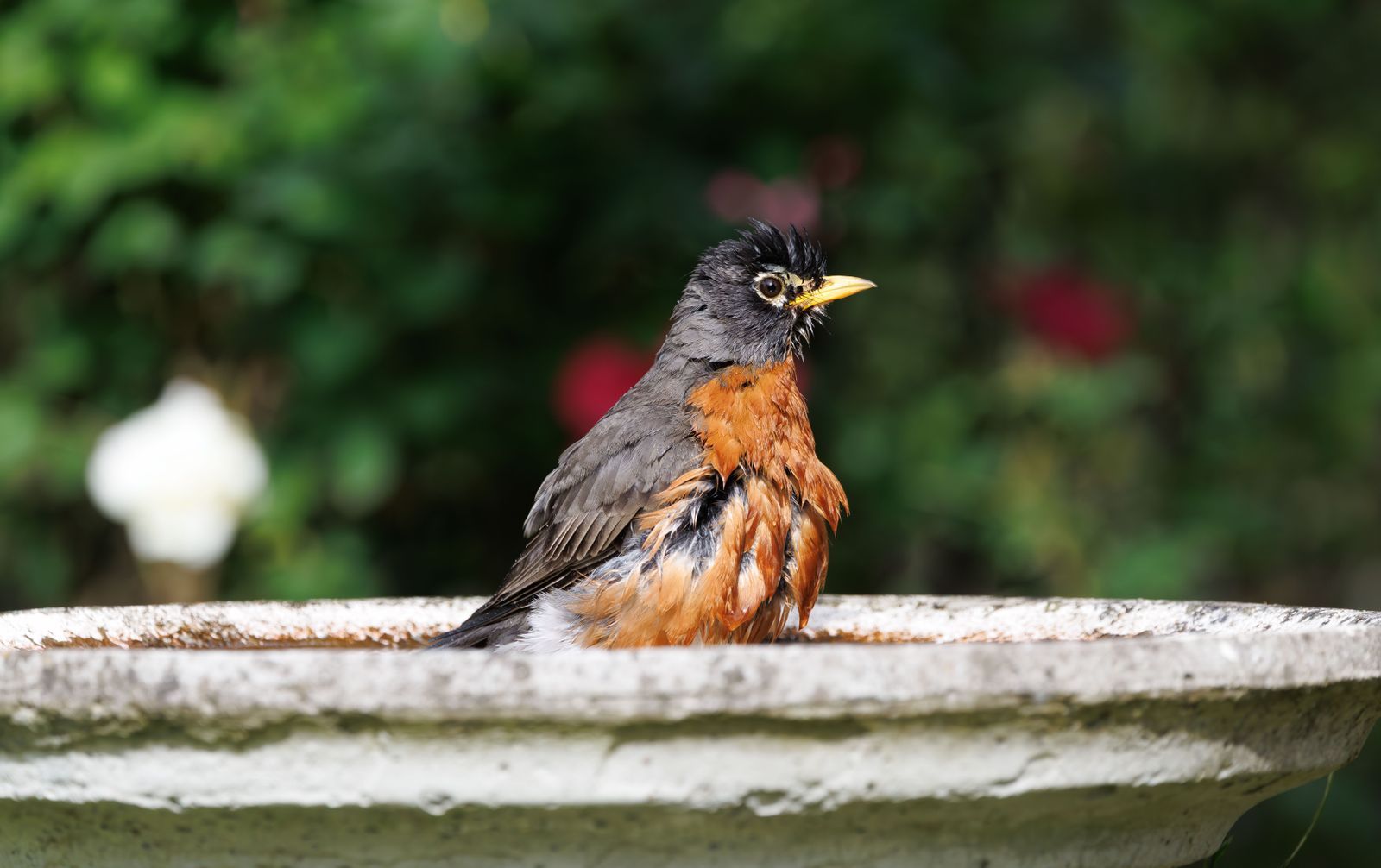
Photo: Veronika Andrews / Pexels
Interactive tool
Bird Bath Setup and Care Checklist
Check off each step as you finish it. Your progress stays on this page.
0 of 8 complete
0% done
Choosing: Depth, Surface, and Stability
Depth is the first specification and the one most often wrong. Small birds bathe in water 1 to 2 inches deep, and a basin deeper than that is a drinking station at best and a drowning risk for fledglings at worst. The ideal basin slopes gently from a shallow edge to a center no deeper than about 2 inches, and if the bath you love is deeper, a layer of gravel or a flat stone in the center builds the shallow zone the birds need. Surface is the second specification: feet need grip, so a rough, textured, or matte basin outperforms a glazed, glossy one, and a bird that cannot stand securely will not bathe however clean the water is. Stability is the third: the pedestal or stand must sit level and resist rocking, because a bath that wobbles when a crow lands teaches every bird in the neighborhood to avoid it. Material follows climate. Concrete and stone hold up and stay put but can crack in freeze and thaw if left full of ice; resin and fiberglass are light and freeze tolerant but can blow or tip; metal heats fastest in sun, which argues for shade placement. None of these is disqualifying. Depth, grip, and steadiness are the purchase; material is the preference.
| Specification | The working figure | Why the birds care |
|---|---|---|
| Water depth | 1 to 2 in, sloped basin | Small birds bathe standing, not swimming |
| Surface | Rough or matte, grippy | Wet feet on glaze slide; insecure birds leave |
| Placement cover | 6 to 15 ft away | Reachable when wet, too far for a cat ambush |
| Refresh rhythm | Dump and refill every 2 to 3 days | Breaks mosquito and algae cycles |
| Scrub rhythm | Weekly brush, monthly deep clean | Disease moves through shared water |
| Winter | Heated, or emptied before ice | Ice cracks basins and birds still need water |
Placing: Cover Near, Sightlines Open, Cat Math Done
Placement is a negotiation between the bird's two fears: predators from the air, which argue for cover, and predators from the ground, which argue for distance from it. The settled answer is cover 6 to 15 feet away, a shrub, small tree, or brush pile near enough that a soaked bird, flying at half speed, can reach it in one short flight, and far enough that a cat hiding inside it cannot cross the gap in one pounce. The bath itself stands in the open, on level ground, ideally with morning sun and afternoon shade: sun warms the water and discourages algae less than shade does, but a bath in full all day sun in a hot climate turns tepid and foul faster than any cleaning rhythm can chase, while full shade keeps water cold enough in spring and fall to discourage bathing. A few feet from a window you actually sit at is the human specification, and it is worth honoring, because a bath placed for a view gets watched, maintained, and defended from cats, while a bath placed for the birds alone at the garden's far end quietly goes green. Moving water is the upgrade that outperforms every ornament: a dripper, mister, or small solar bubbler makes the bath visible and audible to passing birds, and a bath with motion draws several times the traffic of a still one.
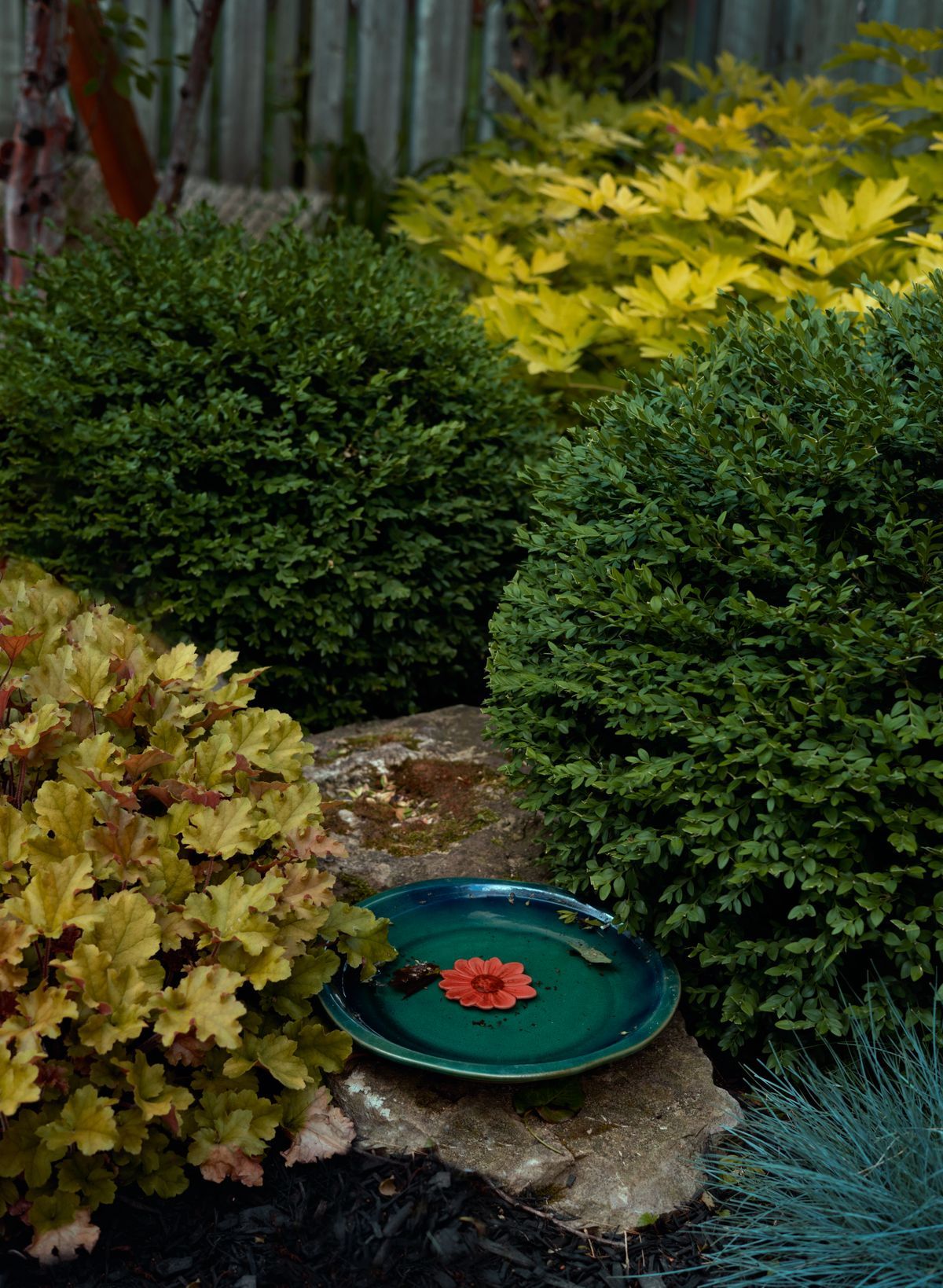
Keeping: The Refresh and Scrub Rhythm
The maintenance is short, regular, and non negotiable, because a shared water source concentrates whatever the local bird population is carrying. Refresh every 2 to 3 days: tip the old water out completely, rinse, and refill, rather than topping up, because the dump is what breaks the mosquito cycle, since larvae need about a week of standing water, and what removes the algae film and seed husks that foul a basin. Scrub weekly with a stiff brush and plain water, working the surface the birds stand on. Deep clean monthly, or immediately after a sick bird is seen at the bath, with a thorough scrub and rinse; if a disinfectant is used, it is rinsed until no trace remains before refilling, and the plain water scrub is the default precisely because it carries no residue risk. No chemicals ever go in the bathing water itself: no algaecide, no bleach, no copper coins, no mosquito products not labeled for bird baths. Clean water, shade, and the refresh rhythm do everything those products promise, without poisoning the customers. In mosquito season the 2 to 3 day dump is doing double duty, and a dripper's motion further discourages egg laying on the surface.
Who Comes, and When
A bath kept on this system develops a clientele with a timetable, and knowing it helps you keep the water ready. Bathing peaks twice a day, in the first hours after dawn and again in the late afternoon, because feathers are serviced before and after the feeding day, and a bath refreshed in the morning gets its heaviest use within the hour. Small songbirds, sparrows, finches, chickadees, and robins in most regions, are the bathers, using the 1 to 2 inch shallows exactly as specified; larger birds, jays, doves, and grackles, drink and bathe at the deeper center if one exists, which is why a sloped basin serves both clienteles in one object. In hot, dry spells the timetable stretches across the whole day and the bath outdraws the feeders, and in fledging season the bath fills with clumsy young birds learning the routine, the weeks when the shallow end and the grippy surface earn their specification most visibly. A bath that has been in place a full season sits on the mental map of every bird in the territory, passed down through the local population's habits, which is why an established bath should be maintained through the winter decision rather than casually moved: relocating it resets the map, and the traffic takes weeks to find it again.
Winter, Drought, and the Bath as Habitat
In freezing climates the bath has two legal winter modes: heated, with a purpose made bath heater or a heated model keeping a small ice free zone, or retired, emptied, cleaned, and stored upside down before ice can crack it. Winter water is genuinely valuable, since natural sources lock up while birds still need to drink and to bathe for feather insulation, so a heated bath in a cold garden is one of the highest value habitat objects you can run. In drought the bath's value rises the same way, and the refresh rhythm matters more, not less, because every bird in the neighborhood is sharing it. Around the bath, the supporting cast multiplies its effect: a perch branch or stone at the rim for preening, cover as placed above, and no feeders so close that seed husks rain into the water. Kept on this system, a bought bath is not a decoration that birds occasionally visit. It is infrastructure, on the daily route of every bird in the territory, and the choosing and placing decisions in the first sections are what decide whether it ever becomes one.
Related guides
These guides sit closest to this one on the garden path:
- How to Build a Raised Bed Against a Wall: Never Use the Wall
- How to Start Composting: Your First Pile, From Corner to Finished Compost
Frequently Asked Questions
How deep should a bird bath be?
One to 2 inches of water, in a basin that slopes gently from the edge. Small birds bathe standing up, and deeper water goes unused or endangers fledglings. If a basin you like is too deep, a layer of gravel or a flat stone in the center creates the shallow standing zone the birds need.
Where should I put a bird bath?
On level ground in the open, with shrubs or a small tree 6 to 15 feet away: close enough for a wet bird to reach cover in one short flight, far enough that a cat cannot ambush from inside it. Morning sun and afternoon shade is the ideal light pattern, and a spot visible from a window you use keeps the bath maintained.
How often should I change the water?
Dump and refill every 2 to 3 days, never just top up. The full dump breaks the mosquito breeding cycle, clears algae and debris, and slows disease spread between birds. Scrub the basin weekly with a stiff brush and plain water, and deep clean monthly or after any sick bird visits.
Why do birds not use my bird bath?
Work the four counts: depth over 2 inches, a glossy surface feet cannot grip, placement with no cover nearby or cover close enough to hide a cat, and stale water. A rocking pedestal is the fifth. Fix them in that order, add a dripper if you can, and give the birds a few weeks to rewrite their route map.
Should I keep a bird bath out in winter?
Either heated or retired, nothing between. A purpose made heater keeping an ice free zone makes a winter bath one of the most valuable habitat objects in a cold garden, since birds need water when every natural source is frozen. An unheated bath should be emptied and stored before ice cracks it.
Photo credits: Veronika Andrews (Pexels); Tetyana Kovyrina (Pexels). Photos are served from this site; follow the credit to the library page for the original.