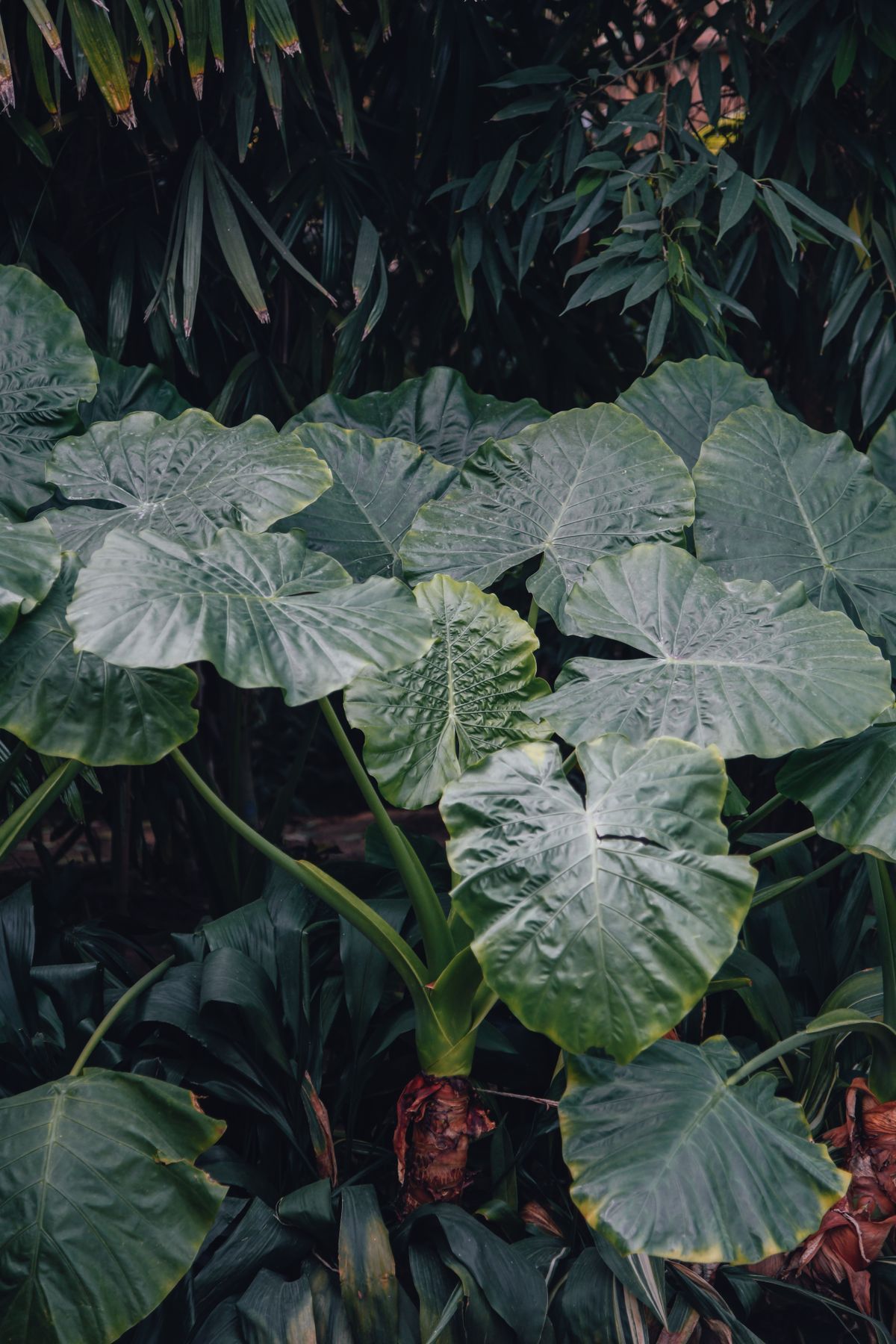
Most watering advice for elephant ears fails before it starts, because the name covers two genera with opposite relationships to water. Colocasia, the taro genus, grows in and beside water in the wild; its leaves point down, shedding rain off the tip, and its roots are happy in soil that never dries. Alocasia grows on forest floors; its leaves point up, held toward the light, and its rhizomes rot in soil that stays saturated. A guide that averages the two produces a rhythm that keeps a Colocasia thirsty and an Alocasia dying, which is why elephant ear watering advice online reads as chaos. The fix is a two second identification. Look at the leaves. If they angle down, tips below the stem joint, you have a bog plant. If they angle up, tips above it, you have a forest floor plant. This page waters them separately from there.
Home / Gardening Basics for Beginners
How Often to Water Elephant Ears: It Depends Which Genus You Bought
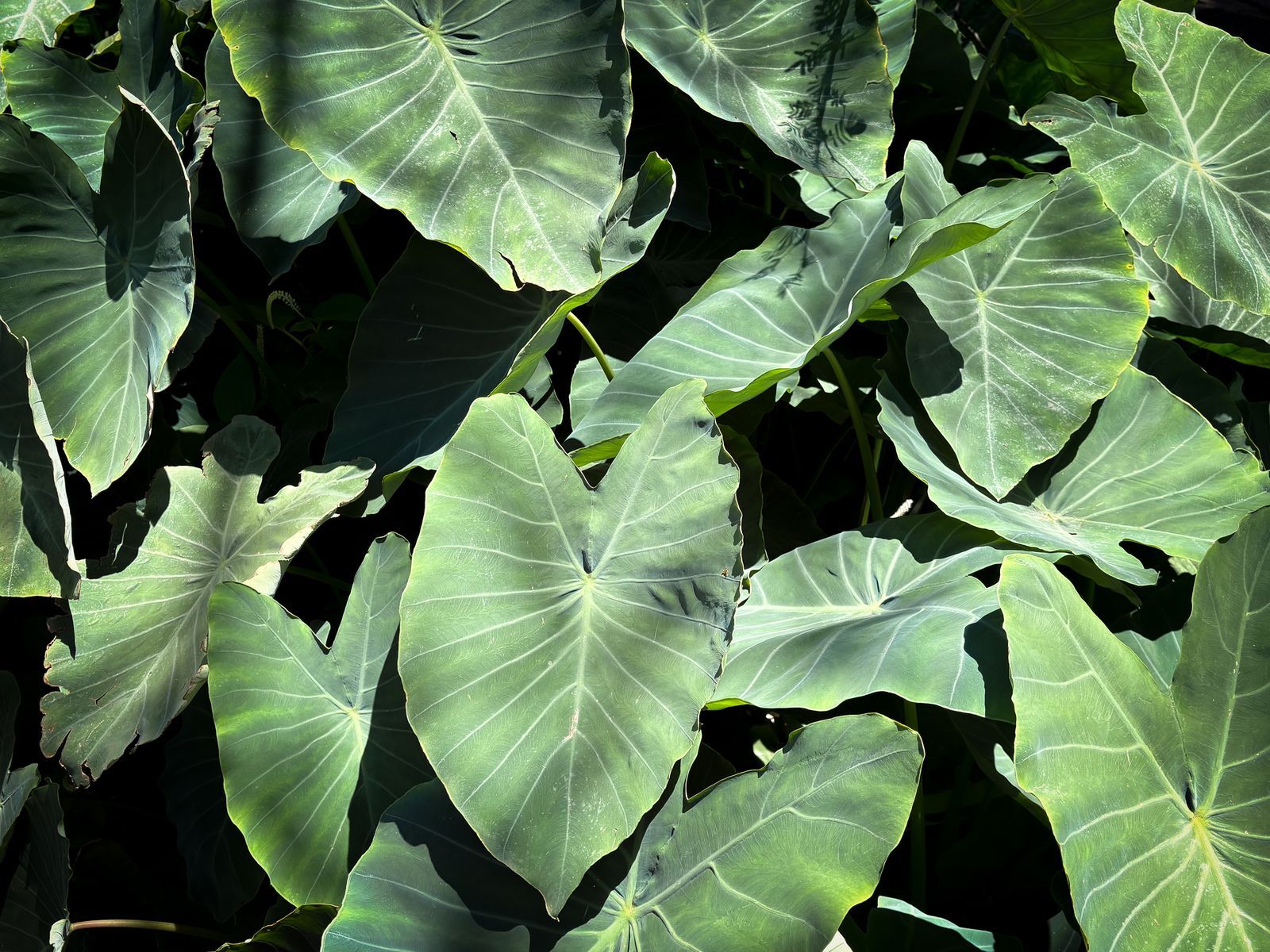
Photo: Magda Ehlers / Pexels
Watering Calculator: The Elephant Ear Bed Audit
Elephant ears run on about 1 to 2 inches of water a week, and the two genera split that budget by soil, not by size. Enter your bed length and width below and a depth of 1 inch to size the weekly drink, then read the Colocasia and Alocasia split in this article.
19.9 gallons
For 32 square feet at 1 inch deep. That is about 76 liters, or 10 trips with a standard 2 gallon watering can.
A rain gauge or a straight sided can set in the bed tells you when a sprinkler or soaker hose has actually delivered this depth. Time alone is a guess, because hose pressure varies from house to house.
The conversion is arithmetic, not opinion: one inch over one square foot is 144 cubic inches of water, and a US gallon holds 231 cubic inches, so each square foot at one inch takes 0.62 gallons.
The Budget Both Genera Share
In the ground in summer, both genera are heavy drinkers by garden standards, running on about 1 to 2 inches of water a week, delivered as deep soakings that wet the full root zone, and more in extreme heat or in containers. These are big leaved tropical plants transpiring through enormous leaf area, and a mature clump in July can move water like a small tree. The shared budget is where the similarity ends. Colocasia wants that water delivered into soil that stays wet, ideally never drying past the top inch or so, and it will grow in a pond margin, a bog bed, or a pot standing in a saucer of water. Alocasia wants the same volume delivered into soil that drains, with a real dry down at the surface between drinks, and it punishes standing water with rhizome rot. Same weekly budget, opposite soil moisture profiles. The calculator above sizes the weekly inches for your bed; the sections below set the rhythm that delivers them for each genus.
| Colocasia (leaves point down) | Alocasia (leaves point up) | |
|---|---|---|
| Wild habitat | Pond margins, stream banks, bogs | Forest floor, drained humus |
| Water when | Top 1 to 1.5 in dry | Top 2 to 2.5 in dry |
| Standing water | Tolerated, even welcomed | Never; rots the rhizome |
| Weekly budget in ground | 1 to 2 in, kept constantly moist | 1 to 2 in, with surface dry downs |
| Pot style | Can stand in a water saucer | Free draining, saucer emptied |
| Winter indoors | Keep lightly moist | Let rest drier; may go dormant |
Colocasia: The Bog Rhythm
For Colocasia, think of the soil as a sponge that should never fully dry. Water when the top 1 to 1.5 inches have dried, which in summer heat can mean every 2 to 3 days in a pot and a deep soak once or twice a week in the ground, and do not be shy about the setting: a Colocasia planted at a pond edge, in a bog bed, or in a large pot standing in an inch of water is a plant in its element, and some of the most vigorous garden specimens grow exactly there. The failure mode is drought, not drowning. A Colocasia that dries hard wilts dramatically, leaves hanging like laundry, and while it usually recovers after a soak, repeated hard droughts cost leaves and invite spider mites, which hunt stressed plants. Mulch heavily, 3 to 4 inches, to hold the moisture you deliver. In cold climates the corms are lifted after frost or the pots brought in, and stored or kept growing indoors on a reduced but still moist rhythm; a Colocasia dried to dust in storage may not wake.
Alocasia: Moist, Drained, and Never Sitting Wet
For Alocasia, the target is the forest floor: evenly moist through the root zone, with the surface allowed to dry 2 to 2.5 inches down between waterings, and drainage that never leaves the pot standing in runoff. Water thoroughly when the test reads dry, then empty the saucer within the half hour. The failure mode is the bog treatment: an Alocasia kept as wet as a Colocasia develops rhizome rot, announced by a yellowing leaf, then a stem base that goes soft and sour smelling, and the rescue is the usual surgery of unpotting, cutting to firm, healthy rhizome, and repotting into fresh, airy mix. Indoors, Alocasia also reads the seasons more strongly: many types slow or go partly dormant in winter, dropping to a leaf or two, and the watering should follow them down, keeping the mix barely moist until spring growth resumes. Watering a dormant Alocasia on its summer rhythm is the indoor version of the bog mistake.
Pots, Beds, and the Summer Heat Case
In pots, both genera drink far more than their size suggests, because the leaf area is enormous relative to the soil volume. A large potted specimen in summer sun can need water daily, Colocasia without apology and Alocasia whenever its deeper test reads dry. Size the pot up generously, use a rich, moisture retentive mix for Colocasia and the same mix cut with bark and perlite for Alocasia, and feed through the season: these are hungry plants, and a pale, slow clump in midsummer is more often underfed than underwatered, once the watering rhythm is right. In beds, group elephant ears with the other heavy drinkers, the bananas, cannas, and moisture loving perennials, rather than scattering them through a dry border where the irrigation rhythm serves neither. The calculator's weekly inch figure is the bed budget; how you split it, two deep drinks for Alocasia, a constantly topped up bog for Colocasia, is the genus decision this page exists to make.
Winter Storage: The Corm and Rhizome Season
In cold climates both genera leave the ground or come indoors before frost, and the storage watering rule inverts everything above: the goal becomes barely alive, not growing. Colocasia corms are dug after the first frost blackens the leaves, dried for a few days, and stored in barely damp peat or wood shavings in a cool, dark place, checked monthly and misted only if they shrivel hard. A corm stored bone dry may not wake; a corm stored wet rots in the dark. Alocasia more often overwinters as a potted plant, brought in and kept on the dry side of barely moist, accepting the loss of leaves as dormancy rather than death, and watered back into growth when spring light returns. Potted specimens of both genera that stay in growth indoors under light keep a reduced version of their summer rhythms, the Colocasia moist at the top inch test, the Alocasia on its deeper dry down. The spring restart is gradual for both: water follows growth, never precedes it, and a stored corm or a dormant rhizome watered heavily before it sprouts is being rotted at the exact moment the year's plant is most defenseless.
Safety and the One Non Negotiable
Both genera carry the standard aroid warning: all parts contain calcium oxalate crystals and are toxic if eaten, causing intense mouth and throat irritation in people and pets. Keep them out of nibbling range of dogs and toddlers, and wash hands after dividing corms and rhizomes, which concentrates the irritant in the sap. This is not a reason to avoid the plants, which are grown in gardens everywhere, but it is a reason the pond margin Colocasia should not double as the dog's drinking station. The non negotiable that ties the page together is the identification. Every other instruction here, the dry depth, the saucer rule, the winter rhythm, flips depending on which genus is in the pot, and the leaf direction test takes two seconds. Down means bog. Up means drained. Water the plant you actually have.
Related guides
More from the same bed, bench, and border:
- How Often to Water Elephant Bush: Read the Leaves, Then the Soil
- How Often to Water Ficus: The Top Half Rule for the Whole Genus
Frequently Asked Questions
How often do I water elephant ears?
It depends on the genus, which the leaves identify: pointing down is Colocasia, pointing up is Alocasia. Colocasia waters when the top 1 to 1.5 inches are dry and tolerates standing water; in summer that can be every 2 to 3 days in a pot. Alocasia waters when the top 2 to 2.5 inches are dry and must drain freely. In the ground, both run on about 1 to 2 inches of water a week in summer.
Can elephant ears sit in water?
Colocasia can, and thrives at pond margins and in pots standing in a shallow saucer of water. Alocasia cannot: standing water rots its rhizome. The shared name hides opposite tolerances, which is why the leaf direction test comes before any watering decision on this page.
Why are my elephant ear leaves wilting even though I water?
First, identify the genus and read the failure the right way. A Colocasia wilting in soil that dries between waterings is thirsty: it wants constant moisture, and a hard dry down causes the dramatic wilt. An Alocasia wilting in constantly wet soil is likely rotting at the rhizome, and more water makes it worse. Wilting is a symptom, not an instruction; the soil test and the genus tell you which problem you have.
How do I water elephant ears indoors in winter?
Colocasia brought indoors stays lightly moist, watered when the top inch dries. Alocasia slows down, sometimes to a leaf or two, and its watering follows: keep the mix barely moist and let the surface dry well between drinks until spring growth resumes. Both want less than their summer rhythm, but the Alocasia reduction is much deeper.
Are elephant ears poisonous?
Yes, in the aroid way: all parts of both Colocasia and Alocasia contain calcium oxalate crystals and irritate the mouth and throat intensely if chewed. Keep them away from grazing pets and small children, and wash your hands after dividing the corms or rhizomes. They are safe to grow and handle, just not to eat.
Photo credits: Magda Ehlers (Pexels); Suki Lee (Pexels). Photos are served from this site; follow the credit to the library page for the original.