Ask how often to water a ficus and the honest answer starts with another question: which ficus? The genus covers the weeping fig on office landings, the rubber plant in the corner, the creeping fig swallowing a topiary, and the fiddle leaf fig that has its own page on this site. They share a name, a milky sap, and a famous temper, but they do not share a thirst, and a single calendar interval waters at least one of them wrong. What they do share is a rule, and it comes from the National Garden Bureau: water a ficus when the top 25 to 50 percent of the potting mix has dried, then water thoroughly until it drains, and empty what collects below. The percentage is the genus bench. Where a given species sits inside that band, how the rhythm shifts with light and season, and why the plant sheds leaves for reasons that have nothing to do with water are the working parts of this page.
Home / Gardening Basics for Beginners
How Often to Water Ficus: The Top Half Rule for the Whole Genus
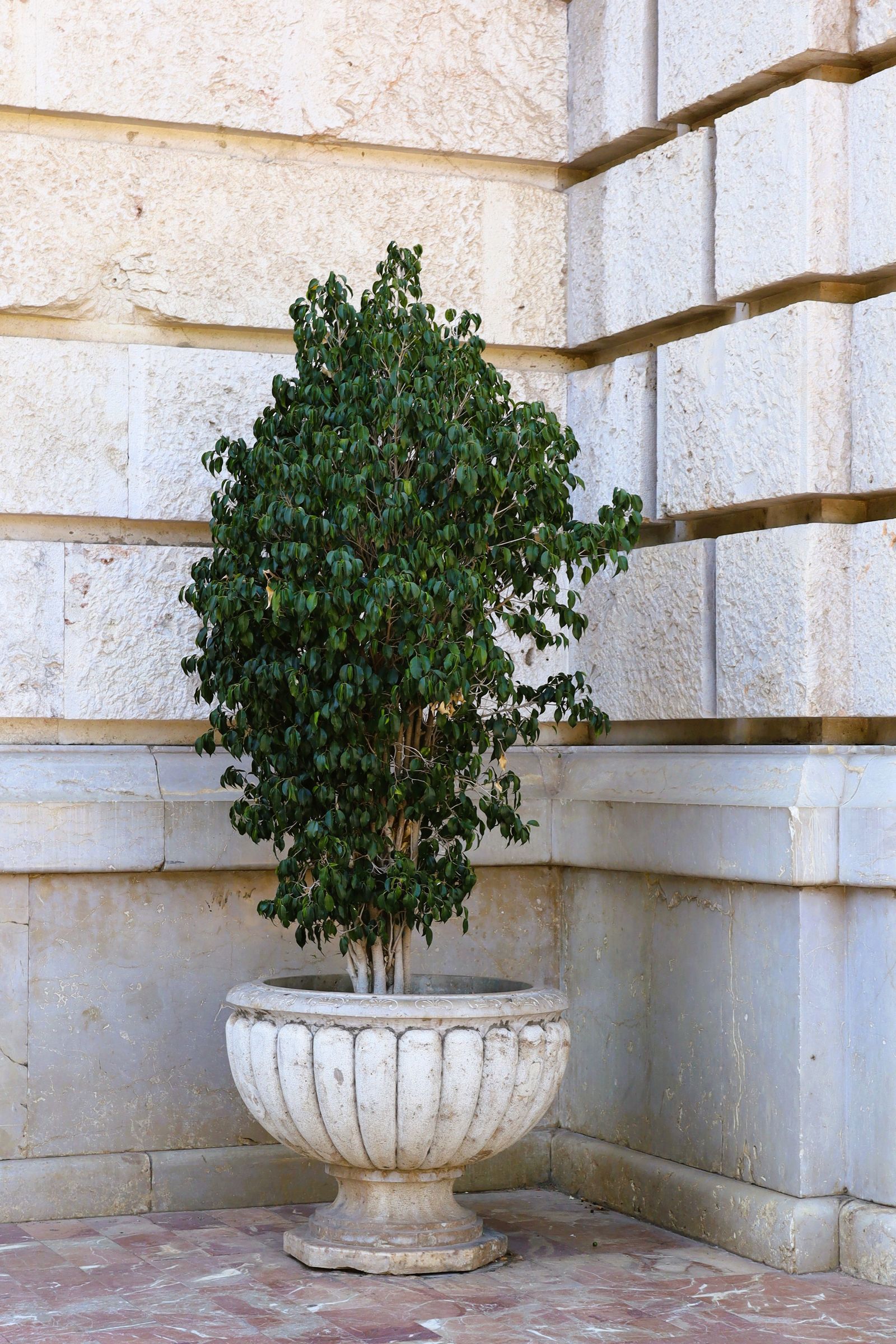
Photo: Maksym Parovenko / Pexels
Watering Calculator: The Ficus Dryness Audit
Ficus waters when the top 25 to 50 percent of the potting mix has dried, not on a calendar day. Enter your pot size below to size the drink, then read the species table and the leaf drop protocol in this article.
19.9 gallons
For 32 square feet at 1 inch deep. That is about 76 liters, or 10 trips with a standard 2 gallon watering can.
A rain gauge or a straight sided can set in the bed tells you when a sprinkler or soaker hose has actually delivered this depth. Time alone is a guess, because hose pressure varies from house to house.
The conversion is arithmetic, not opinion: one inch over one square foot is 144 cubic inches of water, and a US gallon holds 231 cubic inches, so each square foot at one inch takes 0.62 gallons.
The Top Half Rule, Species by Species
The band runs from a quarter dry to half dry, and the species sort themselves along it by leaf thickness, because a leaf is a water tank and thin leaves hold almost nothing. The weeping fig, Ficus benjamina, the most common ficus in homes, has thin leaves and a fine root system, and it sits at the shallow end: water when the top quarter of the mix has dried, which in a bright room in the growing season is roughly every 5 to 7 days for a standard pot. Let a benjamina dry to the halfway mark repeatedly and it answers with the genus's famous leaf drop. The rubber plant, Ficus elastica, carries thick, waxy, water storing leaves and sits at the deep end: let the top half of the mix dry between waterings, roughly every 7 to 10 days in season, and err dry, because elastica forgives a late watering and punishes a wet one with root rot. Creeping fig, Ficus pumila, breaks the pattern in the other direction: it is a moisture lover with tiny leaves and a climber's thirst, wants the mix evenly damp, and should be watered as the top inch dries, never allowed to dry deeply. The fiddle leaf fig, Ficus lyrata, sits mid band and has enough specific demands, and enough searchers asking, that it keeps its own page: the site's fiddle leaf fig watering guide runs that species in full.
| Species | Dry depth before watering | In season rhythm | Notes |
|---|---|---|---|
| Weeping fig (benjamina) | Top 25 percent of mix | Every 5 to 7 days | Thin leaves, drops leaves when dried deeper |
| Rubber plant (elastica) | Top 50 percent of mix | Every 7 to 10 days | Thick leaves store water, err dry |
| Creeping fig (pumila) | Top inch only | Every 3 to 5 days | Wants even moisture, never deep dry |
| Fiddle leaf fig (lyrata) | Top third of mix | Weekly in bright light | Full treatment on its own page |
The Test: Fingers, Weight, and the Pot's Story
A percentage of mix is a depth, and depth is testable three ways, in rising order of reliability. The finger test reads the top 2 inches, which covers the shallow end of the band; for the rubber plant's halfway rule in a deep pot, a finger is not long enough, and a wooden skewer or chopstick pushed to the pot's base and pulled out reads the whole profile, dry mix leaves it clean, damp mix darkens it and sticks. The weight test is the quiet professional method: lift the pot right after a full watering and learn that heft, then lift before each check, and water when the pot feels clearly lighter, roughly a third of its water gone for benjamina, half for elastica. The third check is the plant's own report. A ficus approaching its dry limit holds its leaves a fraction less stiffly, and a benjamina that has gone past it drops a few green leaves when the pot is bumped, a warning that arrives before any wilt. What all three tests replace is the calendar. The same plant in the same pot needs water twice as often in a bright June window as in a dim January corner, and the interval printed on the nursery tag knows nothing about your window.
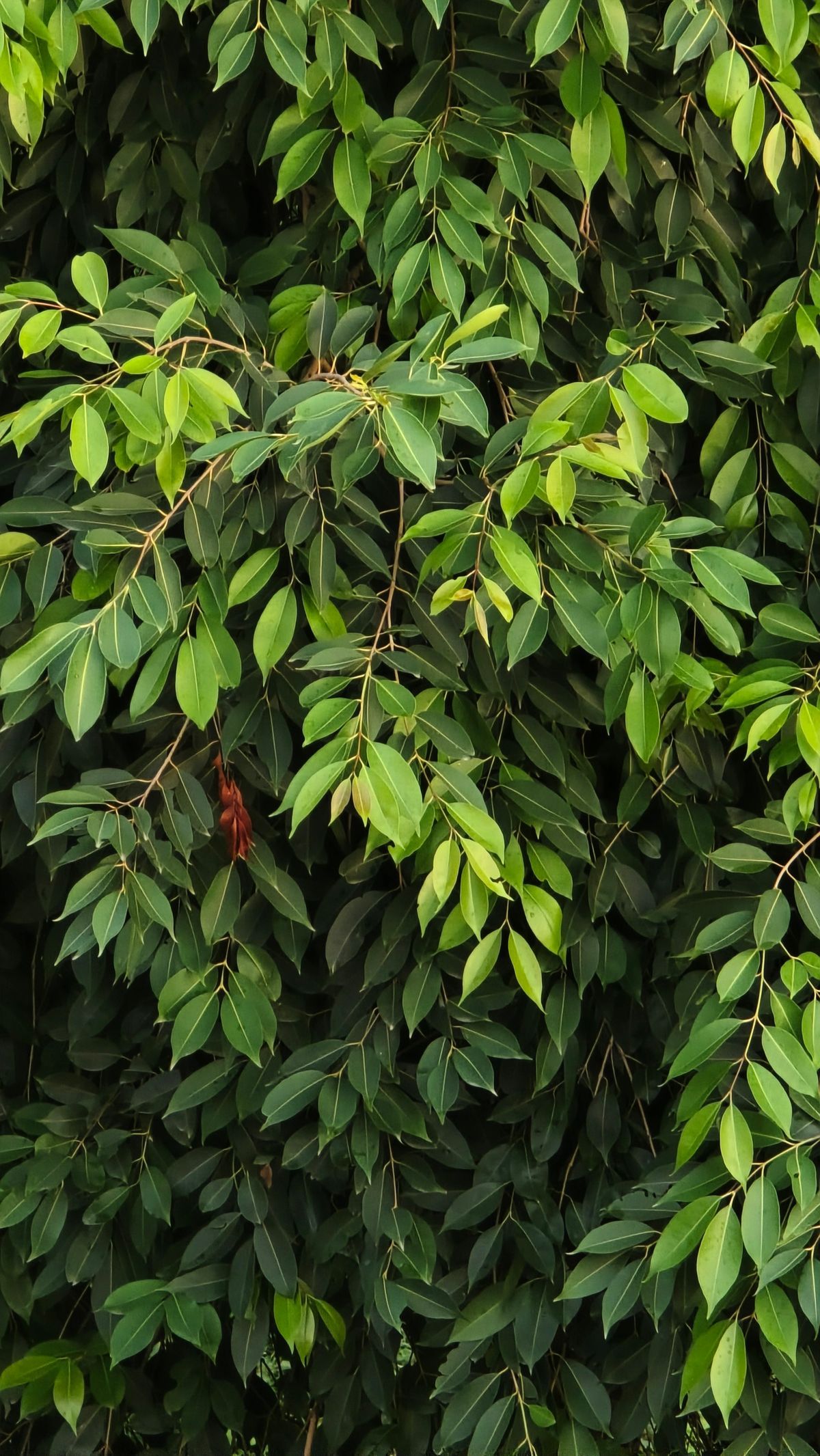
Leaf Drop: The Symptom That Is Usually Not Water
Ficus leaf drop has four common authors, and water is only one of them, which is why so many benjamina owners water a stressed plant into root rot while hunting the wrong cause. The move is the first author: ficus, benjamina above all, sheds leaves when its light changes, after the trip home from the store, after a rotation to a new room, even after a turn of the pot that puts the shaded side to the window. The plant is rebuilding its canopy for the new light, the drop stops on its own in 2 to 4 weeks, and the correct response is to water on the test and otherwise leave it alone. Drafts are the second author: a plant near a heating vent, an air conditioner, or a frequently opened winter door drops leaves on the draft side, and the fix is a move of a few feet, not a drink. Water swings are the third author, and the operative word is swing: a plant cycled between drought and flood drops leaves even if today's moisture is perfect, because the insult was the alternation, and the cure is the test applied consistently. True chronic overwatering is the fourth, and it identifies itself in the soil, which stays wet at depth a week after watering, smells sour, and grows fungus gnats. Check the four in that order and most ficus leaf drop solves without the watering can changing at all.
Winter, Light, and the Rhythm Under the Rule
The band never changes, but the time it takes the mix to dry to the band changes constantly, and reading that rhythm is the real skill. In winter, short days and low light slow a ficus to a near standstill: the same benjamina that drank weekly in June may take 2 to 3 weeks to dry its top quarter in January, and watering it on the summer interval is the single most common way these plants are killed, slowly, in the dark months. Heated rooms complicate the picture, because dry air pulls moisture from leaves while the roots sit in wet, cold mix, producing the paradox of a plant dropping leaves over wet soil; the fix is the test at depth, not the surface, and patience. Light is the other dial: every step closer to a bright window shortens the interval, and a ficus etiolating in a dark corner, long bare stems reaching for light, is telling you its water use has fallen with its growth. Feed lightly in the growing season only, a balanced houseplant fertilizer at half strength monthly, and never feed a plant whose watering is not yet stable, because fertilizer salts accumulate in mix that is not being flushed by regular, thorough watering. Repot in spring when roots circle the drainage hole, one size up, into a free draining mix; a ficus in a pot two sizes too large holds a reservoir of wet mix its roots cannot reach, and the top half rule becomes impossible to hold.
Pets and Placement
The ASPCA lists ficus species, including the weeping fig and rubber plant, as toxic to dogs, cats, and horses; the milky sap irritates mouths and skin and causes drooling, vomiting, and diarrhea when eaten, so floor level ficus and chewing pets are a bad combination, and fallen leaves, which a benjamina sheds freely in a stressful month, should be swept from floors animals use. Placement gathers the whole page into one instruction: bright, indirect light, a spot away from vents and doors, and then stillness. Ficus rewards the keeper who finds the corner and stops moving the plant more than any other common houseplant does. Set it, water it by the test at its species' depth, and let the genus's famous temper become a rumor. The dieffenbachia watering page covers another dramatic leaf dropper whose sheds are also more often about change than thirst, and the two share a checking round well.
Related guides
These related guides round out the picture:
- How Often to Water English Ivy: The Half Inch Rule, the Moist Not Soggy Band, and the Spider Mite Watch
- How Often to Water Elephant Ears: It Depends Which Genus You Bought
- How Often to Water a Rubber Plant: The Top Half Rule
- How Often to Water an Umbrella Plant: Two Plants, One Name
Frequently Asked Questions
How often do I water a ficus tree indoors?
By depth, not by day: water a weeping fig when the top 25 percent of the mix has dried, about every 5 to 7 days in a bright room in the growing season, and a rubber plant when the top half has dried, about every 7 to 10 days. In winter light both intervals can double or triple. The National Garden Bureau bench for the genus is the top 25 to 50 percent, with the species setting the depth.
Why is my ficus dropping leaves after I brought it home?
Because its light changed. Ficus, especially the weeping fig, sheds leaves to rebuild its canopy whenever it moves to a new light level, and the drop typically stops within 2 to 4 weeks. Water on the dryness test, keep the plant in one bright spot away from drafts, and do not compensate with extra water, which adds root rot to a plant that is only adjusting.
How do I know when the top half of the soil has dried?
Use a wooden skewer or chopstick pushed to the bottom of the pot: damp mix darkens it and clings, dry mix leaves it clean. For shallow tests a finger to 2 inches works. Lifting the pot also works once you learn its just watered weight; a pot that has lost about half its water weight is at the rubber plant's line.
Is ficus poisonous to cats and dogs?
Yes. The ASPCA lists ficus species as toxic to dogs, cats, and horses. The milky sap irritates the mouth and skin and causes drooling, vomiting, and diarrhea when eaten. Keep ficus out of chewing reach and sweep up fallen leaves, which a stressed plant drops freely, from floors pets use.
Why does my ficus drop leaves even though I water on schedule?
Probably because the schedule is the problem, or because the cause is not water. A fixed interval overwatering in winter is the classic case; drafts from vents and doors and any recent move are the others. Switch to the dryness test at your species' depth, check for drafts, and give a moved plant a month before changing anything else.
Photo credits: Maksym Parovenko (Pexels); Happy Singh (Pexels). Photos are served from this site; follow the credit to the library page for the original.