How Often to Water a Rubber Plant: The Top Half Rule
By the Windchime Walker editorial team
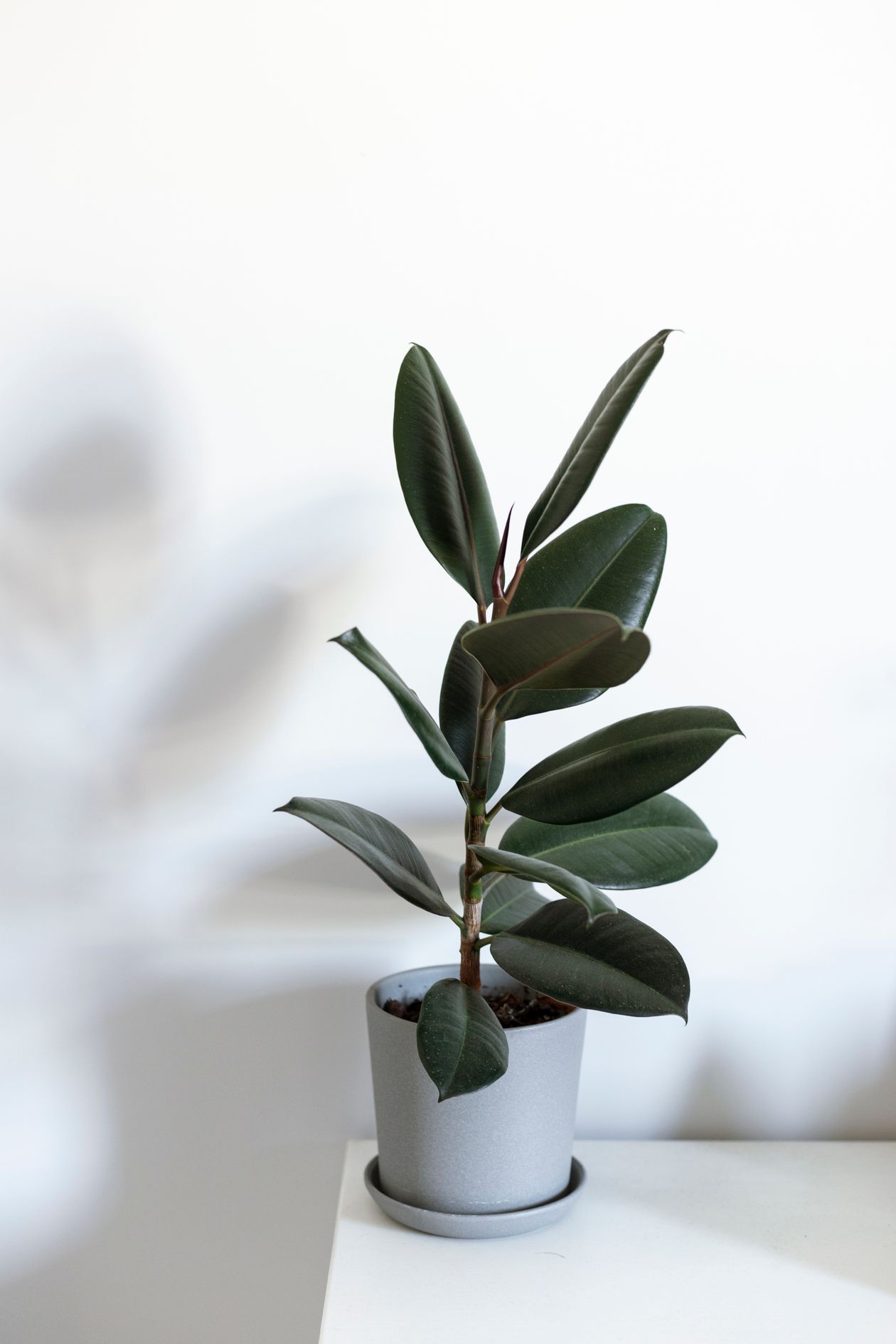
Photo: Justyna Grochowska / Pexels
Rubber plant (Ficus elastica) is the forgiving member of the ficus family, and its watering rule is the driest one the genus uses indoors: let the top half of the pot dry out, then soak it fully. In a typical home that lands every 1 to 2 weeks in spring and summer, and every 2 to 3 weeks in winter. Water on a fixed calendar and the plant will eventually rot; water on the dryness trigger and it will grow for decades.
The genus level system is laid out in our guide to how often to water ficus, which tables elastica at the top 50 percent dry mark. This page goes deeper on the species itself: the chopstick test that reads the middle of the pot, the difference between thirsty leaf drop and overwatered leaf drop, and the light and pot variables that stretch or shrink the interval. If your other ficus is the fussier tree form, compare its system in our guide to how often to water a fiddle leaf fig.
Interactive tool
Watering Schedule Calculator: Rubber Plant
Rubber plant runs on the top half rule: water when the top 50 percent of the pot has dried, about every 1 to 2 weeks in growth and every 2 to 3 weeks in winter. Enter your pot size and climate, then confirm with a chopstick or a meter before you pour.
19.9 gallons
For 32 square feet at 1 inch deep. That is about 76 liters, or 10 trips with a standard 2 gallon watering can.
A rain gauge or a straight sided can set in the bed tells you when a sprinkler or soaker hose has actually delivered this depth. Time alone is a guess, because hose pressure varies from house to house.
The conversion is arithmetic, not opinion: one inch over one square foot is 144 cubic inches of water, and a US gallon holds 231 cubic inches, so each square foot at one inch takes 0.62 gallons.
The schedule by setup
Setup
How often
Trigger
Amount
Pot 6 to 8 inches, bright room
Every 7 to 10 days
Top half of mix dry
Soak until it drains, empty the saucer
Pot 10 to 12 inches
Every 10 to 14 days
Top half of mix dry
Soak until it drains
Large floor pot, 14 inches plus
Every 2 to 3 weeks
Top half of mix dry
Soak slowly so the core wets
Low light corner, any size
Add 3 to 5 days to the above
Top half of mix dry, plus a day
Soak until it drains
Winter, cool room
Every 2 to 3 weeks
Top half of mix dry
Soak until it drains, no fertilizer
Trade and extension style guidance for elastica splits in a way worth flagging honestly. Some care sources say water when the top 1 to 2 inches dry, which on a small pot is nearly the same event as the top half rule. On a deep floor pot the two rules diverge by a week or more, and the top half rule is the safer one, because the bottom of a deep pot stays wet long after the surface reads dry. When in doubt, follow the deeper dryness trigger.
The chopstick test reads the middle of the pot
A finger reads the top 2 inches. A rubber plant in a 10 inch pot needs a reading from the middle of the root ball, and a wooden chopstick or bamboo skewer gives it. Push the stick straight down to within an inch of the bottom, wait ten seconds, and pull it out. Soil clinging to the lower half and a dark stain on the wood mean the pot is still holding water. A stick that comes out mostly clean and pale means the top half rule has been met and it is time to water.
A moisture meter does the same job with a number: water when the reading at mid depth falls to 3 or 4 on a standard 1 to 10 probe scale. Whichever tool you use, test in the same spot each time, a few inches in from the rim, so the readings are comparable week to week.
Leaf drop: thirsty or drowning?
Rubber plants drop leaves for both crimes, and the leaves tell you which one. A thirsty plant drops its lowest leaves first, and they yellow slowly, feel dry and papery, and fall from soil that is dry deep into the pot. An overwatered plant drops leaves that are still green or yellowing fast, sometimes with brown mushy patches, from soil that smells sour and stays wet a week after watering.
Root rot is the end stage of the wet pattern. If the trunk base feels soft, or the plant drops three or more leaves in a week from wet soil, unpot it. Healthy roots are white to tan and firm; rotted roots are brown, translucent, and stringy. Cut the rot away with clean scissors, repot into fresh fast draining mix, and water once lightly. The plant usually releafs from the nodes above the damage within a month or two.
Light and pot size bend the interval more than season does
A rubber plant in a south window in June can drink twice as fast as the same plant in a north facing room in the same week. Bright light drives growth, growth drives water use, and the thick waxy leaves that make elastica drought tolerant also slow its distress signals, so a plant in low light sits in wet soil far longer than its leaves admit. Move a plant to brighter light and shorten your check interval by two or three days until you learn the new rhythm.
Pot material matters the same way. Terracotta breathes and dries the mix from the sides, pulling the interval in by several days against a glazed or plastic pot of the same size. A plant that needed water every 14 days in plastic may need it every 9 or 10 in clay. Repotting up a size resets the clock too: fresh mix around the root ball holds water the roots have not reached yet, so check deeper, not just more often, for the first month.
Water quality, feeding, and the dust problem
Rubber plants tolerate ordinary tap water better than many houseplants, but they show fluoride and salt stress as brown edges on the oldest leaves when the pot never gets flushed. Once a season, water slowly with twice the pot volume of plain water and let it all drain away; that leaches the accumulated salts out of the mix. Feed only in the growing season, at half the label strength of a balanced houseplant fertilizer, and only on a watering day when the mix is already due for a soak. Fertilizer on dry roots burns them.
The big leaves are dust magnets, and a dusty leaf photosynthesizes poorly and drinks less predictably. Wipe both sides of every leaf with a damp cloth once a month. You will spot the early mealybug clusters that hide along the midrib while you are at it, which is the other quiet killer of indoor elastica.
Repotting and root room
Rubber plants are steady growers that eventually fill any pot, and the repotting rhythm explains many mystery slowdowns. A young plant in active growth wants a size up every 12 to 18 months; a mature plant can sit two to three years between pots. The signs that the pot, not the water, is the problem: roots circling out of the drainage hole, water running straight through the mix and out in seconds because the root ball has displaced the soil, and a plant that needs water twice as often as it did last year in the same spot. Repot in spring, one size up, into a mix with bark or perlite for drainage, and water it in once to settle the mix. Then return to the top half rule, remembering that the fresh mix around the edges holds water the roots have not reached, so the first month's chopstick checks should read the old root ball, not the new margin.
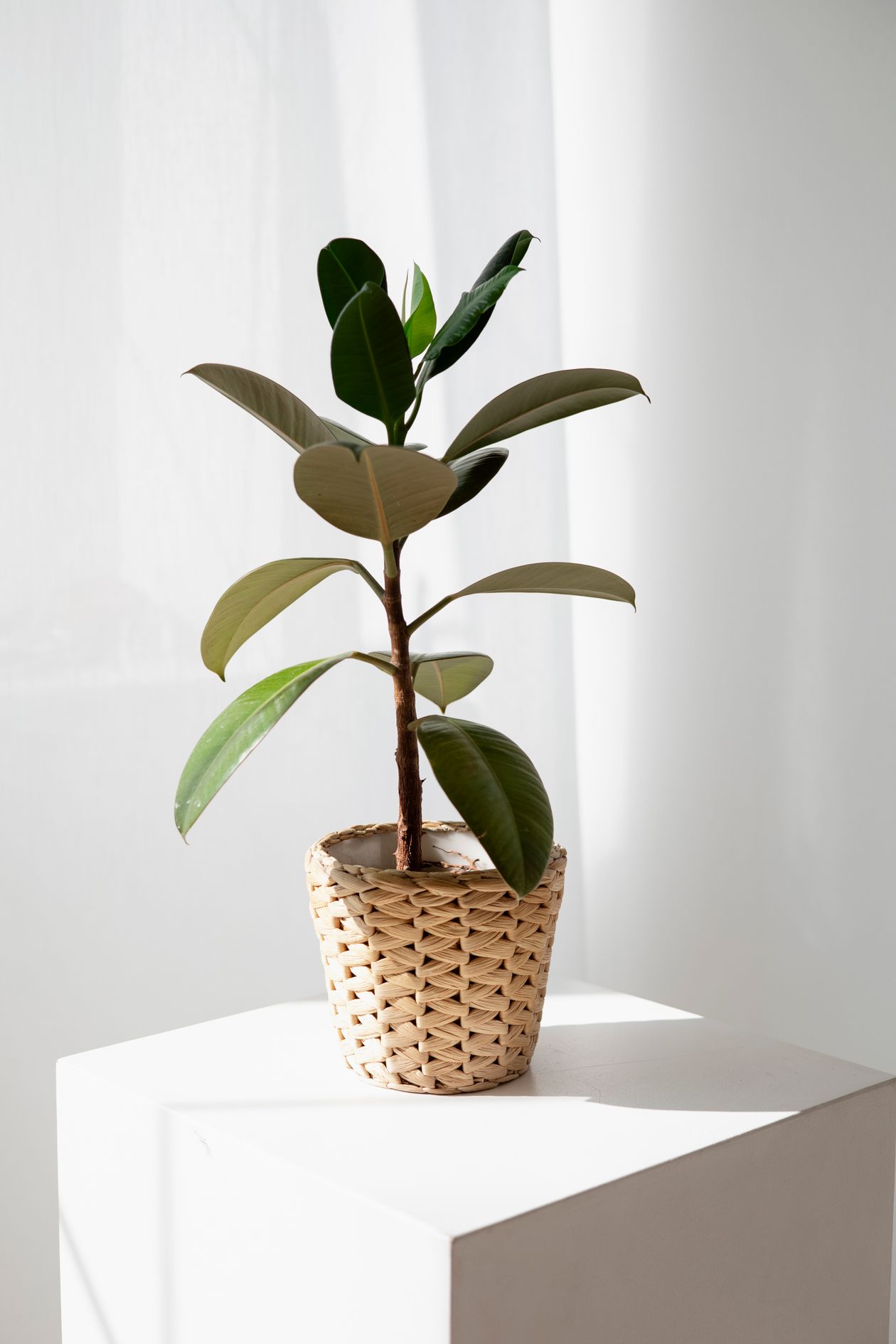
Rubber plant with deep green leaves in a woven basket planter
Signs you are getting it wrong
Leaves curling inward with dry soil mean the plant waited too long; soak it and shorten the interval. A plant that stops growing in spring with wet soil is almost always too wet or too dark, not hungry. Sticky residue on leaves points to scale or mealybug, not watering. And a plant that leans hard toward the window is asking for a quarter turn every week, not for water.
How often should I water a rubber plant in a 10 inch pot?
Expect every 10 to 14 days in the growing season in a bright room, and every 2 to 3 weeks in winter. Treat those as check intervals, not appointments: push a chopstick to mid depth and water only when the top half of the mix has dried. A plant in low light or a glazed pot runs to the long end of the range.
Can a rubber plant recover from overwatering?
Usually, yes, if the trunk is still firm. Unpot it, cut away every brown mushy root, and repot into fresh fast draining mix in a pot with open drainage holes. Water lightly once, then wait for the top half to dry before the next soak. Leaves lost to rot do not return on the same stem, but new growth pushes from the nodes above within a month or two.
Why are my rubber plant leaves drooping but the soil is wet?
That combination is the classic overwatering signal, not thirst. Roots sitting in wet mix cannot take up water, so the leaves droop exactly as they would in a drought. Stop watering, check that the drainage hole is open, and let the top half of the pot dry fully before the next soak. If the base of the trunk feels soft, unpot and inspect the roots for rot.
Should I mist a rubber plant?
Misting does almost nothing for humidity and leaves water sitting on leaves that would rather be wiped clean. Rubber plants handle average household humidity well. Spend the effort on a monthly leaf wipe with a damp cloth instead: it restores photosynthesis, removes dust, and gives you a close look for mealybug before an infestation builds.
Does a rubber plant need distilled water?
No. Ordinary tap water is fine for most rubber plants. If brown leaf edges appear on the oldest leaves while your watering rhythm is right, salts are the likely cause, and a seasonal flush with twice the pot volume of plain water fixes it. Letting tap water sit overnight does not remove fluoride, so do not rely on that trick; the flush is what works.
Photo credits: Justyna Grochowska (Pexels); Hanna Pad (Pexels). Photos are served from this site; follow the credit to the library page for the original.