How Often to Water Tradescantia: The Inchplant Rule for Every Species
By the Windchime Walker editorial team
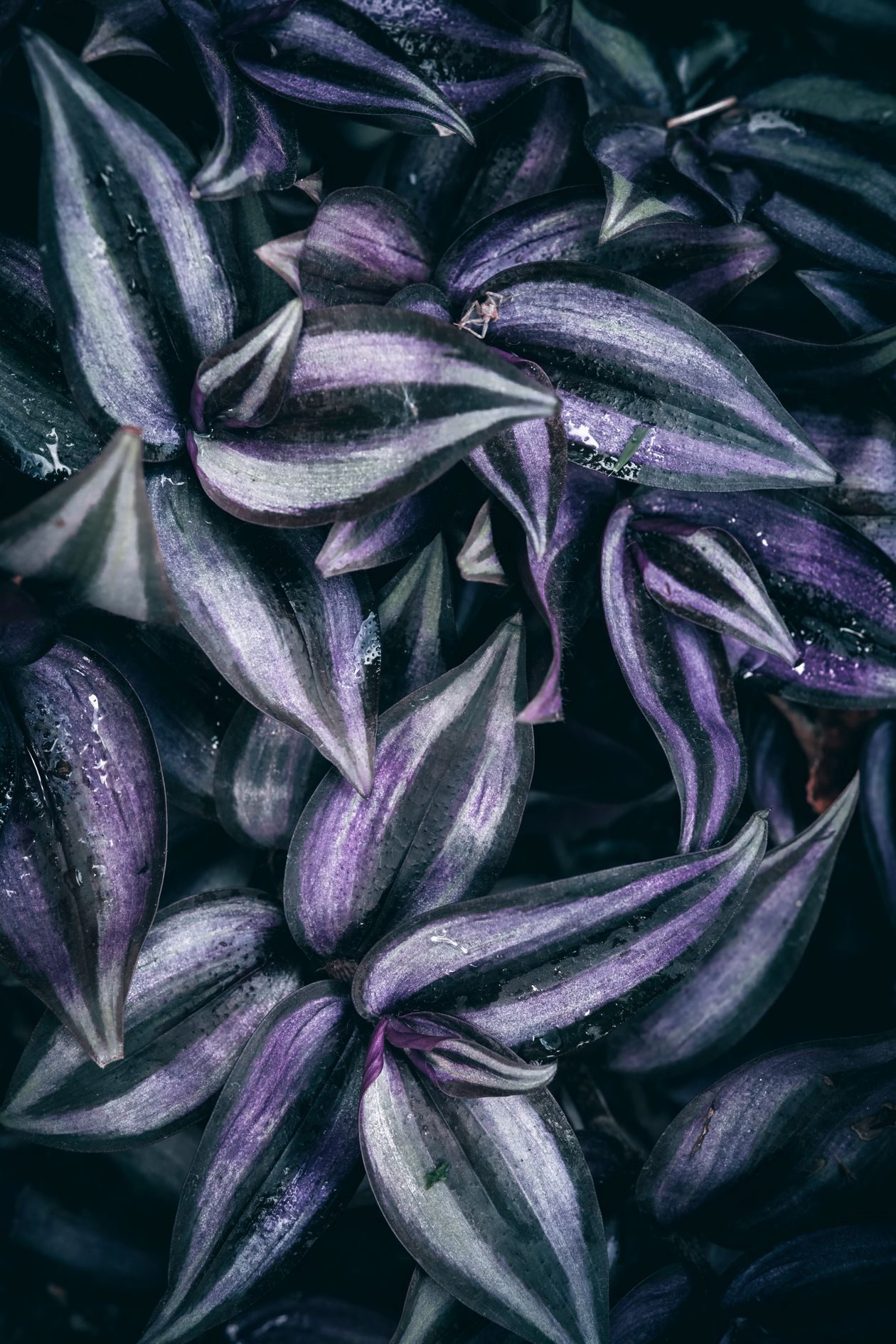
Photo: Wyxina Tresse / Pexels
Tradescantia is sold as the easiest trailing plant in the shop, and its watering rule matches the reputation: let the top 1 to 2 inches of mix dry, then water thoroughly. In a growing season rhythm that is every 5 to 7 days; in winter it stretches to every 10 to 14 days. Missouri Botanical Garden guidance for the genus runs the same way, consistently moist through the growing season with water reduced from fall to late winter. What kills tradescantia is rarely a missed week. It is a rhythm that keeps the surface wet enough to rot the stems at the soil line while the owner wonders why a full pot turned bald in the middle.
The genus covers the purple and silver zebrina, the deep purple pallida (purple heart), the green fluminensis, and the fuzzy sillamontana, plus the wandering dude and wandering jew names attached to all of them. Their thirst is close enough to run one system with small adjustments, which this guide lays out species by species. For the general framework behind the dryness trigger, see our guide to how often to water houseplants; for a plant that wants the opposite, drier rhythm, compare the rubber plant and its top half rule.
Interactive tool
Watering Schedule Calculator: Tradescantia
Tradescantia wants the top 1 to 2 inches dry, then a full soak: about every 5 to 7 days in growth and every 10 to 14 days in winter across zebrina, pallida, and fluminensis. Enter your pot size and climate, and pinch as you water to keep the trailing stems full.
19.9 gallons
For 32 square feet at 1 inch deep. That is about 76 liters, or 10 trips with a standard 2 gallon watering can.
A rain gauge or a straight sided can set in the bed tells you when a sprinkler or soaker hose has actually delivered this depth. Time alone is a guess, because hose pressure varies from house to house.
The conversion is arithmetic, not opinion: one inch over one square foot is 144 cubic inches of water, and a US gallon holds 231 cubic inches, so each square foot at one inch takes 0.62 gallons.
The schedule by species and season
Species
Growing season
Winter
Notes
Tradescantia zebrina
Every 5 to 7 days
Every 10 to 14 days
The standard rhythm; silver striping fades in low light
Tradescantia pallida (purple heart)
Every 5 to 7 days
Every 10 to 14 days
Takes more sun; color washes out if kept wet and dim
Tradescantia fluminensis
Every 4 to 6 days
Every 7 to 10 days
The thirstiest of the group; wilts first, recovers fast
Tradescantia sillamontana
Every 7 to 10 days
Every 14 to 21 days
Fuzzy leaves hold water; run it drier than the others
Outdoor basket, summer
Every 2 to 4 days
Bring inside
Wind and sun strip moisture from hanging baskets fast
The fluminensis row deserves emphasis because it is the species behind most tradescantia disappointment. It roots at every node, grows faster than the others, and drinks accordingly. A basket of fluminensis on a bright porch in July can need water twice as often as the zebrina on the shelf beside it. Group your plants by rhythm, not by looks, and the watering round gets much simpler.
The real killer: rot at the soil line
Tradescantia stems are succulent and soft, and where they touch constantly wet mix, they melt. The pattern is diagnostic: the trailing stems look healthy, the pot looks full from above, but the center of the plant thins and the stems lift away dead at the base. By the time the bald crown shows, the rot has been running for weeks under the foliage.
Prevention is rhythm plus technique. Water when the top 1 to 2 inches are dry, not before. Water at the edge of the pot or from below rather than over the crown, so the surface under the stems dries between drinks. And keep the plant pinched: every pinch forces branching at the base, and a bushy crown shades its own soil line, which sounds protective but actually holds humidity, so pinch for shape and then make sure air moves around the pot. The rescue for a rotted plant is the easiest in the houseplant world: snip every healthy stem tip, and root them in water or straight into fresh mix. Tradescantia cuttings root in days, and a restarted pot is usually fuller than the original within two months.
Leggy growth is a light problem wearing a watering costume
Long bare stems with wide gaps between leaves get blamed on water, but the cause is light. Tradescantia in dim rooms stretches toward the window, and no watering schedule fixes the stretch. The plant wants bright indirect light for most of the day, and zebrina and pallida color up properly only with a few hours of gentle direct sun. If the purple fades to green and the internodes stretch, move the plant first and adjust water second, because a plant in better light also drinks faster and your old interval will suddenly run dry.
The watering connection runs the other way too. A plant kept on the wet side grows soft, fast, and weak, with stems that snap at a touch. Slightly lean water, meaning you let the full top 2 inches dry before soaking, produces the compact, sturdy growth that trails well and propagates cleanly.
Pinching, feeding, and the two month reset
This genus grows so fast that the pros treat it as semi disposable: grow it hard for a season, take cuttings, restart. Build that reset into your calendar and the watering questions simplify, because a young plant in fresh mix on the standard rhythm almost never fails. Pinch the tip of every stem that passes 6 inches to force two branches. Feed monthly in spring and summer at half strength; stop in winter. Every two or three months, take your best five tips and root them in a spare pot as insurance, so a rot event or a vacation disaster costs you nothing.
Hard water shows on tradescantia as brown leaf edges and a white crust on the mix surface. If your tap water is hard, flush the pot monthly with a slow, deep watering and let it drain completely, or switch the plant to rainwater or distilled water for its regular drinks. The leaves also brown at the tips in very dry indoor air; grouping plants together or moving the pot away from heating vents helps more than misting, which mostly wets the surface you are trying to keep dry at the crown.
The outdoor summer, and the trip back in
Tradescantia is one of the houseplants that genuinely benefits from a summer outside, and the watering rhythm changes the day it moves. A basket that drank weekly indoors will want water every 2 to 4 days on a bright porch, and daily in a heat wave if the basket is small, because wind moves across the foliage all day and the pot is rained on and dried in cycles no room reproduces. Acclimate it over a week, shade first, then bright shade, since leaves grown indoors scorch in direct sun they would have handled if they had grown there. Feed a little more often outdoors too; growth is faster and the rain leaches the pot.
The trip back inside in fall is where pests hitchhike. Inspect every stem junction for mealybug before the plant crosses the threshold, rinse the basket under a strong spray, and quarantine it from the indoor collection for two weeks. Watering slows the week it comes in, and owners who keep pouring on the outdoor schedule rot the crown in the dimmer, stiller indoor air. Reset to the indoor column of the table, let the top 2 inches dry honestly, and cut back any stretched summer growth hard; the plant regrows from the base in the spring light and the cuttings root as your insurance stock.
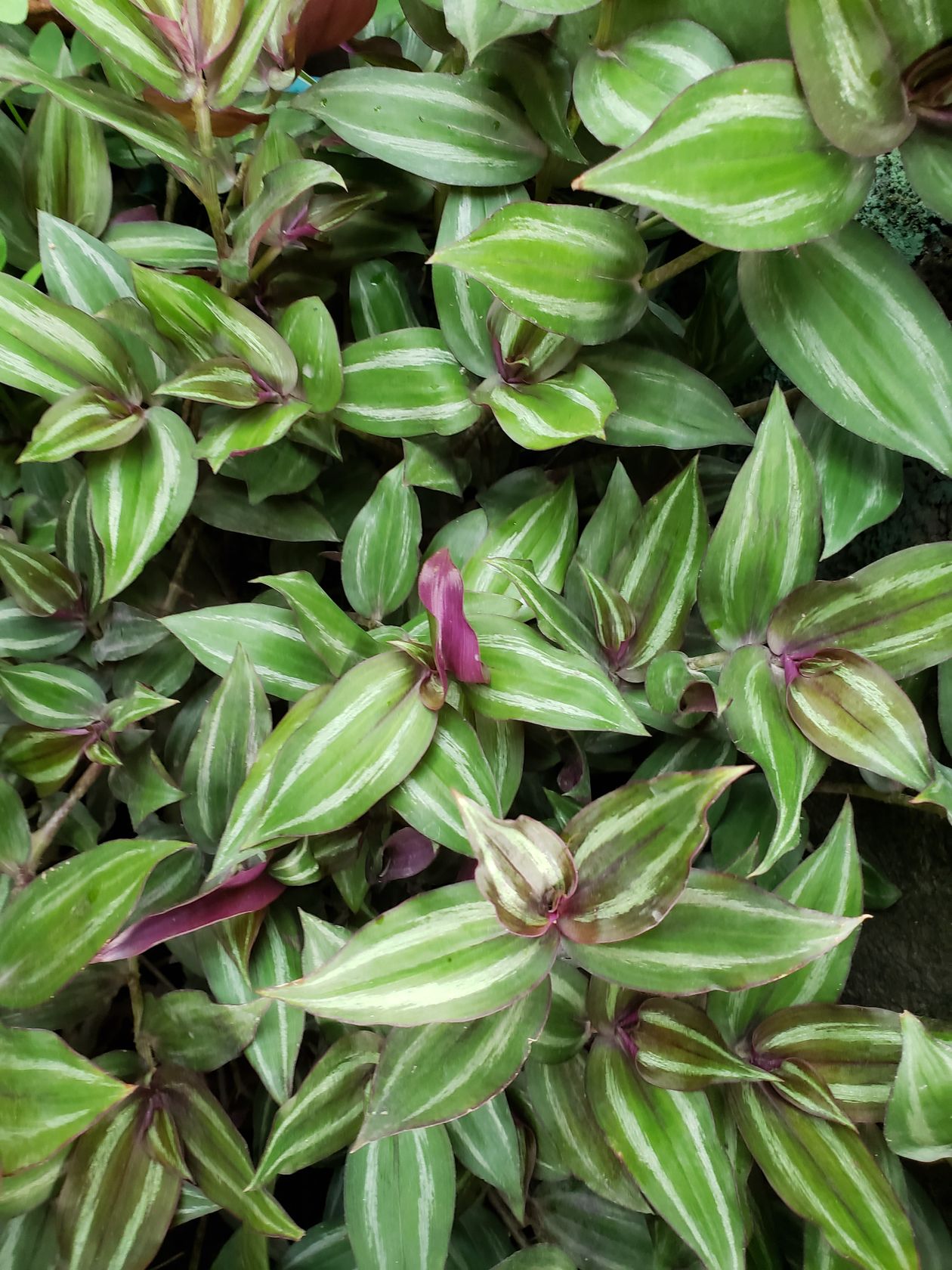
Tradescantia leaves trailing through a garden bed
Signs you are getting it wrong
Crispy brown leaf edges with dry mix mean the interval ran long or the basket is rootbound. A bald center with healthy trailers means crown rot from a wet surface. Pale, stretched, green growth means light, whatever the soil is doing. And a plant that wilts every second day in a small pot is not thirsty by nature; it is potbound, and the fix is a size up or a hard cutback and restart, not a daily drench.
How often should I water tradescantia in a hanging basket?
Indoors in bright light, every 5 to 7 days in the growing season, checking that the top 1 to 2 inches are dry first. Outdoors in summer, a basket can dry in 2 to 4 days because wind strips moisture from all sides. Lift the basket: a dry basket is dramatically lighter than a watered one, and your hands learn the weight faster than any schedule.
Why is my tradescantia bald in the middle?
Almost always crown rot: the stems have rotted where they touch mix that stays wet at the surface. The trailing ends survive because they hang in the air. Cut every healthy tip and root them in fresh mix, then restart with a drier surface rhythm: water at the pot edge or from below, and only when the top 1 to 2 inches have dried.
Can tradescantia sit in water or grow in water permanently?
Cuttings root happily in water, and a stem will live in a jar for months, but a soil grown plant kept with a flooded pot rots at the crown. If you want the water culture look, grow the plant in water from a cutting from the start, change the water weekly, and accept slower growth. Do not move a soil plant into permanent water and expect it to adapt.
Why are the leaves on my zebrina turning plain green?
Light. The silver and purple striping of Tradescantia zebrina fades in dim rooms as the plant stretches toward brightness. Move it to bright indirect light with a little gentle direct sun, pinch the stretched tips to force compact branching, and the new growth will color up. Watering changes will not restore the pattern; only light does.
How do I keep tradescantia full instead of leggy?
Pinch every stem tip once it passes about 6 inches, keep the plant in bright light, and run the water slightly lean, letting the full top 2 inches dry between soaks. Then accept the genus rhythm: every few months, root your best cuttings and restart or top up the pot. A tradescantia is a relay race, not a monument, and the fullest pots are the ones that get restarted on schedule.
Photo credits: Wyxina Tresse (Pexels); Prabin Byanjankar (Pexels). Photos are served from this site; follow the credit to the library page for the original.