How Often to Water an Umbrella Plant: Two Plants, One Name
By the Windchime Walker editorial team
Photo: Ryszard Zaleski / Pexels
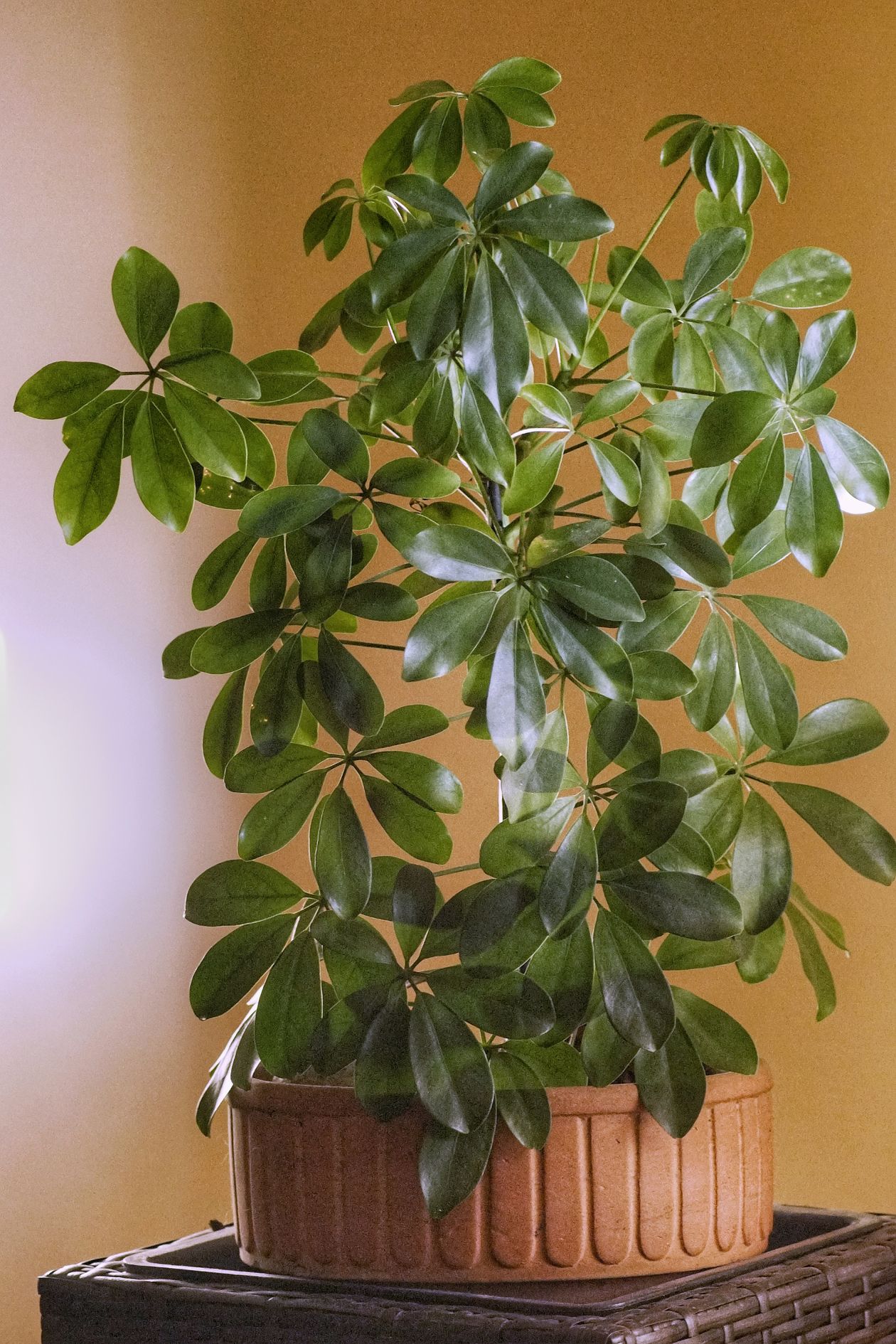
Umbrella plant is one name carried by two plants with opposite watering needs, and confusing them is the fastest way to kill either. The houseplant sold everywhere as umbrella plant is Schefflera, most often the dwarf Schefflera arboricola, with glossy leaflets radiating from a central point like the ribs of an umbrella. It wants the top 1 to 2 inches of soil to dry between waterings: about weekly in summer and every 10 to 14 days in winter. The other umbrella plant is Cyperus alternifolius, the umbrella sedge, a pond edge plant whose pot should sit in water permanently. This guide runs the Schefflera system in full and then gives the Cyperus its own short section, because the name on the tag will not tell you which one you brought home.
Within Schefflera there is a second split: the dwarf arboricola that fills most pots, and the tree form Schefflera actinophylla, the one with leaflets a foot long that becomes a small indoor tree. Both run the same dryness trigger, but the tree drinks deeper and slower. For the broader ficus and houseplant context, compare the rubber plant with its top half rule, and the genus table in our guide to how often to water ficus.
Interactive tool
Watering Schedule Calculator: Umbrella Plant
Umbrella plant runs on the top 1 to 2 inch rule: about weekly in summer and every 10 to 14 days in winter for dwarf Schefflera arboricola, with the tree form actinophylla drinking deeper. Enter your pot size and climate, and read the namesake warning in this guide if your umbrella plant came from the pond aisle.
19.9 gallons
For 32 square feet at 1 inch deep. That is about 76 liters, or 10 trips with a standard 2 gallon watering can.
A rain gauge or a straight sided can set in the bed tells you when a sprinkler or soaker hose has actually delivered this depth. Time alone is a guess, because hose pressure varies from house to house.
The conversion is arithmetic, not opinion: one inch over one square foot is 144 cubic inches of water, and a US gallon holds 231 cubic inches, so each square foot at one inch takes 0.62 gallons.
The Schefflera schedule by form and season
Plant
Growing season
Winter
Trigger
Dwarf umbrella, arboricola, 6 to 8 inch pot
Every 5 to 7 days
Every 10 to 14 days
Top 1 to 2 inches dry
Dwarf umbrella, 10 to 12 inch pot
Every 7 to 10 days
Every 2 to 3 weeks
Top 2 inches dry
Umbrella tree, actinophylla, floor pot
Every 7 to 14 days
Every 2 to 4 weeks
Top 2 inches dry, checked deep
Variegated arboricola, any size
Add 2 to 3 days to the above
Add 3 to 4 days
Variegated plants grow slower and drink less
Umbrella sedge, Cyperus alternifolius
Never dries out
Never dries out
Pot stands in 1 to 2 inches of water at all times
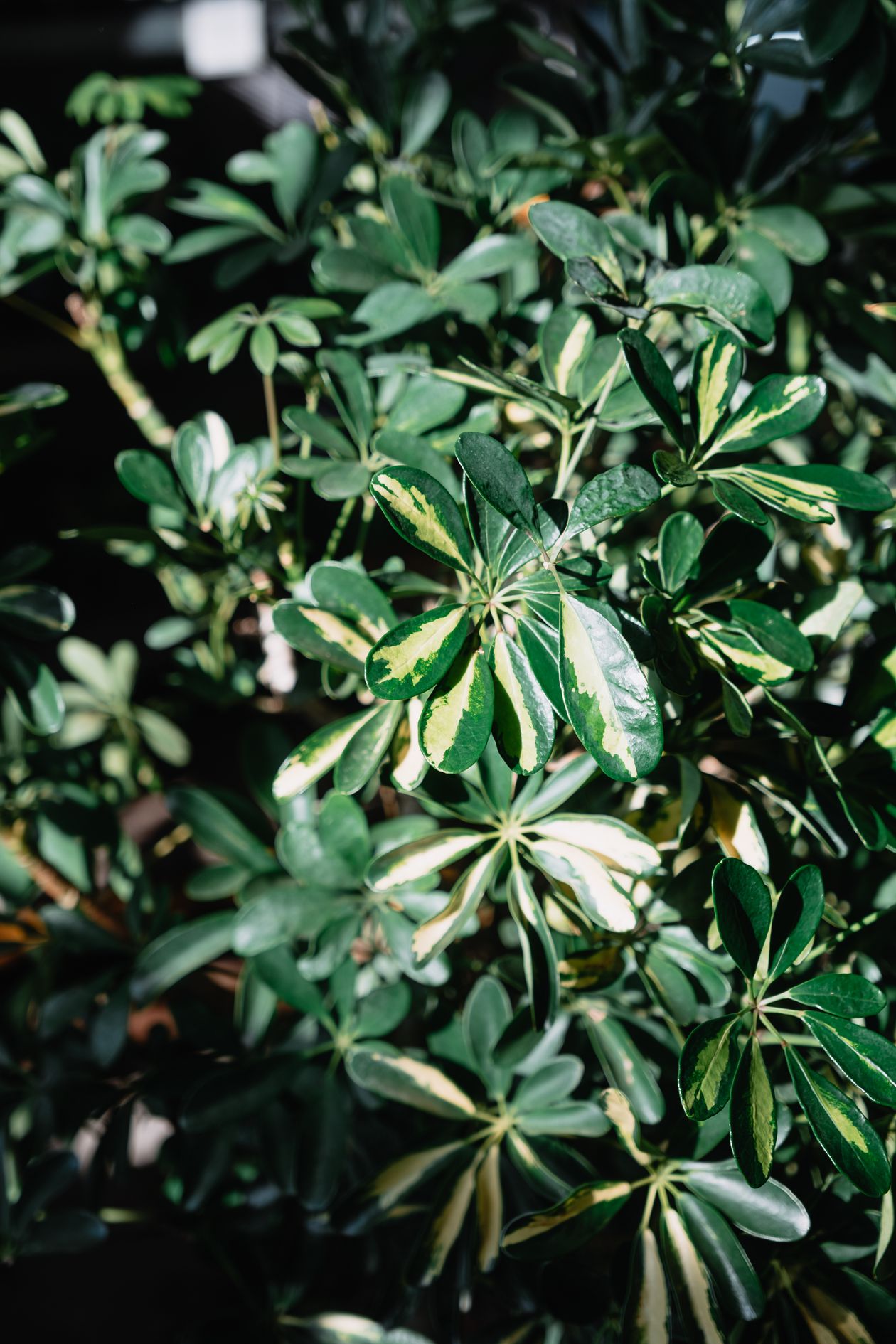
The variegated row surprises people. The cream and gold forms of arboricola carry less chlorophyll per leaf, grow more slowly, and use measurably less water than the plain green form in the same pot. Owners who water both on the green plant's schedule rot the variegated one slowly. Give the patterned plant its own, longer interval and it will outgrow the difference in a brighter spot.
Reading the plant: leaflets, stems, and the droop that lies
Schefflera tells you about water with its leaflets. A thirsty plant lets its leaf clusters droop and fold slightly downward, and the leaflets feel thin and soft. Watered in time, it recovers within hours. An overwatered plant does something crueler: it drops green leaflets, sometimes whole leaf clusters, from soil that is still wet, and the fallen leaflets feel firm rather than wilted. Leaflet drop onto wet soil is the single most reliable overwatering signal this plant gives, and it is routinely misread as thirst, which is how a wet plant gets drowned with sympathy.
Stems give the second reading. On a healthy plant the leaf stalks hold the clusters up and out. On a rotting plant the base of a stem turns soft and dark, and the whole stem lifts away with a gentle tug. If one stem has gone, check the rest, cut the rot out, and let the pot dry to the full trigger depth before watering again.
Light, size, and the winter slowdown
Umbrella plants in bright indirect light grow steadily and drink on the short end of the table. In a dim corner the same plant nearly stops, and the summer interval quietly becomes the winter interval; more Schefflera die in dark corners from unchanged watering calendars than from any pest. Winter compounds it: growth slows, heated rooms dry the leaf surfaces while the mix stays wet longer, and the right response is the winter column plus a check at depth, not a calendar carried over from July.
Size the pot honestly. A dwarf umbrella in a 12 inch pot of dense mix holds water for a long time at the core, and surface checks lie about it. Use a chopstick pushed to mid depth, as in the rubber plant system, before you commit to a soak on any pot over 10 inches.
The other umbrella plant: Cyperus, the bog sedge
If your umbrella plant has thin grass like stems topped with a firework of narrow leaves, grows fast, and came from the pond or aquarium section, it is Cyperus alternifolius, and everything above reverses. This plant grows in marshes. Its roots want to be wet constantly, its pot should stand in a saucer or tray holding 1 to 2 inches of water, and letting the mix dry out is the one reliable way to kill it. Indoors it drinks so fast that many growers set the pot inside a larger watertight container and simply keep the reservoir topped up.
Cyperus also propagates by the umbrella trick that gives both plants their name: cut a stem, trim the leaflets short, and float or pin the head upside down in water, and a new plantlet grows from the center. If a seller or a friend gave you an umbrella plant cutting that roots from its leaf head, you have the sedge, and you should water it like a marsh, not like a houseplant.
Pruning the tree, and the sticky leaf problem
A Schefflera actinophylla left alone becomes a single pole to the ceiling with a tuft on top. Pruning is how it becomes a tree: cut the leader in spring and the plant branches below the cut, and tip prune the branches the following year for a canopy. The dwarf arboricola takes the same treatment at shelf scale, a hard spring cutback that feels brutal and produces a bush instead of a vine like sprawl. Water a freshly pruned plant on the dry side for a few weeks, since a plant with half its leaf area gone drinks about half as much, and the unchanged schedule is a quiet way to rot a plant you were improving.
The sticky leaf problem deserves its own paragraph because it is constantly misdiagnosed as a watering fault. Leaves that feel tacky, with a shiny film and sometimes black sooty mold growing in it, are coated in honeydew from scale insects or aphids feeding on the plant. The watering is innocent. Wipe the leaves, treat the insects with horticultural oil or insecticidal soap on a weekly cycle until the new growth comes in clean, and check the undersides of the leaflets and the stem joints where scale hides in plain sight as small brown bumps. A plant under pest pressure also drinks erratically, so fix the insects first and re learn the watering rhythm afterward, on a clean plant.
Repotting follows the houseplant standard: spring, one size up, when roots circle the drainage hole or the interval between waterings collapses because the root ball has displaced the mix. Schefflera tolerates being snug longer than most, and a slightly rootbound dwarf plant is often a healthier, slower drinking plant than one swimming in an oversized pot of wet mix, so repot on evidence, not on anniversaries.
Variegated umbrella plant leaves with cream and green pattern
Signs you are getting it wrong
Green leaflets dropping onto wet soil mean overwatering, full stop. A plant that sheds its lower leaves slowly while the mix is dry is thirsty or rootbound. Sticky leaves with tiny bumps on the stems are scale insects, a pest problem that watering cannot fix. And a variegated plant reverting to plain green shoots is asking for more light and a pruning cut below the reverted growth, not a new watering rhythm.
In a 6 to 8 inch pot in bright indirect light, about every 5 to 7 days in the growing season and every 10 to 14 days in winter, always checking first that the top 1 to 2 inches of mix have dried. Bigger pots and dimmer rooms stretch the interval. The dryness trigger matters more than the day count, because a variegated plant in the same pot drinks noticeably less than a green one.
Why is my umbrella plant dropping green leaves?
Dropped leaflets that are still green and firm, falling from wet soil, are the classic overwatering signal in Schefflera. The roots are suffocating and the plant sheds leaf area it cannot support. Stop watering, confirm the drainage hole is open, and let the top 2 inches dry fully before the next soak. Check the stem bases for soft dark rot while you wait.
Does an umbrella plant like to be misted?
It tolerates misting but gains little from it. Schefflera handles average household humidity without help. The umbrella plant that genuinely loves wet air and wet feet is the other one, Cyperus, the bog sedge. For Schefflera, spend your effort on light and on the dryness check; both move the plant's health more than any humidity routine.
How do I tell Schefflera from Cyperus umbrella plants?
Look at the stems and leaves. Schefflera has woody stems and clusters of broad, glossy, oval leaflets radiating from one point, like umbrella ribs with fabric. Cyperus has smooth green grass like stems with a burst of long, thin, blade leaves at the top and no woody trunk. Schefflera wants the top of the soil to dry; Cyperus wants to stand in water. The build of the plant tells you which schedule to run.
Can an umbrella tree grow in a low light corner?
It survives, slowly, and that survival is where the watering risk lives. In low light a Schefflera actinophylla may need water only every 2 to 4 weeks even in summer, because it is barely growing. Keep watering it on a weekly calendar and the root ball rots quietly. In dim spots, stretch the interval, check the mix at depth with a chopstick, and rotate the plant weekly so it does not lean itself into a one sided tree.
Photo credits: Ryszard Zaleski (Pexels); Deane Bayas (Pexels). Photos are served from this site; follow the credit to the library page for the original.