How Often to Water a Thanksgiving Cactus: The September Rest and the November Bloom
By the Windchime Walker editorial team
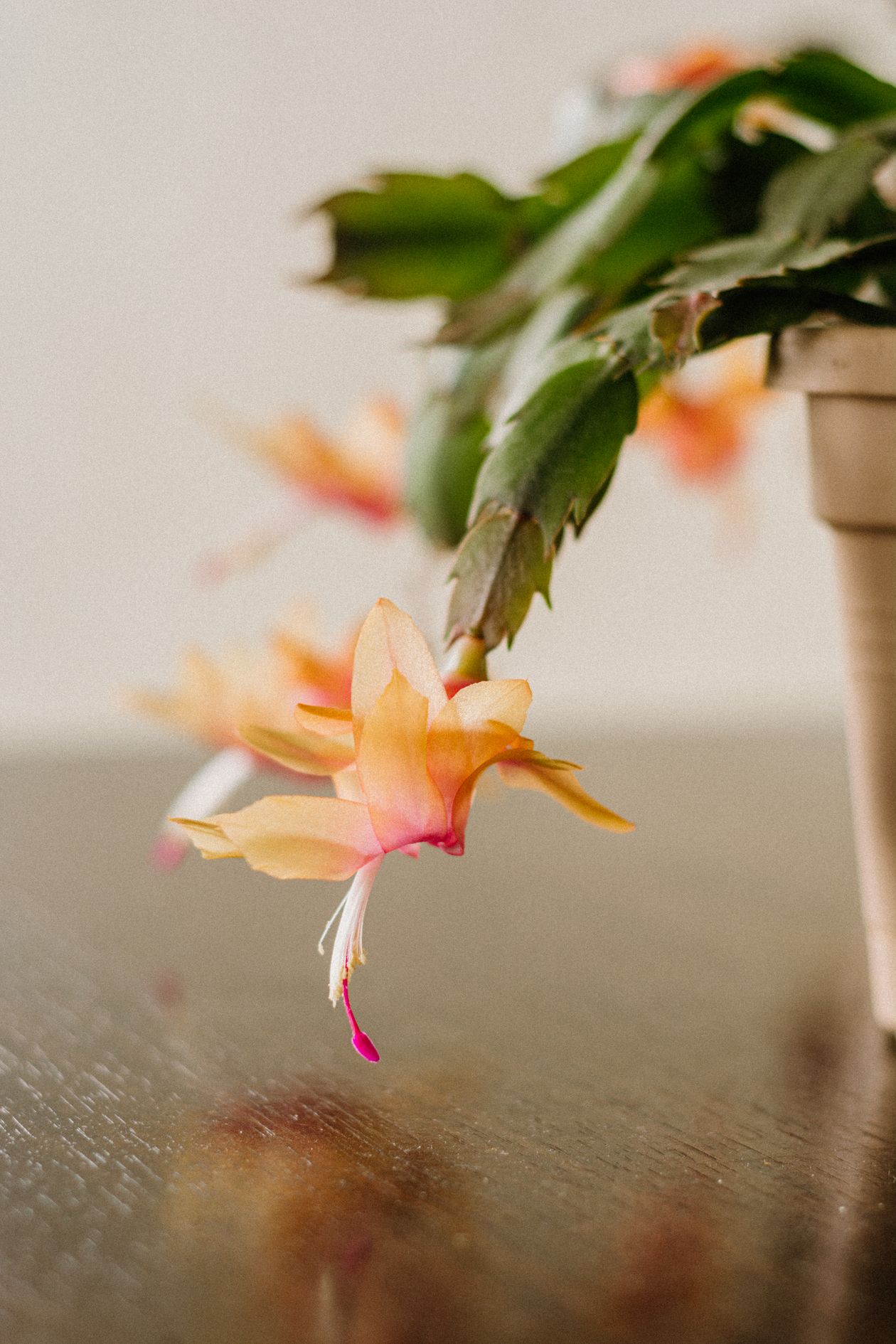
Photo: Nadiye Odabaşı / Pexels
Thanksgiving cactus (Schlumbergera truncata) is the holiday cactus that actually blooms for Thanksgiving, and it runs its whole year about a month ahead of the Christmas species. That shift changes the watering calendar: the dry rest that triggers bud set lands in September, the buds swell through October, and the plant needs steady, even moisture while it flowers in November, because a dry week at that stage drops buds by the handful.
Our guide to how often to water a Christmas cactus covers the sister species and its December calendar, and it says plainly that the Thanksgiving plant runs earlier. This page is the full system for truncata itself: the claw shaped stem segments that identify it, the month by month watering table, and the three causes of bud drop, of which watering is only one. The general houseplant rhythm in our houseplant watering chart does not apply here; this plant is run by the bloom calendar, not the finger test alone.
Interactive tool
Watering Schedule Calculator: Thanksgiving Cactus
Thanksgiving cactus runs on a bloom calendar: rest it dry in September, then keep it evenly moist from bud set through the November bloom or the buds drop. Enter your pot size and climate, and follow the September and post bloom settings in this guide rather than a generic houseplant rhythm.
19.9 gallons
For 32 square feet at 1 inch deep. That is about 76 liters, or 10 trips with a standard 2 gallon watering can.
A rain gauge or a straight sided can set in the bed tells you when a sprinkler or soaker hose has actually delivered this depth. Time alone is a guess, because hose pressure varies from house to house.
The conversion is arithmetic, not opinion: one inch over one square foot is 144 cubic inches of water, and a US gallon holds 231 cubic inches, so each square foot at one inch takes 0.62 gallons.
The year in water, month by month
Period
How often
Trigger
Purpose
March to August, growth
Every 7 to 10 days
Top 1 inch of mix dry
Build the segments that carry next fall's buds
September, the rest
Every 14 to 21 days, light
Top half of the pot dry
Cool nights plus dry soil trigger bud set
October, bud set
Every 7 to 10 days
Top 1 inch dry
Buds swell; keep moisture even from here on
November, bloom
Every 5 to 7 days
Top half inch dry
Even moisture holds the flowers; dry spells drop buds
December to February, after bloom
Every 2 to 4 weeks
Top half of the pot dry
Post bloom rest; the plant rebuilds quietly
Two disagreements in the care literature deserve a flag rather than a blend. Some popular sources, Bob Vila's site among them, suggest watering a holiday cactus as often as every 3 days; on a standard potting mix that rhythm keeps the roots wet enough to rot, and it contradicts the extension style guidance of watering when the top inch dries. The other split is the rest itself: some growers rest the plant in October for a December bloom, which is the Christmas cactus calendar applied to the wrong species. For truncata, September is the rest month. Follow the table for the plant you actually own.
Which cactus do you own? Read the segments
The watering calendars diverge because the species do, and the plants are sold under each other's names all season. Look at the flat stem segments. Thanksgiving cactus has pointed, claw like teeth along the segment edges, and its flowers are held more upright, flaring like a small trumpet. Christmas cactus (Schlumbergera bridgesii) has smooth, rounded segment edges and flowers that hang down. Easter cactus is a different genus entirely with bristled segments and star shaped spring flowers.
If your plant blooms in November and has claws, it is truncata regardless of what the tag said, and this calendar is yours. The claw test matters more than the label, because nurseries ship truncata hybrids for the whole holiday season and tag them with whichever name sells that month.
Bud drop: three causes, one of them water
Bud drop is the complaint that defines this plant, and watering causes only part of it. The first cause is a dry spell during bud swell: buds are expensive, and a plant that dries hard in October sheds them to protect itself. The fix is the even moisture row of the table, not a flood; swing the plant from dry to soaked and it drops buds for the opposite reason.
The second cause is movement. A holiday cactus in bud hates being relocated, rotated, or moved between rooms with different temperatures. Buy the plant in bud and it will drop some no matter what you do; the plant was raised in a greenhouse and your windowsill is a shock. The third cause is a warm room: buds set in cool nights, around 50 to 60 degrees Fahrenheit, and a plant kept at 75 degrees with dry indoor air stalls or sheds. Move it to the coolest bright room you have in September and October, away from heating vents.
Watering mechanics for a jungle cactus
Despite the name, Schlumbergera is a rainforest epiphyte that grows on tree branches in Brazil, so it wants the opposite of desert cactus treatment: a rich, airy mix, regular moisture in growth, and humidity it can feel. Water from the top until it drains, empty the saucer within half an hour, and never let the pot sit in water. In bloom, water smaller amounts more often rather than one heavy soak, because a saturated root ball in a cool room stays wet for days.
Feed monthly from April to August with a balanced houseplant fertilizer at half strength, and stop feeding when the September rest begins. Fertilizer during the rest pushes soft new segments instead of buds, which is the polite version of why a well fed plant can be all leaves in November.
After the bloom: the rest nobody gives it
The weeks after flowering are when the next year is decided. The plant is spent, and the instinct to nurse it with water and food is exactly wrong. Cut watering back to the December to February row of the table, hold fertilizer until April, and let the plant sit in bright indirect light. Prune in late spring, not now: twist off one or two segments at the joints to force branching, because every new segment tip is a future flower site. Those twisted off segments root easily in moist mix, which is how one plant becomes next year's gifts.
Light, humidity, and where the plant sits
Water works with two partners the schedule cannot replace. The first is light: bright, indirect light for most of the day, with the plant set back a few feet from a south window or directly in an east one. A holiday cactus in dim light grows pale, stretched segments and sets few buds no matter how perfect the September rest is, because bud set is paid for with the sugars of a well lit summer. The second partner is humidity. As a rainforest epiphyte, Schlumbergera appreciates the 40 to 60 percent humidity of a normal lived in room and resents the 15 percent air beside a heating vent or above a radiator. Grouping it with other houseplants, or standing the pot on a pebble tray, raises the local humidity enough to matter for bud retention; misting, again, does not.
Siting also settles the darkness requirement. Bud set responds to long, uninterrupted nights, roughly 12 to 14 hours of darkness, through the rest period. A plant on a bright kitchen counter under lights until midnight gets its nights broken nightly. The cool, bright room that hosts the rest should also be a dark one after dinner: a spare bedroom or an enclosed porch usually beats the family's living room on both counts, coolth and darkness, which is why so many successful holiday cactus plants live in the guest room.
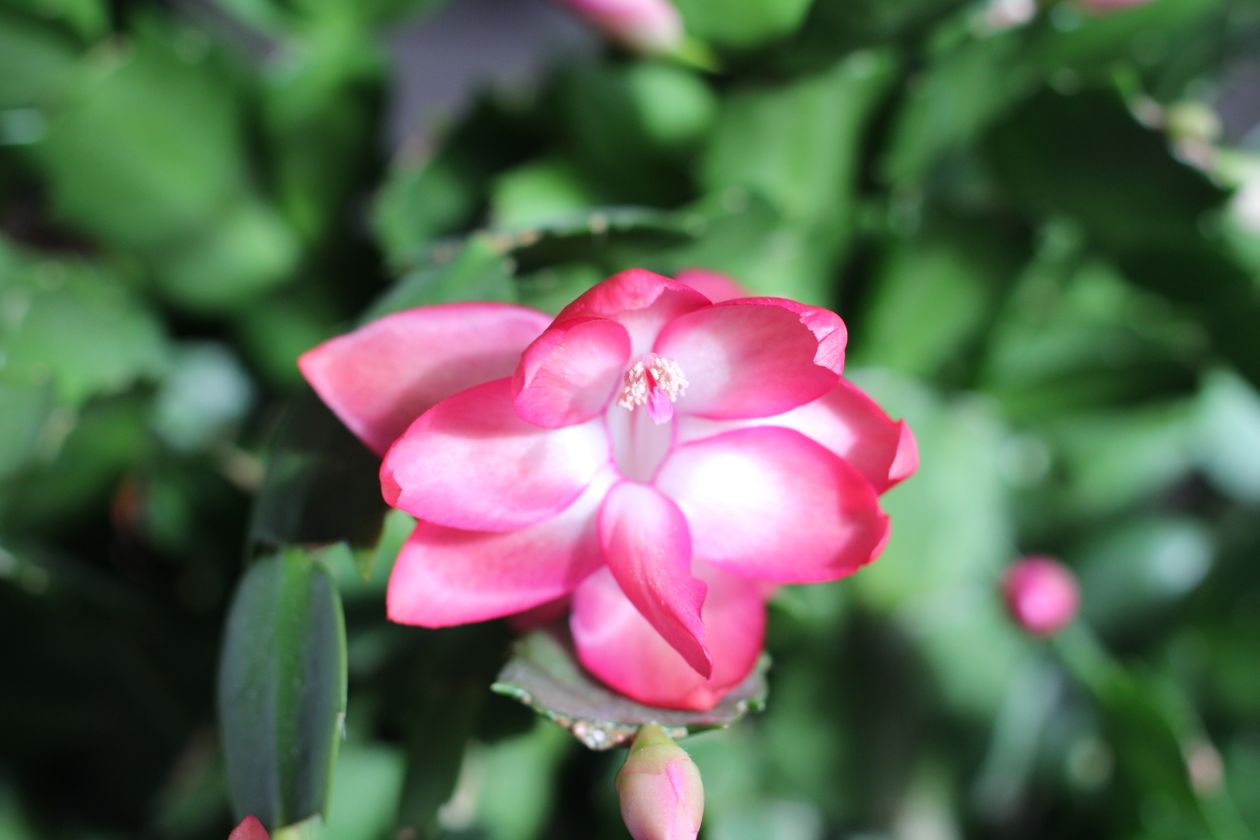
Pink holiday cactus flower with flat segmented green stems
Signs you are getting it wrong
Wrinkled, limp segments with dry mix mean the plant is thirsty; water and it plumps within a day. Mushy segment bases mean rot from wet mix, and the cure is surgery and a drier rhythm, not more drainage holes alone. Red or purple tinged segments usually mean too much direct sun or cold stress, not a watering fault. And a plant that grows beautifully but never buds is almost always missing the September rest or the cool nights that complete it.
How often do you water a Thanksgiving cactus in bloom?
Every 5 to 7 days, keeping the mix evenly moist without soaking it. Check the top half inch: if it is dry, water a moderate amount and drain fully. A hard dry spell during bloom is the top watering cause of bud drop, but a flooded root ball in a cool room causes the same loss, so the target is steady moisture, not maximum moisture.
When should I stop watering my Thanksgiving cactus to make it bloom?
You never stop entirely; you rest it. Through September, stretch the interval to every 14 to 21 days with light waterings, and pair the dry rest with cool nights around 50 to 60 degrees Fahrenheit and long, uninterrupted darkness. Buds should appear at the segment tips by October. Resume the regular rhythm when buds are visible, and keep it even from then on.
Why is my Thanksgiving cactus dropping buds?
Three causes cover nearly every case: a dry spell or a sudden flood while the buds swell, moving or rotating the plant after buds form, and a room that is too warm or full of dry heated air. Set the plant in its coolest bright spot in September, leave it there, and hold moisture even. Some drop on a newly bought plant is unavoidable; it was raised in a greenhouse.
Is my plant a Thanksgiving or Christmas cactus?
Read the stem segments. Pointed, claw like teeth on the edges mean Thanksgiving cactus (Schlumbergera truncata), which blooms in November and rests in September. Smooth, rounded edges mean the true Christmas cactus, which runs about a month later. Nurseries mix the names freely, so trust the claws and the bloom date, not the tag.
Should I repot a Thanksgiving cactus after it blooms?
Not right away, and not often. These plants bloom best slightly snug in their pots and resent disturbance. Repot in spring only when roots circle the drainage hole or the mix has collapsed, and go just one size up into a rich, airy mix. The post bloom months are for rest; spring is for pruning, propagating, and the rare repot.
Photo credits: Nadiye Odabaşı (Pexels); don hoang (Pexels). Photos are served from this site; follow the credit to the library page for the original.