Elephant bush is the succulent that fools people twice. Portulacaria afra, the small leaved South African shrub also called spekboom, looks delicate, all tiny round leaves on red stems, so it gets watered like a fern and rots. Or it gets treated like a cactus because it is sold with the succulents, parked in a dark corner, and dries to a twig. The plant itself resolves the argument if you read it: it stores water in those small leaves and in its stems, and the leaves report the tank level honestly. Plump, glossy, firm leaves mean the tank is full. Leaves that have gone slightly dull and give a little under a gentle squeeze mean the tank is low and it is time. This page teaches that reading, sets the soil test beside it, and gives the seasonal intervals the two tests produce.
Home / Gardening Basics for Beginners
How Often to Water Elephant Bush: Read the Leaves, Then the Soil
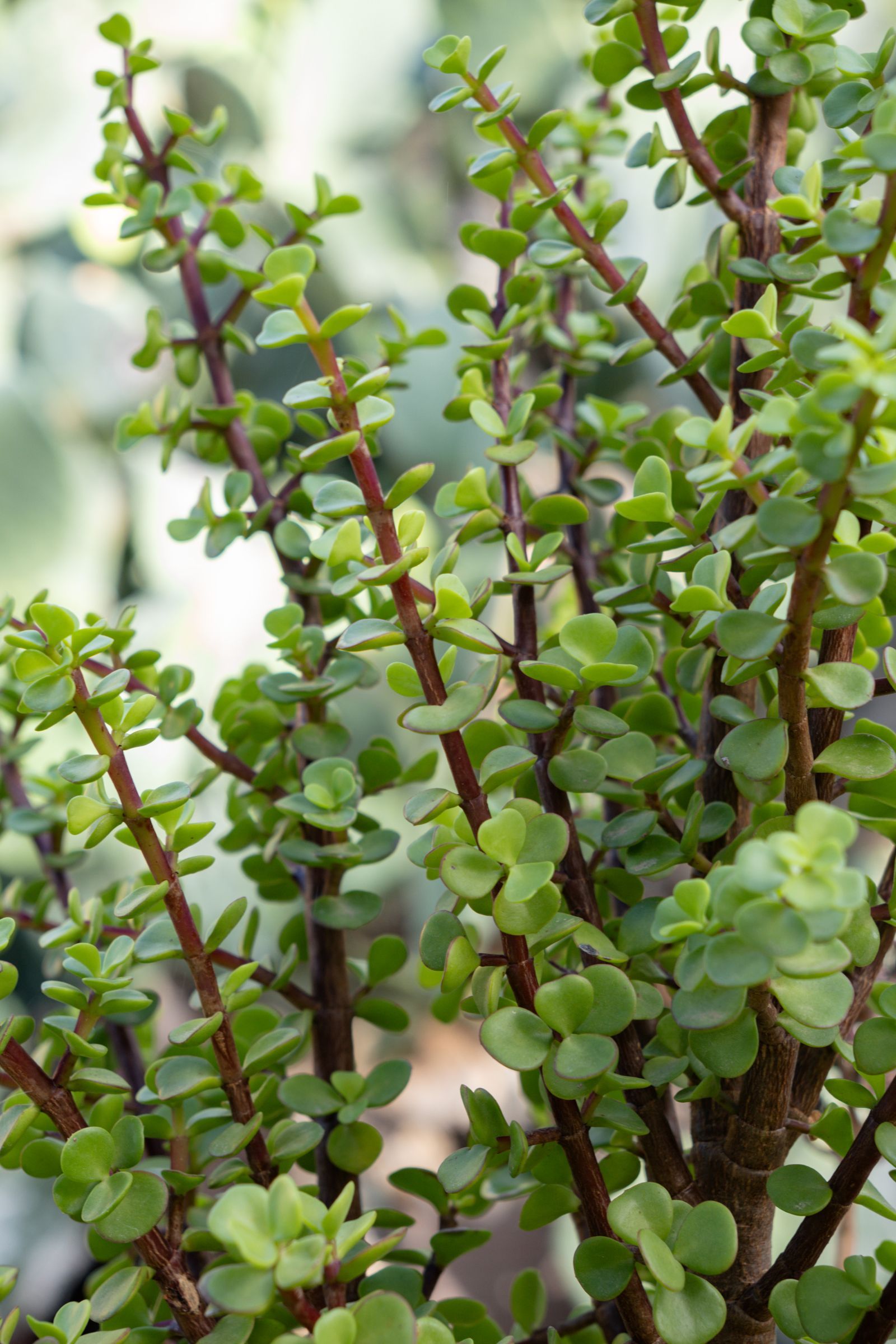
Photo: Liisbet Luup / Pexels
Watering Calculator: The Elephant Bush Pot Audit
Elephant bush stores its water in its leaves and tells you its thirst by their plumpness. Enter your pot diameter as both length and width below and a depth of about 1 inch to size one soak, then check the top 2 inches and the leaf gauge in this article first.
19.9 gallons
For 32 square feet at 1 inch deep. That is about 76 liters, or 10 trips with a standard 2 gallon watering can.
A rain gauge or a straight sided can set in the bed tells you when a sprinkler or soaker hose has actually delivered this depth. Time alone is a guess, because hose pressure varies from house to house.
The conversion is arithmetic, not opinion: one inch over one square foot is 144 cubic inches of water, and a US gallon holds 231 cubic inches, so each square foot at one inch takes 0.62 gallons.
The Two Tests: Leaves First, Soil Second
The soil test is the standard one for a storage plant: water only when the top 2 inches of mix are dry, checked with a finger or a skewer. The leaf test is the refinement that makes this species easy. A day or two before the plant is truly thirsty, the leaves lose their tight shine and feel fractionally soft rather than drum tight. That is the moment to water, and watering then, deeply, keeps the plant from ever reaching the stress signals below. In a typical pot in a bright room in growth, the two tests line up at about every 2 to 3 weeks. In winter, with growth paused and light low, they line up at about every 3 to 4 weeks, and in a cool rest the plant can go longer; a plant that still shows plump leaves at week four does not need water just because the month turned. When the tests disagree, believe the leaves in winter and the soil in summer: a plant can sit in dry mix with full tanks for a while, but a plant showing soft leaves over damp mix has a root problem, not a watering appointment.
| Season | Soil test | Leaf sign | Typical interval |
|---|---|---|---|
| Spring and summer growth | Top 2 in dry | Just off full plumpness | Every 2 to 3 weeks |
| Fall slowdown | Top 2 in dry, deeper as nights cool | Slightly soft | Every 3 weeks or so |
| Winter rest | Dry most of the way down | Soft and dull before watering | Every 3 to 4 weeks, sometimes longer |
| Outdoor pot in summer heat | Top 2 in dry | Watch weekly | Every 1 to 2 weeks |
The Leaf Drop Ambiguity, Resolved
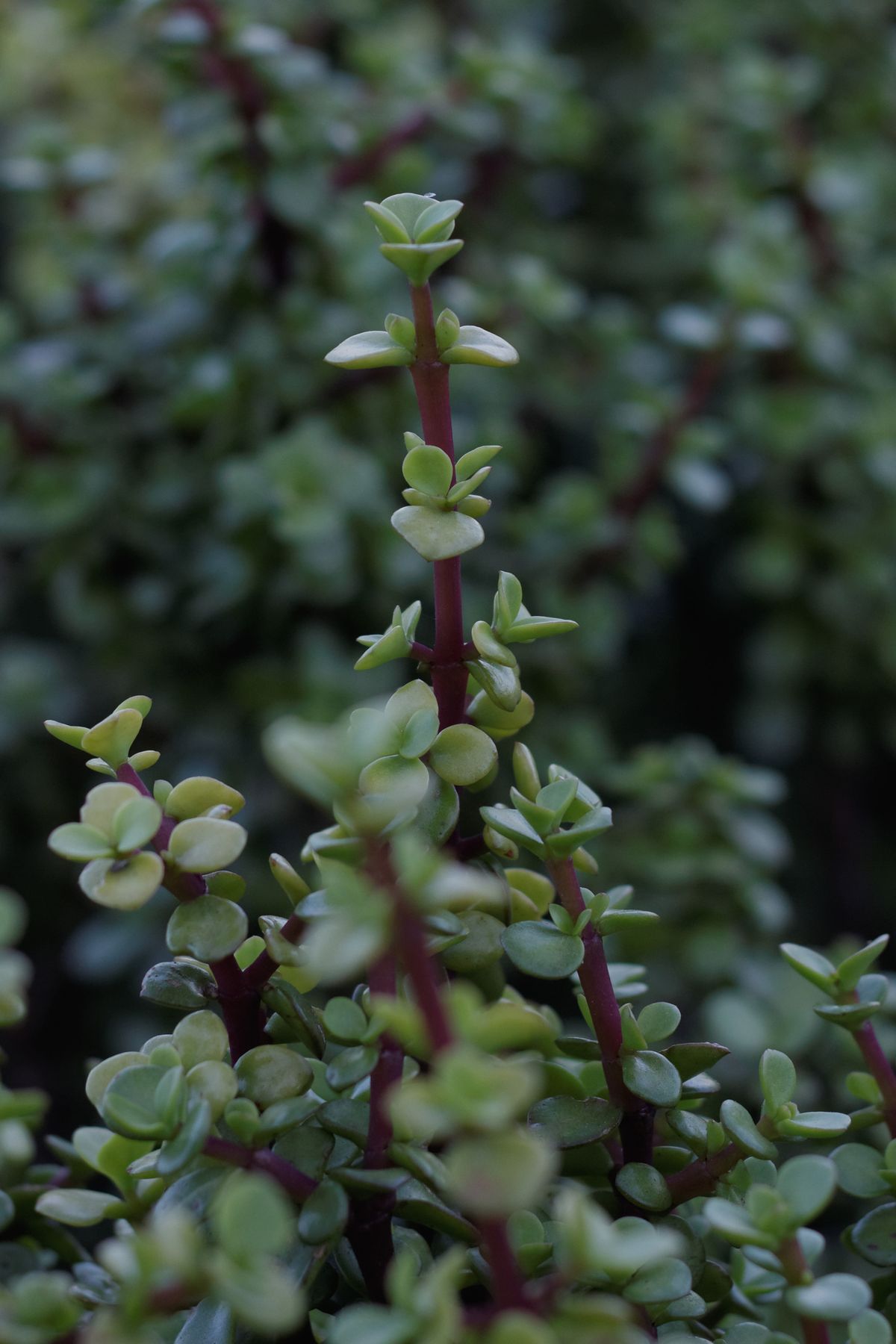
Elephant bush drops leaves under both drought and drowning, which is the trap that kills it in careful homes: the plant sheds, the owner reads thirst, waters a plant whose roots are already gone, and finishes it. The two drops look different if you read the whole plant. A thirsty plant drops leaves that are wrinkled and dry, from a plant whose remaining leaves are thin and dull, standing in mix that is dry all the way down. Water it deeply and it recovers within days. A drowning plant drops leaves that are plump, sometimes yellowing or translucent, from a plant standing in mix that is still damp, often with stems going soft at the base. That plant needs the opposite of water: unpot it, shake off the wet mix, cut any black or mushy root and stem back to firm tissue, let it dry for a few days, and repot into dry, gritty mix, waiting a week before the first light drink. The 10 second diagnosis is a finger in the mix before any other decision. Dry mix plus dropped leaves means water. Damp mix plus dropped leaves means surgery.
Soak, Drain, and the Pot Rules
When you water, water completely: pour slowly until the whole root ball is wet and water runs from the drainage holes, then let the pot drain fully and empty any saucer. Elephant bush roots are fine and dense, and a half hearted drink wets a shell of mix around a dry core, which trains the roots into the shell and makes the plant more fragile, not less. The pot rules are the usual storage plant rules, and they are not optional: a drainage hole, a gritty mix at least half mineral so the dry down actually completes, and no cache pot holding runoff against the base. Terracotta suits this plant especially well outdoors and in humid houses, because it shortens the wet phase of every cycle. In a glazed or plastic pot, stretch the interval rather than shrinking the soak; the error is never the size of the drink, only its frequency.
Light, Bonsai, and the Outdoor Summer
Water demand follows light more than any other variable for this species. Indoors on a bright sill, the 2 to 3 week growth rhythm holds. In low light the plant drinks slowly, stretches soft and leggy between the leaves, and wants water at the winter rhythm all year, which is a sign the plant needs a better window, not a better calendar. Elephant bush is also a classic bonsai subject, and the bonsai case tightens everything: a shallow bonsai pot in gritty soil can dry its top 2 inches in a few days in summer, so the tests run more often while the method stays identical. Outdoors for the summer, which this plant loves, a pot in full sun and wind may want water every 1 to 2 weeks, and in ground plants in hot, dry country are famously drought proof once established. Bring the plant in before frost; it has no cold tolerance to speak of, and a single hard freeze turns the stems to mush more completely than any watering error.
The Jade Confusion and the Cuttings Question
Because elephant bush is forever mistaken for jade, and the two share benches in garden centers, the watering overlap and the differences deserve one direct paragraph. Both are southern African succulent shrubs on a soak and dry rhythm, and a jade schedule will not kill an elephant bush. The differences are tempo and tolerance. Elephant bush grows faster, drinks a little more in growth, and shows thirst earlier in the leaves, which is why its rhythm sits at 2 to 3 weeks against jade's longer drought tolerance. It also tolerates markedly less cold and less root disturbance. Cuttings follow the mother plant's rules with one adjustment: an unrooted cutting has no roots to drink with, so it is set on barely moist mix and misted rather than soaked, and the first true soak waits until roots resist a gentle tug, usually a few weeks. Watering a fresh cutting on the adult schedule rots the buried stem before roots form, which is the one systematic exception to the soak rule on this page.
Feeding, Pruning, and Pet Safety
Feed lightly if at all: a half strength balanced feed two or three times across the growing season is plenty for a plant evolved for poor soils, and a fed plant in low light just grows softer. Pruning is the shaping tool and the propagation source at once; stem cuttings root readily after a few days of drying, set on barely moist gritty mix, and they want the same leaf reading once rooted. The leaf drop diagnosis applies to cuttings too, with one exception: a fresh cutting dropping a few leaves while it roots is normal and is not a watering instruction. For pet households, elephant bush is a friendly choice: Portulacaria afra is listed as non toxic to cats and dogs by the ASPCA, and it is eaten by considerably larger animals than cats in its native range, which is where the elephant in its name comes from. A nibbled plant is a pruning event, not an emergency.
Related guides
These related guides round out the picture:
- How Often to Water a Jade Plant: Read the Leaves, Not the Calendar
- How Often to Water Elephant Ears: It Depends Which Genus You Bought
- How Often to Water Kalanchoe: Watering for Blooms, Not Just Leaves
- How Often to Water an Orchid: The Root Color Read, the Soak and Drain, and the Ice Cube Verdict
- How Often to Water Bromeliads: The Cup Rule, the Weekly Flush, and the Soil as the Second Drink
Frequently Asked Questions
How often should I water an elephant bush?
In growth, when the top 2 inches of mix are dry and the leaves have just lost their hardest plumpness, which usually works out to every 2 to 3 weeks in a bright room. In winter, stretch it to every 3 to 4 weeks or longer, and let the leaves make the call: plump leaves mean the plant is still spending its stored water and does not need more.
Why is my elephant bush dropping leaves?
Read the mix before you act. Leaves dropping from a plant in dry mix, with the remaining leaves thin and wrinkled, mean thirst: soak it deeply. Plump or yellowing leaves dropping from a plant in damp mix mean root rot: unpot, cut back to firm tissue, dry the plant for a few days, and repot into gritty mix. The same symptom means opposite things, and the finger test tells them apart in seconds.
Can elephant bush go a month without water?
Yes, in winter or in a cool, dim rest it commonly does, and a large plant with thick stems can go longer on its stored water. The leaves are the gauge: as long as they stay plump and glossy, the plant is fine. Water when they turn dull and slightly soft, and do not water a plump plant just because a month has passed.
Is elephant bush the same as a jade plant?
No, though they are constantly confused. Jade is Crassula ovata, with larger, thicker, egg shaped leaves. Elephant bush is Portulacaria afra, with much smaller, rounder leaves on reddish stems. The care is similar, soak and dry on a multi week rhythm, but elephant bush wants slightly more frequent water in growth and considerably less cold than jade tolerates.
Is elephant bush safe for pets?
Yes. The ASPCA lists Portulacaria afra as non toxic to cats and dogs. It is a traditional food plant for elephants and tortoises in South Africa, so a cat chewing a stem is a cosmetic problem for the plant, not a poisoning risk for the cat.
Photo credits: Liisbet Luup (Pexels); Annari du Plessis (Pexels). Photos are served from this site; follow the credit to the library page for the original.