Ask how often to water a philodendron and the honest answer is that the genus contains two different plants wearing one name. A heartleaf philodendron trailing from a small pot and a self-heading giant with a crown of leaves a foot across both answer to philodendron, both run on the same moisture test, and they reach that test days apart. Most care advice prints one interval, every 7 to 14 days, top 1 to 2 inches dry, and stops. The interval is fine as far as it goes; what it misses is the habit split, which Iowa State Extension builds into its guidance by treating the climbing types separately from the self-heading ones. This page runs the single test properly, then splits it: climbers first, self-heading types second, with Xanadu placed where it belongs, in the self-heading bench, since the xanadu name variant folds into this article rather than standing alone.
Home / Gardening Basics for Beginners
How Often to Water Philodendron: One Test, Two Habits, and Where Xanadu Fits
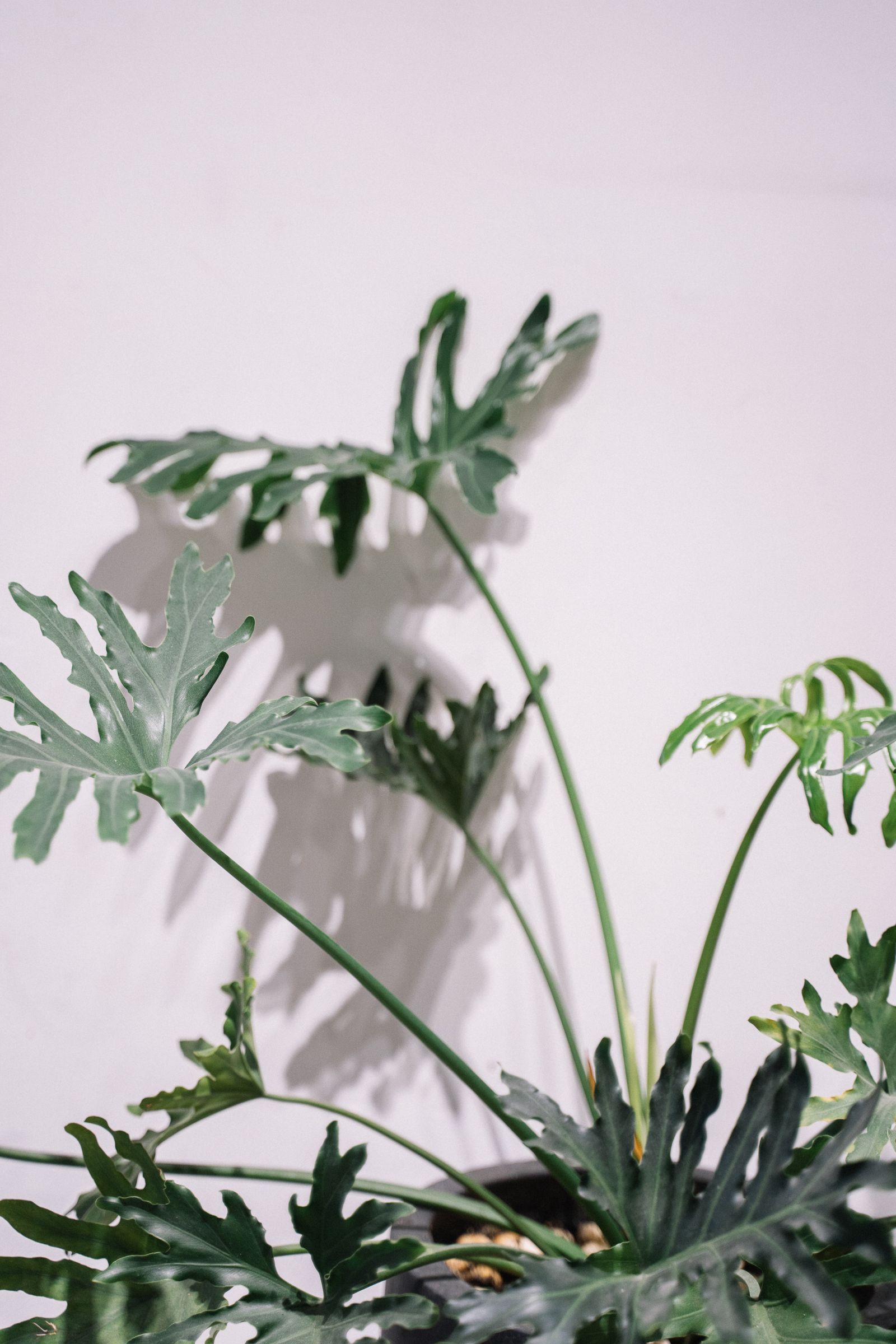
Photo: Anna Tarazevich / Pexels
Watering Calculator: The Philodendron Pot Audit
Both philodendron habits run on the same test, the top 1 to 2 inches dry, but climbers in small pots reach it days before self-heading types in big ones. Enter your pot diameter as both length and width below and a depth of about 1 inch to size the soak, then read the habit split in this article for your interval.
19.9 gallons
For 32 square feet at 1 inch deep. That is about 76 liters, or 10 trips with a standard 2 gallon watering can.
A rain gauge or a straight sided can set in the bed tells you when a sprinkler or soaker hose has actually delivered this depth. Time alone is a guess, because hose pressure varies from house to house.
The conversion is arithmetic, not opinion: one inch over one square foot is 144 cubic inches of water, and a US gallon holds 231 cubic inches, so each square foot at one inch takes 0.62 gallons.
The One Test: Top One to Two Inches Dry
Every philodendron on this page is watered the same way. Push a finger into the mix, and water when the top 1 to 2 inches are dry, then water thoroughly, until water runs from the drainage holes, and empty the saucer. The range in the test, 1 to 2 inches, is itself the habit adjustment in miniature: use the 1 inch end for climbing types in small pots, which dry fast and resent hard drying, and the 2 inch end for self-heading types in large pots, whose crowns shade the mix and whose root balls hold a deep reserve. In a typical room the test produces an interval of about every 7 to 10 days for a climber in a 6 inch pot and every 10 to 14 days for a self-heading plant in a 10 or 12 inch pot, longer in winter for both. The audit above sizes the thorough drink for your pot. The calendar figures are what the test usually finds; the test is the rule.
The Climbing Bench: Heartleaf and the Pole Problem
Climbing philodendrons, heartleaf foremost among them, live in smaller pots relative to their size, grow fast in good light, and empty their tanks quickly. Watered on the self-heading interval, a heartleaf in a 6 inch pot spends its last days before each drink properly dry, and the symptoms creep in: slower growth, smaller new leaves, and a plant that looks fine but never quite thrives. The climber's other wrinkle is the moss pole. A pole that is kept moist is a second water supply the roots grow into, and a pole allowed to dry to a crisp is a decoration the aerial roots ignore. If your climber is on a pole, keep the pole damp as part of the watering routine, misting or pouring through it at pot watering time, and count the pole as part of the plant's water budget. Trailing climbers in hanging baskets dry fastest of all, sitting high in warm air, and want the test run most often.
The Self-Heading Bench: Big Crowns, Deep Reserves, and Xanadu
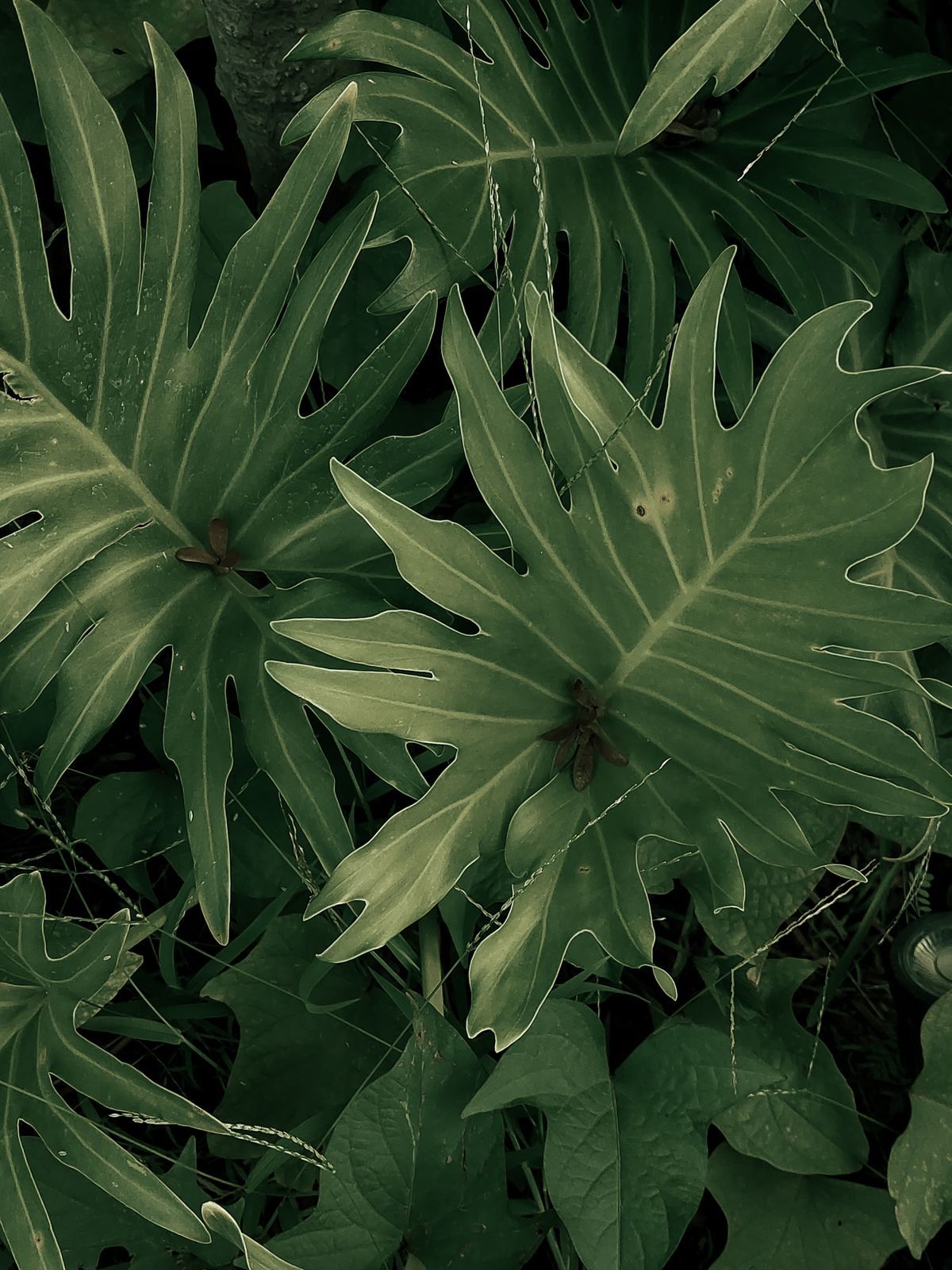
Self-heading philodendrons grow as a crown rather than a vine: leaves rise from a central base, the plant gets wide and heavy, and the pots are correspondingly large. These plants hold water. The mix surface can read dry while the root ball at depth is still moist, which is why the 2 inch end of the test, or a skewer check below it, belongs to this bench. Xanadu sits here. Sold for years as Philodendron xanadu and now classified as Thaumatophyllum xanadu, it is a self-heading plant with deeply lobed leaves, and it waters exactly like its bench mates: top 2 inches dry, thorough soak, longer intervals in bigger pots. One warning belongs to this bench in bold. NC State's guidance for Philodendron bipinnatifidum, the big self-heading tree philodendron, states that it does not tolerate drought. The self-heading interval is longer because the reserve is bigger, not because the plant enjoys being dry; let a self-heading plant go bone dry through the whole pot and it sulks, drops lower leaves, and takes weeks to forgive you. Longer between drinks, never drier at the bottom line.
Light, Pot, and Season Adjustments
Habit sets the bench; conditions set the day. Light is the strongest adjustment after pot size: a philodendron in bright indirect light photosynthesizes and drinks at full rate, while the same plant in a low light corner survives on a fraction of the water, and watering the dim corner plant on the bright sill schedule is a reliable way to rot it. This is also why a plant moved to a better window suddenly seems thirstier; it is, and the test will show it within one cycle. Pot material runs the usual direction, terracotta faster, plastic and glazed ceramic slower. Winter stretches both benches as growth slows, and the correct winter move is to let the test take longer, not to reduce the size of the drink when it comes. Fertilizer rides along in the growing season at label strength for houseplants; a salted pot shows as brown leaf edges that mimic underwatering, and the monthly heavy flush that carries salts out is the fix, with the saucer emptied afterward as always.
Mix and Repotting: Keeping the Test Honest
The finger test only reads honestly in a mix that behaves, and philodendrons want an airy one: a peat or coir based potting mix opened up with bark and perlite, so water runs through freely and air stays in the profile between drinks. A dense, compacted mix breaks the test in both directions, staying soggy at the bottom while the surface dries, so the finger says water while the roots are already drowning. If a pot takes a long time to drain, or water pools on the surface before soaking in, the mix has collapsed and repotting is a watering fix, not a cosmetic one. Repot in spring, one size up, when roots circle the bottom or emerge from the drainage holes. Going up one size matters for water as much as for growth: an oversized pot holds a large volume of mix with no roots in it, that mix stays wet for weeks, and the plant sits in a swamp of its owner's good intentions. A rootbound plant at the other extreme drinks its whole tank in days and needs the test run constantly; that, too, is a repotting signal. After repotting, water thoroughly once to settle the mix around the roots, then return to the test, expecting the interval to lengthen as the new volume comes online.
Pet Safety
The ASPCA lists heartleaf philodendron as toxic to dogs, cats, and horses, and the listing extends across the genus's common houseplant types. The toxins are insoluble calcium oxalates, the same crystal chemistry as dieffenbachia, and chewing produces oral irritation, drooling, and vomiting. Placement is the control: trailing climbers are the exposure risk, because their leaves hang exactly at browsing height for a cat on furniture, so hang them genuinely high or keep them in rooms pets do not use. Self-heading plants put most foliage up and out of easy reach as they mature, but a young plant on a low stand is as chewable as any other. Fallen leaves get picked up promptly, and a pet that has chewed a leaf and is drooling or off its food needs a veterinarian's advice.
Related guides
These related guides round out the picture:
- How Often to Water Lavender: Three Plants in One Question
- Best Plants for Beginners: Decide Where It Lives First
Frequently Asked Questions
How often should I water a philodendron?
When the top 1 to 2 inches of mix are dry, water thoroughly until it drains, then empty the saucer. Use the 1 inch end of the test for climbing types in small pots and the 2 inch end for self-heading types in large pots. In a typical room that is about every 7 to 10 days for a heartleaf in a 6 inch pot and every 10 to 14 days for a big self-heading plant, longer in winter.
How do I water a philodendron xanadu?
The same way as the other self-heading types, because that is what it is: Xanadu, now classified as Thaumatophyllum xanadu, grows as a crown, not a vine. Let the top 2 inches dry, soak thoroughly, and expect a longer interval than a climbing philodendron in a similar sized pot, since the crown shades the mix and the root ball holds a deep reserve. Do not let the whole pot go bone dry; its close relative Philodendron bipinnatifidum is noted by NC State as not tolerating drought, and xanadu shares the family temperament.
Why is my heartleaf philodendron growing slowly with small leaves?
Chronic underwatering is the first suspect. Climbers in small pots dry fast, and an interval borrowed from generic advice, or from a self-heading plant, leaves a heartleaf dry for days before each drink. Run the test at the 1 inch end, water thoroughly when it says so, and check whether a moss pole, if you use one, is being kept damp; a dry pole is a water supply the plant cannot use.
Can I water my philodendron on a fixed weekly schedule?
You can, and in a stable room it will roughly track the test for part of the year. The failure arrives with the seasons and with moves: winter light cuts the plant's drinking, a brighter window raises it, and a fixed schedule notices neither. The finger test takes ten seconds and adjusts automatically. Use the schedule as a reminder to check, not as the decision itself.
Is philodendron safe around pets?
No. The ASPCA lists heartleaf philodendron as toxic to dogs, cats, and horses, due to insoluble calcium oxalates that irritate the mouth and cause drooling and vomiting when leaves are chewed. Keep trailing types hung genuinely out of reach, place young self-heading plants off low stands, and clear fallen leaves promptly.
Photo credits: Anna Tarazevich (Pexels); Victor Cayke (Pexels). Photos are served from this site; follow the credit to the library page for the original.