The miniature rose is the most gifted and most mourned plant in the florist trade. It arrives in a pretty foil sleeve, covered in perfect tiny blooms, and within a month it is a bare twig farm dropping yellow leaves on the counter. The obituary usually blames the keeper, and the keeper is usually innocent. A gift mini is not one plant: it is typically 3 to 4 rooted cuttings grown cheek by jowl in a 4 inch pot, forced into bloom under greenhouse light and feeding, then shipped, shelved under store fluorescents, and sold as a bouquet that happens to have roots. Your kitchen offers it a tenth of the light it was raised in, a foil wrapper that holds water against a pot with no drainage, and four root systems competing in a teacup of mix. The checklist tracker on this page runs the rescue in order, because order is the point: the plant does not need more care, it needs its circumstances changed, once, decisively, in the first week.
Home / Flowers and Houseplants
How to Care for Mini Roses: Rescuing the Gift Plant
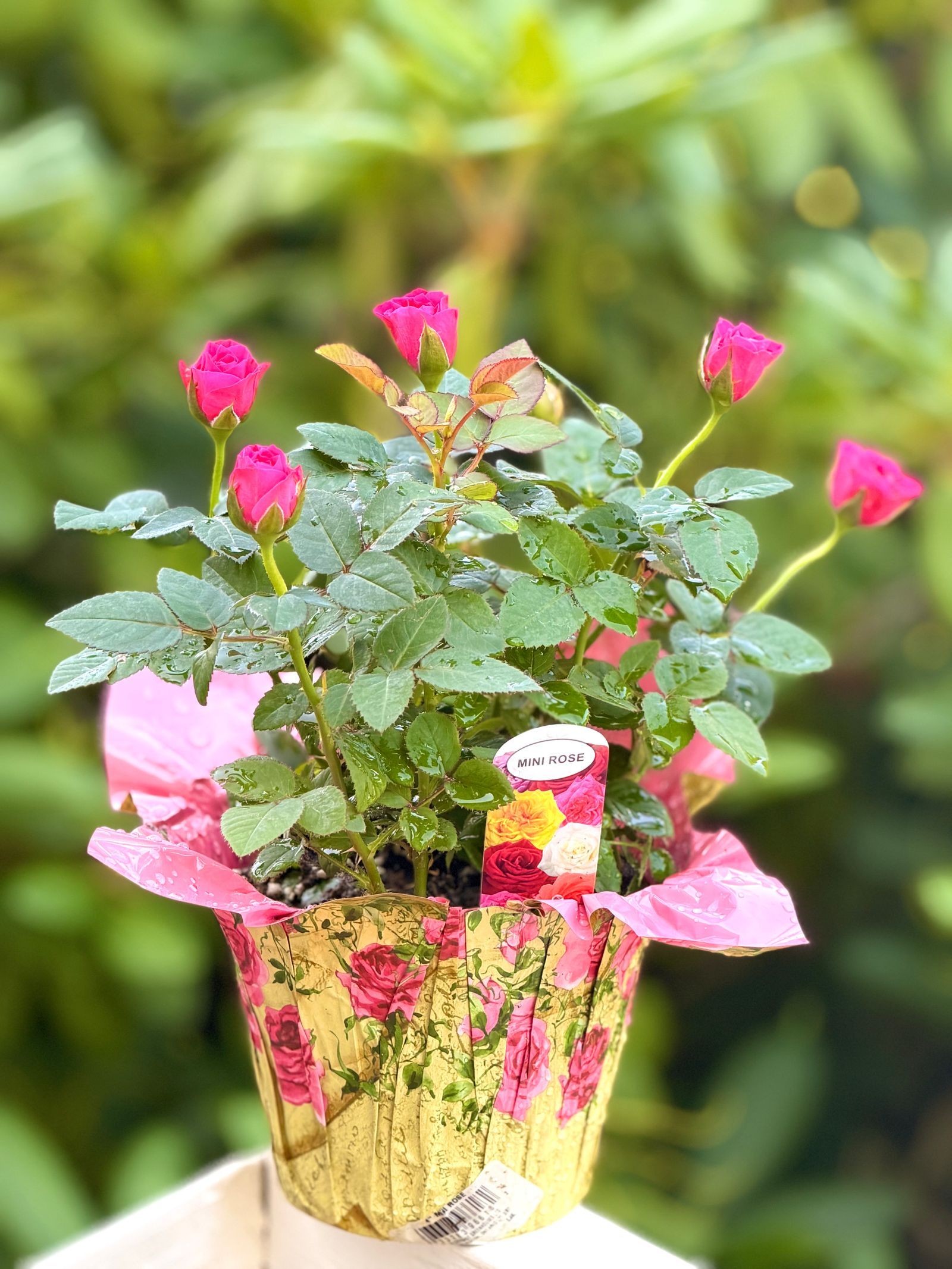
Photo: Richa Varshney / Pexels
Mini Rose Rescue Checklist
Check off each step as you finish it. Your progress stays on this page.
0 of 8 complete
0% done
The First Week: Unwrap, Inspect, Repot
Start with the foil. Remove the decorative sleeve the day the plant comes home and never water the plant sitting in it again, because the sleeve is a reservoir that keeps the mix permanently wet at the base, and wet bases are where the decline starts. Tip the plant out and look at what you actually own: count the separate stems rising from the mix, and expect 3 or 4 individual plants. You have two honest choices. Keep them together and repot the whole group one size up, accepting a crowded but simpler life, or separate them, teasing the root balls apart gently, and pot each cutting on its own, turning one dying gift into 3 or 4 viable plants. Separation is the better rescue and the braver one; do it while the mix is moist, expect some root tearing, and pot the divisions into 5 to 6 inch pots of free draining mix with a drainage hole, non negotiable this time. Water the repotted plants in at the base, set them in the brightest light you have, and cut away any dead or yellowing stems to clean wood. Illinois Extension's rose guidance supplies the ongoing benches the sections below build on: water at the base rather than over the foliage, water when the mix begins to dry, and soak until water drains, the rhythm that keeps rose foliage diseases at bay.
Light: The Six Hour Requirement
Everything else in mini rose care is negotiable except light. A miniature rose is a true rose, bred small, not bred shade tolerant, and it wants what the garden roses want: 6 or more hours of direct sun a day. A south or west window in winter, a sunny patio from spring through fall, or a grow light on a 14 hour timer are the realistic indoor options; the average living room's bright indirect light, which suits a pothos, starves a rose slowly, and the starvation looks like the decline the owner was already blaming on water. Leggy growth, lengthening gaps between leaves, pale foliage, and buds that form and blast without opening are the light hunger reports, in roughly that order. If the plant must live indoors year round, the grow light is not an accessory but the price of admission, set 6 to 12 inches above the plant. Rotate the pot a quarter turn weekly so the canopy grows evenly, and expect an indoor mini to rest, holding leaves without blooming, through the darkest weeks even under good light; that rest is normal and is not a watering problem to solve.
Water and Air: Base Watering and the Mite War
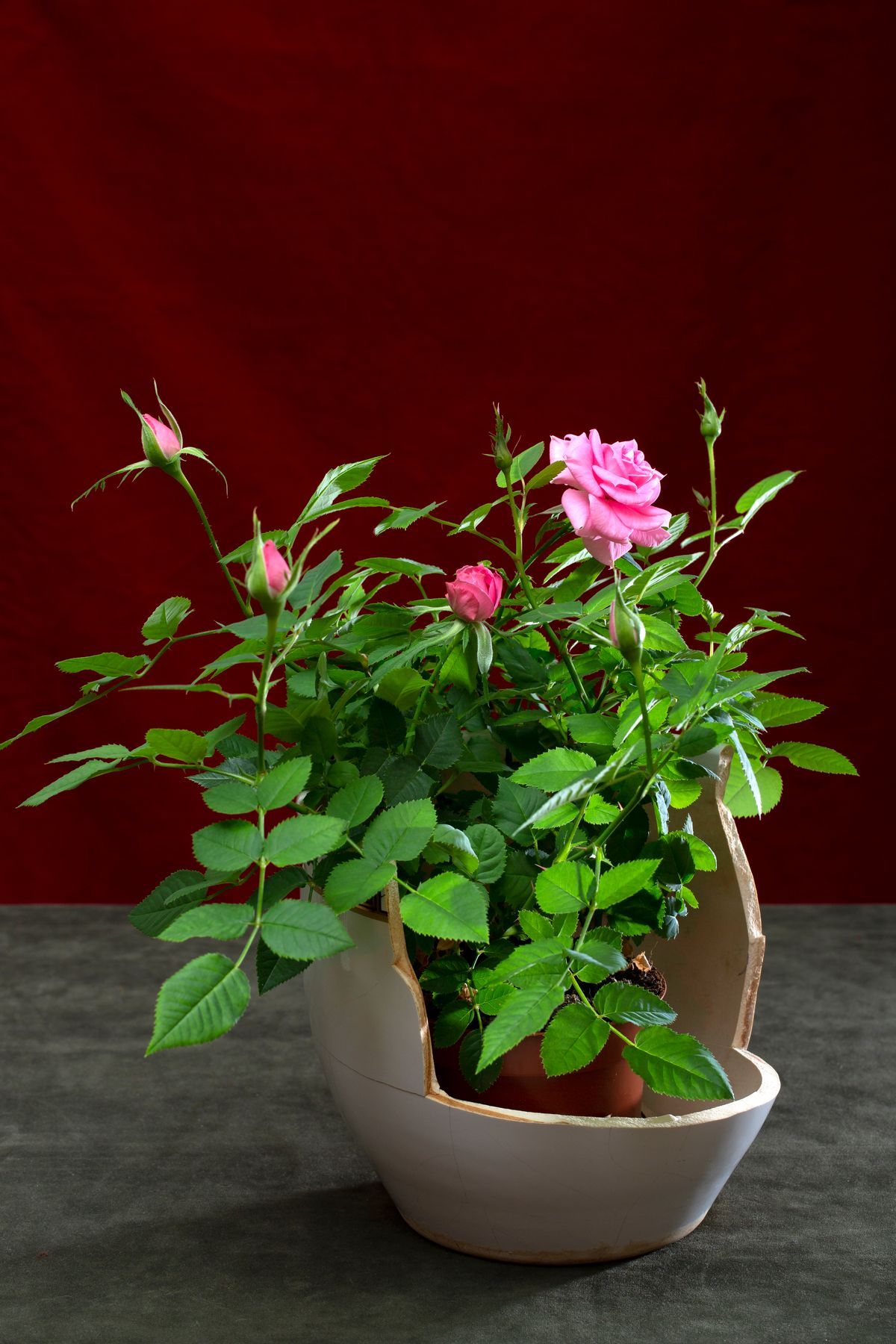
Water a mini rose the rose way: at the base, in the morning, when the top inch of mix has dried, soaking until water runs from the drainage hole, then emptying the saucer. The base rule exists because wet rose foliage is an invitation, and the two diseases that answer, black spot and powdery mildew, are the mini's constant companions indoors where air is still. Air movement is the second half of the defense: a small fan in the room, or simply not crowding the plant into a corner of other plants, drops the disease pressure more than any spray. The pest that owns this plant is the spider mite, a nearly invisible sap sucker that thrives in hot, dry indoor air and announces itself as a fine stippling on the leaves, then a faint webbing under them, then a plant that looks dusty and tired. Check the undersides of leaves weekly with a hand lens or by tapping a leaf over white paper and watching for moving specks. At the first sign, take the plant to the sink and blast the undersides with water, repeat every few days for 2 weeks, and raise the humidity around the plant; mites beaten early rarely need chemistry, and mites discovered late, on a webbed plant, usually take the plant with them.
Feeding, Deadheading, and the Outdoor Summer
A mini rose in active growth is a small, hungry rose. Feed every 2 weeks in the growing season with a balanced houseplant or rose fertilizer at half the label strength, and stop when growth stops in fall; feeding a resting plant in wet winter mix salts the roots and feeds nothing. Deadhead as each bloom fades, cutting back to the first strong five leaflet leaf, which is where the next flowering stem will break; a mini left wearing its dead flowers spends its energy on hips it was never meant to carry indoors. The single best gift you can give the plant is a summer outdoors: after the last frost, move it, in its pot or planted into a bed, into full sun, where light, air, and rain do in 3 months what a year of windowsill care cannot, and expect it to double in size and bloom in waves. Bring pot grown plants back in before the first frost, checking them hard for mites and aphids at the door, since the pests you import in September are the infestations of January. Planted in the ground in zones where it is hardy, many minis survive winter outdoors under mulch and return as tidy 12 to 18 inch shrubs, which is what they always were: not houseplants by nature, but garden roses in miniature, temporarily indoors.
Pruning, Training, and the Shape of the Year
A mini rose prunes like any rose, at a smaller scale and with finer tools. In late winter or early spring for outdoor plants, and at the indoor plant's spring move into growth, remove dead and weak wood entirely, cut out any stem thinner than a pencil that crowds the center, and shorten the remaining canes by about a third to an outward facing bud, which opens the plant to the air its foliage diseases hate. Indoor plants grown under lights need the same shaping whenever they finish a bloom cycle and start pushing uneven growth; a mini allowed to grow unpruned under a lamp becomes a thicket of thin stems that bloom at the top and bare out below. Training is minimal but real: rotate the pot weekly for even growth, stake nothing, and pinch the soft tip of any single runaway shoot to force it to branch, the same pinch that makes a garden rose bushy at one tenth the size. Repot every year or two in spring, teasing out a third of the old mix and refreshing it, because a mini in exhausted, compacted mix drinks badly no matter how carefully it is watered, and many a plant diagnosed as fussy is simply a plant standing in worn out soil. The shape of the year, then, is rest in the dark months, a spring prune and repot, a summer of sun and feeding, and a fall cleaning before the plant comes back inside.
Related guides
More from the same bed, bench, and border:
Frequently Asked Questions
Why is my mini rose dying after a few weeks?
Usually because of how it was sold, not how you kept it. Most gift minis are 3 to 4 cuttings crowded in one small pot inside a foil sleeve with no drainage, raised under greenhouse light. Remove the foil, repot into a pot with drainage, or separate the cuttings into their own pots, and give the plant 6 or more hours of direct sun. That rescue, done in the first week, saves most of them.
How often should I water a miniature rose?
When the top inch of mix has dried, water at the base until it drains, then empty the saucer. In a sunny window in growth that is roughly every 3 to 5 days; in winter rest, weekly or less. Never water over the foliage if you can help it, and never let the pot sit in a water holding sleeve or saucer.
How much light does a mini rose need indoors?
Six or more hours of direct sun, the same as a garden rose. A south or west window can do it in the brighter months; in winter or in most rooms, a grow light 6 to 12 inches above the plant on about 14 hours a day is the reliable answer. Leggy growth and buds that blast without opening are the plant reporting light hunger.
What are the tiny webs under my mini rose's leaves?
Spider mites, the signature pest of indoor roses, thriving in hot dry air. Blast the undersides of the leaves with water at the sink, repeat every few days for 2 weeks, and raise humidity around the plant. Check leaf undersides weekly so you catch them at the stippled leaf stage, before the webbing stage, when they are much harder to beat.
Can a mini rose live outside permanently?
In many climates, yes. Most minis are hardy small shrubs, typically to about zone 5 with mulch, and a summer outdoors in full sun transforms a struggling windowsill plant. Plant it in a sunny bed with drainage, water it as a young rose, mulch it for winter, and it returns at 12 to 18 inches, blooming in waves.
Photo credits: Richa Varshney (Pexels); Valentin Ivantsov (Pexels). Photos are served from this site; follow the credit to the library page for the original.