Start with the claim audit, because the query itself contains the trap. "Permanently" suggests a treatment, applied once, after which weeds never return, and no such treatment exists for a lawn, because a lawn is not a sealed surface. Weed seed arrives on wind, on mower decks, in birds, and from the soil's own bank, where some species wait viable for years; the neighbor's dandelions do not respect your fence; and every thin patch your turf opens is an invitation already addressed. What does exist, and what this page means by the word, is a permanent change of state: a lawn dense enough, fed and mown correctly, with its seed bank suppressed year after year, reaches a condition where weeds are rare visitors pulled in seconds rather than an occupying army. That condition is achievable in about two seasons from a typical weedy lawn, and it is maintained, not by heroics, but by a short annual rhythm. This page lays out the system in its order: audit, kill, block, correct, thicken, maintain. The natural methods companion, How to Get Rid of Weeds in Lawn Naturally: The Density System, covers the no chemical route to the same destination; this page is method neutral and concerned with permanence itself.
Home / Lawn and Landscape Basics
How to Get Rid of Weeds in Your Lawn Permanently: The Honest Answer

Photo: Jonathan Cooper / Pexels
Permanent Weed Control System Checklist
Check off each step as you finish it. Your progress stays on this page.
0 of 8 complete
0% done
The Checklist in Brief
The tracker above runs the system: audit the weeds and what they are telling you, kill the standing crop by type, start the pre-emergent calendar, correct the soil conditions underneath, thicken the turf with fall overseeding, set the mowing height that shades the soil, and settle into the annual maintenance rhythm. Skip steps and the system leaks: killing without blocking gives you a clean lawn for six weeks, and blocking without thickening gives you a tidy dirt patch. The steps are a chain, and the chain is the permanence.
Step One: The Audit, Because Weeds Are a Report
Before killing anything, read the lawn. The weed population is a diagnostic of the conditions underneath it, and the system fails when it treats the report as the disease. Clover spreading through a lawn reports low nitrogen and often a lawn that would rather be fed. Plantain and dandelion in compacted paths report soil too hard for grass roots. Crabgrass reports thin turf and soil that bakes in summer. Moss and creeping weeds in shade report a place grass cannot win and groundcover should. Write the audit down, even roughly: which weeds, where, and how much of the lawn they hold. It decides where the correction step spends its money, and it sets the honest baseline against which two seasons of the system can be judged. A lawn that is more than half weeds is not a weeding project at all; it is a renovation, and the overseeding path in the companion article on rebuilding grass after weeds is the faster road.
Step Two: Kill the Standing Crop, by Type
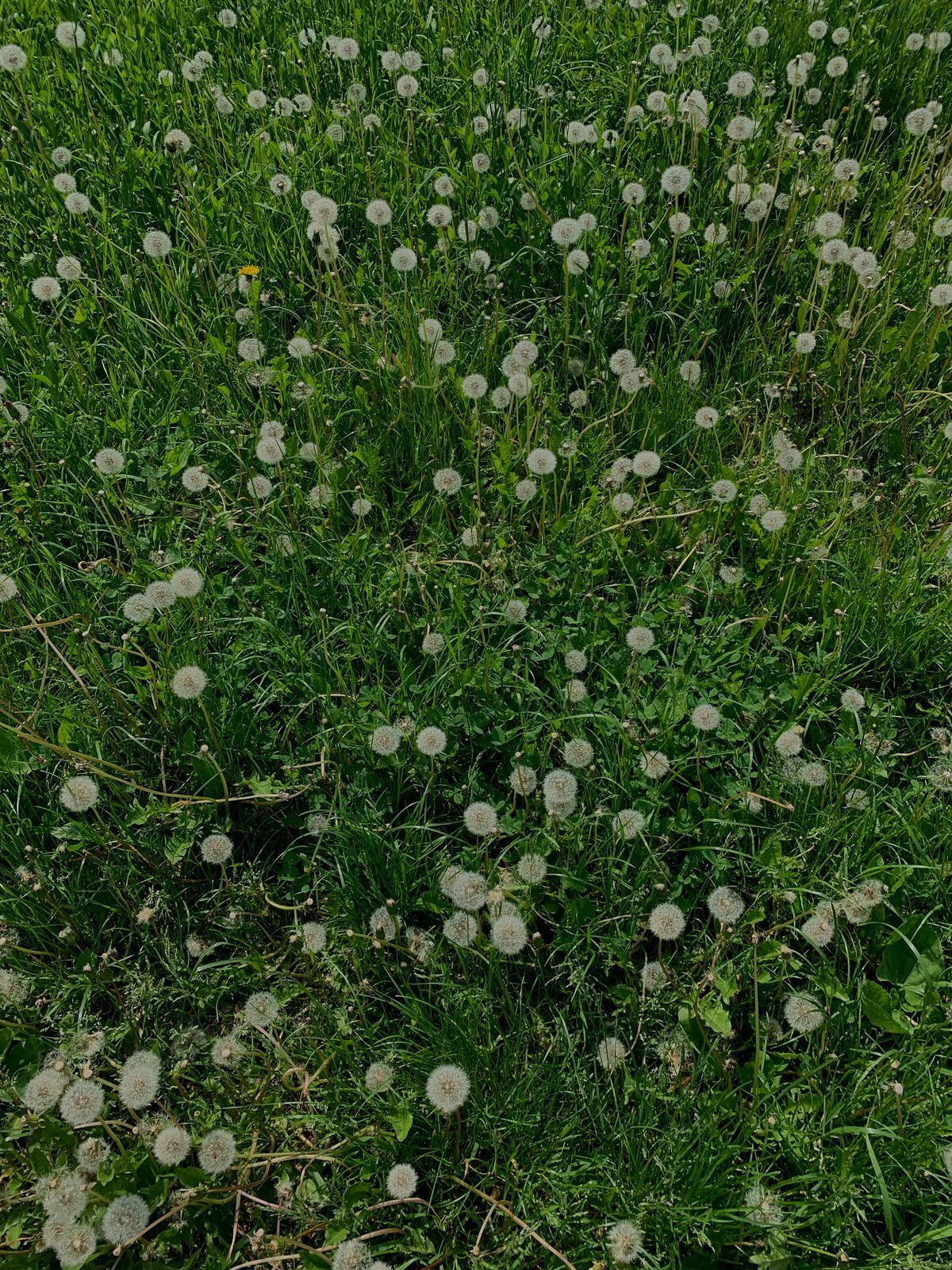
The standing weeds come out or die in place, matched to their type as the general weed removal guide lays out: taprooted perennials like dandelion are dug or spot treated so the root goes too, because a dandelion beheaded is a dandelion delayed; spreading perennials like ground ivy and clover patches are treated across the patch, not plant by plant; annual weeds like crabgrass that have already grown are simply prevented next year rather than fought this year, since they die at frost on their own. The discipline of this step is completeness over speed: a weekend that clears 90 percent of the perennial weeds leaves the 10 percent that re-seed and re-spread the whole problem, and the second pass, two weeks later, catching what the first pass missed and what has emerged since, is the difference between a kill and a haircut.
Step Three: Block the Seed Bank
Annual weed control is a calendar, not a battle. Pre-emergent herbicide, or corn gluten meal on the natural route, applied when soil temperatures reach the germination window in spring, roughly when forsythia blooms, stops crabgrass and its annual cousins at germination; a second window in fall covers the winter annuals. But the chemical and the calendar are only half the block. The real pre-emergent is the turf canopy itself: grass held at 3 to 4 inches shades the soil surface, and weed seed, most of which needs light and warm bare soil to germinate, fails under a closed canopy at rates no product matches. Every practice that thickens the canopy is weed prevention; every scalping, every drought thin summer, every bare worn path is an application of weed seed's favorite conditions, applied by the lawn's owner.
Step Four: Correct the Conditions
Now spend on the audit's findings. Compacted ground is aerated, in fall, and topdressed. Hungry soil is fed on the fall centered schedule grass prefers, guided by a soil test rather than a bag's promises, because the test also hands you the pH, and grass struggling at the wrong pH is a weed invitation no killing fixes. Shade that cannot grow grass is surrendered gracefully to groundcover or mulch, which removes a permanent weed nursery from the system. Drainage that drowns turf in winter is fixed or the area is replanted with what tolerates wet. This step is the least visible and the most permanent, because it removes causes; a system that skips it is a subscription to step two, repeated forever, which is the actual business model behind the word "permanently" on a spray bottle.
Step Five: Thicken, Every Fall
Fall overseeding is the engine of the whole system, detailed fully in the lawn overseeding guide: aerate or slice seed into the existing turf in early fall, when soil is warm, nights are cool, and weed pressure is at its yearly low, and the new grass establishes through fall and the following spring. Repeat it every fall, not as a rescue but as a rhythm, and the turf's density compounds year over year, because each fall's seedlings fill the gaps that summer opened before weed seed finds them. Choose seed that matches your conditions rather than the bag's photograph, shade mixes for shade, tough tall fescue for heat and traffic, and water the seedbed lightly and daily until germination, the one time in lawn care when daily watering is correct. A lawn overseeded two falls running, mown high, and fed on test results is a lawn whose weed problem has been structurally solved; what remains is maintenance.
The Maintenance Rhythm, and the Honest Promise
The permanent state, once reached, is kept by a short annual round: pre-emergent in spring, mowing held at 3 to 4 inches with no more than a third of the blade taken at once, a soil test every few years with feeding to its results, fall overseeding as a habit rather than a rescue, and a walking pass with a hand weeder after rain, pulling the occasional arrival while the soil is soft, minutes a month. Weeds will still arrive; the promise was never a sealed lawn. The promise is proportion: a lawn where weeds are an errand instead of a project, and where the errand list shrinks every year the system runs. Anyone selling more than that is selling the word on the bottle. The system above is what the word can honestly mean, and it works.
The Two Seasons, Mapped
For the gardener who wants the system as a calendar rather than a philosophy: Season one, spring: soil test taken, pre-emergent down in the forsythia window, standing perennials spot treated or dug as they show. Summer: mowing held high, the second kill pass on surviving perennials, no heroics in the heat. Fall: aeration, the soil corrections the test prescribed, and the first full overseeding, watered daily until germination. Winter: rest, and a notebook entry recording the audit numbers. Season two, spring: pre-emergent again, and the first honest comparison against the audit, which usually shows the annual weeds halved and the perennials reduced to stragglers. Summer: the canopy closing, hand pulling measured in minutes. Fall: the second overseeding, thinner seed over a thicker lawn, the corrections maintained. From season three the rhythm is maintenance, and the audit, repeated each spring, becomes a formality that mostly confirms the state the system built. Two years is the price, and it is worth noticing that the spray and pray alternative charges the same two years, in installments, without ever delivering the lawn.
The Weeds That Are Telling You to Stop
One honest exception completes the system: ground where grass cannot win. Deep dry shade under dense trees, the strip where every winter's salt spray lands, the boggy corner that never dries, these places will grow weeds forever because they grow grass barely at all, and the permanent solution there is not a better system but a different surface: shade groundcover, a mulched bed, a gravel path, stone. Removing unwinnable ground from the lawn is not surrender; it is the audit's final lesson, that permanence is partly a matter of only defending defensible ground. The lawn that remains, all of it winnable, is the lawn the system can actually keep clean, and a smaller clean lawn beats a larger weedy one at every measure the owner cares about, including the view from the street.
Related guides
These guides sit closest to this one on the garden path:
- How to Get Rid of Weeds in Lawn: Match the Method to the Root
- How to Get Rid of Weeds in Lawn Naturally: The Density System
- How to Get Rid of Weeds in a Lawn Without Killing the Grass: Identify First
- How to Get Rid of Weeds in Your Lawn and Grow Grass: One Sequence
Frequently Asked Questions
Can you actually get rid of lawn weeds permanently?
Not with a treatment. Weed seed arrives constantly on wind, animals, and equipment, and a soil seed bank waits years, so no single application ends weeds forever. What is achievable is a permanent system: kill the standing weeds completely, block germination with pre-emergent timing and a thick high mown canopy, correct the soil conditions the weeds were reporting, and overseed every fall. After about two seasons the lawn stays clean on light maintenance.
What is the single most important step for long term weed control?
Density. A thick turf canopy, held at 3 to 4 inches, shades the soil and stops most weed seed from germinating at all, which outperforms any product over time. Density is built by fall overseeding repeated every year, feeding to a soil test, and mowing high. Killing weeds without thickening the turf just prepares a clean seedbed for the next generation of weeds.
When should pre-emergent be applied?
In spring as soil temperatures reach the annual weed germination window, roughly when forsythia is in bloom in your area, and again in fall for winter annual weeds if they are part of your problem. Timing matters more than product choice: pre-emergent only works on seed that has not yet germinated, so an application after the crabgrass is visible is money spent on the wrong war.
My lawn is more than half weeds. Where do I start?
With renovation rather than weeding. A lawn past roughly half weeds is faster and cheaper to rebuild: kill or strip the existing cover in late summer, correct the soil, and seed fresh into the fall window, following the removal to reseeding sequence. Trying to rescue such a lawn plant by plant takes longer, costs more in product, and usually ends at the same renovation a year later.
How long does the permanent system take to work?
Visible improvement comes in the first season: the standing crop dies, germination is blocked, and fall overseeding closes the worst gaps. The structural change, a canopy dense enough to suppress weeds on its own, typically takes two full seasons of the rhythm. After that the maintenance is light: spring pre-emergent, high mowing, fall overseeding, and minutes a month of hand pulling after rain.
Photo credits: Jonathan Cooper (Pexels); Anastasiia Goncharova (Pexels). Photos are served from this site; follow the credit to the library page for the original.