Asiatic jasmine, Trachelospermum asiaticum, is not planted for flowers or form. It is planted to make ground disappear under a low evergreen mat, in the dry shade under oaks and along the strips where turf fails, across the warm half of the country. That makes its spacing a different kind of question from a border plant's: you are not composing a picture, you are buying coverage speed with plant count. The extension bench is firm: UF/IFAS Gardening Solutions plants Asiatic jasmine 18 inches apart, on center, and the spacing conversation is about what moving off that bench buys and costs. At 18 inches, one cited UF/IFAS figure projects roughly 90 percent cover in about 12 months; UF/IFAS Gardening Solutions itself is more patient and allows two growing seasons for full cover. Both numbers stay on this page unblended, because the difference between them is exactly what your site conditions decide.
Plant Spacing for Asiatic Jasmine: Buying Coverage by the Inch
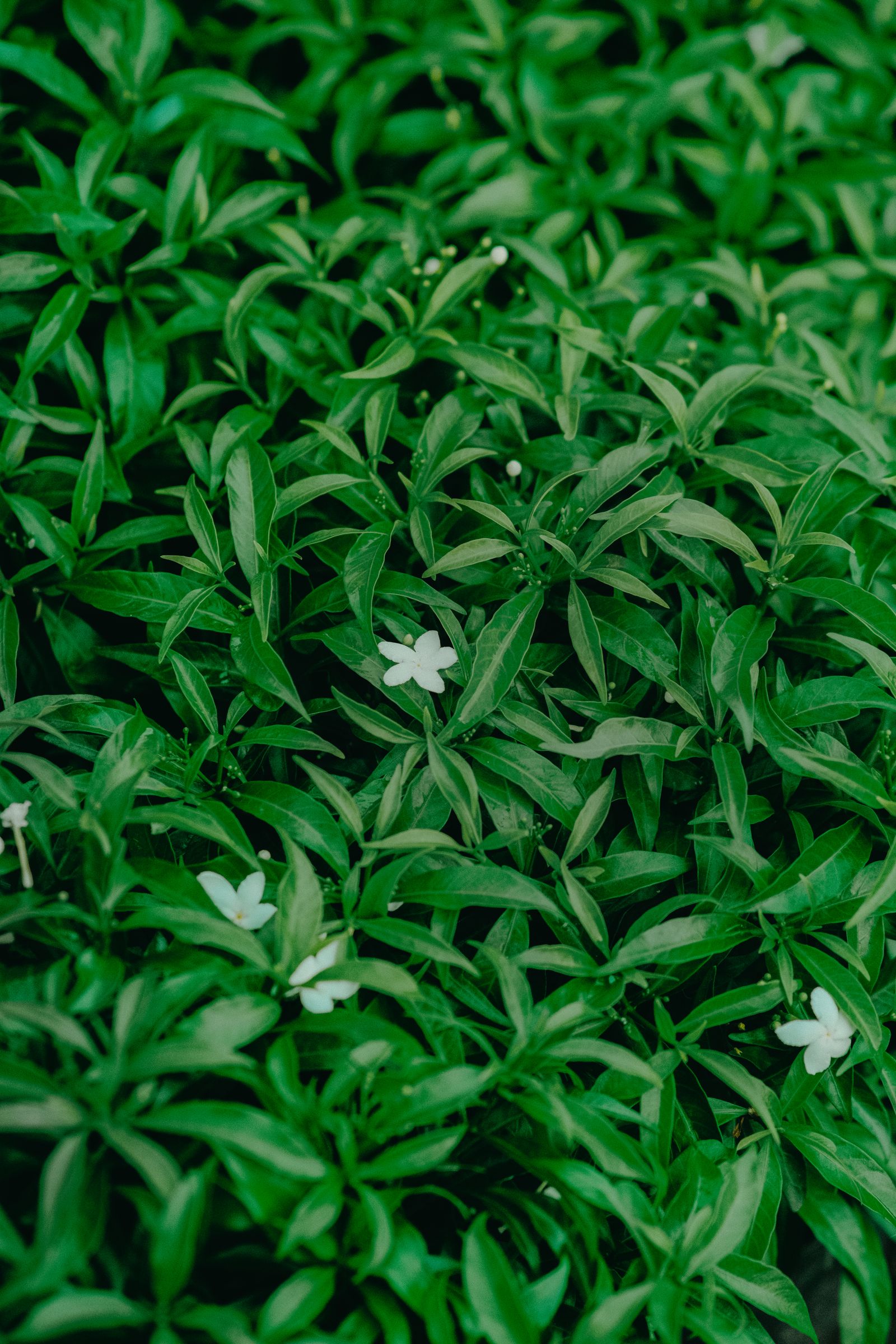
Photo: Pew Nguyen / Pexels
Plant Spacing Planner: The Asiatic Jasmine Carpet
Asiatic jasmine is in the crop list below at the UF/IFAS mass planting bench of 18 inches on center. Enter your bed size to count plants, then read the coverage time tradeoff in this article before you buy flats.
8 tomato plants fit this bed
4 plants per row across 2 rows, on a 24 inch grid. Extension spacing for this crop: 24 in between plants, 48 in between rows.
The grid uses the in-row spacing in both directions, the standard square foot layout for raised beds. In open ground, keep the wider row spacing in the note above so you can walk and weed between rows.
Spacing figures: University of Georgia Cooperative Extension, Circular 963, Vegetable Planting Chart, source.
The Coverage Math
A plant on an 18 inch grid owns 2.25 square feet of ground. A 100 square foot bed therefore takes about 44 plants at the bench spacing, and the runners each plant throws, rooting as they go, have at most 9 inches to travel before they meet a neighbor's runners coming the other way. Tighten to 12 inches and the same bed takes 100 plants, each runner traveling 6 inches, and cover arrives months sooner; widen to 24 inches and the bed takes 25 plants traveling a foot each, and the second season does the work the extra plants would have done. NC State's Toolbox describes the mature plant as a groundcover 1 to 2 feet tall spreading 10 to 12 feet wide given time, which is the quiet fact under the whole calculation: the plant can cover the ground from almost any spacing eventually, so the bench is about time, not possibility.
| Spacing on center | Plants per 100 sq ft | Runner distance to meet | Cover expectation |
|---|---|---|---|
| 12 inches | About 100 | 6 inches | Fastest; premium price |
| 18 inches (UF/IFAS bench) | About 44 | 9 inches | About 90% in 12 months per one UF/IFAS cited figure; two seasons per Gardening Solutions |
| 24 inches | About 25 | 12 inches | Two full seasons, budget option |
| 36 inches | About 11 | 18 inches | Accent drift, not a coverage plan |
The Two Timelines, Flagged Honestly
Coverage claims for this plant disagree in print, and the disagreement is worth showing rather than splitting. One figure cited from UF/IFAS material has the 18 inch spacing reaching about 90 percent cover in 12 months. UF/IFAS Gardening Solutions, the program's own planting guide, allows two growing seasons for transplants at 1.5 feet to fill in fully. The gap between one year and two is not an error to average into eighteen months; it is the range your conditions pick from. A bed in rich, irrigated soil in full sun in zone 9 grows jasmine at the fast end. A bed in dry root competition under a live oak in zone 8, which is where this plant is most often asked to perform, grows it at the slow end. Budget your patience, and your plant count, by the slow end, and let a fast site surprise you. Gardeners who cannot wait out the slow end should tighten the spacing, not fertilize harder: extra plants buy time honestly, while pushed growth in shade mostly buys legginess.
Cleared Soil: The Rule That Outranks Spacing
UF/IFAS Gardening Solutions pairs its spacing with a condition that matters more: plant into cleared, weed free soil. Asiatic jasmine covers ground slowly enough that any weed already rooted in the bed gets a one to two season head start inside the planting, and once jasmine runners weave over and through established weeds, cleaning the bed means tearing the mat you paid for. Clear the site completely, kill or strip turf and perennial weeds, and mulch the bare ground between the new plants with 2 to 3 inches of bark or leaf mulch, which holds the field while the jasmine is still traveling. The mulch is temporary scaffolding: as the mat closes it shades its own ground, and a mature planting needs no mulch and almost no weeding, which is the entire point of the plant. Skipping the clearing to save a weekend is the false economy this plant punishes for years.
Planting Pattern and Edges
Plant on a staggered grid, offsetting alternate rows by half a spacing, rather than in straight lines: the diamond pattern closes the gaps between four plants faster and avoids the visible rows a square grid shows for its first year. Keep plants back from bed edges, walks, and the trunks of trees by at least a foot: the mat will travel outward from the last row, and a plant placed at the edge spends its first season growing onto the pavement instead of into the bed. NC State rates the plant medium maintenance largely for this edge habit: a mature mat needs shearing or edging two to three times a year to hold a line, and it will climb a trunk or a wall base if it reaches one, so the maintenance line belongs in the planting plan, not as a surprise in year three. Under trees, expect the mat to thin directly over major surface roots and plan the spacing a notch tighter there, 12 to 15 inches, to compensate for the slower growth root competition causes.
Asiatic Is Not Star Jasmine
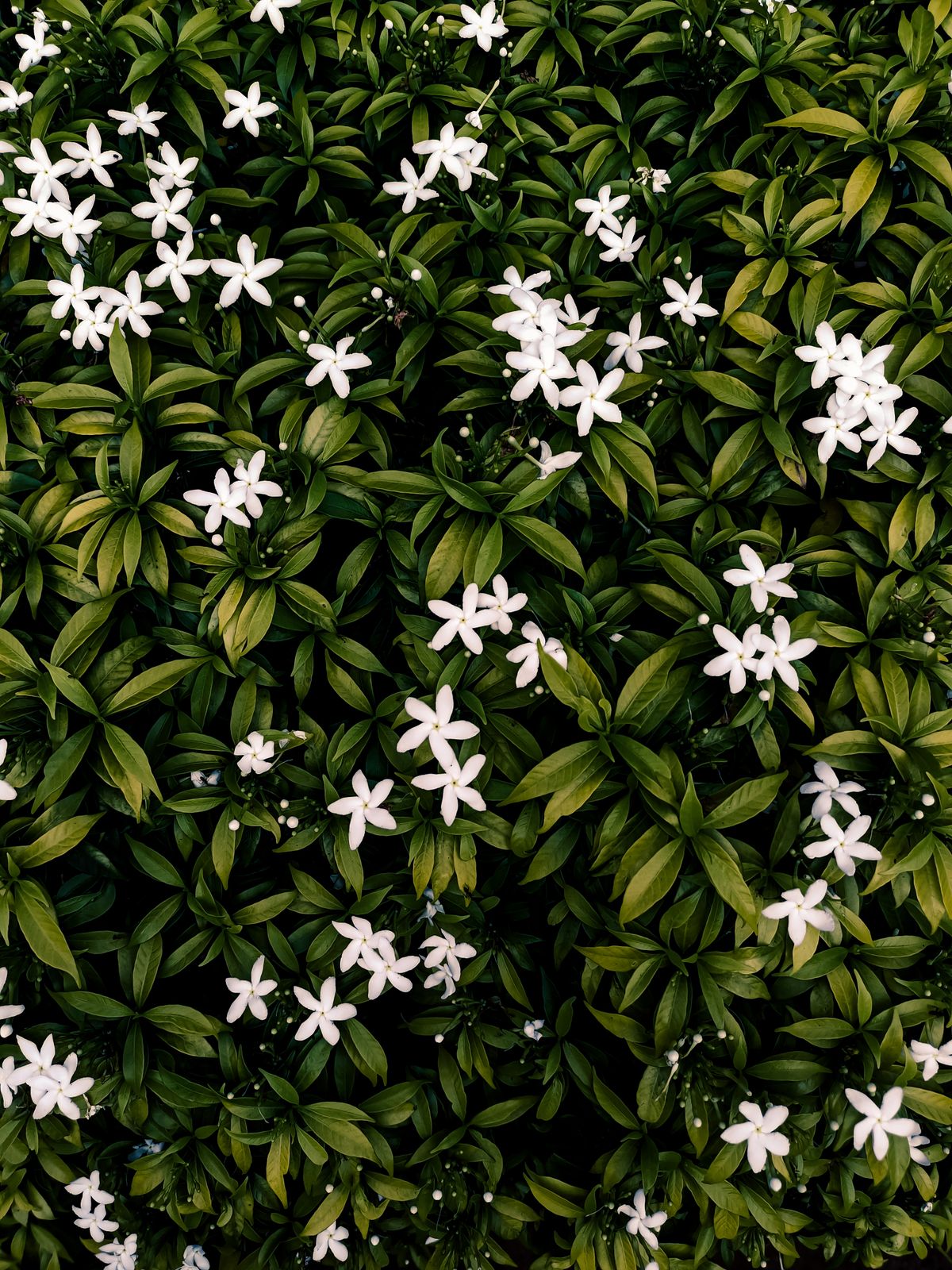
The two trachelospermums get confused at the garden center and their spacing should not be swapped. Asiatic jasmine is the groundcover: low, dense, grown for the mat, spaced at 18 inches for coverage. Star jasmine, covered in the star jasmine spacing guide, is the climber, spaced in feet for the wall or fence it will cover, and only secondarily used as a groundcover at much wider spacing. Asiatic's flowers are small, cream, and incidental; if the planting's job includes fragrance and bloom, you want the other plant. Asiatic's job is a green floor that asks almost nothing once established, tolerates shade that kills turf, and holds a slope's soil with its rooting runners, and 18 inches of patience at planting is the price of the whole performance.
Slopes, Deep Shade, and the Cold Margin
Three site conditions bend the bench, each in a predictable direction. On slopes, tighten one step, from 18 inches to 12 or 15, for two reasons: the planting's first job on a bank is holding soil, and bare gaps on a slope are where rills start, and growth on a dry slope runs slower than on the flat, so the tighter grid compensates for plants that travel less per season. Plant the rows on the contour, staggered, and mulch with a material that stays put, bark nuggets or a jute net over straw on the steepest pitches. In deep shade, the oak hammock shade this plant is famous for surviving, growth slows again and the honest expectation is the slow UF/IFAS timeline even at tight spacing; gardeners planting under a closed canopy should buy the 12 inch grid or accept that full cover is a third season project, and should not mistake the plant's shade tolerance for speed. At the cold margin, zone 7 and the cold edge of 8, winter burn thins a planting most years, and the mat's recovery each spring comes from the rooted runners; a margin planting at 18 inches spends its recovery refilling its own gaps and never gets ahead, so the tight grid is again the answer, with the understanding that in the coldest sites this is a plant that performs as a slowly improving groundcover rather than a finished carpet. In every case the adjustment is the same tool, plant count, applied where the site taxes growth, which is the whole logic of a spacing bench for a plant whose product is time.
Related guides
Readers working on this usually need these next:
- Plant Spacing for Spinach: The 2 Inch Bench and the 6 Inch Argument
- Plant Spacing for Vinca Minor: Fast Cover, Honest Warnings
Frequently Asked Questions
How far apart should I plant Asiatic jasmine?
Eighteen inches on center is the UF/IFAS bench for groundcover coverage. Tighten to 12 inches to buy faster cover at roughly double the plant count, or widen to 24 inches to save plants and accept a second season of filling in.
How many Asiatic jasmine plants do I need?
At 18 inches on center, about 44 plants per 100 square feet. At 12 inches, about 100; at 24 inches, about 25. Multiply your bed's square footage accordingly, and add a few extra for the thin ground over tree roots, where growth runs slower.
How long does Asiatic jasmine take to cover?
Published guidance disagrees, and both figures are worth knowing: one UF/IFAS cited figure projects about 90 percent cover in 12 months at 18 inch spacing, while UF/IFAS Gardening Solutions allows two growing seasons for full cover. Irrigated sun in warm zones lands at the fast end; dry shade under oaks lands at the slow end.
Should I mulch between new Asiatic jasmine plants?
Yes. Plant into cleared, weed free soil, per UF/IFAS, and mulch the gaps with 2 to 3 inches of bark or leaves. The mulch suppresses the weeds that would otherwise establish inside the slow closing mat, and it becomes unnecessary once the jasmine shades its own ground.
Does Asiatic jasmine spread beyond where I plant it?
Given time, yes: NC State lists a mature spread of 10 to 12 feet, with runners rooting as they travel. It will cross an unedged bed line and climb a trunk it reaches. Hold it with edging and two to three shearings a year, which is the medium maintenance the plant is rated for.
Photo credits: Pew Nguyen (Pexels); Rahul Dev (Pexels). Photos are served from this site; follow the credit to the library page for the original.