Vinca minor, common periwinkle, is the evergreen groundcover that has carpeted shady banks for a century, and its spacing works like its groundcover cousins: plants per square foot buys speed. The trade standard is 12 to 18 inches on center for a bed meant to close in two to three seasons, tightened to 8 inches where cover must arrive in one season, on a slope that is eroding or a bank that cannot sit bare. NC State's Extension Gardener Plant Toolbox gives the plant's spacing field as under 12 inches, tighter than the trade range, and this page keeps the two apart rather than blending them: the Toolbox figure suits the small, rooted plugs and divisions the plant is often installed from, while the 12 to 18 inch trade bench assumes gallon and quart pots with a running start. Either way, the plant itself is only 3 to 6 inches tall and spreads by runners that root at the nodes, NC State crediting each plant with 3 to 18 inches of width while the mat as a whole travels without limit. Read the warning section before the math: this is the rare spacing page where the honest advice includes not planting.
Plant Spacing for Vinca Minor: Fast Cover, Honest Warnings
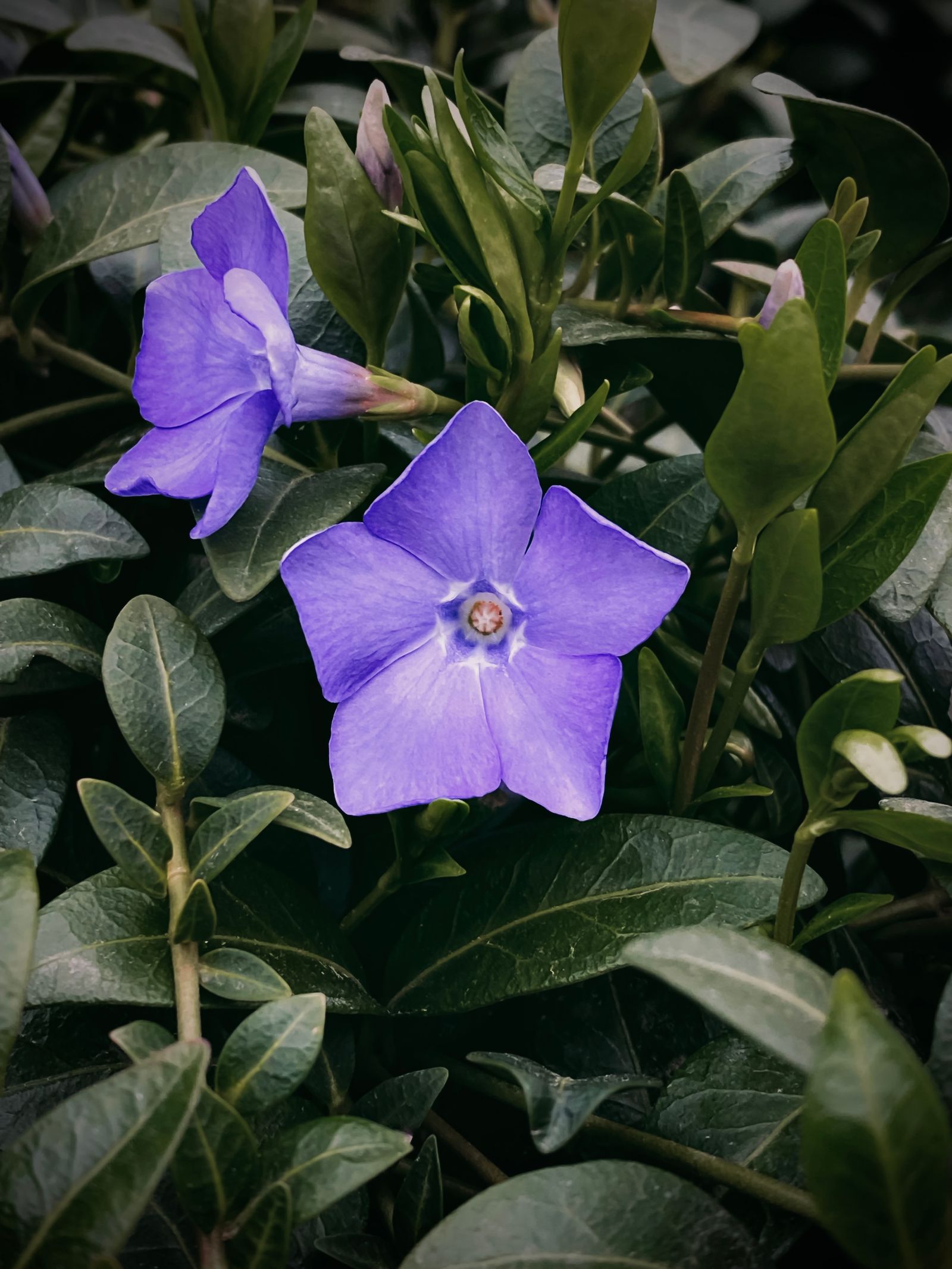
Photo: Eugene Golovesov / Pexels
Plant Spacing Planner: The Periwinkle Carpet
Vinca minor is in the crop list below at 12 inches. Enter your bed size to count plants, then read the fast cover versus economy spacing tradeoff in this article before you order.
8 tomato plants fit this bed
4 plants per row across 2 rows, on a 24 inch grid. Extension spacing for this crop: 24 in between plants, 48 in between rows.
The grid uses the in-row spacing in both directions, the standard square foot layout for raised beds. In open ground, keep the wider row spacing in the note above so you can walk and weed between rows.
Spacing figures: University of Georgia Cooperative Extension, Circular 963, Vegetable Planting Chart, source.
The Coverage Math
On a grid, a plant at 8 inches owns about 0.44 square feet, at 12 inches 1 square foot, at 18 inches 2.25 square feet. A 100 square foot bank therefore takes roughly 225 plants at the fast spacing, 100 at a foot, or 44 at 18 inches, and the choice is a straight trade of money for seasons. Divisions change the economics: an established vinca bed is a plant factory, and a gardener expanding coverage can dig rooted runner sections in spring and install them at the tight spacing for free, which is how this plant colonized so many old gardens. New purchases in flats of small plugs price out best at the 8 to 12 inch spacing the Toolbox field suggests; gallon pots at 18 inches suit small, high visibility beds where the wait would be on display. Slopes argue for the tight end regardless of container size, because every month of bare soil on a bank is soil in motion, and the rooting runners are the erosion control you are actually buying.
| Spacing on center | Plants per 100 sq ft | Cover timing | Best use |
|---|---|---|---|
| 8 inches | About 225 | One season | Slopes, erosion, plugs and divisions |
| 12 inches | About 100 | One to two seasons | Standard beds, Toolbox tight bench |
| 18 inches | About 44 | Two to three seasons | Budget beds, gallon pots |
| 24 inches | About 25 | Three seasons or more | Accent drifts, not full cover |
The Warning That Travels With the Plant
NC State lists vinca minor with rapid growth, high maintenance, and an invasive warning from the NC Invasive Plant Council, and those three labels are the plant's real specification sheet. It escapes: runners cross under fences, root in the leaf litter of adjacent woods, and establish colonies in natural areas where they suppress spring wildflowers, which is why many states and parks programs discourage or prohibit planting it near wild land. The containment rules are therefore part of the spacing plan. Plant it only inside hard edges it cannot cross without being seen: pavement, walls, mown lawn you actually mow, or a buried edging strip, and shear the edges two or three times a year, which is the high maintenance rating in practice. Never plant it on a property line against woods, a creek bank that connects to wild ground, or a slope you cannot reach to patrol. Gardeners who need this plant's job done in a sensitive site should look at native or better behaved alternatives first; where vinca is already established and contained, the spacing math on this page serves its expansion and repair.
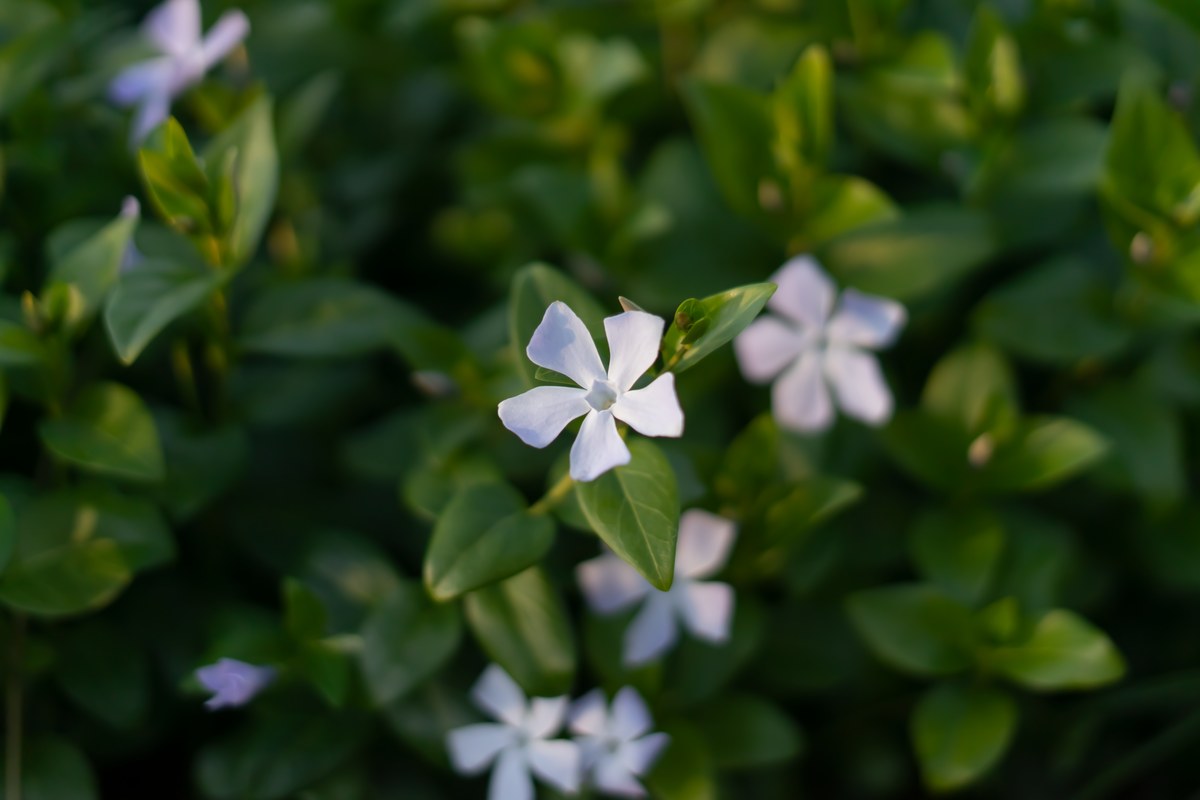
Planting and the First Two Seasons
Install in spring or early fall, into cleared soil, because like every slow closing groundcover, vinca cannot fight established weeds while it is still traveling; the clearing rule from the Asiatic jasmine spacing guide applies word for word. Set plugs and pots with the crown at soil level, water in, and mulch the gaps at 2 inches, shallow enough not to bury the runners that need soil contact to root. Through the first season, water during dry spells as you would any establishing perennial; by the second season an established mat is notably drought tolerant in shade, one of its genuine virtues. A spring feeding is optional and often counterproductive, pushing soft growth the mat does not need. The maintenance rhythm that keeps a planting an asset instead of a problem is simple: edge in spring and midsummer, pull the occasional tree seedling before it roots through the mat, and walk the boundary after storms, when a runner laid across a path or into a bed can be lifted and cut before it roots.
Shade, Slopes, and Under Trees
Vinca minor earns its keep in the sites nothing else wants: dry shade under maples, north facing banks, the root laced ground under pines. It tolerates deep shade at the cost of flowers, blooms best with a few hours of sun or bright open shade, and holds a slope's soil through winter when deciduous covers are bare, which is why highway departments planted it for decades. Under trees it competes better than turf ever will, though the hosta watering problem applies in miniature: tree roots take the first share of water, and a new vinca planting under a mature tree needs its establishment watering honored even though the species is drought tolerant later. On slopes too steep to mow, the tight 8 inch spacing and a jute mesh over the planting for the first season hold both plants and soil in place until the runners knit. In sun baked hot sites the plant thins and scorches at the margins; it is a shade tool, and full southern sun is the one common siting error besides planting it next to a woodland.
Repairing and Extending an Old Mat
Established vinca beds thin in the center with age, under drip lines, and where foot traffic cuts across. Repair uses the plant's own habit: in spring, dig rooted sections from the bed's vigorous edges, each a hand sized piece with roots at the nodes, and plug them into the bare spots at 6 to 8 inches, watering them in as new plants. Bare patches caused by a changed condition, a new drip line, a compacted path, will fail again unless the condition changes, so diagnose before replanting. Extending a bed follows the same plug method outward from the edge, one row at a time, which keeps the expansion contained and observable rather than a new frontier all at once. Old mats also accumulate leaf litter and thatch that can smother crowns; a hard shear and rake out in early spring every few years, brutal as it looks, renews the planting, which regrows from the rooted runners within weeks.
Vinca Major, and the Alternatives Shelf
The plant on this page has a larger cousin whose spacing should never be borrowed. Vinca major, bigleaf periwinkle, is the same idea at twice the scale, leaves and stems roughly double, growth faster, and invasiveness worse; it is the species behind most periwinkle horror stories in mild climates, and garden centers do not always label the distinction loudly. Check the name before buying: minor is the manageable one, and even it carries the warnings above. For gardeners who need vinca minor's job done, evergreen cover in dry shade, on ground that connects to anywhere sensitive, the alternatives deserve the first look. Wild ginger, Asarum canadense, covers shade slowly and beautifully in the east and center. Allegheny spurge, Pachysandra procumbens, the native pachysandra, makes a loose evergreen mat without the escape record. Green and gold, Chrysogonum virginianum, adds months of yellow bloom to the same shade. Partridgeberry and the native sedges each cover their niches. All of them are slower than vinca, which is precisely the trait that makes them safe: the speed on this page's coverage table and the risk in its warning section are the same property wearing two hats. Where vinca minor is already yours, contained and performing, keep it and patrol it. Where the planting is new and the site is open, spend the extra season on a plant that will never need a patrol.
Related guides
The closest companions to this guide:
- Plant Spacing for Alyssum: How Far Apart to Plant Sweet Alyssum
- Plant Spacing for Lavender: English, Lavandin, and the Hedge Bench
Frequently Asked Questions
How far apart should I plant vinca minor?
Twelve to eighteen inches on center is the trade standard for cover in two to three seasons; 8 inches buys one season cover on slopes and eroding banks. NC State's Toolbox spacing field reads under 12 inches, which suits the plugs and divisions the plant is often installed from; the two benches are kept separate on this page rather than blended.
How many vinca minor plants do I need for 100 square feet?
About 225 at 8 inches, 100 at 12 inches, and 44 at 18 inches. Small plugs and divisions price out at the tight spacings; gallon pots suit the 18 inch bench for small beds. An established bed can supply free rooted divisions for expansion and repair.
Is vinca minor invasive?
It is listed as invasive by the NC Invasive Plant Council and flagged by NC State for rapid growth and high maintenance. It escapes gardens into woods and suppresses wildflowers. Plant it only inside hard, patrolled edges, never against wild ground, and consider alternatives for sensitive sites.
How fast does vinca minor spread?
Each plant spreads 3 to 18 inches wide by runners that root at the nodes, and the mat travels indefinitely while conditions suit it. At 8 to 12 inch spacing a bed closes in one to two seasons; at 18 inches, two to three. Edge shearing two or three times a year holds the line.
Can vinca minor grow under trees?
Yes, it is one of the best covers for dry shade and root filled soil where turf fails. Give a new planting its establishment water even under trees, since tree roots take the first share, and expect thinner bloom in deep shade. Do not plant it where the ground connects to a woodland it could escape into.
Photo credits: Eugene Golovesov (Pexels); Denis Liendo (Pexels). Photos are served from this site; follow the credit to the library page for the original.