Sweet alyssum is planted for one effect: a low, fragrant carpet that spills over an edge and flowers from spring to frost. Whether you get the carpet depends almost entirely on spacing, because alyssum planted too far apart never knits, and alyssum planted too tight competes itself out of bloom by midsummer. The complication is that two different plants share the name at the garden center. The seed-grown types, the classic edging alyssum sold in six-packs and seed packets, spread about a foot per plant. The newer sterile hybrids, sold in pots under series names, are mounding machines two to three times that width. Clemson Extension's sweet alyssum guidance draws the line plainly: seed-grown plants spread 12 inches or more, while the sterile hybrids reach 24 to 36 inches wide and are a different spacing case. This page benches both, because planting a hybrid on the seed-grown bench is the most common alyssum failure there is.
Plant Spacing for Alyssum: How Far Apart to Plant Sweet Alyssum
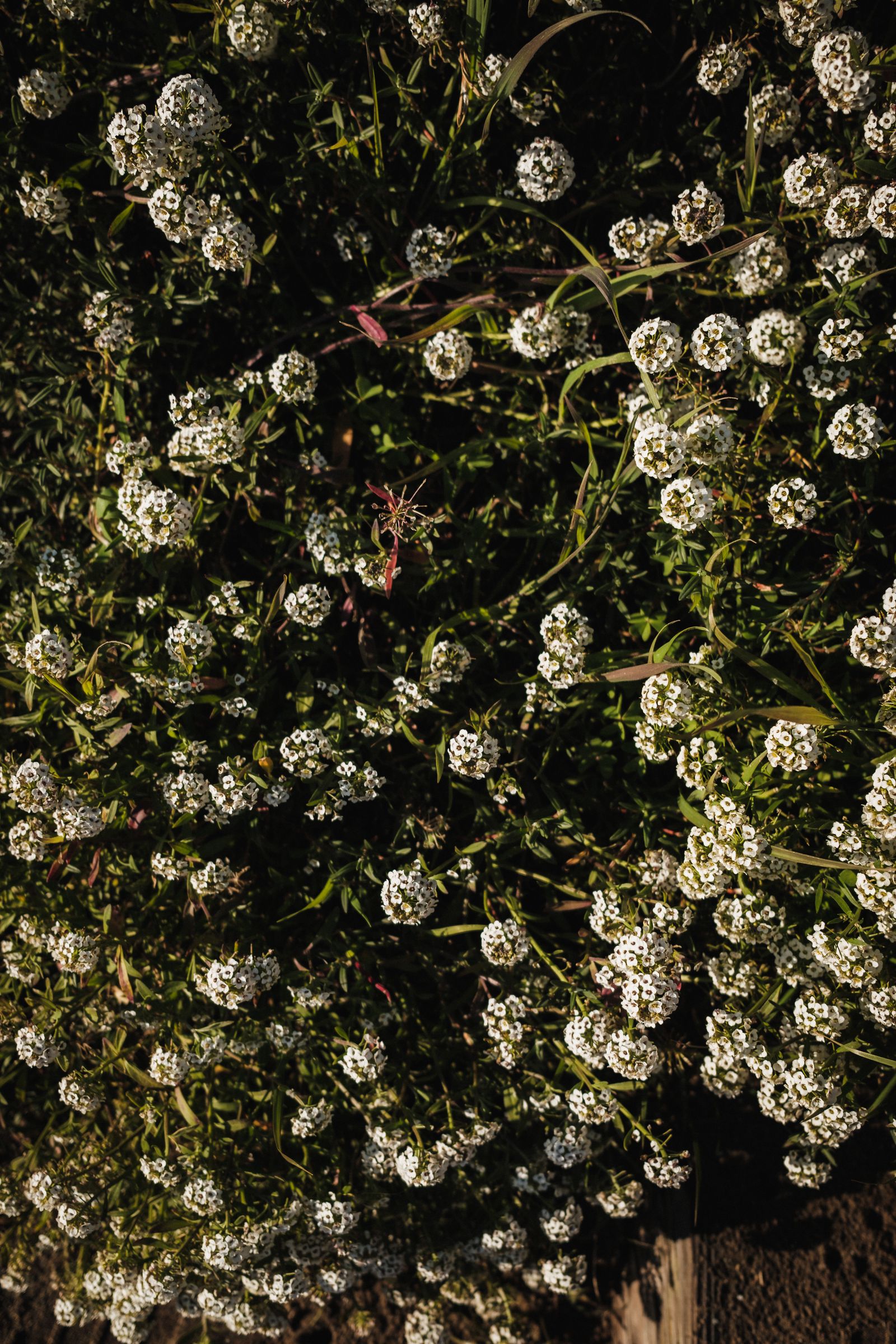
Photo: Airam Dato-on / Pexels
Plant Spacing Planner: The Alyssum Edge
Sweet alyssum is in the crop list below at the Clemson Extension bench of 6 to 12 inches for seed grown edging plants, the planner at 9. Enter your bed or border length, then read the hybrid exception in this article before you set plants out.
8 tomato plants fit this bed
4 plants per row across 2 rows, on a 24 inch grid. Extension spacing for this crop: 24 in between plants, 48 in between rows.
The grid uses the in-row spacing in both directions, the standard square foot layout for raised beds. In open ground, keep the wider row spacing in the note above so you can walk and weed between rows.
Spacing figures: University of Georgia Cooperative Extension, Circular 963, Vegetable Planting Chart, source.
The Two Benches: Seed-Grown and Sterile Hybrid
For seed-grown alyssum, space plants 6 to 12 inches apart. The planner on this page runs 9 inches, the middle of the band, which is the right default for an edging run or a carpet planting: at 9 inches the plants touch within a few weeks of warm weather, shade their own soil, and flower as a continuous mat. Choose your point in the band by purpose. At 6 inches, the mat closes fastest and the planting reads finished almost immediately, at the cost of more plants and a tighter, more humid canopy that needs the shear-back below to stay in bloom through summer. At 12 inches, each plant keeps its individual mound shape longer, which suits alyssum used as single accents among other plants rather than as a carpet. For the sterile hybrids, forget the band entirely: space them 18 to 24 inches apart in beds and one plant to a 10 to 12 inch pot, because a hybrid that fills 24 to 36 inches will swallow a 9-inch neighbor by July and the planting turns into a wrestling match the bigger plant wins. Read the pot tag before you dig; if the label names a series hybrid rather than a seed strain, you are on the wide bench.
| Plant type | Spacing in beds | Plants per 10 feet of edging | Notes |
|---|---|---|---|
| Seed-grown, carpet effect | 6 to 9 inches | 14 to 20 | Fastest knit, needs summer shear-back |
| Seed-grown, individual mounds | 9 to 12 inches | 10 to 14 | Planner bench at 9 inches |
| Sterile hybrid, in ground | 18 to 24 inches | 5 to 7 | Mature width 24 to 36 inches |
| Sterile hybrid, container | 1 per 10 to 12 inch pot | n/a | Two per large basket maximum |
Edging Math: Plants per Run and per Bed
Alyssum is bought by the flat and planted by the foot, so the useful numbers are counts. For a single-row edge at the 9-inch bench, a 10-foot run takes 14 plants; at 6 inches it takes 20, and at 12 inches, 10. For a carpeted area rather than an edge, the planner above does the grid math for your bed dimensions, but the anchor figures are worth knowing: a 4 by 8 foot bed filled at 9-inch spacing takes about 55 plants, which is a flat and a half of six-packs, while the same bed at 12 inches takes about 32. Stagger the rows in a carpet planting, offsetting each row by half a spacing, so the mat knits in both directions and no straight channels of bare soil remain for weeds to colonize. Around stepping stones and along paths, run alyssum at the tight end, 6 inches, because the plants at a path edge get stepped near, shaded unevenly, and replaced piecemeal, and the tight bench forgives all of it. NC State's Lobularia maritima profile adds the timing that makes the math useful: sow seed several weeks before the last frost for the earliest mats, or start indoors 5 to 6 weeks ahead for transplant-size plants at frost date, because alyssum spacing only performs when the plants go in with the whole cool season ahead of them.
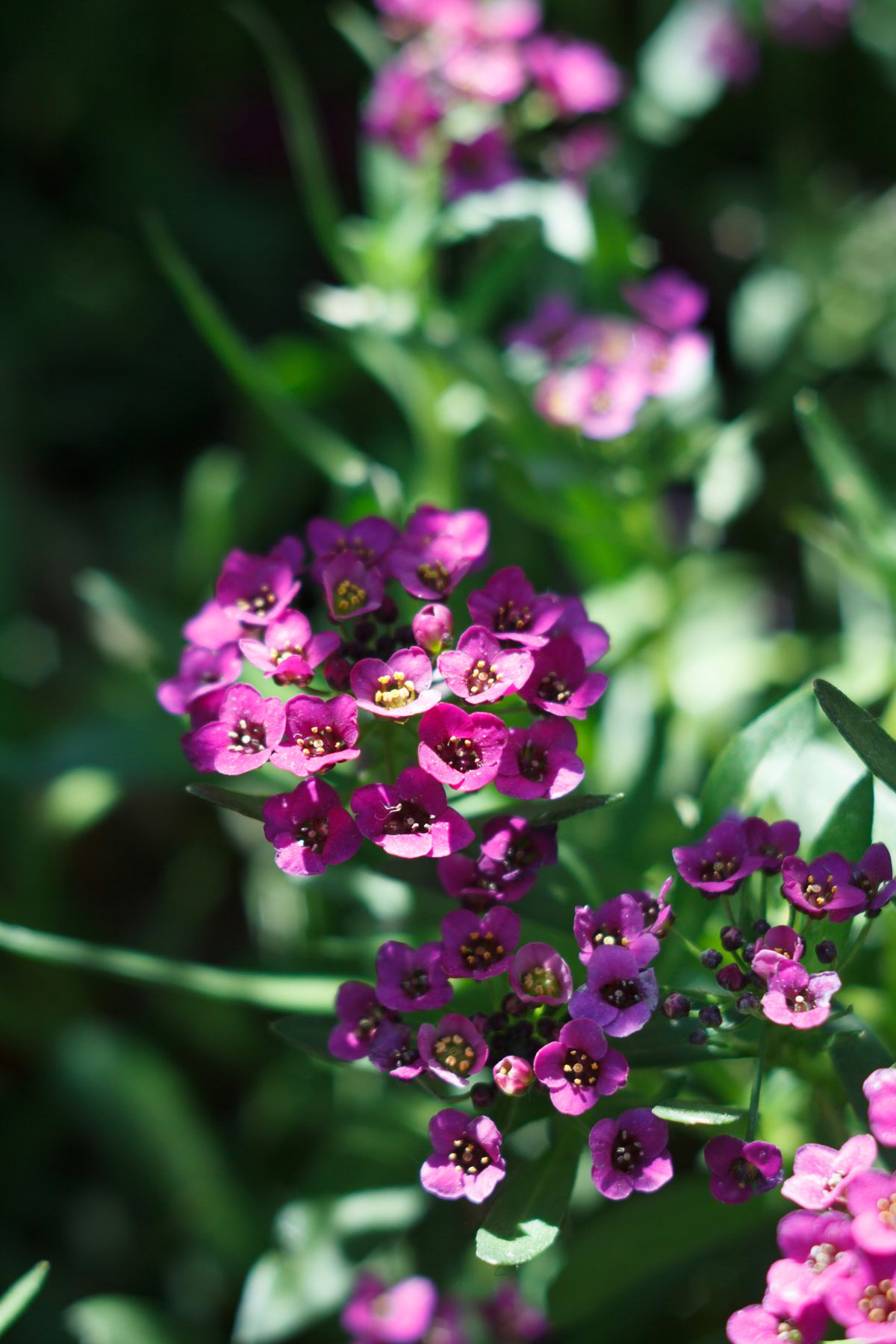
The Summer Stall and the Shear-Back Revival
Alyssum's known midsummer behavior is to stall: the mat goes green and sparse-flowered in the hottest weeks, and gardeners rip it out as finished. It is usually resting, not done. Alyssum is a cool-season flowerer that tolerates summer rather than enjoying it, and the standard revival is mechanical. Shear the whole mat back by about half with scissors or hedge shears, taking off the leggy top growth and the spent flower heads in one pass, then water and give it a light feed. In 2 to 3 weeks the plants push fresh branching growth and return to flower, and as nights cool toward fall the second bloom often beats the first. Spacing decides how well the revival works: a mat at 9 to 12 inches has the air and the individual crowns to regrow cleanly, while an over-tight 6-inch mat shears back into a humid tangle that can rot at the center in wet heat. This is the long-game argument for the middle of the band. The tight bench wins May; the 9-inch bench wins the season. Gardeners in hot climates also treat alyssum as a two-season annual, spring and fall, and simply let the summer gap be a green mat; benched at 9 inches and sheared once, the same plants usually carry both seasons without replacement.
Where Alyssum Earns Its Spacing
The reason to fuss over a 6-inch difference in an edging plant is that alyssum works for a living. It is one of the classic companion plantings in the vegetable garden, where its nectar feeds the hoverflies and parasitic wasps that police aphids, and a run of alyssum along a bed edge is pest infrastructure, not decoration. It is also a living mulch: a knitted mat shades soil, holds moisture, and suppresses the small weeds that germinate in bare edges, which is why it pairs so well with the site's vegetable spacing system, from the bean spacing bench to the brassica rows. Planted under taller crops it asks almost nothing, because its roots are shallow and its top is 4 to 8 inches tall. The one placement to avoid is the wettest corner of the garden: alyssum in soil that stays soggy rots at the crown, whatever the spacing, and the mat develops holes that read as a spacing failure but are a drainage verdict. Give it sun, drainage, the right bench for its type, and one shearing in July, and alyssum is the cheapest continuous flower in the garden, reseeding itself into the same edges for years if you let a few fall plants go to seed.
Containers, Window Boxes, and Hanging Baskets
Alyssum's second career is spilling out of containers, and container spacing runs tighter than bed spacing because the goal is a finished cascade, not a self-sustaining mat. In a window box, set seed-grown plants 6 inches apart along the front edge; the box is shallow, the season is one year, and the tight bench that would crowd a bed by August is exactly right for a display that is replanted annually. In a hanging basket, place 3 to 5 plants around the rim of a 12-inch basket, angled slightly outward so the growth spills over the edge from the first month, and let one upright plant, never another alyssum, hold the center. Sterile hybrids invert the math again: one hybrid fills a 12-inch basket alone by midsummer, and two is a crowd. Container alyssum also dries faster than any bed planting, and the mat's shallow roots mean a missed watering in a heat wave shows within a day as a gray, flat patch; the shear-back revival works in containers too, and a basket sheared in July and fed lightly usually outblooms a basket left to stall. The container rule that survives every case: alyssum at the rim, spaced for the spill, and never buried in the middle of a mixed planting where taller neighbors shade it out, because alyssum in shade stretches, thins, and stops flowering regardless of the inches you gave it.
Related guides
Readers working on this usually need these next:
- How Far Apart to Plant Tomatoes
- Plant Spacing for Zinnias: Air Is the Fungicide
- Snapdragon Plant Spacing: Airflow Is Rust Control
- Nigella Plant Spacing: Sow It Where It Stands
Frequently Asked Questions
How far apart do I plant sweet alyssum?
Seed-grown alyssum goes 6 to 12 inches apart, with 9 inches the planner bench for a mat that knits quickly and still revives well after shearing. Sterile hybrid types are far bigger, 24 to 36 inches wide at maturity per Clemson Extension, and need 18 to 24 inches. The pot tag tells you which plant you have.
How many alyssum plants do I need for a 10-foot edge?
Fourteen at the 9-inch bench, 20 at 6 inches for the fastest knit, or 10 at 12 inches if you want individual mounds. For a filled bed rather than an edge, a 4 by 8 foot area takes about 55 plants at 9-inch spacing or about 32 at 12-inch spacing, in staggered rows.
Why did my alyssum stop flowering in summer?
Heat stall, the species' normal midsummer rest, aggravated by tight spacing. Shear the mat back by half, water, and feed lightly; fresh growth returns to flower in 2 to 3 weeks and usually blooms harder as nights cool. A mat spaced at 9 to 12 inches revives more cleanly than an over-tight one.
Can I plant the big hybrid alyssum at 9 inches like the regular kind?
No. The sterile hybrids reach 24 to 36 inches wide, so at 9 inches they swallow their neighbors and the planting collapses into competition by midsummer. Give hybrids 18 to 24 inches in the ground or a pot of their own. Check the label for a series name to know you have a hybrid.
When should alyssum seed be sown?
Several weeks before the last frost outdoors, per NC State's profile, or started indoors 5 to 6 weeks ahead for transplants at frost date. Alyssum is a cool-season flowerer, so the earliest safe start gives the longest spring bloom before the summer stall.
Photo credits: Airam Dato-on (Pexels); Mikhail Peace (Pexels). Photos are served from this site; follow the credit to the library page for the original.