Zinnias ask for so little, heat, sun, and indifference to soil, that their spacing requirement is easy to miss, and it is not really about room to grow. It is about air. A zinnia canopy that closes too early in a humid summer holds wet air against its leaves through every dewy night, and powdery mildew, the white dusting that creeps from the lowest leaves upward, ends the flowering weeks before frost does. Clemson Extension's zinnia guide divides the benches by plant size: dwarf types 8 to 9 inches apart, and the tall, large flowered cultivars, the Benary's Giant and State Fair class that most cutting gardeners grow, at 12 inches apart. The planner on this page runs 12 inches within the row and 12 inches between rows on the tall bench. One housekeeping matter is handled in the open below: Clemson's page states the row spacing two different ways in two of its own sections, and this page flags the conflict rather than quietly picking one and pretending the other does not exist.
Plant Spacing for Zinnias: Air Is the Fungicide
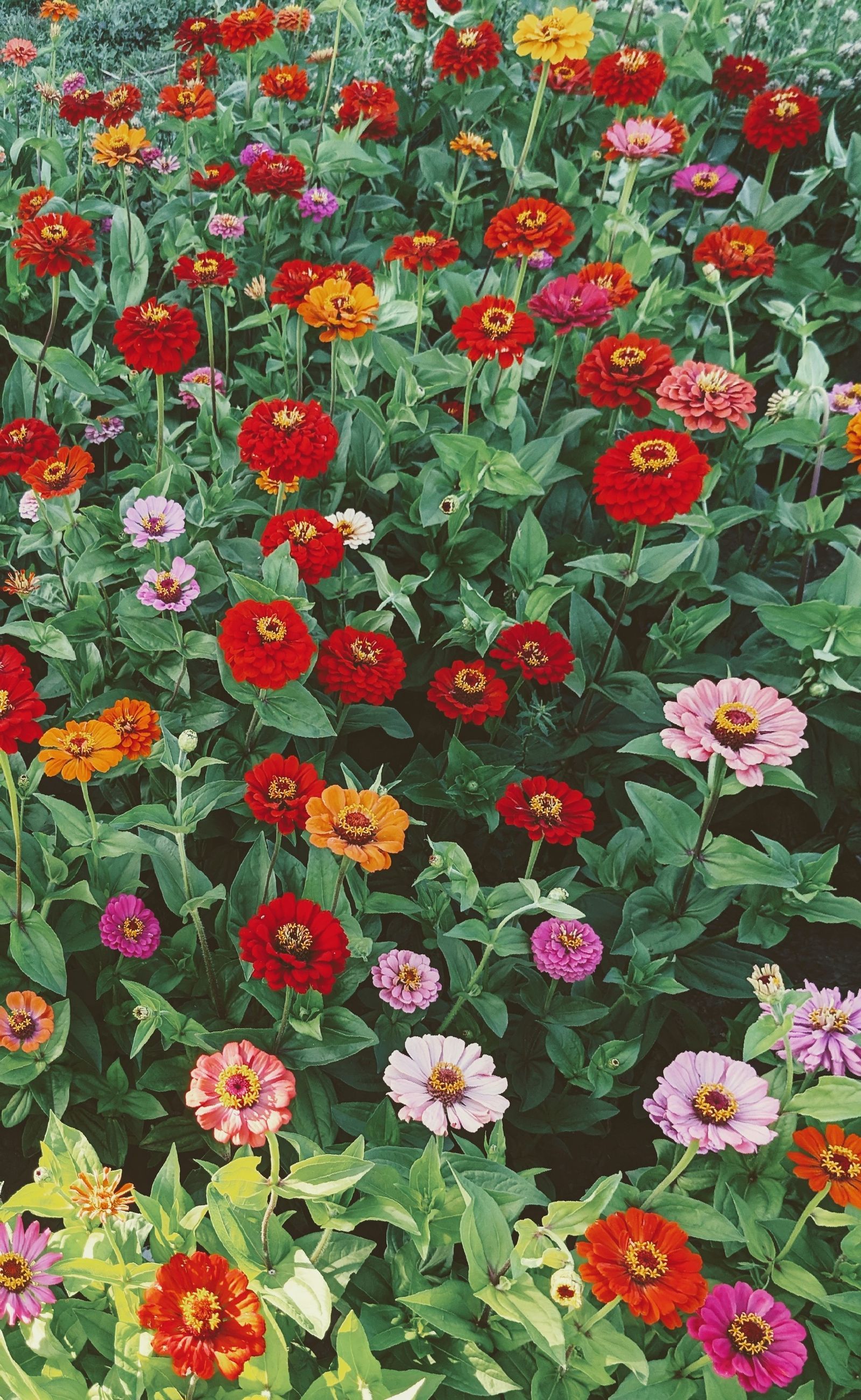
Photo: Guzel Sadykova / Pexels
Plant Spacing Planner: The Zinnia Row
Zinnia is in the crop list below at the Clemson Extension tall cultivar spacing of 12 inches, with dwarf types at 8 to 9. Enter your bed size, then read the airflow and mildew logic in this article before you thin seedlings.
8 tomato plants fit this bed
4 plants per row across 2 rows, on a 24 inch grid. Extension spacing for this crop: 24 in between plants, 48 in between rows.
The grid uses the in-row spacing in both directions, the standard square foot layout for raised beds. In open ground, keep the wider row spacing in the note above so you can walk and weed between rows.
Spacing figures: University of Georgia Cooperative Extension, Circular 963, Vegetable Planting Chart, source.
The Two Benches: Dwarf at 8 to 9, Tall at 12
Dwarf zinnias, the Profusion, Zahara, and Thumbelina types that finish 8 to 14 inches tall, are bedding plants and are spaced like them, 8 to 9 inches apart, growing into a closed, self supporting mat that needs no staking and shades its own soil. Tall zinnias are a different organism: 2 to 3 feet of branching stem carrying flowers 4 to 6 inches across, and at the Clemson bench of 12 inches each plant has room to branch from low on the stem, which is where the cut flower yield lives, because a zinnia branches in proportion to the light that reaches its sides. Crowd a tall zinnia to 6 inches and it does not branch; it races, producing one tall stem with one flower and a column of mildewed leaves, and the bed yields a fraction of the buckets it should. In a cutting row, the 12 inch grid also leaves the picker a path of sight and hand: you cut zinnias every few days at peak, choosing stems whose flowers pass the wiggle test, pollen showing and stem stiff, and a bed you cannot reach into is a bed picked late and badly. Succession sowing, a new short row every 2 to 3 weeks into early summer, spreads the harvest and means the spacing decision gets made fresh several times a season, each time at the same 12 inches.
| Type | Clemson bench | Planner grid | Finished size |
|---|---|---|---|
| Dwarf bedding (Profusion type) | 8 to 9 inches | 9 inches in 12 inch rows | 8 to 14 inches tall |
| Tall cut flower (Benary's Giant type) | 12 inches | 12 inches in 12 inch rows | 2 to 3 feet tall |
| Mid size (Zowie, Uproar types) | About 12 inches | 12 inches in 12 inch rows | 1.5 to 2 feet tall |
| Rows, wide layout | 12 to 18 inches between rows | See flagged note | For hoe and harvest access |
The Flagged Conflict: Clemson Against Itself
In its How to Grow section, Clemson's zinnia guide describes planting in rows 12 inches apart; in its Care section, the same page gives rows 12 to 18 inches apart. The in row plant spacings agree throughout, dwarfs at 8 to 9 and tall types at 12, and it is only the between row figure that shifts. This page's planner runs 12 inches between rows, the tight end, on the reasoning that in a home bed or a grid planting the rows are nominal anyway and the per plant distance is the figure that governs air and branching. A grower laying out true field rows, who needs a hoe's width or a harvest path between them, should take the 18 inch end of Clemson's own range with a clear conscience, because the source itself publishes it. What neither section supports is compressing the in row spacing of tall types below 12 inches, and that is the number the mildew enforces. The conflict is recorded here in full so that a reader who checks the source finds exactly what this page says they will find.
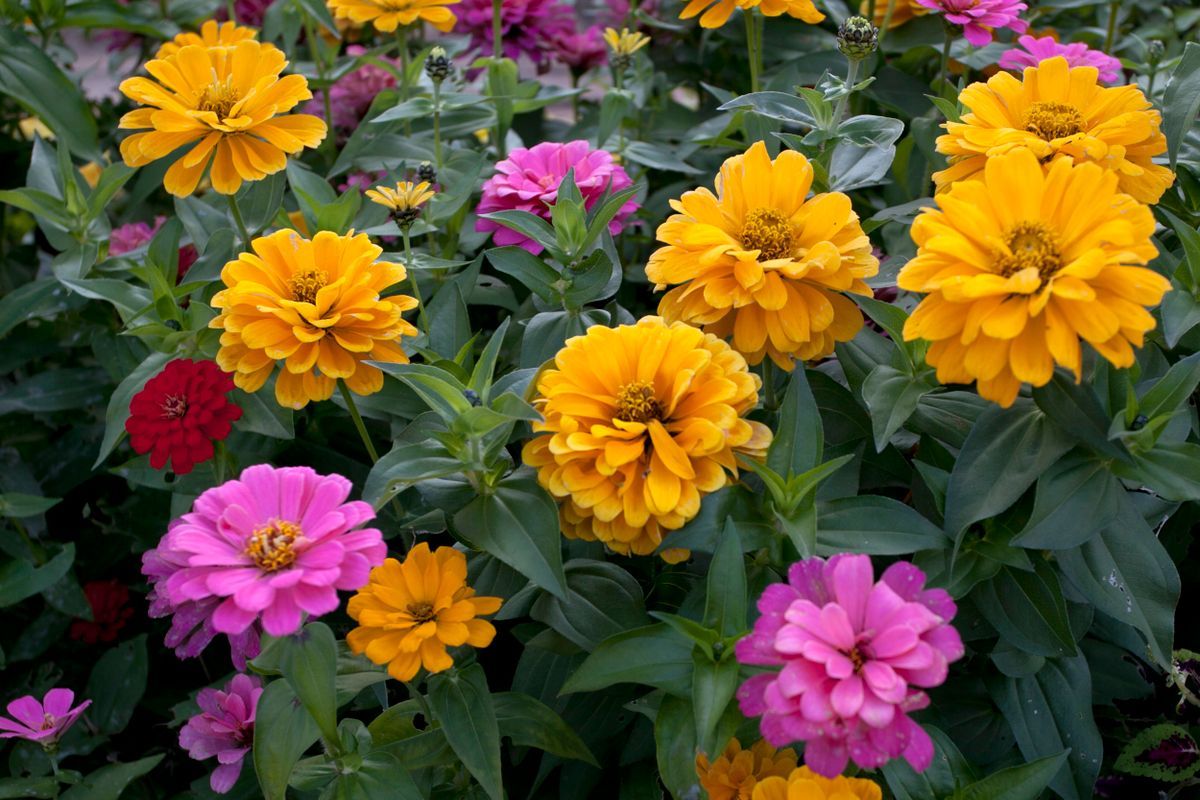
Water, Mildew, and the Case for the Inches
Spacing does its work together with watering method, and the two together decide the mildew season. Water zinnias at the base, by drip or soaker or a watering can aimed at the soil, and the foliage stays dry through the day's heat; water overhead in the evening and even a correctly spaced bed carries wet leaves into the night. Morning is the safe hour for any watering that wets leaves, since sun and air strip the moisture in an hour. The first mildew usually appears on the lowest, oldest leaves of the most crowded plant in the row, and removing those leaves, and any plant that becomes a white flag, slows the spread honestly, though nothing reverses it. Resistant series exist and are worth choosing in humid climates: the Profusion and Zahara dwarfs carry real mildew resistance, one more reason the dwarf bench exists as its own line in the table. By late summer some mildew is nearly universal in humid regions, and the gardener's goal is timing, holding it off until the plants have given most of their season, which is precisely what 12 inches and dry leaves buy. The site's zinnia care page covers the season long routine, and its zinnia watering page runs the moisture half of the same mildew equation.
Sowing, Thinning, and Pinching
Zinnias are sown where they will grow more often than they are transplanted, germinating in 4 to 7 days in warm soil, and the spacing is set at the thinning, the moment most home rows go wrong. Seed is cheap and hands are generous, and a row sown thickly and never thinned becomes the 3 inch spacing no source recommends, a mildew thicket of single stems. Thin seedlings to the final bench, 9 or 12 inches by type, when they have two sets of true leaves, and thin in one decisive pass. Transplants, started indoors for an early cutting crop, go out after frost at the same grid, handled by their leaves, since zinnia stems bruise easily and a bruised stem is a mildew door. Pinching is the spacing multiplier: snip the growing tip of a young tall zinnia at about 12 inches of height and the plant answers with two or three branching stems, filling its 12 inch allotment with flowering wood instead of a single pole. A pinched, correctly spaced tall zinnia is the plant the catalog photographs promise; an unpinched, crowded one is the plant the complaints describe, and the difference is a minute of work in June.
Zinnias in the Cutting Garden Economy
The tall bench at 12 inches is also the spacing that makes a cutting garden pay. A zinnia stem is cut when the flower is fully open and the stem below it has gone stiff, the wiggle test in which a stem shaken gently stays rigid rather than flopping, and a plant with room to branch produces those stems in succession from June to frost: each cut above a pair of leaves returns two new flowering stems, so the season's yield from one well spaced plant is measured in dozens of stems. The economics invert at tight spacing, where the plant produces its one stem early and then stands as a mildewed column occupying a square foot that a branched plant would have made productive. Support is the tall bench's companion task in windy sites: a single layer of horizontal netting stretched over the row at about 18 inches, installed when the plants are young, holds the whole row upright through thunderstorms without a single stake, and the plants grow through it invisibly. Gardeners saving seed should let the last flowers of the best plants ripen fully on the stem, since zinnia seed from a mildewed, crowded plant carries the season's weaknesses with it, while seed from a plant that stood in air and light starts the next year with the habit you are trying to keep.
Related guides
Keep reading with these guides from the same corner of the garden:
- Plant Spacing for Alyssum: How Far Apart to Plant Sweet Alyssum
- Plant Spacing for Marigolds: French and African Are Different Plants
- Snapdragon Plant Spacing: Airflow Is Rust Control
- Strawflower Plant Spacing: Garden Rows and Cutting Beds
- Plant Spacing for Cut Flowers: The Production Grid
Frequently Asked Questions
How far apart should zinnias be planted?
Dwarf types go 8 to 9 inches apart and tall, large flowered types 12 inches apart, on Clemson Extension's bench. The planner runs 12 inches in 12 inch rows for tall types. Clemson's own page gives rows at 12 inches in one section and 12 to 18 inches in another; that internal conflict is flagged on this page, and field rows may take the wider figure.
Why do my zinnias get powdery mildew every year?
Because the leaves stay wet and the air does not move. Crowded spacing is the leading cause, followed by overhead watering, especially in the evening. Space tall types at the full 12 inches, water at the base in the morning, remove the first mildewed lower leaves, and choose resistant dwarf series like Profusion in humid climates.
Can I plant zinnias closer together for a fuller bed?
For dwarf bedding types, the 8 to 9 inch bench already produces a closed mat. For tall types, planting closer than 12 inches trades branching for racing: single stems, fewer flowers, earlier mildew. If a fuller look is the goal, pinch the young plants to force branching at the correct spacing instead of crowding them.
How many zinnia plants fit in a 4 by 8 foot bed?
At the tall bench of 12 inches in both directions, a 4 by 8 foot bed holds 32 plants, which is a serious cutting garden, roughly a bucket of flowers every few days at peak. At the dwarf bench of 9 inches in 12 inch rows, the same bed holds about 40 plants.
When should zinnias be sown?
After all frost, into warm soil, since zinnias are among the most cold tender annuals and stall or rot in cold ground. Sow succession rows every 2 to 3 weeks into early summer for continuous cutting, thinning each row to its final spacing in one pass when the seedlings have two sets of true leaves.
Photo credits: Guzel Sadykova (Pexels); Jeffry Surianto (Pexels). Photos are served from this site; follow the credit to the library page for the original.