Strawflower Plant Spacing: Garden Rows and Cutting Beds
By the Windchime Walker editorial team
Photo: Anderson Wei / Pexels
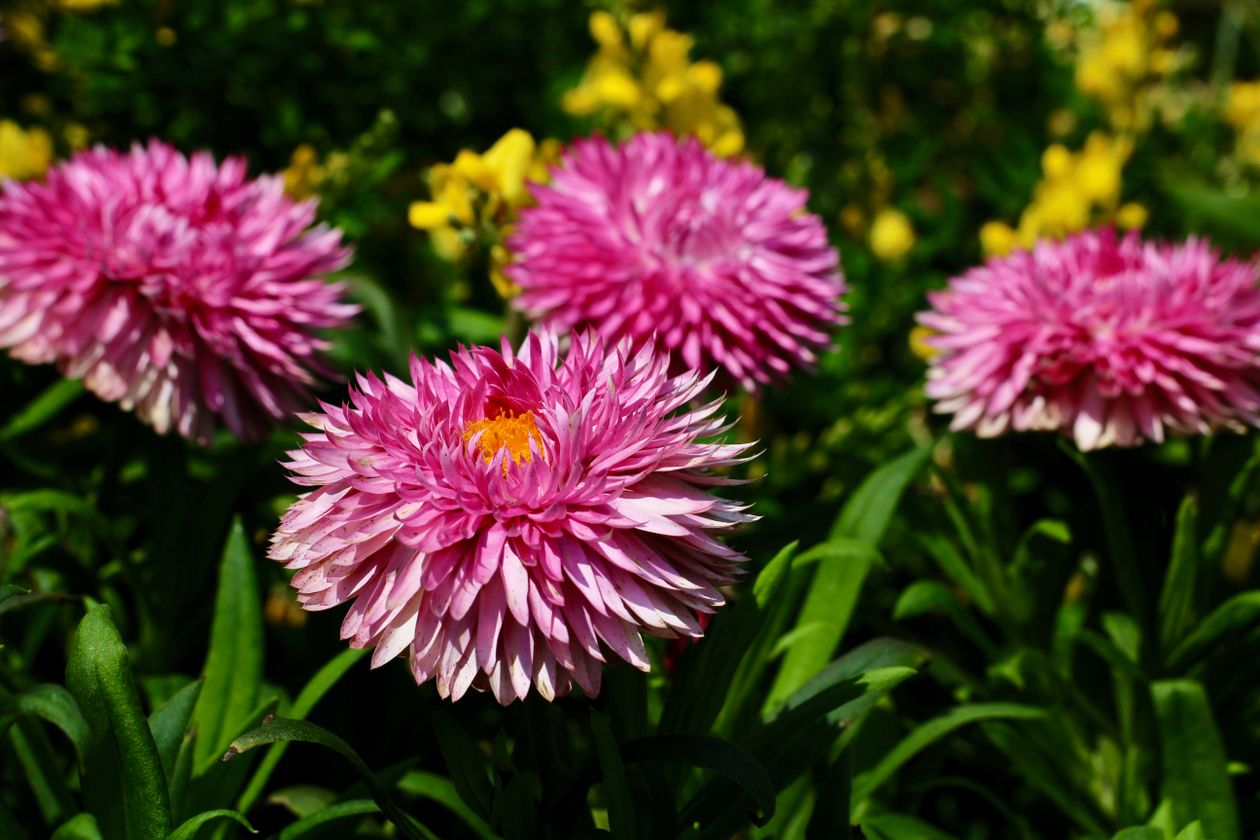
Strawflower (Xerochrysum bracteatum) is the everlasting flower of dried arrangements, and its spacing question has two correct answers because it is grown two ways. In the garden, where the plant itself is the display, space it 12 inches apart: NC State Extension sizes most cultivars at 2 to 3 feet tall, with dwarf forms near 12 inches and some types reaching 5 feet, and a 12 inch grid gives a standard cultivar room to branch and carry dozens of blooms. In the cutting bed, where straight stems are the crop, the same plant goes in at 6 inches and grows up instead of out. The planner below carries the 12 inch garden setting; the cutting row is in the table, flagged as the separate system it is.
The disease that referees the argument is downy mildew, the named weakness of strawflower in extension guidance. It thrives in still, humid air inside a crowded canopy, and it is the reason the garden spacing should not be tightened on a whim: a bed planted at 8 inches in a humid climate is a mildew nursery by midsummer. Where the air is dry, the plant is famously tough, with moderate drought tolerance once established and a bloom run that shrugs off heat that melts lesser annuals.
Interactive tool
Plant Spacing Planner: Strawflower
Strawflower is in the crop list below at 12 inches, the garden end of the working bench for a plant NC State sizes at 2 to 3 feet tall for most cultivars. Enter your bed size to count plants, and use the 6 inch cutting bed setting in this guide only where stems, not display, are the crop.
8 tomato plants fit this bed
4 plants per row across 2 rows, on a 24 inch grid. Extension spacing for this crop: 24 in between plants, 48 in between rows.
The grid uses the in-row spacing in both directions, the standard square foot layout for raised beds. In open ground, keep the wider row spacing in the note above so you can walk and weed between rows.
Spacing figures: University of Georgia Cooperative Extension, Circular 963, Vegetable Planting Chart, source.
Edging and containers; standard spacing wastes bed
Match the cultivar to the row before you open the planner. A dwarf strawflower at the 12 inch garden setting leaves bare soil between plants all season, inviting weeds and wasting the bed. A 5 foot type at the 6 inch cutting spacing becomes a thicket that mildews from the center. The seed packet height is the first spacing decision; the table is the second.
Starting the seed and setting out
Strawflower seed is small and needs light to germinate well, so sow it on the surface of the mix or barely cover it, 6 to 8 weeks before the last frost indoors, or direct sow after frost where seasons are long. The plant is a warm season annual with no frost tolerance worth testing; set transplants out only when nights are reliably warm. Pinch the growing tip once, when the plant is 6 to 8 inches tall, to force the branching that fills the 12 inch garden spacing. Unpinched plants at garden spacing grow up as single poles with a tuft of flowers on top and bare knees below.
Water at the base and keep the foliage dry where you can, which is the watering half of the mildew program. Strawflower's moderate drought tolerance is real once the roots are down, and lean watering on established plants, a deep soak when the top 2 inches dry, suits it better than a daily sprinkle that wets the leaves and feeds the disease.
The everlasting harvest, and why spacing serves it
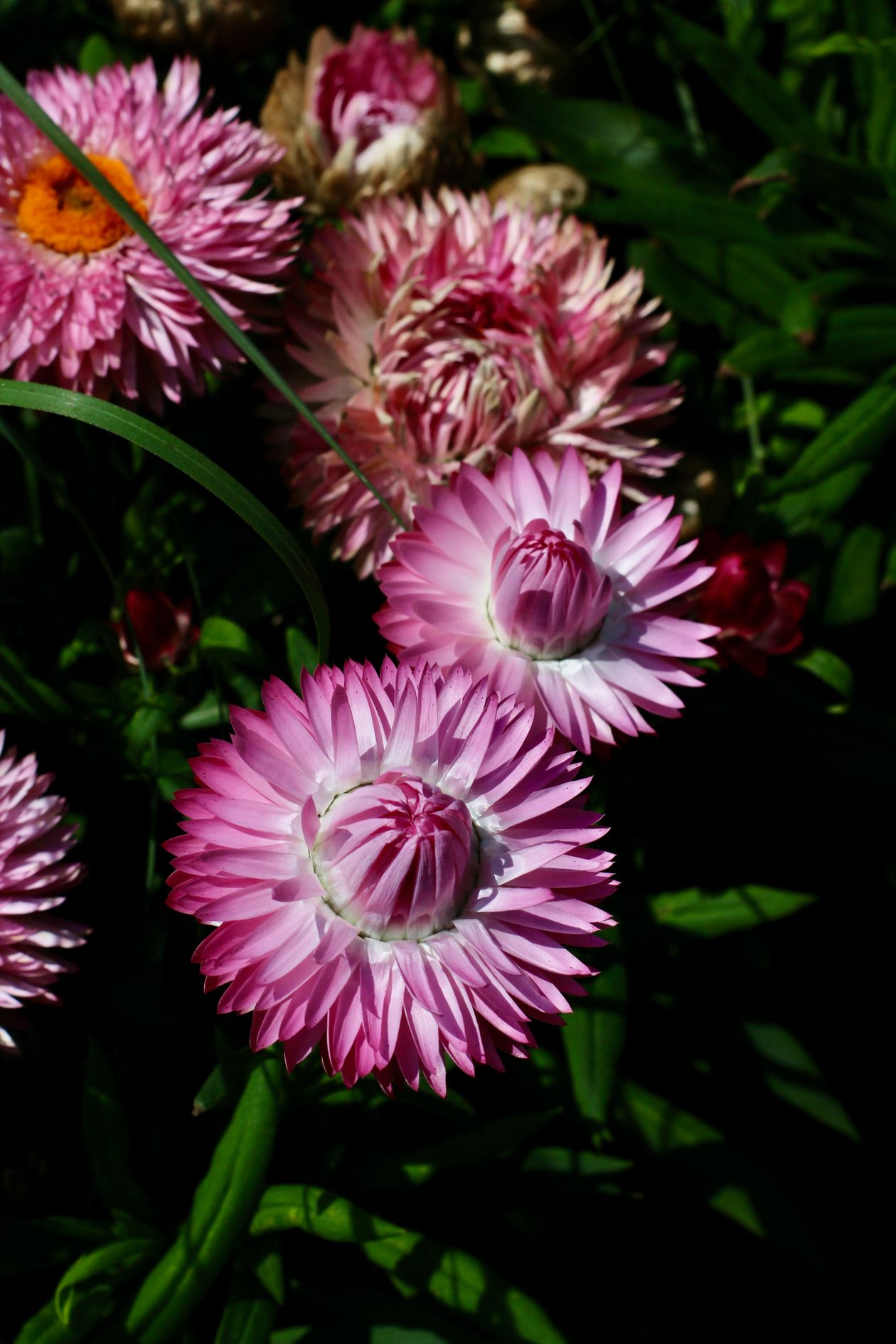
Strawflower is cut for drying before the flower fully opens, when the center disk is still tight and the papery bracts show full color. Cut at that stage, the heads finish opening as they dry and hold their color for years. Cut fully open, they shatter and fade. At garden spacing each plant yields a steady handful of stems a week through the season; at cutting spacing the yield per bed roughly doubles in stem count while the heads run smaller, which dried flower growers accept because wreaths and bunches are built from many small heads anyway.
Leave a few plants uncut at the end of the season if you want seed: the heads that shatter in the bed are the ones that ripen viable seed, and the same plant that filled your vases will fill next year's seed envelope. In the cutting garden rotation, strawflower slots into the same production beds as the zinnias in our guide to plant spacing for zinnias and the gomphrena in our guide to plant spacing for gomphrena, both of which share its heat loving, air wanting character.
Drying the harvest, and growing in containers
Strawflower was bred for the dried bouquet, and the drying method decides whether the harvest keeps for years or molds in a month. Cut stems in the morning after the dew dries, strip the leaves, and wire or bunch them in small bundles of 8 to 10 stems, because a thick bunch traps moisture at its center. Hang the bunches upside down in a dark, warm, airy place, a garage rafter or an attic, for two to three weeks. Darkness is not a nicety: dried strawflower colors fade measurably in sunlit rooms, and the heads you see in florists' shops kept their saturation by drying in the dark. Once dry, the stems are brittle and the heads are best handled by their wires; many growers push a florist wire up the hollow stem at cutting time, while it is still supple, so the dried head can be arranged without snapping its stalk.
The colors hold a ranking worth knowing before you order seed. The reds, oranges, and yellows dry nearly true. Pinks fade toward a softer blush, pleasantly. Whites yellow slightly with age, and the pale pastel mixes fade fastest of all, which is why production dried flower growers lean on the saturated colors and treat the pastels as fresh cut flowers. If your goal is a dried wreath that looks the same next winter, plant the saturated end of the catalog at the cutting spacing and harvest it on the tight bud schedule.
Containers are the third way to grow the plant, and the spacing rule becomes one plant per gallon of mix, roughly. A 12 inch pot carries one standard cultivar comfortably or three dwarfs. Container strawflower drinks more than the in ground plant and loses its drought tolerance advantage, but it gains the mildew fight: a pot on a breezy step, watered at the base, in full sun, is about the cleanest air a strawflower can live in. In humid climates where bed plantings mildew at any spacing, the container crop is not a compromise; it is the reliable version of the plant.
Pink strawflowers with papery petals outdoors
Signs you are getting it wrong
White or gray fuzzy growth under the leaves in midsummer is downy mildew, and its cause is the canopy you built: thin the bed, water at the base, and take the wide row next season. Tall bare stems with flowers only at the top mean the pinch was skipped. Plants that stall after a cool night were set out too early; strawflower has no interest in cold soil. And heads that shatter in the vase were cut too open, a harvest timing fault that no spacing can repair.
Twelve inches apart for garden display, which is the planner setting on this page and suits the 2 to 3 foot height NC State lists for most cultivars. Use 18 inches for the tallest types and in humid climates where downy mildew is a threat, 6 to 9 inches for dwarf cultivars near a foot tall, and 6 inches in cutting beds where straight stems matter more than flower size.
Why are there two spacings for the same plant?
Because the crop differs. A garden plant is grown for its own display, so it gets room to branch, and branching is where the flowers come from. A cutting plant is grown for stems per bed, so it is crowded on purpose and grows up instead of out, yielding more, smaller heads. Neither spacing is wrong; each is wrong for the other's purpose, which is why the table separates them instead of averaging them.
Does strawflower need support at these spacings?
The tall types, 4 to 5 feet, benefit from a layer of netting or a few stakes in windy sites, especially at the wide garden spacing where each plant stands alone. At cutting spacing the plants largely hold each other up. Standard 2 to 3 foot cultivars in a sheltered bed usually stand without help if they were pinched once for branching.
How do you keep strawflower from getting mildew?
With air, mostly. Downy mildew is the plant's named disease problem, and it builds in crowded, humid canopies. Hold the full garden spacing in humid climates, water at the base so the foliage stays dry, and site the bed in full sun with moving air. If mildew took last year's bed at 12 inches, plant next year's at 18 before reaching for sprays.
When do you cut strawflower for drying?
Cut when the papery bracts show full color but the center disk is still closed and tight. At that stage the flower finishes opening as it dries and holds shape and color for years. Hang stems upside down in a dark, airy place for two to three weeks. Flowers cut fully open continue to open as they dry, then shatter, which is the most common reason home dried strawflowers disappoint.
Photo credits: Anderson Wei (Pexels); Anderson Wei (Pexels). Photos are served from this site; follow the credit to the library page for the original.