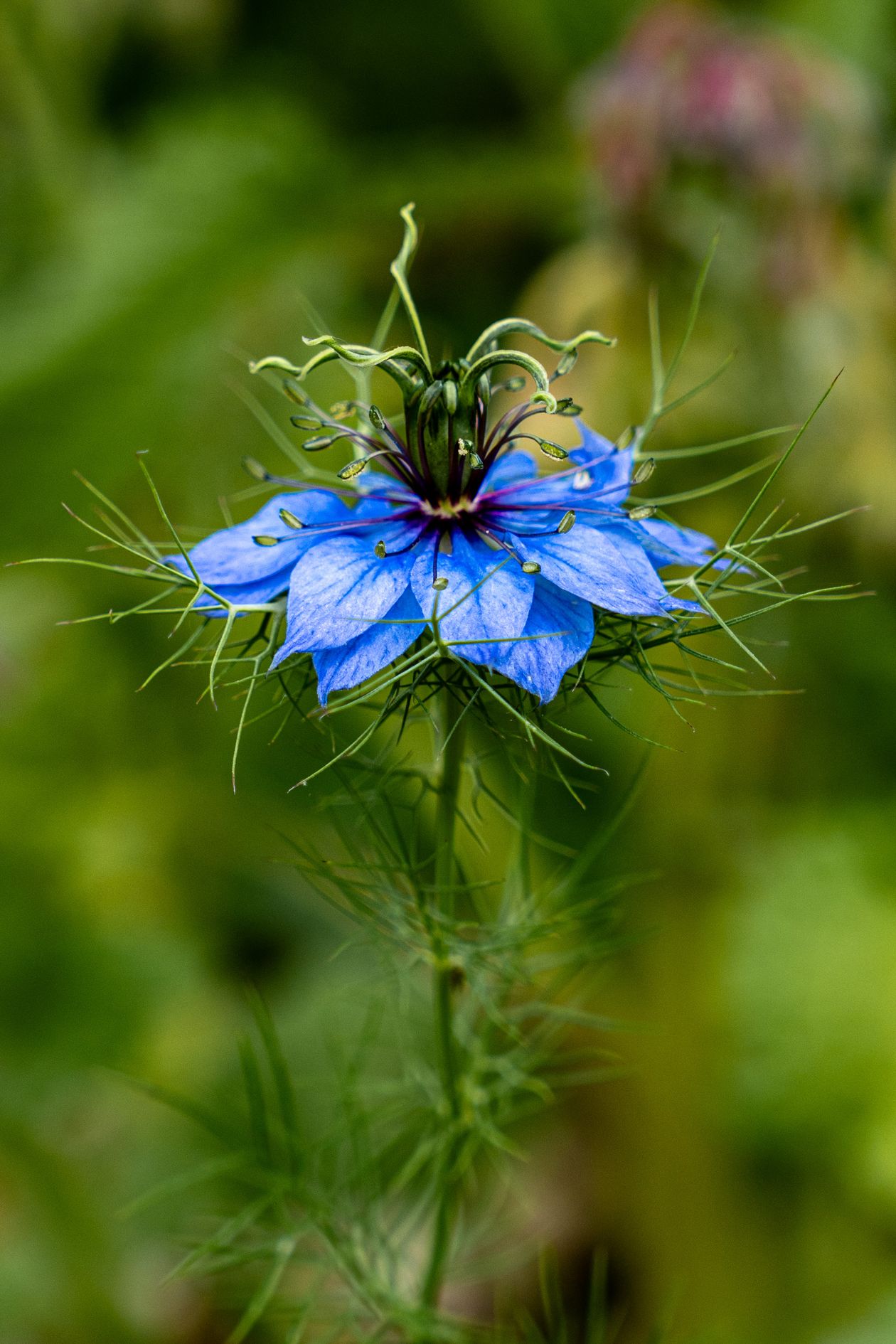
Nigella damascena, love in a mist, breaks the rule that governs most annual spacing: you do not start it in a tray and set it out at the perfect distance. Nigella has a taproot and a famous resentment of transplanting, so it is direct sown where it will flower, sown thick, and thinned to its final spacing. NC State Extension sizes the plant at about 2 feet tall with a spread of 18 inches (1.5 feet), and the planner below runs it at a 12 inch grid with 18 inch rows, a working spacing that fills a bed without crowding the airy, ferny foliage this plant is grown for.
The honest conflict in the sources deserves a flag before the table. The Old Farmer's Almanac bench runs much thinner, thinning seedlings to 8 to 10 inches, and cutting garden practice often packs nigella at 6 inches for straight, single stems. Those are not errors; they are different crops. The Almanac spacing grows specimen plants for the border, the 6 inch grid grows stems for the vase, and the 12 inch planner setting grows a full bed of flowering plants with room to self sow. Pick the row of the table that matches your crop, and read the flagged disagreement before you split the difference, because an averaged 9 inches serves none of the three purposes well.
Interactive tool
Plant Spacing Planner: Nigella, Love in a Mist
Nigella is in the crop list below at a 12 inch grid and 18 inch rows, inside the NC State plant data spread of 18 inches for a self sowing annual that hates transplanting. Enter your bed size to count plants, and read the flagged thinner Almanac bench in this guide before you crowd a cutting bed.
8 tomato plants fit this bed
4 plants per row across 2 rows, on a 24 inch grid. Extension spacing for this crop: 24 in between plants, 48 in between rows.
The grid uses the in-row spacing in both directions, the standard square foot layout for raised beds. In open ground, keep the wider row spacing in the note above so you can walk and weed between rows.
Spacing figures: University of Georgia Cooperative Extension, Circular 963, Vegetable Planting Chart, source.
Spacing by purpose
Purpose
In-row spacing
Row spacing
What it produces
Mixed border, planner standard
12 inches
18 inches
Full plants, fern foliage, flowers plus seed pods
Specimen clumps, Almanac bench
8 to 10 inches after thinning
12 to 18 inches
Fewer, larger plants with heavy pod set
Cutting bed
6 inches
9 to 12 inches
Long straight single stems, smaller flowers
Self sowing drift
Scatter, thin to 12 inches
None
A naturalized patch that returns yearly
Succession is the other half of the nigella plan. A single sowing flowers for a few weeks and then shifts to pods. Sow a short row every 3 to 4 weeks from early spring, and in mild climates again in fall, because fall sowing is preferred where winters allow it: fall sown plants are bigger, earlier, and stronger than spring sown ones. Each sowing gets thinned to the table spacing as soon as the seedlings are large enough to handle, and the thinnings are compost, not transplants. Trying to rescue thinned seedlings into another bed is the classic nigella heartbreak; they sulk and rarely catch up.
Direct sowing depth and timing
Sow seed about 1/8 to 1/4 inch deep, barely covered, because the seed is small and the seedlings are fine. In most climates the first sowing goes out 2 to 4 weeks before the last spring frost; nigella germinates best in cool soil and the seedlings shrug off light frost. Where winters are mild, a September or October sowing overwinters as a small rosette and flowers weeks ahead of any spring sowing, which is why so many experienced growers treat nigella as a fall annual that happens to tolerate spring.
Mark the row. Nigella seedlings look like tiny dill fronds and are easy to weed out by mistake in a busy spring bed. The same feathery foliage that makes the plant pretty makes its seedlings nearly invisible against bare soil, so sow in a defined line or ring and weed around it by hand until the plants are 4 inches tall.
Why the spacing matters more than the feeding
Nigella is a lean soil plant. Rich, heavily fed beds produce soft foliage and fewer flowers, and crowding makes it worse by trapping humidity in the fern like leaves, which invites the mildew that is the plant's main disease in humid summers. Honest spacing is the disease program: 12 inches of air around each plant in the border dries the foliage after rain and keeps the display clean without a single spray. If your summers are humid and your plants mildewed last year, widen to the full NC State spread of 18 inches before you reach for a fungicide.
The seed pods are the second crop and spacing serves them too. The inflated, striped pods dry on the plant and are cut for dried arrangements, and a plant with room makes more and bigger pods. Let a few pods ripen fully and shatter in place and the bed renews itself; that self sowing is the reason nigella, once established in a garden, is usually there for good. Gardeners who deadhead every flower for tidiness get neither pods nor volunteers, and buy seed again every year for a plant that wanted to be free.
Companions and the cutting garden connection
Nigella's blue, white, and pink flowers float above fine foliage at about 2 feet, which makes it a natural filler between stiffer plants. In the cutting garden it runs on the production logic of our guide to plant spacing for cut flowers, tightened to the 6 inch row of the table when stems are the crop. In the border it pairs well with the other cool season annuals spaced in our guides to plant spacing for alyssum and snapdragon plant spacing, all three sown or set out in the same cool window and all three preferring air over richness.
Varieties worth knowing, and the pod harvest
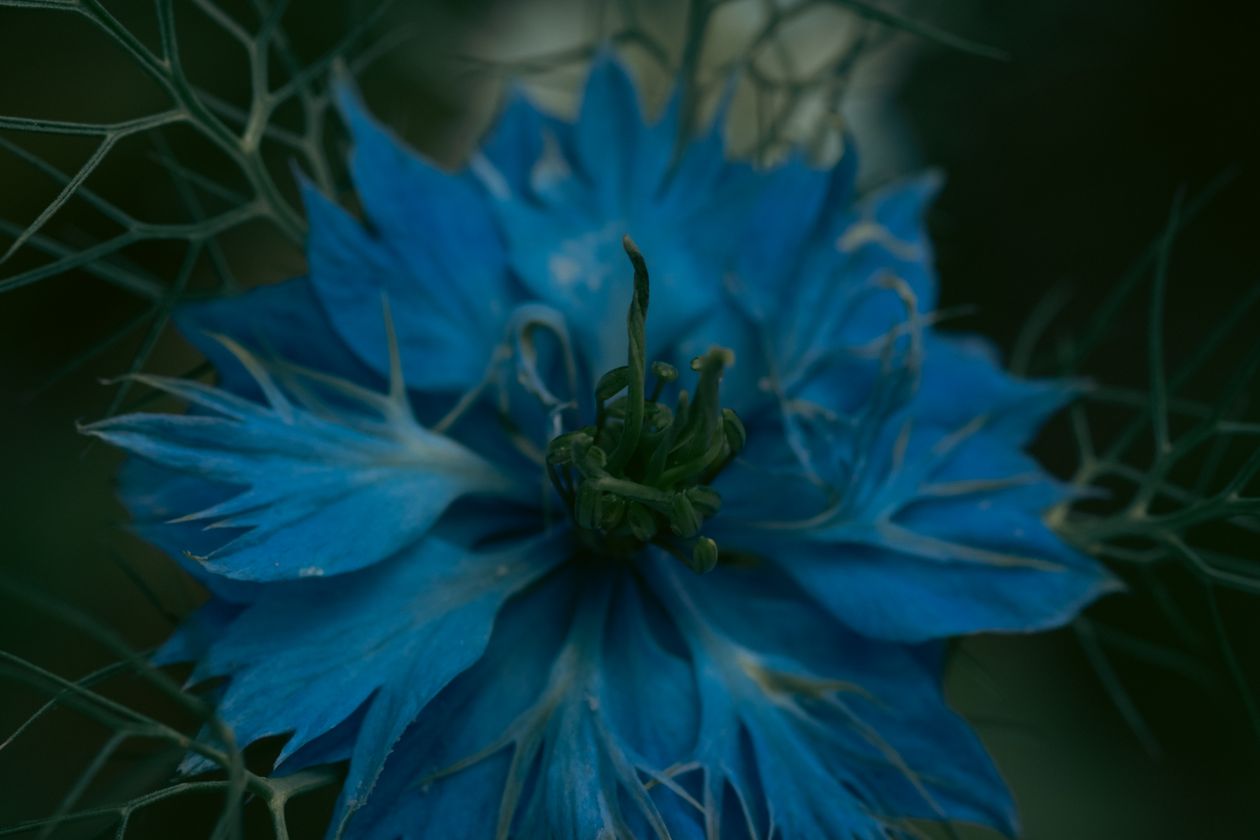
The species runs in named strains that behave differently in the bed. Miss Jekyll types are the classic cornflower blue, the color most gardeners mean by love in a mist. Persian Jewels mixes rose, pink, and blue on plants a little shorter than the species. The white forms read as foam in the border and are the ones florists ask for by name. All of them share the same spacing and the same taproot rules; the variety changes the palette, not the system.
The pods deserve their own harvest note because they are half the crop. Cut pod stems when the balloons are fully inflated and the stripes have colored but before they split and shed seed, unless the stem is one of the designated reseeding stems. Bunch and hang them upside down in a dry, airy place for two weeks. A border plant at the full 12 to 18 inch spacing produces noticeably fatter pods than a cutting bed plant at 6 inches, which is the final reason the two spacings stay separate: stems want company, pods want room.
Saving your own seed
Nigella seed is one of the easiest saves in the annual garden, and it closes the plant's economic loop. Let the chosen pods dry on the plant until they rattle, cut them on a dry morning, and shake the black seed out over a bowl indoors. Winnow the chaff by pouring the seed between two bowls in a light breeze. Stored dry in a paper envelope, the seed stays viable for two to three years, though the freshest seed germinates most evenly. One caution for the seed saver: nigella crosses freely between varieties growing in the same garden, so a bed that grew Miss Jekyll beside Persian Jewels yields seedlings that are neither, usually a pleasant blue pink mixture. Grow one variety per year, or accept the mixture as your garden's own strain, which many gardeners come to prefer.
Blue love in a mist flowers blooming in a garden
Signs you are getting it wrong
Seedlings that vanish after being moved were transplanted; sow in place next time. A bed of all foliage and no flowers is overfed or overshaded, and nigella wants full sun and lean soil. Mildew in a crowded bed is a spacing verdict, fixed by thinning harder, not by spraying more. And a patch that never returns was deadheaded too completely: leave the last flush of pods to shatter if you want the drift to persist.
For a flowering border, thin direct sown seedlings to 12 inches, with rows 18 inches apart if you are planting in rows; NC State Extension lists the plant's full spread at 18 inches, so 12 inches is a deliberate, slightly tight garden spacing that fills in. The Old Farmer's Almanac thins to 8 to 10 inches, and cutting growers use 6 inches for straight stems. Match the spacing to the crop: display, specimen, or stems.
Can you transplant nigella seedlings?
Technically you can, and practically you should not. Nigella forms a taproot early and resents disturbance; transplanted seedlings commonly stall for weeks and never match their direct sown siblings. Sow where the plant will flower, sow thick, and thin ruthlessly to the final spacing. The thinnings go to the compost, not to a second bed.
When do you sow nigella for the longest display?
Sow every 3 to 4 weeks from early spring for succession, and where winters are mild, make a fall sowing your main one: fall sown plants overwinter as rosettes and flower earlier and larger than spring sown plants. A single sowing gives a few weeks of flower followed by the ornamental seed pods, which many growers value as highly as the bloom.
Does nigella really reseed itself?
Yes, reliably, if you let it. Leave the last flush of striped pods to ripen and shatter in place and seedlings will appear the following season without any help. Gardeners who deadhead every flower or mulch the bed thickly in fall break the cycle and have to resow. Most gardens, once they have grown nigella for a year, have it permanently.
Why did my nigella get mildew?
Crowding and humidity, almost always. The fine, ferny foliage holds moisture, and plants spaced tighter than about 10 inches in a humid summer trap wet air at the center of the clump. Thin to the full 12 to 18 inches, water at the base rather than overhead, and give the bed full sun. Powdery mildew on nigella is a spacing diagnosis first and a spray decision second.
Photo credits: Audrey Bory (Pexels); Kaiya Inouye (Pexels). Photos are served from this site; follow the credit to the library page for the original.