Ranunculus Plant Spacing: 6 to 8 Inches, Claws Down
By the Windchime Walker editorial team
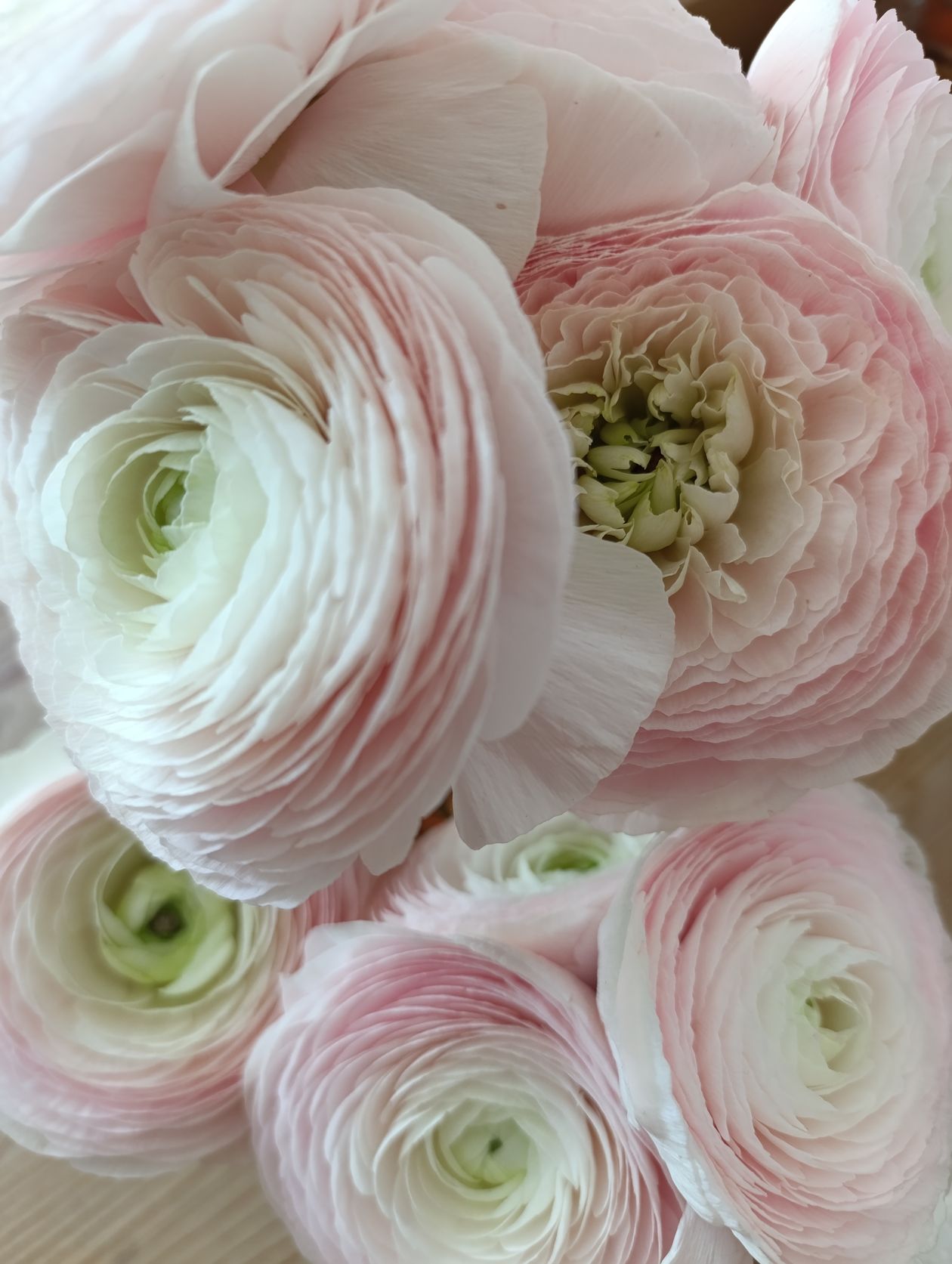
Photo: Ema Trinh / Pexels
Ranunculus asiaticus, the Persian buttercup of florists, is planted as a dry, claw shaped tuber, and the spacing instruction is unusually specific in the extension literature. NC State Extension states it plainly: plant tubers 2 inches deep and 6 to 8 inches apart, with the root claws pointing down. The planner below carries the tight end of that bench, 6 inches in the row with 8 inch rows, because ranunculus is almost always grown as a cut flower crop where stem count per bed is the point.
A second extension bench disagrees, and it is flagged here rather than averaged. Clemson Extension runs ranunculus tighter and shallower, at 3 to 6 inches apart and 2 to 3 inches deep. The two benches reflect different growing traditions: Clemson's numbers suit its home garden factsheet context of small plantings in the Southeast, while the NC State figures match florist production practice. A grower who splits the difference at 5 inches and splits the depth at 2.5 inches has followed neither. Pick the bench for your purpose: production beds on the NC State row, small home plantings can use Clemson's tighter grid, and keep the depth at 2 inches either way unless your soil is very sandy.
Interactive tool
Plant Spacing Planner: Ranunculus Tubers
Ranunculus is in the crop list below at 6 inches in the row and 8 inch rows, the tight end of the NC State bench of 6 to 8 inches apart with tubers planted 2 inches deep, claws down. Enter your bed size to count tubers, and read the flagged Clemson bench in this guide before you plant.
8 tomato plants fit this bed
4 plants per row across 2 rows, on a 24 inch grid. Extension spacing for this crop: 24 in between plants, 48 in between rows.
The grid uses the in-row spacing in both directions, the standard square foot layout for raised beds. In open ground, keep the wider row spacing in the note above so you can walk and weed between rows.
Spacing figures: University of Georgia Cooperative Extension, Circular 963, Vegetable Planting Chart, source.
The planting numbers in one table
Decision
NC State bench
Clemson bench
Planner setting
Spacing in the row
6 to 8 inches
3 to 6 inches
6 inches
Depth
2 inches
2 to 3 inches
2 inches
Orientation
Claws down
Claws down
Claws down
Season, mild climates
Fall planting
Fall planting
Fall
Season, cold climates
Spring, as a treated annual
Spring
Spring
Ranunculus is a cool season plant with a hard floor on cold: the foliage and tubers are injured below about 28 degrees Fahrenheit, which is why the planting calendar splits by climate. In zones 8 and warmer, tubers go in during fall and overwinter for an early spring bloom. In colder zones, they are planted in early spring, or pre-sprouted indoors in late winter, and grown as a spring annual that finishes before summer heat. Heat is the other wall: the plant stops when nights stay warm, so a late planting in a warm spring produces leaves and disappointment.
The pre-soak and the claw rule
Dry ranunculus tubers look like tiny dried octopuses, and they plant better rehydrated. Soak them in room temperature water for 3 to 4 hours before planting; they plump visibly. Some growers extend the soak with gentle aeration, but the simple soak is enough for garden purposes. Plant immediately after soaking, claws down, because the claws are the roots and the crown sits on top. A tuber planted claws up usually still grows, sending its shoots on a detour around the tuber, but it emerges later and weaker, and at production spacing those weak plants are the gaps in the bed.
Soil decides survival more than spacing does. Ranunculus demands sharp drainage: sandy or amended soil, raised beds in anything heavy, and no clay that holds winter water around the tubers. The plant's other demand is a steady, moderate moisture supply while growing, which in a raised bed with the drainage it wants means watering on the container rhythm rather than the field rhythm. Rotted tubers in spring almost always trace to wet winter soil, not to cold alone.
Spacing for stems versus spacing for show
At the planner's 6 inch grid, a 3 foot wide bed carries rows of plants that support each other, flower over a long window, and cut well. That density works because ranunculus foliage is modest and the plants are pulled or finished within a season. For a display planting in a border, take the wide end of the NC State bench, 8 inches, and accept fewer, larger flower heads. For a florist bed where every stem is harvested, some growers push to the Clemson tight end of 3 to 4 inches for the smaller flowered series; the trade is smaller blooms and more disease pressure in humid weather, and it only pays where airflow is good and the crop is cut young.
The cut flower context is the same one that governs our guide to plant spacing for cut flowers, and ranunculus shares its bed season with the other cool season flowers in our guides to lisianthus plant spacing and plant spacing for dahlias, though dahlias run the opposite calendar in cold climates, planted after frost for summer bloom.
Feeding, cutting, and the end of the season
Ranunculus is a moderate feeder: a balanced fertilizer at planting and one follow up as buds form is enough, and excess nitrogen makes soft foliage that flops at production spacing. Cut flowers in the morning when the buds show color and feel like a marshmallow, before they open; cut tight and the vase life suffers, cut fully open and it collapses. In mild climates the tubers can be left in a well drained bed or lifted, dried, and stored like dahlia tubers once the foliage yellows. In cold climates most gardeners treat them as annuals and start fresh, because the tubers are cheap and the storage losses are real.
Pre-sprouting indoors, step by step
Cold climate growers who want flowers before the heat arrives start ranunculus inside, and the method is specific enough to write as a sequence. Soak the tubers 3 to 4 hours. Fill a flat or shallow tray with barely moist potting mix, lay the tubers on the surface claws down at the planner spacing of about 6 inches, and cover with another inch of mix. Set the tray somewhere cool, 50 to 55 degrees Fahrenheit, for 10 to 14 days, checking that the mix stays damp but never wet; a heated room is the usual failure, because warmth plus moisture plus a dormant tuber is a rot recipe. Roots and small sprouts appear at the crown when the tray is working. Plant the pre-sprouted tubers out at the full table spacing and depth as soon as the soil can be worked and hard freezes are past, handling them by the tuber, not the sprout.
The head start is worth 2 to 3 weeks of bloom, which in a crop with a hard summer deadline is often the difference between a harvest and a near miss. It also moves the most rot prone stage, the dormant tuber waking in cold wet ground, into a tray you can inspect daily. Tubers that soften or smell in the tray get discarded before they ever reach the bed, which is a second, quieter advantage: the bed starts at full density instead of showing gaps where dead tubers sat.
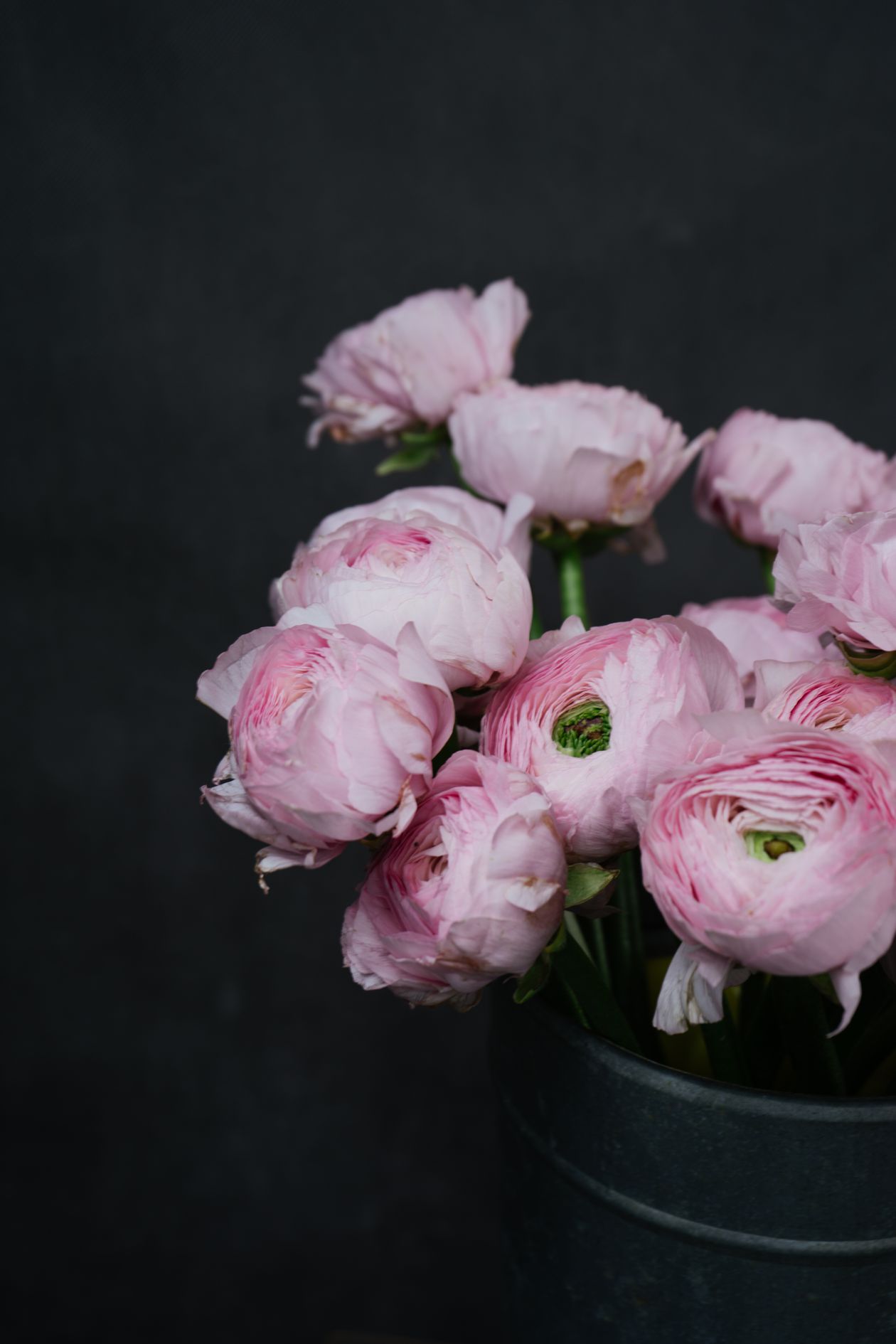
Pink ranunculus blooms arranged in a dark metal pot
Signs you are getting it wrong
Tubers that never emerge were planted claws up in cold wet soil, or rotted in a bed that held winter water. Plants that green up and stall as days warm were planted too late; ranunculus is a cool season crop with a hard stop. Spindly stems at tight spacing in a humid spring mean the Clemson end of the bench was a mistake for your airflow, and next season belongs at 8 inches. And flowers that open small and blow in a day were cut too late or grown too warm, not spaced wrong.
Plant them 6 to 8 inches apart on the NC State Extension bench, and the planner on this page uses 6 inches for production beds. Clemson Extension publishes a tighter bench of 3 to 6 inches for home plantings. The two disagree, and this guide does not average them: use 6 to 8 inches for cut flower beds and borders, and reserve the tightest spacings for small home plantings with good airflow.
How deep do ranunculus tubers go, and which way is up?
Two inches deep, with the claw shaped roots pointing down and the crown on top. NC State specifies both the depth and the orientation. Clemson's factsheet allows 2 to 3 inches deep. Soak the dry tubers in room temperature water for 3 to 4 hours before planting so they plump up, then set them claws down and cover with 2 inches of soil.
When do you plant ranunculus?
By climate. In zones 8 and warmer, plant in fall for late winter and spring bloom. In colder zones, plant in early spring, or pre-sprout the tubers indoors in late winter for a head start. The plant is injured below about 28 degrees Fahrenheit and quits in summer heat, so the whole crop lives in the cool window between those two walls.
Can ranunculus grow in clay soil?
Not happily, and usually not for long. The tubers rot in soil that holds water, especially over winter. Grow in raised beds with a sandy, amended mix, or in containers, anywhere the native soil is heavy clay. Drainage is the non negotiable requirement for this plant; spacing, feeding, and variety all matter less than water moving away from the tuber.
Do ranunculus come back every year?
In mild climates with dry winter soil, yes, the tubers can persist and bloom again, and they can also be lifted, dried, and stored after the foliage yellows. In cold or wet winter soils, most gardeners treat ranunculus as an annual and plant fresh tubers each season. Given the low cost of the tubers and the high loss rate in storage, the annual treatment is the pragmatic default for most home growers.
Photo credits: Ema Trinh (Pexels); Albina White (Pexels). Photos are served from this site; follow the credit to the library page for the original.