Most spacing advice on this site is a distance. Lisianthus spacing is a lattice. The plant, grown almost entirely as a cut flower, is set out as plugs on a measured grid, typically 6 by 6 inches, with horizontal support netting raised above the bed as the stems grow, so the crop stands as a uniform stand of upright stems that can be harvested cleanly for months. Cornell's cut flower program work gives the working benches: the 6 by 6 grid as the common standard, and 9 by 9 for the branching series whose plants throw several harvestable stems each and need the room to do it. One production source, Sakata's cultural guidance, flags a tighter 4 by 6 arrangement for single stem production; this article records it as the production end of the range rather than blending it into the standard, because a home cutting garden copying 4 by 6 without the professional harvest rhythm will crowd itself by midsummer. The planner carries lisianthus at 6 inches, the standard grid.
Lisianthus Plant Spacing: The Cut Flower Grid
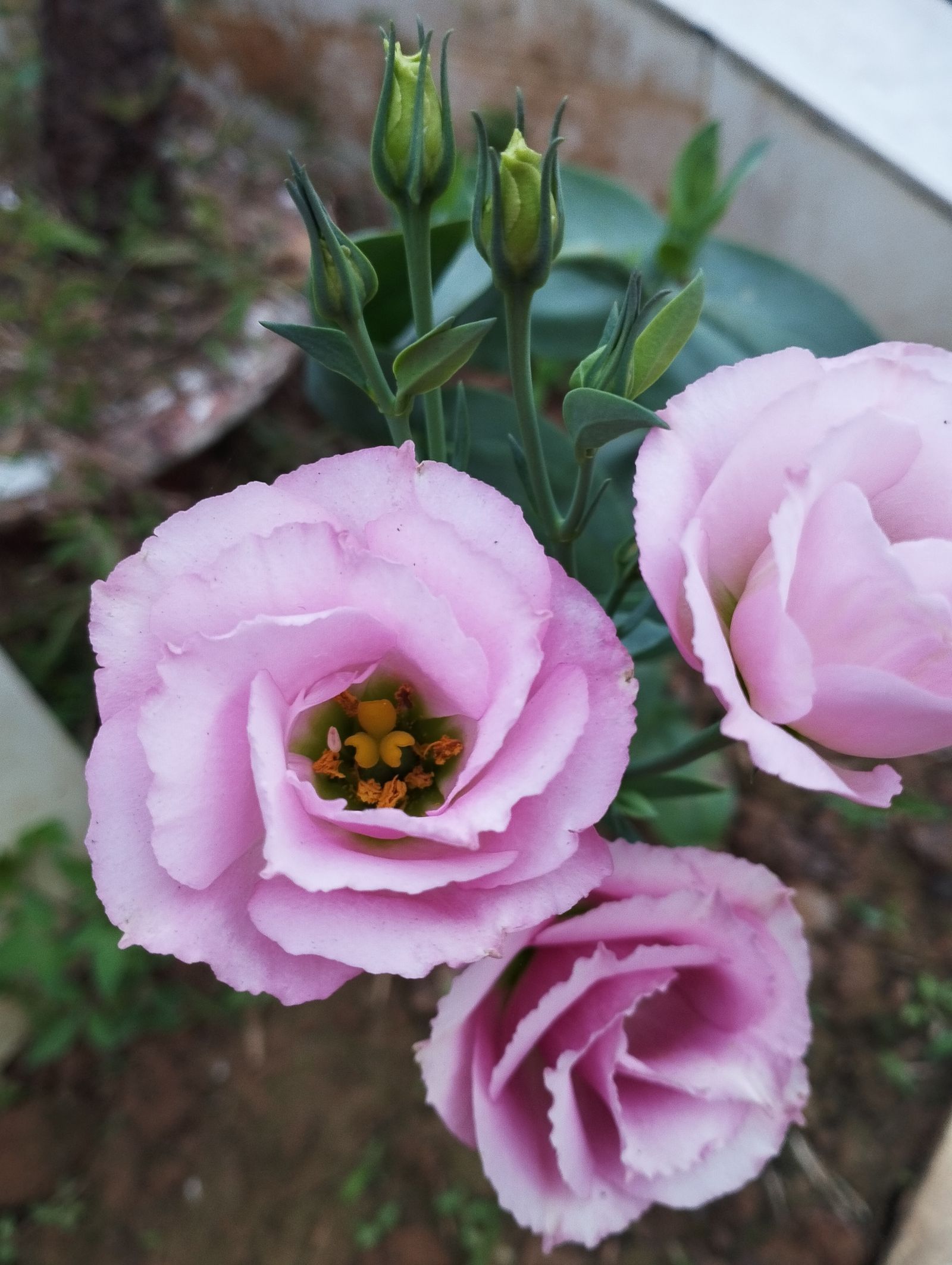
Photo: Jobayer Ahmed / Pexels
Plant Spacing Planner: The Lisianthus Grid
Lisianthus is in the crop list below at the common 6 inch grid from the Cornell guide. Enter your bed size to count plants, then read the branching type bench in this article.
8 tomato plants fit this bed
4 plants per row across 2 rows, on a 24 inch grid. Extension spacing for this crop: 24 in between plants, 48 in between rows.
The grid uses the in-row spacing in both directions, the standard square foot layout for raised beds. In open ground, keep the wider row spacing in the note above so you can walk and weed between rows.
Spacing figures: University of Georgia Cooperative Extension, Circular 963, Vegetable Planting Chart, source.
The Grid Benches
| Production style | Grid | Plants per square foot | Notes |
|---|---|---|---|
| Standard, most series | 6 by 6 inches | 4 | The common Cornell bench; best default |
| Branching series | 9 by 9 inches | About 1.8 | Multi stem plants need the room |
| Single stem, production | 4 by 6 inches | 6 | Sakata guidance; harvest discipline required |
| Home cutting garden | 6 by 6 to 8 by 8 inches | 2.25 to 4 | The forgiving end; start here |
The grid is laid out across a bed 3 to 4 feet wide, the width a grower can reach into from both sides, because lisianthus is harvested stem by stem, repeatedly, and a stem you cannot reach without leaning on its neighbors is a stem that gets snapped or skipped. Within the bed the grid keeps every plant at the same distance from its neighbors in all directions, which a row layout never does, and the uniformity matters for a crop whose stems are graded by length and straightness: evenly lit plants grow evenly, and a plant shaded on one side by a closer neighbor bends toward the light and grades out.
Netting: The Other Half of the System
A lisianthus grid without support netting is a plan for a July collapse. The stems are tall, slender, and top heavy with buds, and the first summer storm or heavy watering lays an unsupported stand flat, where the stems kink, curve upward from the kink, and become unmarketable and ugly in a week. The standard system stretches one or two layers of horizontal plastic or twine netting, with openings matched roughly to the grid, across the bed on posts, the first layer at about a foot high, and the stems grow up through the openings and are held upright by the lattice. Raise or add the second layer as the crop grows. Home growers can substitute a grid of twine woven between stakes, which is the same idea at garden scale. The netting is also why the grid spacing must be decided before planting and not adjusted later: the holes in the net are the spacing, and a plant that comes up between holes leans all its life.

The Slow Start, and Why the Grid Fills Late
Lisianthus is famously slow from seed, taking months to reach transplant size, and the young plants sit as tiny rosettes for weeks after planting out before they bolt upward. This creates the grid's one psychological trap: a freshly planted 6 by 6 bed looks absurdly empty, and the gardener is tempted to interplant something fast to fill it. Resist. Anything vigorous enough to fill the gaps in spring will be shading and crowding the lisianthus exactly when it bolts in early summer, and the crop's whole value is in that bolt. If the empty bed offends, the honest filler is a mulch of clean straw, which holds moisture and suppresses the weeds that would otherwise colonize the open grid and become impossible to pull once the netting is up. Weed the bed thoroughly at planting, mulch it, and leave it alone; the stand that looks empty in May is a wall of stems in July, and the grid you held is the reason they are straight.
Water, Soil, and the Long Season
The grid holds the crop in the ground from spring to frost, and the soil under it has to be planned for the duration: fertile, evenly moist, and drained, in full sun. Lisianthus resents drying out at the plug stage and resents wet feet at every stage, and the grid concentrates this demand, because four plants per square foot draw on the same soil volume all season. Drip lines run under the netting are the professional answer and the home answer too, delivering water to the soil without wetting the foliage or the blooms, which spot and spoil under overhead watering. Feed lightly and regularly through the season rather than heavily at planting; a crop harvested stem by stem for months is eating steadily the whole time. In hot climates a light shade cloth over the hoop above the bed during the worst weeks keeps stems from shortening, and the bed's posts that hold the netting hold the cloth as well, one more reason the system is built as a structure rather than a row.
Groups and Successions
Lisianthus varieties are bred in groups that flower at different speeds, from the earliest group 1 to the latest group 4, and a cutting garden plants across the groups so the harvest runs in sequence rather than in a single overwhelming flush. The spacing does not change by group; the grid is the grid. What changes is the map: label which grid section holds which group, because by harvest the plants look alike and the succession only works if you know which block is peaking. A second sowing, started in winter for a late summer planting in mild climates, extends the season further, and it goes onto its own grid with its own netting, never squeezed into the gaps of the first stand, because a young rosette planted among mature stems is shaded, stunted, and wasted. The discipline of this crop, from the measured grid to the labeled groups, is that everything is decided on paper in winter and merely executed in spring. It is the least improvisational flower in the garden, and grown its way, one of the most rewarding, with a vase life that outlasts almost everything else you can cut.
The Home Garden Version, Without Apology
A home gardener does not need a field of lisianthus to grow it well; a single 3 by 4 foot bed on the 6 inch grid holds 48 plants, which across a summer is more cut flowers than most households can use, and the bed runs on the same system at miniature scale: netting on four posts, drip line under the mulch, groups labeled at the corners. What the home version should not do is apologize its way out of the system, planting the plugs in a mixed border among perennials at ornamental spacing, where the stems lean on their neighbors, the harvest is a tangle, and the plant earns its difficult reputation in a setting it was never bred for. Lisianthus is a crop plant wearing a flower's face. Grown as a crop, on its grid, it is reliable and generous; grown as a border perennial, it is a disappointment with good public relations. The grid is not commercial fussiness imported into the garden. It is the plant's native arrangement, the one its whole growth habit assumes.
Vase Life and the Harvest Cut
The crop's reward justifies the system: lisianthus is one of the longest lasting cut flowers a garden can produce, holding one to two weeks in the vase, with buds along the stem continuing to open after cutting, so a stem harvested with two open flowers and a column of buds performs for days like a small flower shop. Cut in the cool of the morning, when at least two blooms on the stem are open, because a stem cut in tight bud never opens properly; strip the leaves that would sit below the water line, and stand the stems in deep clean water at once. The grid serves the harvest as it served the growth: stems are taken one by one from a stand that stays upright and undamaged around the cuts, and the branching types, given their wider 9 by 9 grid, return stem after stem from the same plant across the season. A flower that behaves like this in the vase is worth a measured grid and a roll of netting in the garden, which is the whole argument of this page restated at the kitchen table.
Starting From Seed, Briefly
Most growers buy lisianthus as plugs, and the reason is the seed's timetable: sown in mid winter, it germinates slowly and grows as a tiny rosette for months, demanding light, even moisture, and patience through the exact weeks when the seed starting shelf is most crowded. The home grower who does start it should sow by January in the north, keep the seedlings cool and bright, and never let the rosettes dry out or sit in heat, both of which can trigger a stubborn dormancy called rosetting, where the plant refuses to bolt. The grid does not care where the plugs came from; it cares that they arrive at planting as sturdy rosettes ready to run, and a bought plug that arrives on time is worth more than a home seedling that arrives exhausted. Choose the source by the calendar, not by pride.
Related guides
Guides in the same spacing family:
- Plant Spacing for Delphinium: Spacing by Height Class, Stakes Included
- Plant Spacing for Echinacea: Coneflower Spacing for Drifts, Beds, and Bees
- Snapdragon Plant Spacing: Airflow Is Rust Control
- Plant Spacing for Dahlias: Spacing by Size Class, With Stakes at Planting
- Ranunculus Plant Spacing: 6 to 8 Inches, Claws Down
- Plant Spacing for Cut Flowers: The Production Grid
Frequently Asked Questions
How far apart should lisianthus be planted?
On a grid: 6 by 6 inches is the standard bench from Cornell's cut flower work, opening to 9 by 9 inches for the branching series that produce several stems per plant. A tighter 4 by 6 grid appears in Sakata's production guidance for single stem growing; it demands professional harvest discipline and is recorded here rather than recommended as the default. Home cutting gardens do best at 6 by 6 to 8 by 8.
Why is lisianthus planted on a grid instead of in rows?
Because the crop is harvested stem by stem for months and every stem must stand straight and reachable. A grid gives each plant equal distance and equal light in all directions, so stems grow uniformly, and it matches the support netting the crop grows through. Rows leave the plants at uneven distances, shaded on one side, bending toward the light and grading out as crooked stems.
Does lisianthus need support netting?
Yes, at any spacing. The stems are tall, slender, and top heavy, and an unsupported stand collapses in the first storm, kinking stems that then curve and spoil. Stretch one or two layers of horizontal netting over the bed on posts, the first at about a foot high, and let the stems grow through it. A woven twine grid between stakes does the same job at garden scale.
Can I plant lisianthus closer to fill the bed faster?
The bed will look empty for weeks regardless, because the young plants sit as small rosettes before bolting; closer spacing does not fix the empty look, it only guarantees crowding when the bolt comes. Interplanting a fast filler is the same mistake with extra steps. Mulch the open grid, keep it weeded, and let the stand fill on its own schedule. It will.
How wide should a lisianthus bed be?
Three to four feet, the width you can reach into from both sides without leaning over the crop. Harvesting is a repeated, selective job, and every stem must be reachable without stepping into the bed or pressing on its neighbors. The bed width, the grid, and the netting are one system; design them together before the plugs arrive.
Photo credits: Jobayer Ahmed (Pexels); Engin Akyurt (Pexels). Photos are served from this site; follow the credit to the library page for the original.