Delphinium is the spire flower of the cottage border, and its spacing problem is that the name spans a threefold range of plant. NC State's Delphinium elatum profile sorts the genus into height classes, from short types at 3 to 5 feet to tall hybrids over 6 feet, and a spacing that suits the short class buries the tall one. The perennial bench most growers work from is 12 to 18 inches apart, which is right for the short and mid classes and too tight for the giants; grower guides for the tall hybrids print 24 to 36 inches. This page refuses to average those into a single meaningless number. Instead it spaces by height class, pairs each class with the stake it needs, because delphinium staking is not optional equipment, and covers the two facts that change how you plan a delphinium bed: the plant is short-lived, and every part of it is poisonous.
Plant Spacing for Delphinium: Spacing by Height Class, Stakes Included
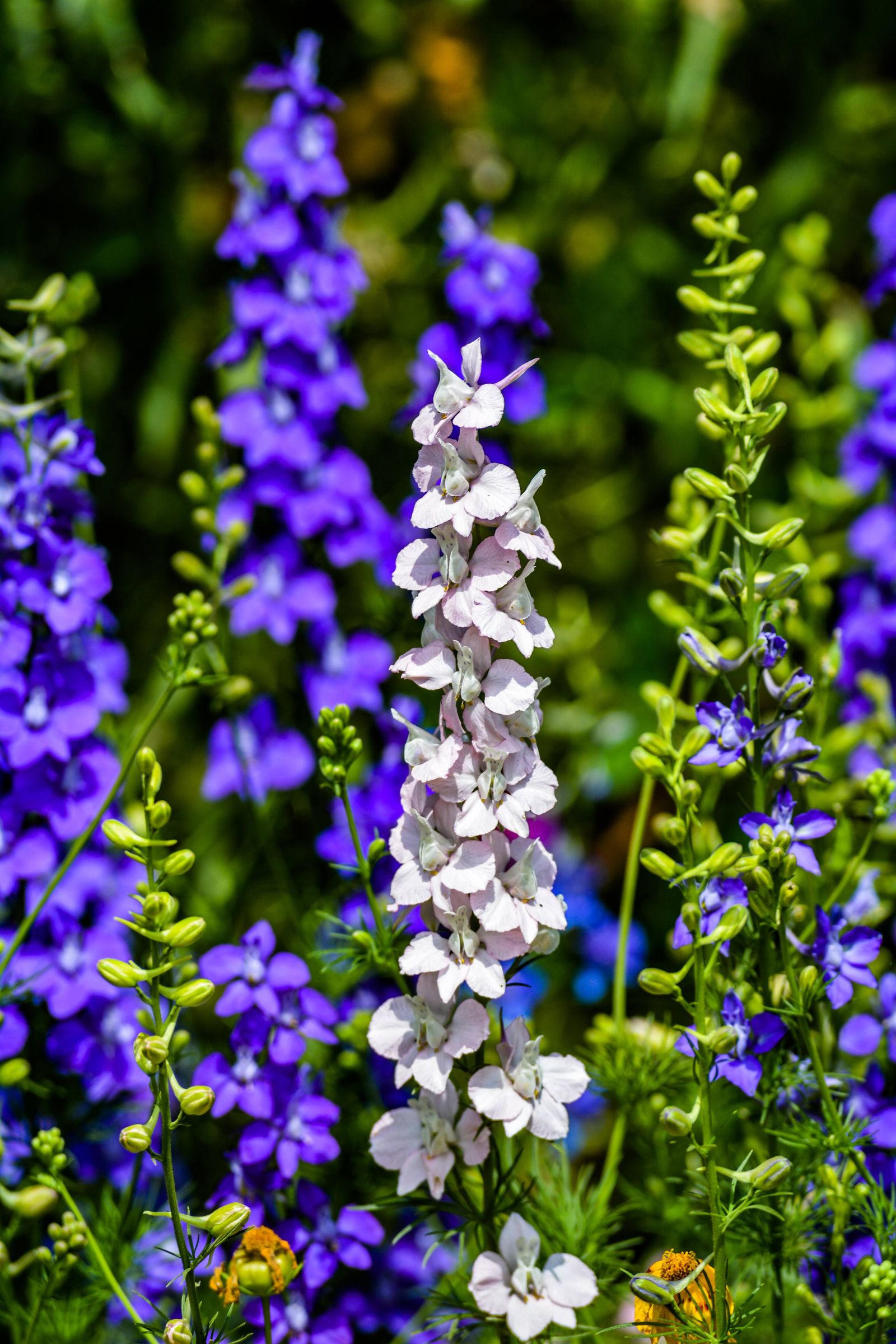
Photo: Saakshi Yadav / Pexels
Plant Spacing Planner: The Delphinium Row
Delphinium is in the crop list below at 12 to 18 inches for perennial plantings, the planner at 18 in rows 24 apart. Enter your bed size, then read the height class table and the staking plan in this article.
8 tomato plants fit this bed
4 plants per row across 2 rows, on a 24 inch grid. Extension spacing for this crop: 24 in between plants, 48 in between rows.
The grid uses the in-row spacing in both directions, the standard square foot layout for raised beds. In open ground, keep the wider row spacing in the note above so you can walk and weed between rows.
Spacing figures: University of Georgia Cooperative Extension, Circular 963, Vegetable Planting Chart, source.
The Height-Class Table
Find your variety's mature height on the seed packet or plant tag, and plant from its row. The planner on this page runs 18 inches in the row and 24 between rows, the top of the perennial bench, which suits the mid class and gives the border standard layout.
| Height class | Mature height | Spacing | Support |
|---|---|---|---|
| Short border types | 3 to 4 feet | 12 to 15 inches | Single cane or grow-through ring |
| Mid class | 4 to 5 feet | 15 to 18 inches | Ring or three canes per plant |
| Tall hybrids | 5 to 6 feet and over | 24 to 36 inches | Stout stake per spike or a tied frame |
The tall-class band deserves its flag: the 24 to 36 inch figure comes from grower guides for the big hybrid strains, against the 12 to 18 inch general perennial bench, and the two are reconciled by class, not by splitting the difference. A 6-foot delphinium at 15 inches is not a spacing compromise; it is a plant whose spikes will lean on, shade, and eventually fall across its neighbors. Air belongs in the same calculation as it does for every tall border perennial: delphinium foliage mildews in still, wet air, and the wide end of each band is the humid-climate choice. Delphiniums also resent root competition and crowding from shrubs at the border's back, so the spacing discipline extends to the neighbors: give the back row its measured room from the fence and the shrubs alike, the same principle the site's fence-line raised bed guide applies to beds.
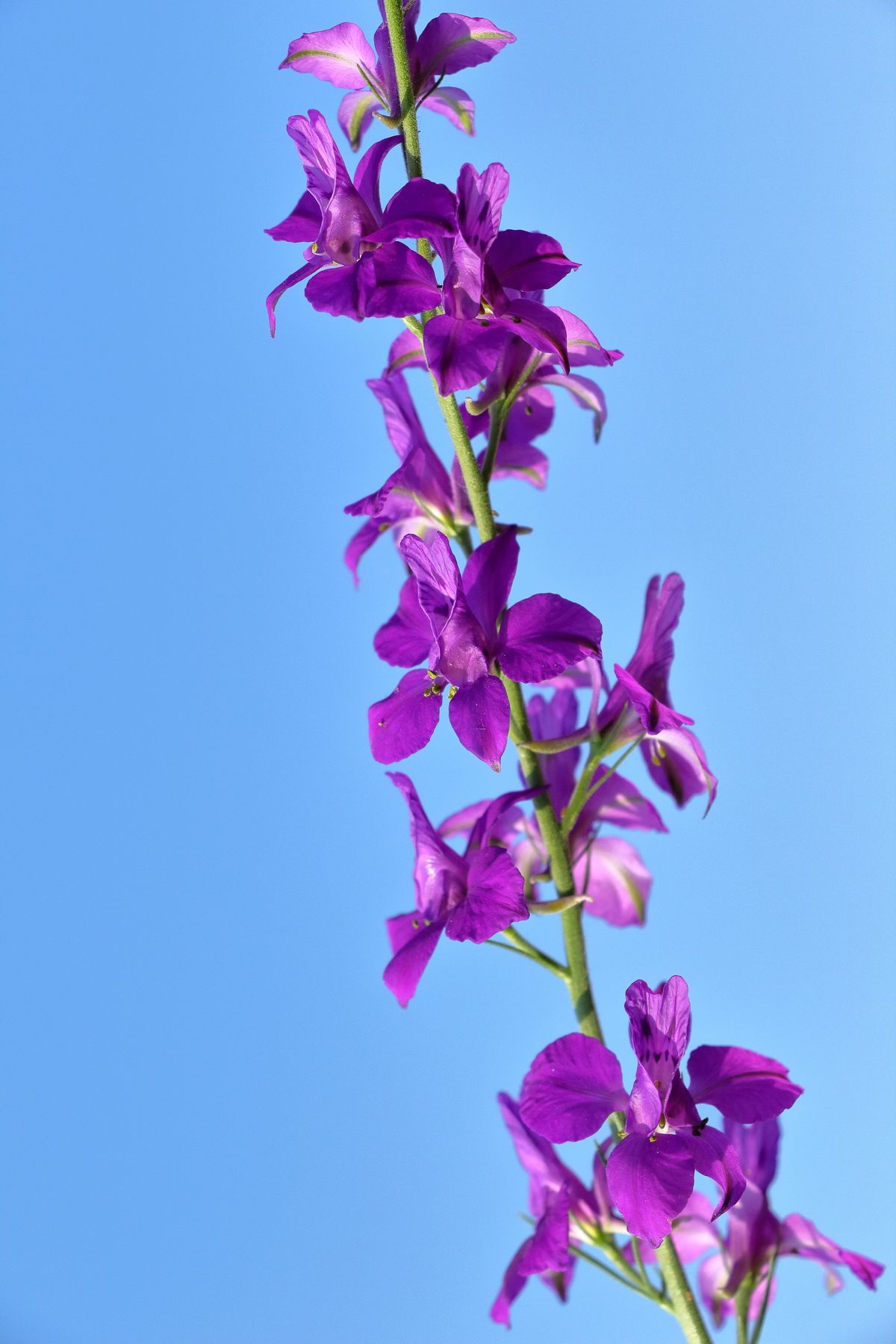
Staking: Part of the Spacing, Not an Accessory
NC State's profile states it without decoration: staking is necessary. A delphinium spike in flower is a sail full of water-heavy blooms on a hollow stem, and the first thunderstorm of bloom season lays an unstaked planting flat, often snapping stems at the base so the season ends in an afternoon. The support system is installed at planting or at first spring growth, never after the spikes elongate. Short types take a grow-through ring set over the crown in spring, which the foliage hides within weeks. Mid and tall types take individual support: either a stout stake per plant with each spike tied in loosely as it rises, two or three ties up the spike, or canes and twine run as a frame along the row. The ties matter as much as the stakes; tie loosely with soft material, because a spike cinched tight snaps at the tie in wind, while a spike in a loose loop rides the gust and returns. Spacing and staking are one decision: the wide tall-class bench exists partly so the stakes and ties can be worked around each plant without breaking its neighbors, and a border too tight to stake is a border that will fall.
The Short Life and the Succession Plan
Delphinium is a short-lived perennial, 3 to 5 years on the NC State bench, and in hot, humid climates many gardeners run it as a biennial or a glorious annual. That lifespan changes the planting plan in two ways. First, succession: sow or buy a few new plants each year rather than a whole border at once, so the bed always holds plants in their prime second and third years instead of aging out together. Second, placement honesty: a plant with a 4-year horizon does not get the border's single best spot forever, and it pairs well with longer-lived neighbors that fill in as individual delphiniums exit. The second-flush cutback extends each plant's season in the same spirit. After the first spikes finish, cut them down to the basal foliage, feed and water, and most plants push a second, shorter set of spikes for late summer. The regrowth is smaller, which is a virtue at the border's front edge of the delphinium group, and the cutback plants stand better than the first flush did. Deadheading alone, leaving the stem, does not produce the same flush; the cut goes to the base of the spent spike.
The Toxicity Terms
NC State rates delphinium's poison severity as Medium, with all parts of the plant toxic, and the alkaloids are most concentrated in young growth and seed. For the home garden this is a handling and placement section, not a reason to skip the plant. Wear gloves when dividing, staking, and cutting back, and wash after handling armloads of spent spikes. Keep cuttings, thinnings, and spent plants out of any pile livestock or horses can reach; delphinium and its larkspur relatives are a documented range poisoning for cattle, and the garden version of that rule is simply that trimmings go to municipal green waste or the burn pile, never to a pasture fence line or a compost heap animals browse. Place delphiniums where toddlers are not grazing the border unsupervised, as you would for foxglove and monkshood, its companions in the beautiful-and-toxic back row. Pets that ignore growing plants are at low practical risk; the seed heads are the part to keep from curious chewers, which is one more reason the cutback and deadheading schedule above earns its keep.
Starting from Seed and Young Plants
Delphinium spacing begins a full season before the border, because the genus is most often raised from seed, and young plants deceive. Seed sown indoors goes into individual cells or small pots rather than a shared tray where roots tangle, since delphinium seedlings resent root disturbance; prick out once, grow on cool and bright, and plant out at the class spacing after frost, when the rosettes are sturdy. A first-year plant from seed is a fraction of its mature size, a green rosette that may not flower until its second season, and the border looks empty at honest spacing. Resist the obvious fix. Filling the gaps with more delphiniums mortgages the second year, when every plant doubles; fill instead with annuals that exit in fall, cosmos or annual larkspur at the front, which carry the border's first summer and leave before the delphiniums need the room. Bare-root and potted plants from nurseries go in at the same class spacing with the crown at soil level, never buried, and the stake or ring installed the same day even though the plant is a foot tall, because retrofitting support around a 4-foot spike in June is how spikes get broken. Water new plants through their first dry spells as you would any perennial establishing, then let the mature bench, deep and occasional, take over.
Site and Soil: What the Spacing Assumes
Delphinium spacing assumes a site the genus can actually live in, and the site terms are strict enough to state before the inches. Delphiniums want full sun with cool roots, the classic cottage-garden paradox, answered by a deep mulch or a skirt of lower plants shading the soil at their feet while the spikes rise into the light. They want rich, deep, well-drained soil, neutral to slightly alkaline, worked with compost before planting, because a 6-foot spike is built out of soil fertility in a single season. And they hate wet winter crowns more than any other condition: in heavy soil, plant on a slight mound or in a raised bed, where the crown sits above the winter water table, because more delphiniums die of February wet than of any spacing error. Wind is the final term, already implied by the staking section: a border in a wind corridor needs the frame staking and the wide bench, or a different flower. Gardeners in hot, humid regions should hear the genus's honest verdict, that delphinium is a cool-summer plant performing against its nature there, run best as an annual from fall-sown plants, and spaced at the annual bench, 12 inches, since a one-season plant never reaches the perennial's footprint.
Related guides
These related guides round out the picture:
- Plant Spacing for Dahlias: Spacing by Size Class, With Stakes at Planting
- Plant Spacing for Alyssum: How Far Apart to Plant Sweet Alyssum
- Lisianthus Plant Spacing: The Cut Flower Grid
Frequently Asked Questions
How far apart should I plant delphiniums?
By height class: short types 12 to 15 inches, mid class 15 to 18 inches, and tall hybrids 24 to 36 inches. The general perennial bench is 12 to 18 inches; the tall band comes from grower guides for the big strains, and the two figures are assigned by class rather than averaged. The planner runs 18 inches in the row.
Do delphiniums really need staking?
Yes. NC State's profile lists staking as necessary, and a flower spike on a hollow stem snaps or flattens in the first storm of bloom season without it. Install rings or stakes at planting or first spring growth, and tie spikes loosely as they rise so they can ride the wind instead of snapping at a tight tie.
How long do delphinium plants live?
Three to five years, per NC State, which makes the genus a short-lived perennial. Plan succession, a few new plants each year, so the border always holds plants in their prime, and expect hot, humid climates to shorten the run toward the biennial end.
Are delphiniums poisonous?
Yes, all parts, rated Medium severity by NC State, with alkaloids concentrated in young growth and seed. Wear gloves for heavy handling, keep trimmings away from livestock and horses, and place plants as you would foxglove, in the back border rather than where toddlers graze unsupervised.
How do I get a second bloom from delphiniums?
Cut each spent spike down to the basal foliage as soon as it finishes, then feed and water. Most plants push a second, shorter flush for late summer. Merely deadheading the flower head and leaving the stem does not trigger the same regrowth.
Photo credits: Saakshi Yadav (Pexels); Mustafa Akın (Pexels). Photos are served from this site; follow the credit to the library page for the original.