Globe amaranth is two crops in one plant, and they are spaced in opposite directions. In a landscape bed, gomphrena is a mounding annual that wants room to become a rounded, flower-covered cushion. In a cutting garden, it is a stem crop, grown tight so the plants hold each other upright and push long, straight stems for harvest. Ask how far apart to plant gomphrena and the honest answer is a question back: which crop are you growing? UF/IFAS, in its Gomphrena globosa profile, gives the landscape bench, spacing for mass planting at 12 to 18 inches, on plants 1 to 2 feet tall with a spread of half a foot to a foot, in full sun and moderately dry soil, with an explicit warning not to overwater. The cut-flower trials give the other bench: Wisconsin Extension's gomphrena work and Utah State's cut flower trials both run spacing in the 6 to 9 inch range, with the Utah trials at 8 inches. These figures are not in conflict, because they are not measuring the same planting. This page presents them as the two benches they are, and never averages them into a 10-inch compromise that serves neither crop.
Plant Spacing for Gomphrena: Two Benches, Landscape and Cutting
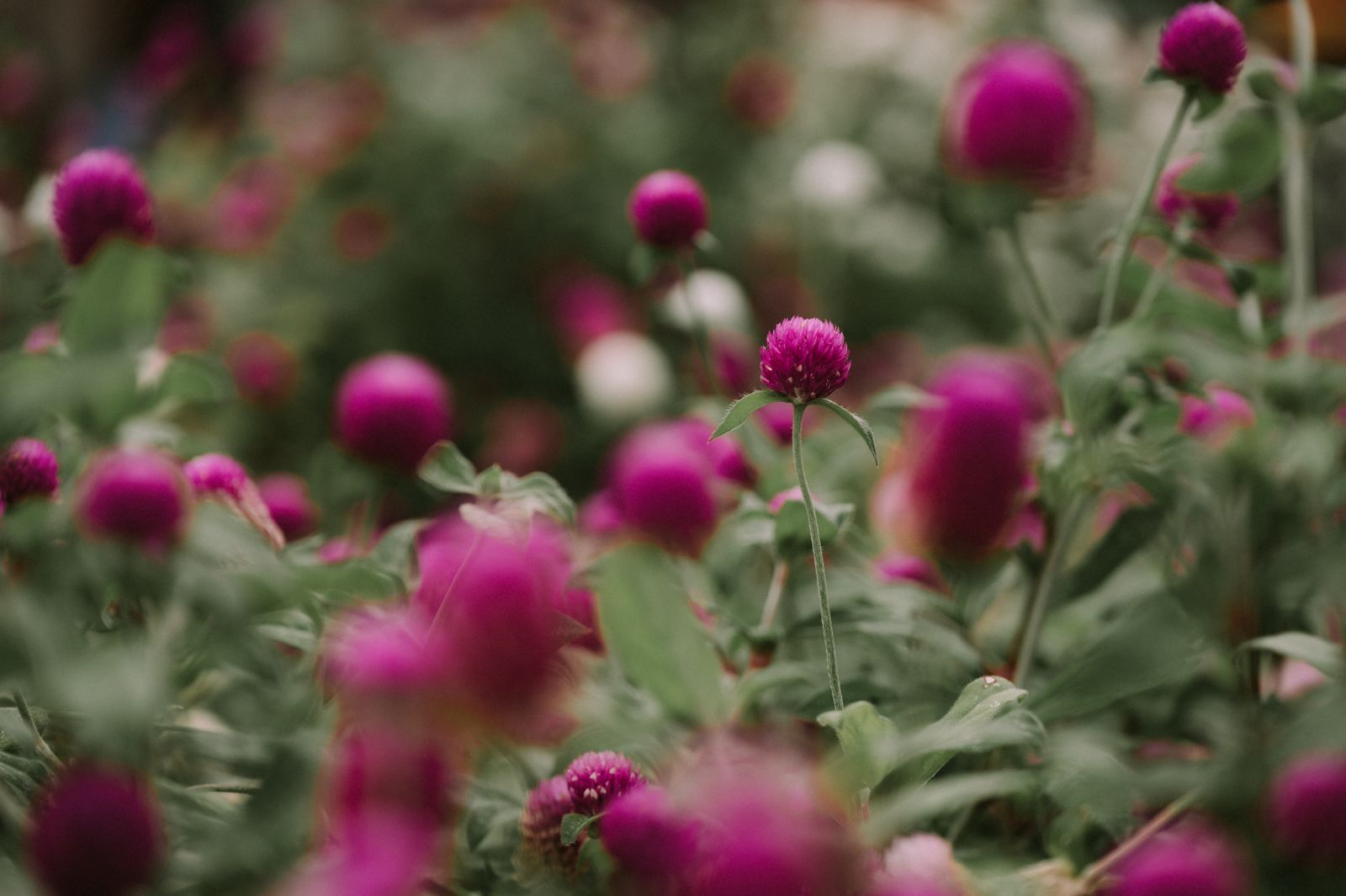
Photo: Mariya Eskina / Pexels
Plant Spacing Planner: The Gomphrena Bed
Gomphrena is in the crop list below at the UF/IFAS landscape spacing of 12 to 18 inches, the planner at 15. Enter your bed size, then read the cutting row bench in this article if you grow for the vase.
8 tomato plants fit this bed
4 plants per row across 2 rows, on a 24 inch grid. Extension spacing for this crop: 24 in between plants, 48 in between rows.
The grid uses the in-row spacing in both directions, the standard square foot layout for raised beds. In open ground, keep the wider row spacing in the note above so you can walk and weed between rows.
Spacing figures: University of Georgia Cooperative Extension, Circular 963, Vegetable Planting Chart, source.
The Landscape Bench: 12 to 18 Inches
The planner on this page runs the landscape bench at 15 inches, the middle of the UF/IFAS band, in rows 15 inches apart, following the site's practice of planting the mid-band figure for a mass annual. At 15 inches a gomphrena planting closes into a continuous, knee-high mound of color by midsummer without the plants climbing over each other, and the canopy shades the soil enough to honor the plant's preference for the dry side. Choose within the band by variety and purpose. The tall types, the 2-foot strains grown for backdrop and big beds, take the 18-inch end. The compact bedding types, a foot tall, take 12 inches and read as an edging. Gomphrena's water character belongs in its spacing article because it constrains placement: UF/IFAS is explicit that the plant wants moderately dry soil and should not be overwatered, which makes gomphrena a poor neighbor for thirsty annuals on an irrigation schedule. Space it with its own kind, or with the other dry-side annuals, lantana, portulaca, and vinca, and keep it out of the sprinkler's favorite corner. In a mixed bed, gomphrena at the wide bench on the dry edge outperforms gomphrena at any spacing in the wet middle.
| Purpose | Spacing | Row width | Result |
|---|---|---|---|
| Landscape mass planting | 12 to 18 inches (planner: 15) | 15 inches | Rounded mounds, continuous color |
| Tall landscape strains | 18 inches | 18 inches | Backdrop clumps, full spread |
| Compact bedding types | 12 inches | 12 inches | Edging line |
| Cutting rows | 6 to 9 inches (trials: 8) | 9 to 12 inches | Long straight stems, mutual support |
The Cutting Bench: 6 to 9 Inches
Cut-flower gomphrena is planted like a field crop because it is one. At 6 to 9 inches in rows, the plants compete upward instead of outward, producing the long, straight, branchy stems that bunch well, and the stand supports itself without netting in most gardens. The trial figures are the authority here: Utah State's cut flower program grew gomphrena at 8-inch spacing, and Wisconsin Extension's trial work sits in the same 6 to 9 inch band, which is why this page treats that band as the cutting bench rather than a rumor. Harvest discipline is the cutting bench's second half. For fresh use, cut when the flower heads are fully colored and open. For drying, UF/IFAS gives the timing that matters: cut just before the heads are fully open, because gomphrena continues to open and expand after cutting, and a head cut fully open dries shattering and dull while a head cut at three-quarter color dries tight and bright. Strip the leaves, hang small bunches upside down in a dark, dry, airy place, and the dried stems hold color for a year or more, which is the entire historical point of globe amaranth. A cutting row at 8 inches in a 4-foot bed, four rows with working paths, yields hundreds of stems across the season from a crop that asks for sun, drainage, and to be left alone between harvests.
The Plant Itself: Heat, Drought, and Honest Limits
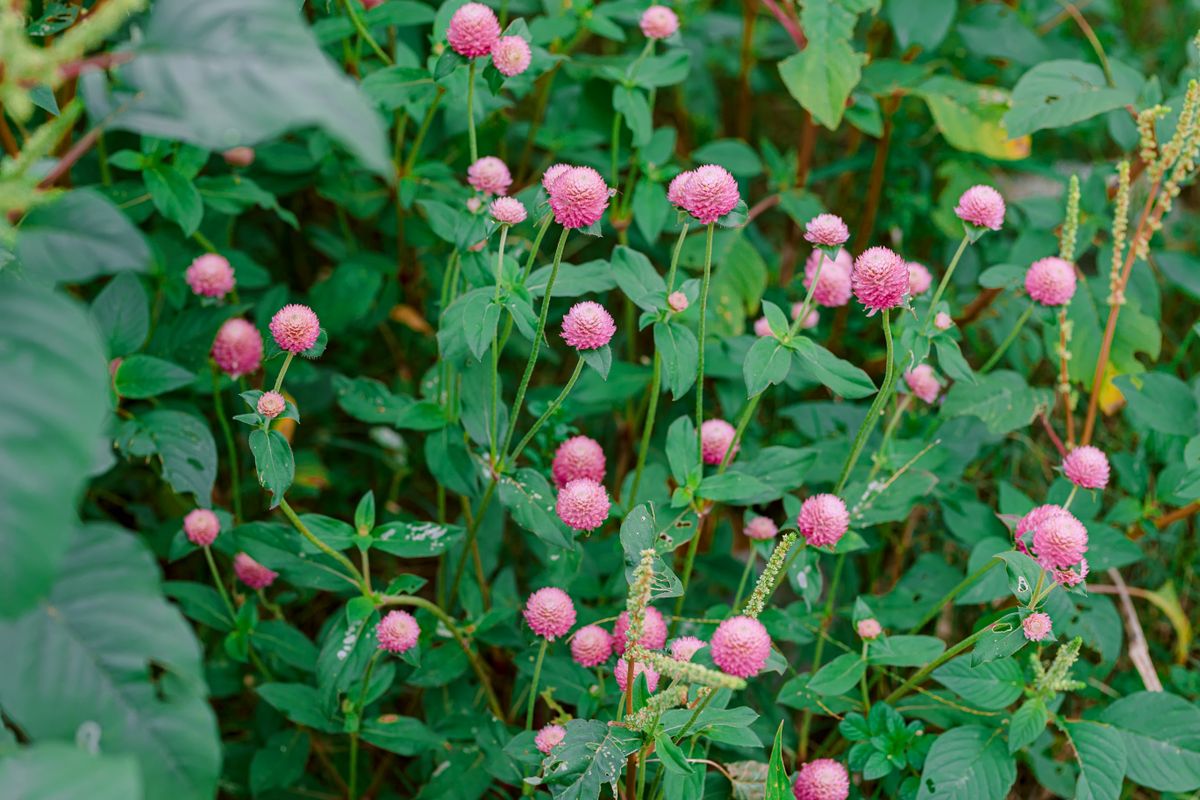
Gomphrena's spacing works because the plant is built for the conditions the spacing assumes. It is a heat lover in the amaranth family, planted out only into warm soil, that grows slowly in the cool of spring and accelerates hard when summer arrives, which is why early-season gomphrena always looks too widely spaced and August gomphrena never does. Judge the planting in August, not May. It is drought tolerant once established, on the UF/IFAS moderately-dry bench, and its papery flower heads are bracts rather than petals, which is why they shrug off heat that wilts true petals and why they dry without losing shape. The honest limits are two. Gomphrena has no frost tolerance at all and ends with the first freeze, so northern gardeners get one long season and should start plants indoors rather than direct sow late. And in humid climates with wet summers, the landscape bench should run at its wide end with the best air the garden has, because a plant that hates wet feet also dislikes a sealed, steamy canopy. Within those limits, gomphrena is among the lowest-work annuals in the garden, which is why it anchors both benches on this page: the landscape gardener plants it and forgets it, and the cutting gardener plants it and harvests it, and neither one waters it much.
Starting Gomphrena: Seed, Transplants, and the Warm-Soil Rule
Gomphrena spacing begins with how the plants are started, because the crop is slow from seed and impatient with cold soil. Seed germinates erratically unless it is scarified or soaked, and seedlings grow slowly for their first month, which is why most gardeners start gomphrena indoors 6 to 8 weeks before the last frost and transplant out only when the soil is genuinely warm, the same week the tomatoes go in. A gomphrena transplant set into cold spring soil sits still and sulks, and the spacing beside it looks wrong for weeks; the same plant set out late grows so fast in heat that it closes its bench by midsummer. Direct sowing works in long-season climates after the soil warms, sown at the final spacing and thinned once, since gomphrena seedlings transplant poorly from a crowd. Pinching is the one intervention both benches share: pinch the growing tip of each young plant once, at 6 to 8 inches tall, to force the branching that makes a landscape mound bushy and a cutting plant multi-stemmed. An unpinched gomphrena grows a single upright stem with a pom-pom on top, charming in a pot and useless in both production systems. The pinch, the warm soil, and the correct bench for the crop's purpose are the whole establishment program; after that the plant's heat engine takes over and the gardener's remaining jobs are harvest and admiration.
Varieties: The Size Range Inside the Species
The benches assume the standard gomphrena of the seed catalogs, but the species' varieties span enough size to move a planting between rows of the table. The compact bedding strains, the Gnome series and similar, mature at 8 to 12 inches tall and take the 12-inch end of the landscape bench or serve as the edging in front of taller plantings. The mid-size strains, including the common purple, pink, and white globe types, are the 15-inch planner case. The tall strains, the Audray and QIS types grown for the cutting trade, reach 2 feet and beyond and take 18 inches in landscape use or the cutting bench when they are grown for stems. Strawberry Fields, the red-flowered Gomphrena haageana type, runs taller and looser than the globosa strains and wants the wide end of every bench it is planted on. Read the variety's mature height off the packet the way the dahlia page insists on, because gomphrena's common name hides the same threefold size range in miniature, and a Gnome planted at a QIS spacing leaves a bed looking underplanted all season while the reverse buries the edging by July.
Related guides
Readers working on this usually need these next:
- Brussels Sprouts Plant Spacing: Room for a Two Foot Plant With a Fall Job
- Plant Spacing for Lavender: English, Lavandin, and the Hedge Bench
- Snapdragon Plant Spacing: Airflow Is Rust Control
- Strawflower Plant Spacing: Garden Rows and Cutting Beds
Frequently Asked Questions
How far apart do I plant gomphrena?
It depends on the crop, and the two benches are not averaged here. For landscape mass planting, UF/IFAS gives 12 to 18 inches, and the planner runs 15. For cutting rows, the trial bench is 6 to 9 inches, with Utah State's cut flower trials at 8 inches, because tight rows grow straight harvestable stems.
Why do cut-flower growers plant gomphrena so much closer?
Competition upward. At 6 to 9 inches the plants shade each other's bases, support each other without netting, and push long straight stems instead of wide mounds. The landscape bench wants the opposite shape, a rounded cushion, so it gives each plant its full spread of room.
When do I cut gomphrena for drying?
Just before the flower heads are fully open, per UF/IFAS. Gomphrena keeps opening after cutting, so a head cut at about three-quarter color dries tight and bright, while a fully open head dries loose and dull. Strip leaves and hang bunches upside down in a dark, airy place.
Does gomphrena need much water?
No. UF/IFAS puts it on moderately dry soil and warns against overwatering. Water to establish, then in drought only, and place it with other dry-side annuals rather than in an irrigated bed's wet center. A gomphrena planting that is failing is usually wet, not thirsty.
Is gomphrena a perennial?
No, it is a tender annual with no frost tolerance, grown from seed or transplants set out into warm soil. In frost-free climates plants can linger, but the standard practice everywhere is one long season, spring planting to first frost, with the dried harvest carrying the plant's color through winter indoors.
Photo credits: Mariya Eskina (Pexels); Nguyễn Tiến Thịnh (Pexels). Photos are served from this site; follow the credit to the library page for the original.