Lavender dies of crowding and wet feet far more often than of cold, and its spacing argument is really an argument about which lavender and which climate. The two extension figures in circulation look like a disagreement. Utah State Extension's English lavender guide says to space plants 18 to 24 inches apart, for a plant that matures at 1 to 2 feet tall and wide and takes about 3 years to reach full size, in soil of pH 6.5 to 7.5, hardy in zones 5 to 10. UF/IFAS prints 24 to 36 inches. Read closely, the figures are describing different plantings: the USU bench is English lavender, Lavandula angustifolia, in a dry western garden, while the wider Florida figure serves the larger lavandin hybrids and a humid climate where air movement between plants is a disease control, a point Washington State's guidance makes explicitly for wet regions. This page assigns each number to its case. Averaging them into a single 24-inch rule would underspace a lavandin in Florida and overspace an English lavender in Utah, which is to say it would be wrong in both gardens at once.
Plant Spacing for Lavender: English, Lavandin, and the Hedge Bench
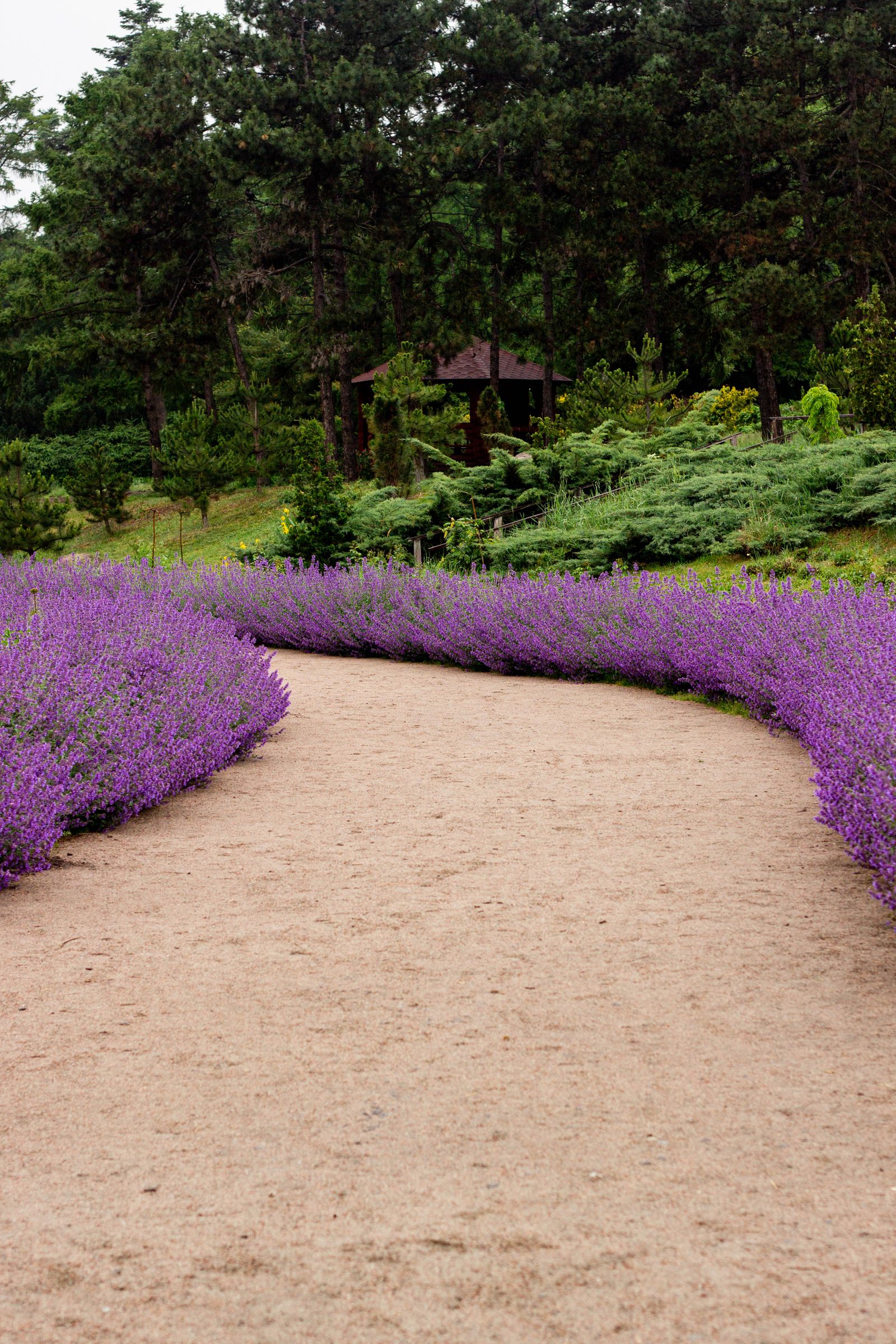
Photo: Natalia Sevruk / Pexels
Plant Spacing Planner: The Lavender Row
English lavender is in the crop list below at the Utah State Extension spacing of 18 to 24 inches, the planner at 21 in rows 24 apart. Enter your bed or border length, then read the type table in this article before you plant lavandin at English spacing.
8 tomato plants fit this bed
4 plants per row across 2 rows, on a 24 inch grid. Extension spacing for this crop: 24 in between plants, 48 in between rows.
The grid uses the in-row spacing in both directions, the standard square foot layout for raised beds. In open ground, keep the wider row spacing in the note above so you can walk and weed between rows.
Spacing figures: University of Georgia Cooperative Extension, Circular 963, Vegetable Planting Chart, source.
The Type Table
The planner on this page runs the English lavender bench, 21 inches within the row and 24 inches between rows, the middle of the USU band. Adjust by type from the table, and remember that lavender spacing is measured for the plant's third year, not the pot it arrived in. A nursery lavender in a 4-inch pot looks lost at 21 inches; by its third summer it fills the station exactly, which is the entire point.
| Type | Mature size | Specimen spacing | Hedge spacing | Notes |
|---|---|---|---|---|
| English lavender (angustifolia) | 1 to 2 feet tall and wide | 18 to 24 inches | 12 to 15 inches | USU bench; zones 5 to 10 |
| Lavandin (x intermedia) | 2 to 3 feet and wider | 24 to 36 inches | 18 to 24 inches | The big oil and wand types |
| French and Spanish lavender | 1.5 to 2.5 feet | 18 to 24 inches | 15 to 18 inches | Tender; often grown as annuals in cold zones |
| Any type, humid climate | As type | Add 4 to 6 inches | Add 3 inches | Airflow is disease control |
Hedge spacing is deliberately tighter than specimen spacing, and it is the one place tight planting is correct: a lavender hedge is a single visual object, the plants are meant to merge into a continuous line, and at 12 to 15 inches for English types they knit by the second year. The hedge pays for its tightness with a shorter life and more pruning discipline, and it should be planted in the driest, best-drained line the garden has, because a hedge that loses one plant in the middle advertises the gap for years. The site's lavender watering bench runs the moisture half of this plant's contract: USU's establishing rate is about a gallon a week, dropping to half a gallon every 2 weeks once established, which tells you how dry the spacing assumes the soil stays.
Drainage and Gravel: The Rule Under the Spacing
Every lavender spacing figure ever printed assumes drainage, and drainage is where lavender plantings actually succeed or fail. The USU guide's cultural core is sharp soil and a gravel mulch, and both halves matter. Plant in soil that drains freely, raised beds and slopes being lavender's friends, with no compost-rich moisture-retentive amendments in the planting hole beyond what the native soil needs for structure. Then mulch with gravel or crushed stone rather than bark: gravel keeps the crown dry, reflects heat up into the plant, which lavender loves, and does not hold moisture against the stems the way organic mulch does in a wet spell. In humid climates the gravel rule graduates from preference to requirement, and the wide-spacing correction from the table stacks with it. A lavender that sits in bark mulch in clay soil at tight spacing in a wet summer is dead on a schedule no variety choice can fix, while the same plant on a gravel-mulched slope at the wide bench survives winters and summers that kill its coddled twin. Soil pH completes the foundation: USU's 6.5 to 7.5 range means lavender is one of the few garden plants that prefers soil slightly alkaline, and acid-soil gardeners should lime the lavender bed rather than acidify it, the reverse of the gardenia bench elsewhere on this site.
The Three-Year Horizon and Pruning Shape
USU's note that lavender takes 3 years to reach full size is a planning instruction. Year one plants are small and the bed looks underplanted; year two they double; year three they meet at the bench spacing and the planting is finished. Gardeners who fill the year-one gaps with more lavender own a thicket by year three and a dead hedge by year five, so fill the gaps with annuals or gravel and patience. Pruning is the spacing's maintenance half. Lavender is sheared after the main bloom, taking the flower stems and a little foliage, and given a lighter tidy in spring, never cut back into the old bare wood at the plant's base, which does not resprout reliably. A plant pruned on that rhythm holds the compact dome its spacing assumed. A plant never pruned goes leggy, opens in the middle, flops outward over its neighbors, and effectively doubles its footprint while halving its bloom, which reads as a spacing failure and is actually a pruning debt. When an old plant has gone fully woody and open, replacement beats rescue: take cuttings in summer, root them, and replant the station the following spring at the same bench, which is how commercial lavender fields manage the same arithmetic at scale.
Lavender in Containers and Cold Climates
Two situations bend the benches without breaking them. In containers, spacing collapses to one plant per pot, and the pot is sized to the type's second year rather than its first: English lavender in a 12 to 14 inch pot minimum, lavandin in 16 inches or more, because a root-bound lavender in a small pot dries, stalls, and goes woody ahead of its time. Container drainage is the bench's whole foundation in miniature, a gritty mix, a pot with real holes, and no saucer left holding water, and the gravel rule applies on the surface of the pot as mulch. In cold climates at the edge of a type's hardiness, spacing interacts with winter survival in a way gardeners miss: plants at the full bench, with air around them and gravel beneath, dry their crowns after winter wet and come through; plants crowded tight stay wet at the center and rot in the thaw. Cold-climate growers also use spacing to plan the replacement cycle, leaving one station in a run deliberately filled by a young plant each few years, so the row renews itself in rotation instead of failing all at once. Neither case changes the table's numbers; both explain why the numbers, drainage first and air always, are really one rule stated twice.
Harvest and the Spacing Payoff
Lavender is harvested, for wands, buds, and oil, by cutting the flower stems just as the buds show color and before they fully open, and the spacing benches in this page are what make that harvest a pleasure instead of an excavation. A plant at its full bench can be worked around with a basket and shears, each stem cut at its base without reaching through a neighbor's canopy, and the plant's dome shape, held by the post-bloom shear, presents the stems at a uniform height that speeds the work. A crowded plant hides half its stems inside its neighbors, holds dew into the morning of harvest, and delivers buds with mildew pressure already on them. The harvest rhythm also closes the pruning loop: the main cut is the year's shaping shear, taking stems and the top of the foliage together, so a harvested lavender bed needs no second pruning pass, while an ornamental bed that is never harvested still owes the same cut as maintenance. Bundle the stems, hang them upside down in a dark, airy place for two weeks, and the buds strip off the stems with a rolling motion. The gardener who spaces for the harvest gets both products of the plant, the border in June and the sachets in January, from the same tape-measure decision.
Related guides
These related guides round out the picture:
- Plant Spacing for Spinach: The 2 Inch Bench and the 6 Inch Argument
- Plant Spacing for Alyssum: How Far Apart to Plant Sweet Alyssum
- Rosemary Plant Spacing: Set It by Mature Width
- Hydrangea Plant Spacing: By Species and Mature Width
- Emerald Green Arborvitae Spacing: 3 to 4 Feet for a Hedge That Fills In
- Plant Spacing for Karl Foerster Grass: Masses, Rows, and Specimens
Frequently Asked Questions
How far apart should I plant lavender?
English lavender goes 18 to 24 inches apart on the Utah State bench, and the planner runs 21 inches in the row. Lavandin types are bigger and take 24 to 36 inches, the UF/IFAS figure. In humid climates add 4 to 6 inches to any of these for airflow. Each figure belongs to its type and climate; they are not averaged.
Why do sources disagree on lavender spacing?
They are describing different plants in different climates. The 18 to 24 inch figure is English lavender in a dry western garden; the 24 to 36 inch figure fits the larger lavandins and humid regions where spacing is disease control. Match the figure to your type and your rainfall and the disagreement disappears.
Can I plant lavender closer for a hedge?
Yes, hedging is the deliberate exception: English lavender at 12 to 15 inches knits into a continuous line by the second year. The hedge trades lifespan for density, needs its driest, best-drained line, and asks strict pruning discipline to hold its shape.
What mulch is best around lavender?
Gravel or crushed stone, per the USU guidance's drainage logic. Gravel keeps the crown dry, reflects heat the plant enjoys, and does not hold moisture against the stems. Bark mulch against lavender crowns in wet weather is a rot arrangement. Pair gravel with free-draining soil and the spacing figures in this page hold.
How long until lavender reaches full size?
About 3 years, per Utah State. Plant for the third-year footprint from day one, fill the early gaps with annuals rather than extra lavender, and prune after bloom without cutting into old wood so each plant holds the dome its spacing assumed.
Photo credits: Natalia Sevruk (Pexels); Pew Nguyen (Pexels). Photos are served from this site; follow the credit to the library page for the original.