Plant Spacing for Karl Foerster Grass: Masses, Rows, and Specimens
By the Windchime Walker editorial team
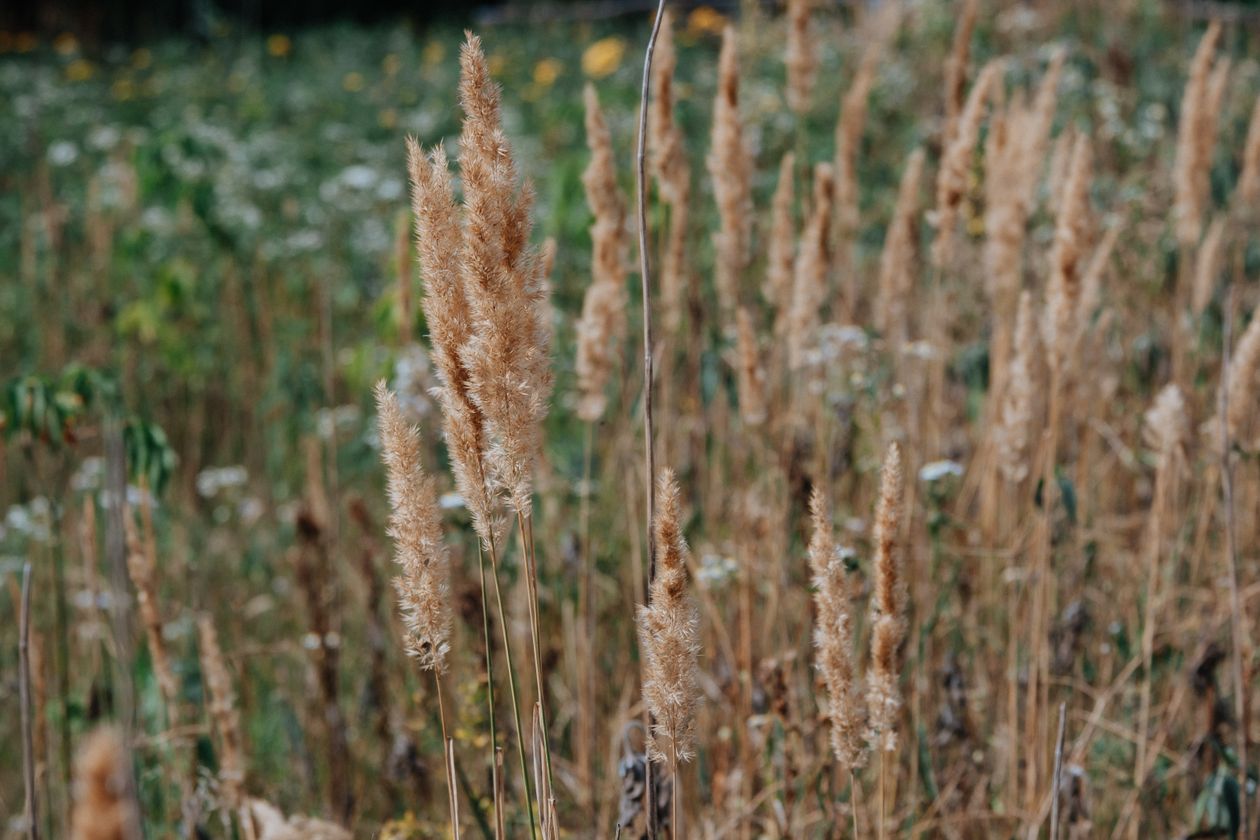
Photo: Julia Filirovska / Pexels
Karl Foerster feather reed grass (Calamagrostis x acutiflora 'Karl Foerster') is the vertical accent of modern planting design, and its spacing confuses people because the plant is two sizes at once: NC State Extension describes a clump 3 to 5 feet tall, flower plumes included, but only 1 to 1.5 feet wide, a slow spreader by short rhizomes, and sterile, so it never self sows. A plant that narrow can be spaced like a exclamation point: 24 inches apart for the massed drifts and screens in the planner below, 36 inches on center where each clump stands as a specimen, and closer than almost any shrub of equal height without crowding.
The trade literature splits on the standard setting, and the split is flagged here rather than smoothed over. The Spruce and much nursery guidance put mass plantings at 24 inches and specimens or loose screens at 36 inches on center, which matches the planner's two settings. Some designers run drifts at 18 inches for an instant wall of plumes, which the plant's 1 to 1.5 foot width technically allows, but at 18 inches the clumps merge into a single mass within two seasons and lose the individual vertical rhythm that is the entire point of the cultivar. This guide keeps 24 as the working mass spacing and treats 18 as a special effect, not a standard.
Interactive tool
Plant Spacing Planner: Karl Foerster Feather Reed Grass
Karl Foerster grass is in the crop list below at 24 inches, the mass planting bench for a clump NC State sizes at 3 to 5 feet tall but only 1 to 1.5 feet wide. Enter your bed length to count plants, and read the flagged 36 inch specimen bench in this guide before you space a screen.
8 tomato plants fit this bed
4 plants per row across 2 rows, on a 24 inch grid. Extension spacing for this crop: 24 in between plants, 48 in between rows.
The grid uses the in-row spacing in both directions, the standard square foot layout for raised beds. In open ground, keep the wider row spacing in the note above so you can walk and weed between rows.
Spacing figures: University of Georgia Cooperative Extension, Circular 963, Vegetable Planting Chart, source.
Spacing by design job
Job
Spacing
What it looks like at year 3
Notes
Massed drift, planner setting
24 inches
A unified field of plumes, clumps still readable
The standard design spacing
Screen or hedge row
24 inches
A narrow living wall 3 to 5 feet tall
One row is enough; the plant is only 1.5 feet wide
Specimen spacing
36 inches on center
Individual exclamation points
The Spruce bench for accents and loose groups
Instant effect drift
18 inches
A solid plume wall in season one
Merges completely; use knowingly
Container
One plant per pot
A single fountain
Pots at least 16 inches wide for a mature clump
The screen row deserves emphasis because it is where the money is saved. A hedge of shrubs at this height is planted at 3 to 5 feet per plant with plants costing far more each, and takes years to close. A Karl Foerster screen at 24 inches closes in its second season, costs a fraction as much, asks for one cut a year, and stands through winter as a tan architectural row instead of dropping its leaves. The Perennial Plant Association named it Perennial Plant of the Year in 2001 largely on this combination of structure, season length, and indifference to neglect.
The sterile advantage and the slow spread
Two facts from the NC State description do quiet work in every spacing decision. The plant is sterile: it sets no viable seed, so a drift never jumps its borders into the lawn or the neighbor's bed, and the spacing you plant is the spacing you keep. And it spreads slowly by short rhizomes, widening its clump by inches a year rather than feet, so a 24 inch grid reads the same in year five as in year two, only taller and denser. Compare the running grasses and groundcovers elsewhere in the spacing series, where half the guide is containment, and the appeal of a grass that stays where it was put becomes obvious.
Division is the only maintenance the spacing ever demands, and it is on a long clock: every 4 to 5 years, or when the center of a clump dies out, dig in early spring, split the crown, and replant the divisions at the same grid. The divisions are also the cheapest way to extend a drift, which is why experienced designers plant the first screen at full spacing and let patience, not the nursery bill, fill later projects.
Planting, cutting back, and the winter stand
Plant in spring or early fall, at the same depth the plant grew in its pot, and water weekly through the first season while the roots establish. From the second year the plant is notably drought tolerant for an ornamental grass, though it plumes best with ordinary garden moisture. The single annual chore is the cutback: shear the whole clump to 4 to 6 inches in late winter, before the new green shows at the base, because cutting after growth starts decapitates the fresh shoots mixed into the old. Leave the foliage standing all winter; the tan plumes and upright stems are the winter garden's structure, and the birds work the standing stems even though the seed is sterile, using them for cover.
In mixed plantings, Karl Foerster is the vertical partner for the drought tolerant perennials in our guides to plant spacing for butterfly weed and plant spacing for lavender, and it fills the same narrow, upright role in the landscape that the hedge in our emerald green arborvitae spacing guide fills with evergreen, at a quarter of the width and none of the shearing.
Laying out a drift: the staggered grid
Designers rarely plant Karl Foerster on a square grid. The standard layout is a staggered, or triangular, pattern: rows 24 inches apart, plants 24 inches apart in the row, and each row offset by half a spacing so every plant sits in the pocket between two plants in the row behind. The stagger removes the visible lanes a square grid leaves when you look along the row, and the drift reads as a woven field of plumes from every angle instead of a cornfield from one. The planner's counts assume the square; a staggered drift of the same area takes roughly the same number of plants, within a few percent, so order by the planner count and lay out by the stagger.
Depth is the other layout number. A drift reads as a mass at three rows deep; two rows read as a line, and one row is a screen, which is a different tool. For a border backing, plant the grass as the rear layer in a band at least 5 feet deep overall, grass included, so the plumes rise behind mid height perennials with room for both. Against a fence, a single staggered band of the grass 24 inches deep does the screening job alone, and the space it saves over a shrub hedge, which wants 4 feet of depth or more, is often the entire reason it was chosen.
Division math belongs in the layout plan too. A drift planted at 24 inches from one gallon pots reaches full effect in its second season; a budget drift planted at 36 inches from divisions reaches the same effect in three. Many designers plant the front of a drift at 24 and the back at 36, where the eye cannot judge the gaps, and let the second season's growth close the difference. That is not cheating the bench; it is the bench applied with a hierarchy, tight where it shows, patient where it does not.
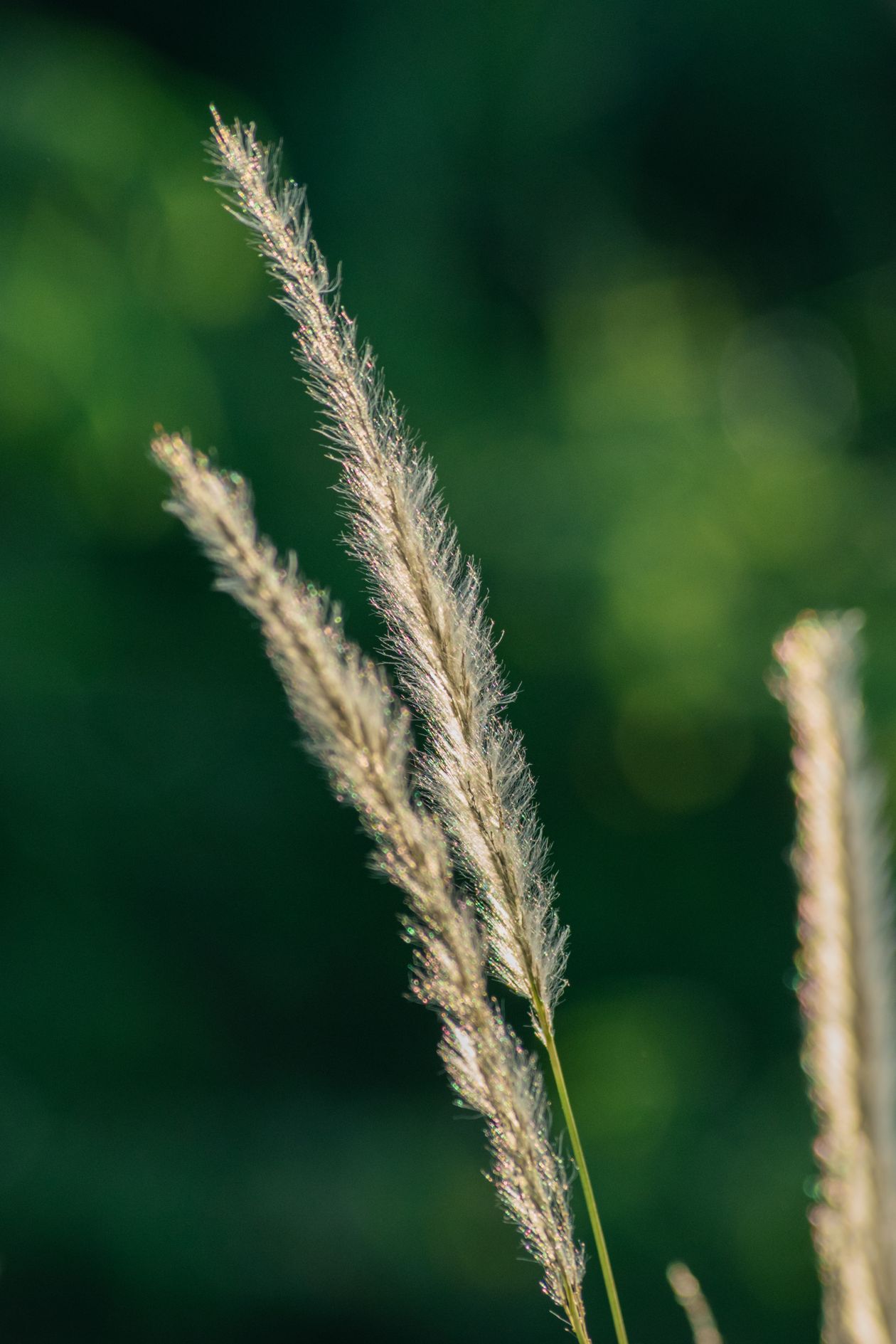
Feather reed grass plume glowing in sunlight
Signs you are getting it wrong
A drift that reads as one solid lump by year two was planted at 18 inches by someone who wanted instant effect; it is not unhealthy, just merged, and division is the only way back to rhythm. Clumps that flop open in the center are usually in too much shade or were cut back too late in spring. A screen with gaps at year three has lost plants to wet winter soil, the one condition this grass sulks in. And a gardener still waiting for self sown seedlings has confused this sterile cultivar with its fertile cousins; Karl Foerster never volunteers.
Twenty four inches apart for masses, drifts, and screens, which is the planner setting on this page, and 36 inches on center for specimens, the trade bench published by The Spruce. The plant itself explains the numbers: NC State sizes the clump at 3 to 5 feet tall but only 1 to 1.5 feet wide, so it can stand much closer than a shrub of the same height without crowding.
Can Karl Foerster be planted at 18 inches?
Yes, and designers do it for an instant wall of plumes in the first season. Know the trade: at 18 inches the clumps merge into a single mass within about two seasons and the individual vertical rhythm of the cultivar disappears. For a permanent planting, 24 inches keeps both the density and the rhythm. Use 18 only where the merged wall is the effect you actually want.
Does Karl Foerster grass spread or self seed?
Neither, in any way that matters. The cultivar is sterile and sets no viable seed, so it never self sows into lawns or beds. It widens slowly by short rhizomes, a few inches a year, so the spacing you plant is essentially the spacing you keep. That combination is rare among ornamental grasses and is a large part of why this plant won Perennial Plant of the Year in 2001.
When do you cut Karl Foerster back?
Once a year, in late winter, before new growth starts: shear the clump to 4 to 6 inches. Leave the foliage standing through winter, when the tan plumes provide structure and cover. Cutting after the green shoots emerge in spring beheads the new growth hiding inside the old stems, so the late winter timing is the one appointment this low maintenance plant insists on.
How wide a pot does Karl Foerster need?
At least 16 inches wide for a plant you intend to keep, because a mature clump is 1 to 1.5 feet across at the base with a root system to match. One plant per pot, always; two in a pot is a division waiting to happen. Container plants also need the annual cutback and more regular water than in ground plants, since even this tolerant grass cannot forage beyond the pot walls.
Photo credits: Julia Filirovska (Pexels); Ty Nguyễn (Pexels). Photos are served from this site; follow the credit to the library page for the original.