Plant Spacing for Butterfly Weed: Set It Once, Never Move It
By the Windchime Walker editorial team
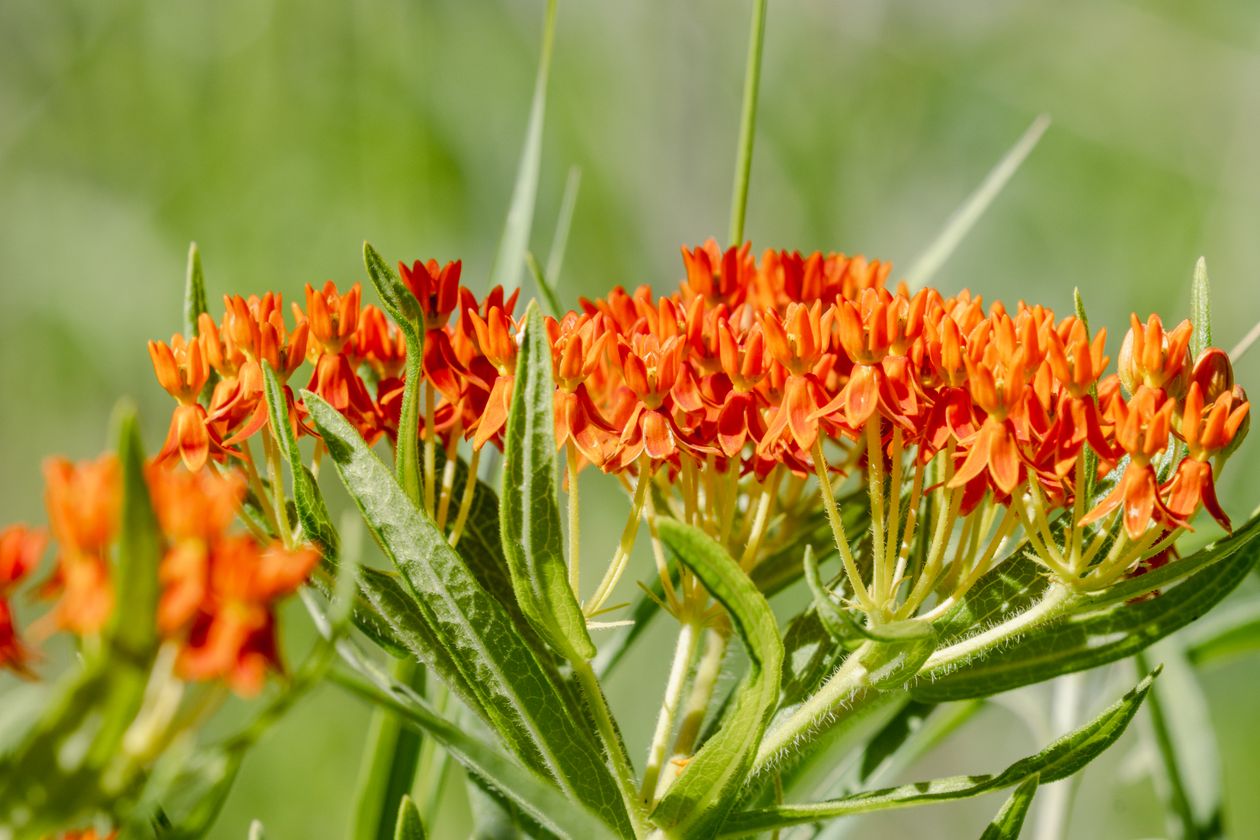
Photo: Scott Platt / Pexels
Butterfly weed (Asclepias tuberosa) is the milkweed that behaves in a garden border, and its spacing decision is the most permanent one in this series: UF/IFAS Extension (EDIS FP050) gives plant spacing of 18 to 24 inches for a plant that matures at 2 to 3 feet tall with a 2 to 3 foot spread, and the same source family warns that the deep taproot means the plant should not be disturbed once established. The planner below runs 24 inches, the top of the bench, because a spacing you can never revise deserves the generous end of its range.
Every other spacing guide on this site assumes you can fix a mistake next season. Butterfly weed does not. The taproot that makes it drought proof also makes transplanting a mature plant a near certain loss, so the 24 inches you give it on planting day is the space it will negotiate with its neighbors for a decade. Gardeners who plant it at annual spacing spend years watching it crowd, unable to do the obvious thing and move it.
Interactive tool
Plant Spacing Planner: Butterfly Weed
Butterfly weed is in the crop list below at 24 inches, inside the UF/IFAS bench of 18 to 24 inches for a 2 to 3 foot plant with a deep taproot that resents moving. Enter your bed size to count plants, then set them once and leave the roots alone.
8 tomato plants fit this bed
4 plants per row across 2 rows, on a 24 inch grid. Extension spacing for this crop: 24 in between plants, 48 in between rows.
The grid uses the in-row spacing in both directions, the standard square foot layout for raised beds. In open ground, keep the wider row spacing in the note above so you can walk and weed between rows.
Spacing figures: University of Georgia Cooperative Extension, Circular 963, Vegetable Planting Chart, source.
The numbers and the plant they describe
Decision
UF/IFAS bench
Planner setting
Why
Spacing
18 to 24 inches
24 inches
The placement is permanent; take the generous end
Mature height
2 to 3 feet
Plan for 3 feet
Keeps taller neighbors from shading it out
Mature spread
2 to 3 feet
Plan for 3 feet
Clumps widen slowly from the crown
Soil
Well drained, sandy tolerated
Drainage first
Wet winter soil rots the taproot
Transplanting after establishment
Do not disturb
Do not disturb
Deep taproot; losses are the rule
The mature size drives a placement decision that surprises people: at 2 to 3 feet tall with an equal spread, butterfly weed is a mid border plant, not an edger, and it emerges late enough in spring that its neighbors have a head start. Give it the full sun it demands, because in shade it stretches, flops, and blooms poorly at any spacing. It is also slow from seed, often taking two to three years to flower, which argues for buying plants or sowing seed and marking the spot with unusual care.
The late emergence trap
Butterfly weed breaks dormancy weeks after its neighbors, sometimes not showing until late spring when the soil is properly warm. Every year, gardeners dig into the apparently empty space, plant something else on top of it, or slice the crown with a spade while edging, and kill a plant that was simply asleep. Mark the crown's position with a permanent label or a ring of stones at planting, and treat that circle as occupied ground in every spring cleanup, forever.
The late start also shapes the spacing in practice: fast spring neighbors like echinacea, spaced in our guide to plant spacing for echinacea, can lean into the empty looking gap and shade the emerging shoots. The 24 inch planner setting buys the milkweed a clearing that its slower calendar can defend.
Monarchs, aphids, and the milkweed bargain
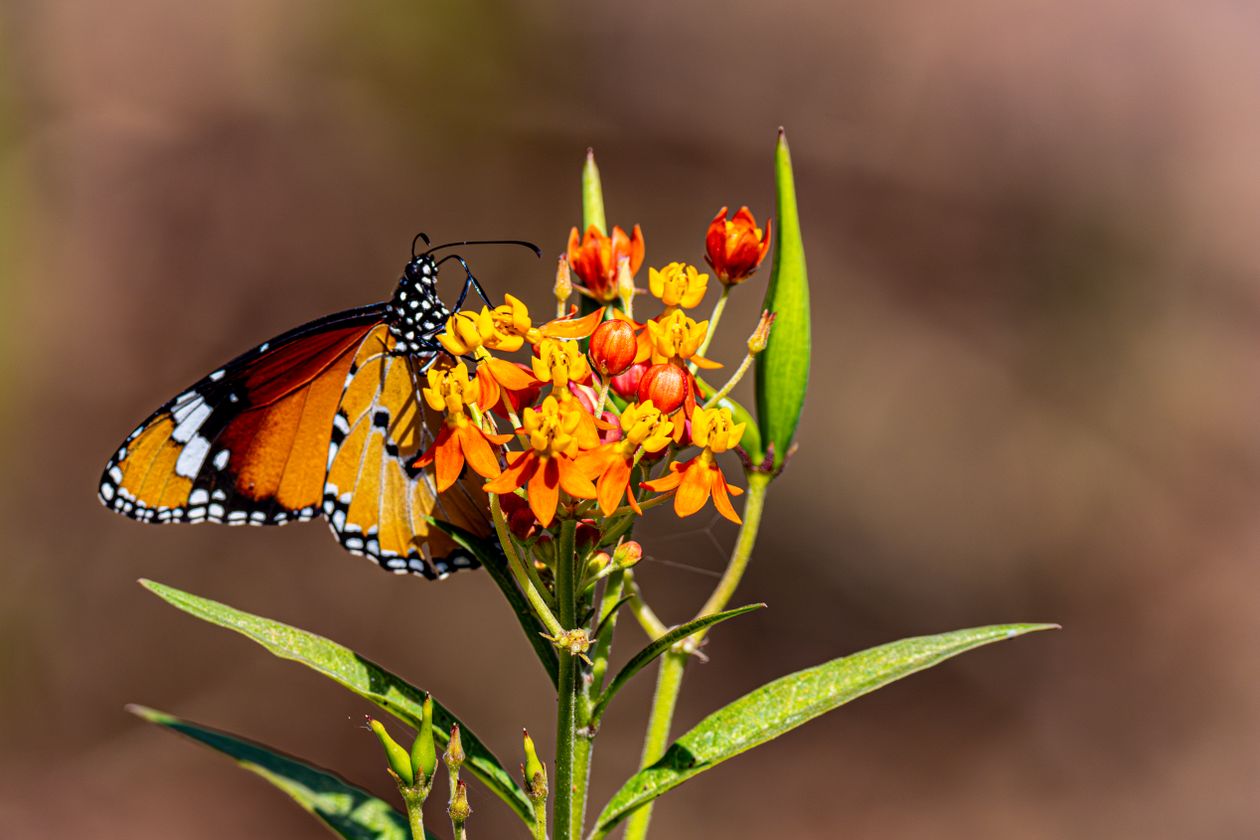
Butterfly weed is a monarch host plant and a serious nectar source, and a spacing that produces a healthy, long lived clump produces butterflies for years. The orange milkweed aphids that colonize it in summer are part of the bargain: they rarely harm a established plant, they feed lady beetles and lacewings, and blasting them off with insecticide poisons the caterpillars the plant exists to feed. A hard jet of water handles an unsightly outbreak; patience handles the rest.
For a pollinator drift, butterfly weed pairs with the yarrow in our guide to plant spacing for yarrow and the ornamental grasses in our guide to plant spacing for Karl Foerster grass, all three drought tolerant once established, all three content in lean soil, and all three best planted once and left alone. In a cutting or production context it also appears in the beds described in our guide to plant spacing for cut flowers, where its stems are a minor crop and its real yield is ecological.
Starting from seed without losing your patience
Seed needs cold stratification to germinate well: sow outdoors in fall, or refrigerate seed in moist mix for a month before a spring sowing. Seedlings grow a taproot from their first weeks, so start them in deep pots and set them out young, at their final spacing, rather than potting them on repeatedly. First year plants are small and may not flower; second year plants establish; third year plants are the ones in the photographs. None of this is a flaw. It is the life history of a plant built to live in one place for a long time, and the spacing system in this guide exists to honor it.
Seed saving, winter, and the long game
The plant's permanence cuts both ways: you are also choosing its seed rain. Pods left on the plant split and scatter seed around the crown, and volunteers appear the following spring, usually within a few feet of the parent. Most gardeners welcome them; a drift renews itself this way, filling the gaps where an old crown thins. If you garden near wild land, know that the seed is the same native species already present across its range, and a garden planting adds little pressure, but in a tightly managed bed you can deadhead the pods in fall and keep the population exactly where you planted it.
Winter care is mostly a decision to do nothing, correctly. Leave the crowns standing and unmulched or lightly mulched after the ground freezes; heavy, early mulch over a still warm crown invites the rot the plant fears. In spring, resist two urges: the urge to dig and check, and the urge to feed. Butterfly weed emerges on its own clock from a crown that needs no fertilizer in ordinary soil, and rich feeding produces the soft, floppy growth that then gets blamed on the spacing. The plant's whole design is lean and permanent, and the gardener's job after planting day reduces to three things: mark the spot, keep the spade out of it, and enjoy the butterflies.
A word on buying plants, since most gardeners start there rather than from seed. Buy the smallest, youngest plants you can find, in deep pots, and plant them the same week. A large, rootbound butterfly weed in a gallon pot has already folded its taproot into a spiral it will never fully straighten, and it establishes worse than a small plant in a 4 inch deep pot. This is one of the few plants where the cheaper, smaller pot is genuinely the better purchase, and where the spacing you give it matters more than the size you buy.
Monarch butterfly feeding on milkweed flowers
Signs you are getting it wrong
A plant that never appears by early summer after a spade went through its circle in April was killed by tidiness, not winter. Thin, floppy growth means shade; the plant cannot be moved, so the fix is pruning the neighbor, not relocating the milkweed. A crown that rots out over winter sat in wet soil, the one soil fault this drought plant cannot forgive. And a gardener digging a three year clump to move it six inches to the left is about to learn the taproot lesson the expensive way.
UF/IFAS Extension gives 18 to 24 inches, and the planner on this page uses 24 inches. The plant matures at 2 to 3 feet tall with a 2 to 3 foot spread, so even the top of the bench means mature clumps will just touch. Because the placement is effectively permanent, erring wide costs nothing and crowding costs a plant you cannot move.
Why can you not move butterfly weed?
It grows a deep, fleshy taproot that stores the plant's reserves and anchors it for drought. Digging a mature plant severs or badly damages that root, and the plant rarely re-establishes. Set young plants, or deep potted seedlings, directly at their final spacing, and treat the spot as permanent. If a move is truly forced, do it in early spring as the plant wakes, take the largest root ball you can lift, and expect a season of sulking at best.
When does butterfly weed come up in spring?
Late, often weeks after neighboring perennials, and sometimes not until the soil has warmed thoroughly in late spring. This is normal dormancy, not death. Mark the crown at planting time and keep spades, mulch forks, and new transplants out of its circle during spring cleanup. Gardeners kill more butterfly weed with April tidiness than winter ever does.
Does butterfly weed spread or stay in a clump?
It stays in a clump that widens slowly from the crown, and it can self sow modestly where the pods are left to split. It does not run like common milkweed, which spreads by rhizomes and needs a very different spacing conversation. One plant at 24 inches will become a substantial, well behaved clump over five years without threatening its neighbors.
Is butterfly weed good for monarchs if it blooms late?
Yes. It is a true milkweed, so monarch caterpillars can feed on its leaves, and its flowers are a rich nectar source for adult butterflies and bees through summer. Its bloom runs later than many spring flowers, which fills a useful gap. Leave the orange milkweed aphids alone where you can; they are part of the food web the plant supports, and an established clump tolerates them easily.
Photo credits: Scott Platt (Pexels); Regan Dsouza (Pexels). Photos are served from this site; follow the credit to the library page for the original.