Plant Spacing for Yarrow: Match the Gap to the Variety
By the Windchime Walker editorial team
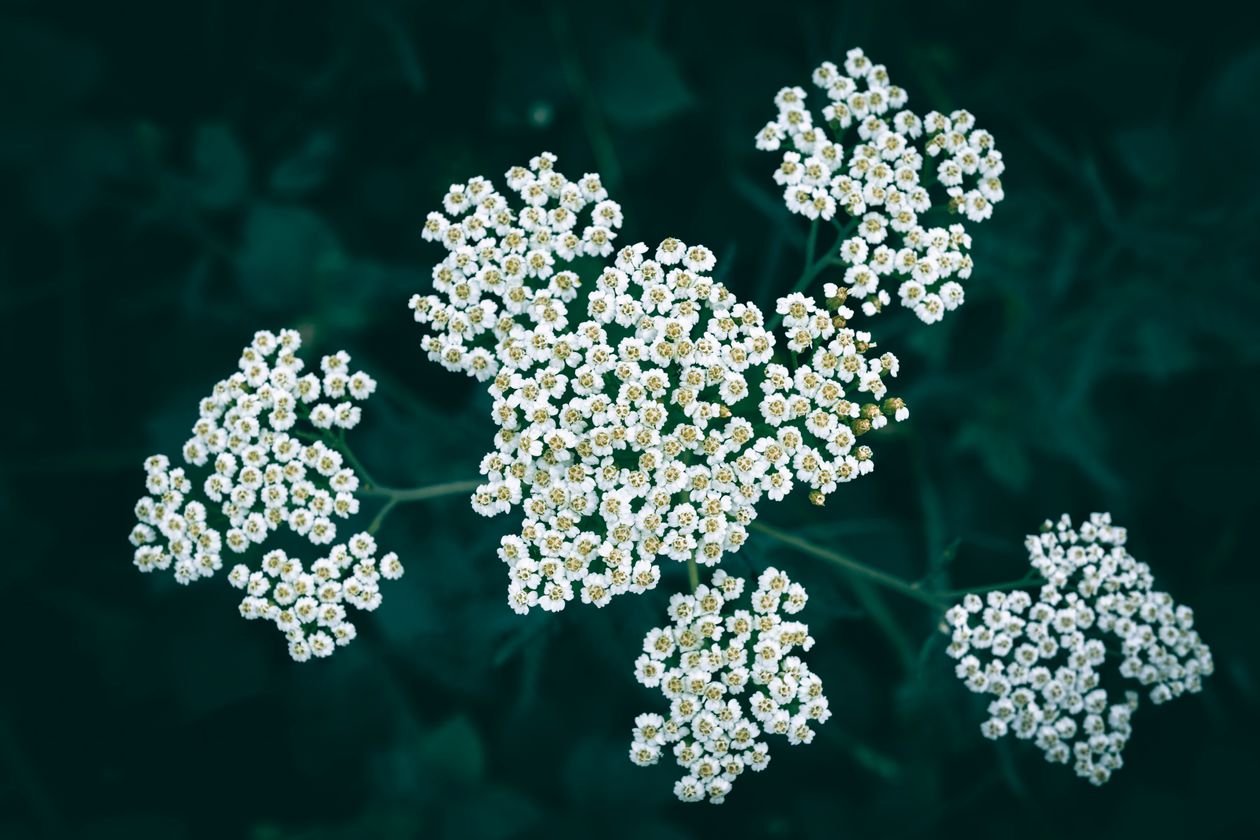
Photo: Wyxina Tresse / Pexels
Yarrow (Achillea millefolium and its hybrids) is a tough, drought-tolerant perennial flower that pollinators love and neglect cannot kill. Its spacing question has one correct first step: identify the type you are holding. Compact modern varieties top out under 18 inches and space at 12 to 18 inches. Standard common yarrow grows 18 to 24 inches tall and wide and spaces at 18 to 24 inches. Tall fernleaf yarrow (Achillea filipendulina types) reaches 3 to 4 feet and needs 2 to 3 feet between plants.
NC State Extension's plant profile puts common yarrow at 1 to 3 feet tall and wide, spreading aggressively by rhizomes and self-seeding, which is why this guide treats spacing and containment together. The planner defaults to 18 inches, the compact-to-standard working number. Give a yarrow room and it becomes a billowing, flower-covered mound; crowd it and you get mildew-prone stems competing for light. Err on the wide side: yarrow fills gaps faster than almost any perennial you own.
Interactive tool
Plant Spacing Planner: The Yarrow Drift
Yarrow is in the crop list below at 18 inches, the standard spacing for common yarrow from the NC State plant data. Compact varieties take 12 to 18 inches and fernleaf types 24 to 36, so match the planner run to the variety named on your label.
8 tomato plants fit this bed
4 plants per row across 2 rows, on a 24 inch grid. Extension spacing for this crop: 24 in between plants, 48 in between rows.
The grid uses the in-row spacing in both directions, the standard square foot layout for raised beds. In open ground, keep the wider row spacing in the note above so you can walk and weed between rows.
Spacing figures: University of Georgia Cooperative Extension, Circular 963, Vegetable Planting Chart, source.
Spacing at a glance
Yarrow type
Spacing
Mature size
Notes
Compact varieties ('Little Moonshine' and similar)
12 to 18 inches
12 to 18 inches tall and wide
Tool default 18 inches covers this and standard
Standard common yarrow
18 to 24 inches
18 to 24 inches, spreads beyond
Rhizomes widen the clump yearly
Fernleaf yarrow
24 to 36 inches
3 to 4 feet tall, 2 to 3 feet wide
Stake in rich soil or wind
Mass planting or meadow drift
18 inches
Fills to a continuous drift
Plan the edges, not just the gaps
Containers
1 plant per 12 inch pot
Prune to fit
Division every 2 years
However you space it, assume the plant you see in the pot is half the plant you will have in year two. Yarrow's first season is establishment; its second season is expansion. Spacing that looks sparse in May of year one looks perfect in June of year two, and spacing that looks perfect in year one looks like a wrestling match in year two.
Spread: rhizomes, seed, and the honest containment plan
Yarrow spreads two ways. Rhizomes creep outward from the clump a few inches a year, and wind-blown seed lands wherever it likes. In a mixed border, the containment routine is simple: deadhead before seed ripens if you do not want volunteers, and dig the clump's advancing edge each spring to hold its line. In a meadow or pollinator drift, let both mechanisms run and simply mow the boundary.
NC State flags the flip side of this vigor: yarrow can be aggressive enough to crowd out weaker neighbors, and it resents wet soil, with root rot in poorly drained spots its main disease. So the spacing plan is also a pairing plan. Give yarrow neighbors with matching toughness, like the Mediterranean herbs in plant spacing for oregano, and keep it away from delicate alpines and slow seedlings it will happily smother.
Site and soil
Full sun, lean soil, sharp drainage: yarrow is the anti-delphinium. Rich soil and generous fertilizer produce tall, floppy stems that splay open after rain, which effectively widens the plant beyond its spacing and shades its neighbors. Planted lean and hungry, the same variety stands stiff at its listed height. If your soil is rich, widen the spacing by a few inches to price in the flop, or choose compact varieties bred to stay upright.
Once established, yarrow is one of the most drought-tolerant perennials in the garden, which makes it a natural partner for the water-wise designs in front yard landscaping ideas with rocks and no grass. It also tolerates poor, dry, even salty soil that defeats fussier flowers, and it is a first-call plant for hell strips and slopes.
Division: the spacing reset button
Every 3 to 5 years, or whenever the center of the clump dies out and flowering thins, dig the plant in spring, split it into fist-sized sections with roots and shoots, and replant at full spacing. Division is not just rejuvenation; it is how a yarrow planting stays at its planned footprint instead of becoming a woody, hollow-centered ring. The divisions are also free plants for the next drift, spaced at the same numbers.
Deadheading spent flower heads through summer pushes many varieties into a second, smaller bloom and keeps the mound compact. A mid-season shear after the main flush, cutting the whole plant back by half, refreshes foliage and tightens the plant inside its allotted space, a useful trick in tidy borders.
Varieties and their footprints
Common yarrow cultivars like 'Paprika', 'Terracotta', and the Song Siren and Tutti Frutti series are the standard 18 to 24 inch citizens. 'Moonshine', with silver foliage and lemon flowers, is a bit more compact and clumping, slower to run. 'Little Moonshine' is the true dwarf for edges and containers at 12 inches. Fernleaf types like 'Gold Plate' and 'Coronation Gold' are the giants: give them their 2 to 3 feet and a position at the back of the border where their height is an asset.
White wild-type yarrow, the form that colonizes roadsides, is the most aggressive spreader of all. It is a legitimate choice for meadows and erosion control and a poor choice for a small mixed border at any spacing, because the plant, not the tape measure, will decide the final arrangement.
Yarrow from seed: the patient route
Yarrow is easy from seed but slow to flower size, which changes the spacing workflow rather than the spacing itself. Sow indoors 8 to 10 weeks before the last frost, barely covering the seed, and keep the tray in light. Seedlings grow into small rosettes that can be transplanted after frost at the final spacing, where they spend year one building the crown. Expect scattered first-year flowers and the full show in year two.
Direct sowing into a prepared meadow or drift works well in fall, mimicking the plant's own self-sowing. Broadcast, rake lightly, and let winter do the stratification. Thin or transplant the resulting seedlings the following spring toward your target spacing, knowing that in a meadow context, even coverage matters more than exact inches. The seedlings you remove transplant happily; yarrow at the rosette stage moves with almost no setback.
Yarrow through the seasons
Spring is for dividing, edging, and planting: the crowns wake early and establish fast in cool soil. Summer is the flower show and the deadheading decision, seed for next year or a second bloom now. In late summer, a hard shear on tired plantings produces fresh basal foliage that looks good into fall. In winter, the evergreen basal rosettes hold a low green footprint in mild zones and vanish to the crown in cold ones; leave the dried stems standing if you like the structure, or cut them in the spring cleanup.
One seasonal warning: yarrow's enthusiasm peaks in its second and third years. A border that looks balanced in year one needs its spring edge patrol by year two, or the yarrow quietly annexes the space of anything slower. Build that 15 minute spring job into your calendar and the plant stays a citizen instead of becoming a takeover.
Yarrow in a designed planting: a quick layout example
For a sunny 10 by 3 foot border, a reliable recipe is five standard yarrow at 24 inch spacing along the back-center, fronted by a lower drift of compact varieties at 15 inches, with the whole bed edged by something low and evergreen. That is 5 plus about 9 plants, and by year two the border reads as one continuous flower band from June through August with a September echo after shearing. The same border planted at a uniform guessed spacing, say everything at 12 inches, would have the standard plants swamping the compacts by midsummer and the whole composition collapsing into the strongest grower. Variety-matched spacing is what keeps a mixed planting mixed.
In a meadow drift of 100 square feet, yarrow at 18 inches in a staggered grid takes about 45 plants and closes in two seasons. Interplant with grasses at wider spacing and let the yarrow be the flower infrastructure between them; its rhizomes will quietly fill the seams you leave.
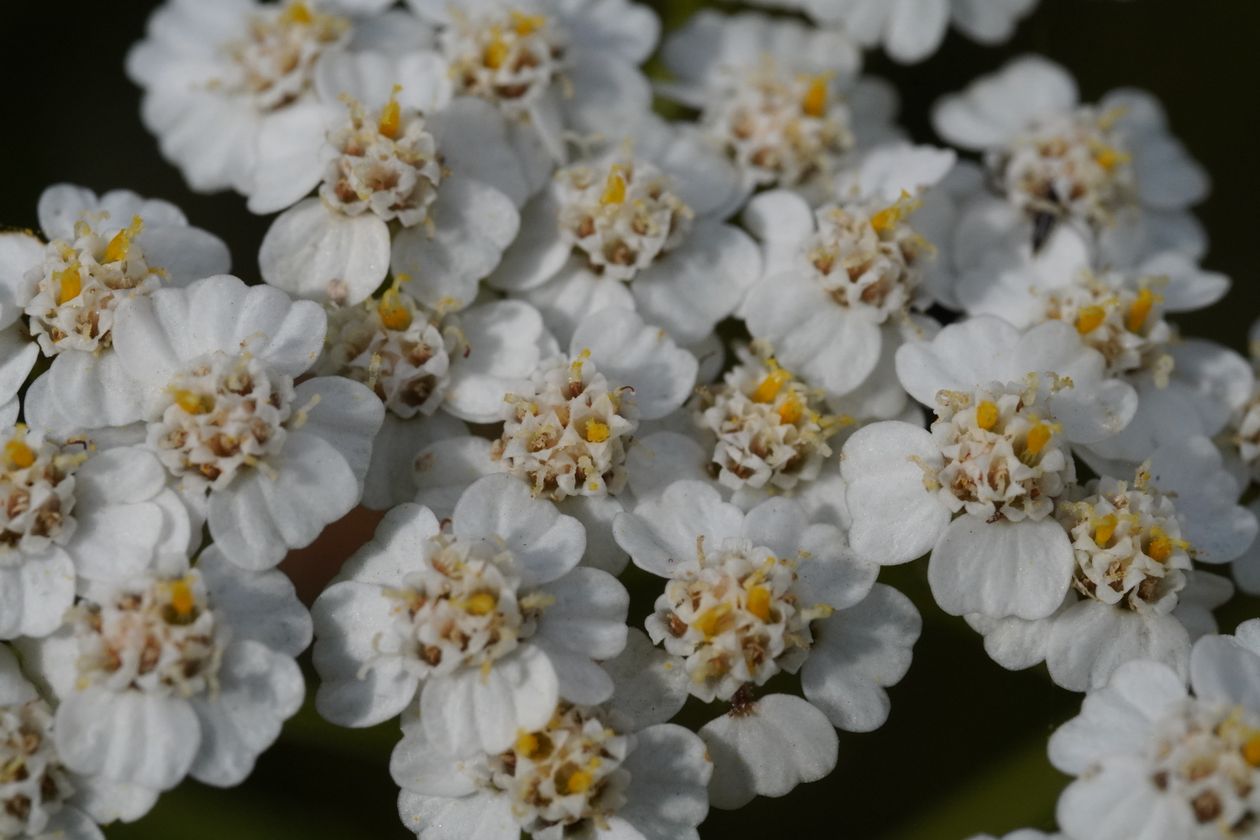
White yarrow flowers blooming in a sunny perennial border
Match the spacing to the type: compact varieties 12 to 18 inches apart, standard common yarrow 18 to 24 inches, and tall fernleaf yarrow 2 to 3 feet. When the label does not say, use 18 inches, and remember the plant spreads by rhizomes beyond its first-year footprint.
Does yarrow spread aggressively?
It can. NC State Extension notes that yarrow spreads by rhizomes and self-seeding and can crowd weaker neighbors. Deadhead to stop seed, edge the clump each spring to hold rhizomes, and divide every 3 to 5 years. In meadows and pollinator plantings, that same vigor is the point.
Why is my yarrow flopping over?
Rich soil, generous feeding, and shade are the usual causes, and all three make stems grow tall and weak. Yarrow stands best lean and hungry in full sun. Widen spacing in rich soil, skip fertilizer, and shear the plant back by half after the first flush to force stiffer regrowth.
How often should yarrow be divided?
Every 3 to 5 years, in spring, or whenever the clump center dies out and flowering declines. Dig, split into sections with roots and shoots, discard the woody center, and replant at full spacing. Divisions establish fast and are the cheapest way to extend a drift.
Is yarrow good for pollinators and cutting?
Yes to both. The flat flower clusters are landing pads for bees, hoverflies, and small butterflies, and the stems dry well for arrangements. Cut flowers in the morning as heads fully open. Leave some heads standing if you want winter texture and self-sown seedlings.
Photo credits: Wyxina Tresse (Pexels); Lajos Kristof Kantor (Pexels). Photos are served from this site; follow the credit to the library page for the original.