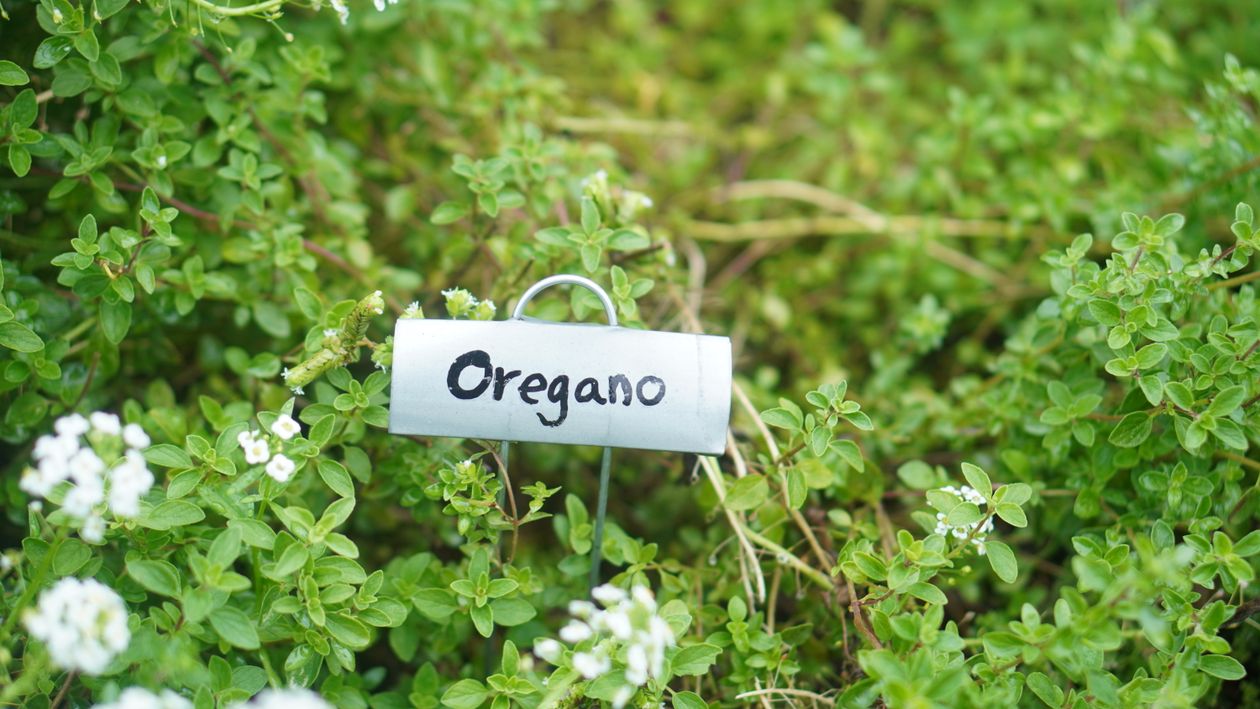
Plant Spacing for Oregano: Thin Seedlings to 8 to 12 Inches
By the Windchime Walker editorial team
Photo: Ri Yad / Pexels
Oregano is a low, spreading perennial herb, and its spacing is set at the thinning stage. Penn State Extension's herb guidance is specific: sow oregano in rows 19 to 24 inches apart, and thin the seedlings to stand 8 to 12 inches apart in the row. This guide uses 10 inches as the working in-row number, the middle of the extension bench, with rows at 24 inches for a cultivated bed. Clumps started from divisions or nursery plants go straight in at the final 8 to 12 inch spacing.
The reason spacing matters so much for oregano is flavor chemistry. Oregano's pungency concentrates in sun-drenched, slightly stressed leaves. Crowded, shaded, over-watered oregano grows lush and tastes like lawn. Give it the full spacing, lean soil, and maximum sun, and the same plant becomes the intense herb that justifies growing it at all. Use the planner to count plants for your bed, then read why this is the one herb where generosity with space pays you back in taste.
Interactive tool
Plant Spacing Planner: The Oregano Row
Oregano is in the crop list below at 10 inches in the row and 24 inch rows, the middle of the Penn State Extension bench that thins seedlings to 8 to 12 inches in rows 19 to 24 inches apart. Enter your bed size to count plants for a seed-grown or transplanted row.
8 tomato plants fit this bed
4 plants per row across 2 rows, on a 24 inch grid. Extension spacing for this crop: 24 in between plants, 48 in between rows.
The grid uses the in-row spacing in both directions, the standard square foot layout for raised beds. In open ground, keep the wider row spacing in the note above so you can walk and weed between rows.
Spacing figures: University of Georgia Cooperative Extension, Circular 963, Vegetable Planting Chart, source.
Spacing at a glance
Situation
In-row spacing
Row spacing
Notes
Seed-grown bed
Thin to 8 to 12 inches (tool uses 10)
19 to 24 inches
Penn State Extension bench
Nursery transplants
10 to 12 inches
24 inches
Set at final spacing directly
Divisions
10 to 12 inches
24 inches
Spring divisions establish fastest
Container
1 plant per 10 to 12 inch pot
n/a
Terracotta suits its dry preference
Groundcover planting
12 inches
12 to 18 inches
Fills in by the second season
Greek oregano (Origanum vulgare subsp. hirtum) is the culinary standard, white-flowered and fiercely flavored. Common oregano (O. vulgare) is pink-flowered, milder, and more vigorous, so give it the wide end of every range. Ornamental types like 'Kent Beauty' are grown for looks and follow the same spacing without the flavor stakes.
Why thinning is the whole game
Oregano seed is dust-fine, germination is patchy, and seedlings emerge in clumps wherever the seed landed thickest. Every beginner's instinct is to keep them all. Resist it. A clump of 30 seedlings becomes a congested mat where the middle plants stretch, yellow, and mildew, while a thinned stand of single plants at 10 inches becomes a row of productive mounds.
Thin in two passes. First pass, when seedlings are an inch tall, reduce each clump to 3 or 4 strong seedlings. Second pass, at 3 to 4 inches tall, take each station down to one plant at the final spacing. The thinnings are not wasted if you pot them up; oregano transplants readily at that size, and a thinned row can stock a whole herb garden.
Site and soil: spacing works only with sun and drainage
Oregano demands full sun, at least 6 to 8 hours, and soil that drains freely. In rich, wet soil the plant grows fast and tastes weak, and root rot joins the party in winter. Sandy or gravelly soil that would starve basil is oregano's idea of home. If your bed is heavy clay, plant on a slight mound or in a raised row so crowns stay dry, and keep the full 12 inch spacing for maximum airflow.
Water needs are modest once established: oregano prefers to dry between waterings, a rhythm closer to rosemary than to mint. Its neighbors in the herb bed should share that preference, which is why it pairs naturally with thyme and clashes with thirsty lemon balm unless the bed is zoned by moisture.
Growth habit over the years
A first-year oregano plant is a modest rosette 8 to 10 inches across. By year two it is a spreading mound that roots where stems touch soil, and the patch begins to widen beyond its original station. That spread is welcome in a dedicated bed and easy to edit: dig the outlying rooted stems each spring and either replant them at spacing elsewhere or give them away. Oregano is one of the easiest herbs to share because divisions are nearly unkillable in spring.
Replace or renovate the patch every 3 to 4 years. Old plants get woody at the center and flavor fades. Dig, divide the vigorous outer growth, discard the woody core, and replant at full spacing in refreshed soil. The renovated patch tastes like a new planting because, genetically young tissue aside, it effectively is one.
Harvest and spacing feedback
Harvest by cutting stems back by up to two thirds, just before flowering for peak flavor, and the plant responds with dense regrowth. Regular harvesting keeps the mound compact and inside its allotted space, so a harvested patch can live happily at the 8 inch end of the spacing range. An unharvested patch sprawls and should get the full 12 inches.
Dry or freeze the harvest promptly; oregano is one of the few herbs whose flavor survives drying almost intact, which is why a modest, well-spaced planting supplies a kitchen year-round. Two or three plants at proper spacing, harvested on schedule, out-produce a crowded dozen for actual cooking purposes.
Starting oregano from seed, step by step
Sow indoors 8 to 10 weeks before your last frost, scattering seed on the surface of a fine seed mix and pressing it in without covering, because the seed needs light. Keep the tray warm and moist and expect slow, uneven germination over 1 to 3 weeks. This unevenness is normal and is another reason the thinning bench exists: you are managing a crowd, not placing individuals.
Prick out seedlings into small pots once they have true leaves, grow them on in bright light, and harden them off before transplanting after the last frost. Set transplants at the final 10 to 12 inch spacing directly; there is no benefit to a closer nursery spacing outdoors. Water transplants in well, then taper to the dry rhythm the plant prefers as roots establish over the first month.
Direct sowing outdoors after frost works in warm climates and for gardeners with patience. Prepare a fine seedbed, sow in the 19 to 24 inch rows from the Penn State bench, and thin in the two passes described above. A direct-sown patch typically lags a transplanted one by a month in the first year and catches up completely by the second.
Winter behavior and zone notes
Oregano is hardy in zones 5 to 10, dying back to the crown in cold winters and persisting as a semi-evergreen in mild ones. Winter survival depends on drainage more than temperature: a crown sitting in cold, wet soil rots, while the same crown in dry, gravelly soil sails through colder weather. This is the final argument for the full spacing and lean soil in this guide; they are winter insurance as much as summer flavor policy.
In zones colder than 5, grow oregano in pots that move to a sheltered spot, or treat it as an annual restocked from spring divisions of a protected mother plant. In warm zones, the plant's main winter issue is the opposite: it never fully rests, gets leggy, and benefits from a hard late-winter cutback to force compact spring growth at the same spacing.
Oregano in the perennial herb bed: putting the spacing together
A worked example pulls the numbers together. Take a 4 by 8 foot raised bed dedicated to Mediterranean herbs. Rows at 24 inches give you two working rows across the 4 foot width with margins. Oregano at 10 inches in-row fits about 9 plants per row; most home cooks should plant one row of oregano (9 plants is already abundance) and give the second row to thyme at its 12 inch spacing, with rosemary anchoring the corners. That single bed, planted at extension spacing, produces more dried oregano than a family uses in a year, which is the practical proof that thinning to 8 to 12 inches is generosity, not waste.
Leave one corner of the bed as the division nursery: each spring, pot up the oregano and thyme divisions you take during renovation and hold them there for giveaways or replacements. A herb bed managed this way never needs a nursery order again after its first year.
Thin or transplant oregano to 8 to 12 inches apart in the row, with rows 19 to 24 inches apart, per Penn State Extension. This guide uses 10 inches as the working in-row spacing. Give vigorous common oregano the wide end of the range and Greek oregano the middle.
Why does my oregano have no flavor?
Crowding, shade, and rich wet soil are the usual causes, in that order. Oregano concentrates its aromatic oils in full sun and lean, dry conditions. If your plants are lush, green, and bland, widen the spacing, cut back water and fertilizer, and make sure they get at least 6 to 8 hours of direct sun.
Can oregano be grown as a groundcover?
Yes. Plant at 12 inches in a staggered grid and it knits into a fragrant, pollinator-friendly mat by the second season. It will not take foot traffic like creeping thyme, but for a sunny slope or the front of a border it is excellent, and the whole patch can still be harvested.
How many oregano plants does a home cook need?
Two to three well-spaced plants, harvested regularly, supply fresh oregano all season and enough dried oregano for winter. Because dried oregano keeps its flavor so well, there is little reason to overcrowd a bed with more plants than your spacing allows.
Does oregano spread and need dividing?
It spreads moderately by stems that root where they touch soil, and clumps benefit from division every 3 to 4 years when the center turns woody. Divide in spring, replant the vigorous outer sections at 8 to 12 inch spacing, and discard the old core.
Photo credits: Ri Yad (Pexels); Jazmine Foxx (Pexels). Photos are served from this site; follow the credit to the library page for the original.