Plant Spacing for Thyme: Upright and Creeping Types Need Different Gaps
By the Windchime Walker editorial team
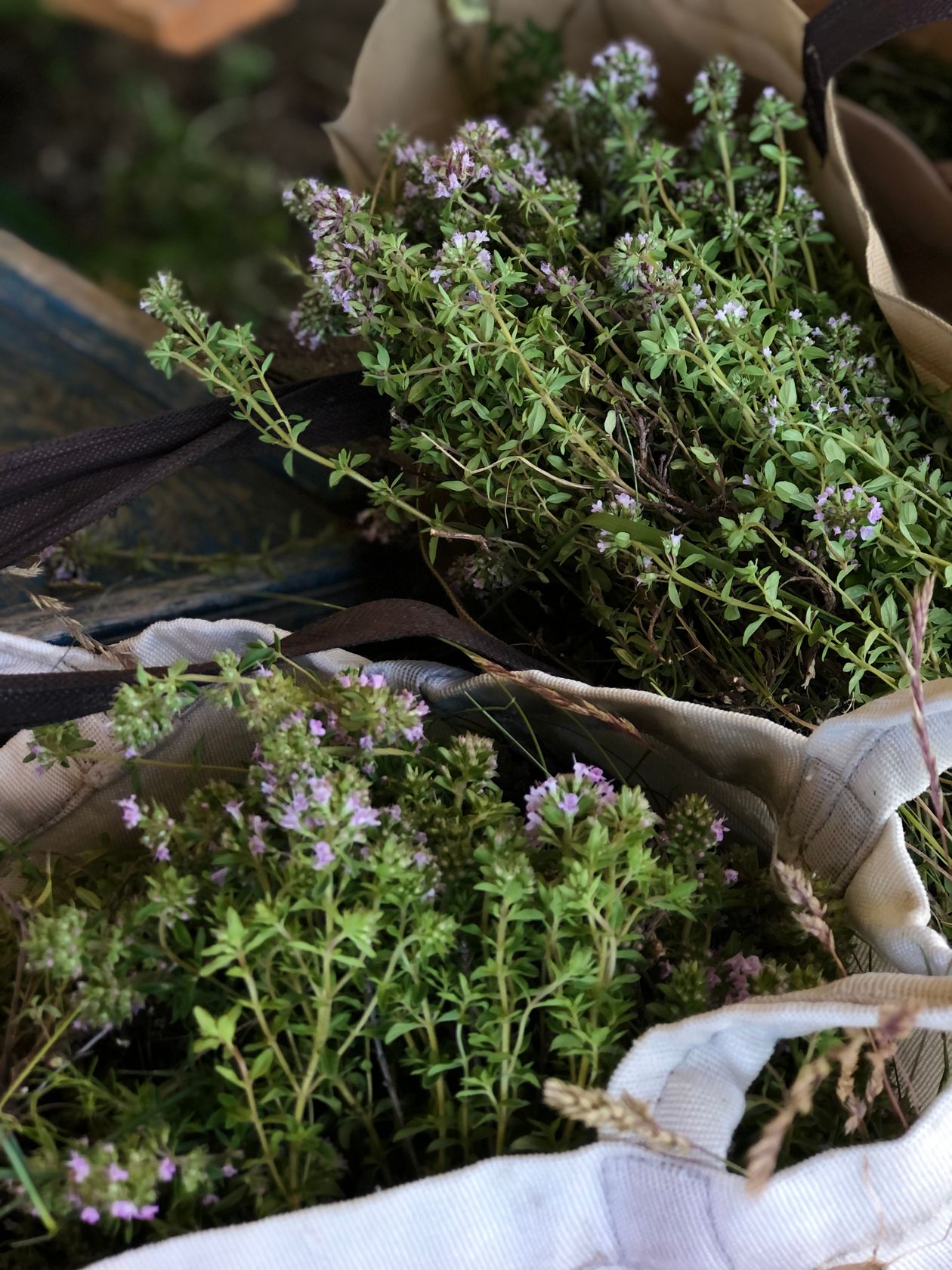
Photo: Unaizat Abdulgamidova / Pexels
Thyme is two plants wearing one name, and they take different spacing. Upright culinary thyme (Thymus vulgaris and its forms) is a small woody shrublet that should stand 12 to 18 inches apart; Penn State Extension's herb guidance thins seed-grown plants to about 12 inches. Creeping thyme (Thymus serpyllum and relatives) is a groundcover mat that Illinois Extension spaces 8 to 12 inches apart, and this guide's working range for it is 6 to 12 inches depending on how fast you want coverage.
The planner below uses 12 inches as the default for upright thyme, which is both the Penn State thinning bench and a sound mature spacing for a plant that reaches 12 to 15 inches across. If you are planting creeping thyme between pavers or as a lawn substitute, switch to the groundcover numbers in the table and expect the mats to merge within one to two seasons.
Interactive tool
Plant Spacing Planner: Thyme, Upright and Creeping
Thyme is in the crop list below at 12 inches, the Penn State thinning bench for upright culinary thyme. Creeping thyme for groundcover runs 6 to 12 inches, so run the planner at both spacings and compare the plug count before you buy.
8 tomato plants fit this bed
4 plants per row across 2 rows, on a 24 inch grid. Extension spacing for this crop: 24 in between plants, 48 in between rows.
The grid uses the in-row spacing in both directions, the standard square foot layout for raised beds. In open ground, keep the wider row spacing in the note above so you can walk and weed between rows.
Spacing figures: University of Georgia Cooperative Extension, Circular 963, Vegetable Planting Chart, source.
Spacing at a glance
Type and use
Spacing
Row spacing
Notes
Upright culinary thyme, transplants
12 to 18 inches
18 inches
Tool default 12 inches
Upright thyme, seed grown
Thin to about 12 inches
18 inches
Penn State Extension bench
Creeping thyme, groundcover
6 to 12 inches
Staggered grid
Illinois Extension: 8 to 12 inches
Creeping thyme, between pavers
6 to 8 inches
n/a
Small plugs, faster fill
Thyme in containers
1 plant per 8 to 10 inch pot
n/a
Terracotta and gritty mix
The distinction that matters is speed versus patience in groundcover. At 12 inches, creeping thyme plugs take two full seasons to knit into a closed mat, and weeds move into the gaps meanwhile. At 6 to 8 inches you pay for roughly twice as many plugs and get a closed, weed-suppressing mat in one season. For a small area between stepping stones, the tight spacing is almost always worth it.
Upright thyme: a tiny shrub, spaced like one
Treat culinary thyme as the small woody shrub it is. Each plant becomes a twiggy dome about a foot across and a foot tall, and it resents both crowding and wet feet. Twelve inches gives neighboring domes room to breathe; 18 inches suits rich soil and humid climates where airflow is the difference between a healthy plant and a gray, mildewed one.
Seed-grown thyme starts absurdly small and slow, which tempts everyone to skip thinning. The Penn State instruction to thin to about 12 inches exists because a mat of seedlings behaves like the worst of both types: too crowded to thrive as shrubs, too upright to work as groundcover. Thin without mercy, or start from cuttings and divisions, which is how most experienced growers propagate thyme anyway since seed-grown plants vary in flavor.
Creeping thyme: the groundcover math
Creeping thyme spreads by stems that root as they run, so spacing is really a decision about time. Plugs at 8 to 12 inches (the Illinois Extension range) close in about two seasons with mulching and weeding help in year one. Plugs at 6 inches close in a single good season. Measure your area, run the planner with both numbers, and let the plant count difference make the decision with your budget in the room.
Between pavers and stepping stones, use small plugs at 6 to 8 inches and keep them watered through their first summer; the reflected heat from stone is brutal on new roots. Once established, creeping thyme is genuinely drought tolerant and asks only for a shearing after bloom to keep it dense.
Site, soil, and companions
All thymes want full sun and sharp drainage, and they are happiest in the lean, gravelly soil that makes basil sulk. Rich, wet soil produces soft, flavorless growth and winter rot. Plant thyme at the sunny edge of the herb bed where its low dome fronts taller herbs, alongside oregano, its Mediterranean partner with nearly identical spacing logic and soil taste. Keep both away from the thirsty corner where lemon balm and mint live; the watering schedules are incompatible.
Thyme also earns its keep as edging along paths and raised bed rims, where brushing against it releases scent and the drainage is naturally excellent. In raised beds, set upright plants 12 inches apart along the edge and let them soften the timber line.
Care that keeps the spacing honest
Shear upright thyme lightly after its spring bloom and again in late summer, never cutting into the oldest bare wood at the base, which does not resprout reliably. Replace plants every 3 to 4 years as they get woody and sparse; divisions and stem cuttings taken in spring root easily and keep your best-flavored clone going at the same spacing.
Winter is thyme's exam. In zones 5 and colder, survival hinges on drainage and snow cover, not on cold itself. A plant at proper spacing in gritty soil, with air moving around it and no wet mulch mounded against the crown, comes through winters that kill coddled plants in rich beds. In warm zones the plant stays evergreen and can be harvested lightly all year.
Starting thyme: seed, cuttings, and divisions
Thyme seed is tiny, slow, and genetically variable, which is why the seed route comes with a thinning bench rather than a planting distance. Sow indoors 8 to 10 weeks before the last frost, barely covering the seed, and keep the tray warm; germination takes 2 to 4 weeks and the seedlings grow at a crawl for their first month. Transplant after frost at the final 12 inch spacing and accept that the plants will look lost in their allotment until midsummer. They are not lost; they are building the woody frame that carries them for years.
Cuttings are the professional route for culinary thyme. Snip 3 to 4 inch stem tips in spring, strip the lower leaves, and root them in gritty mix under humidity; most strike within a month. Every cutting is a clone of the mother plant, so the flavor you tasted is the flavor you get, which seed can never promise. Divisions work for clumps two or more years old: dig in spring, tease the rooted outer stems apart, and replant each section at full spacing.
Creeping thyme is almost always planted as plugs or small pots rather than seed, because named forms do not come true from seed and coverage speed matters. When you buy plugs, the spacing decision in the table above is the entire project plan: count, cost, and seasons to coverage all flow from it.
Varieties worth knowing before you space
English thyme (Thymus vulgaris) is the culinary default, upright and gray-green, happiest at 12 to 15 inches. French thyme is a narrower-leaved form of the same species with a reputation for finer flavor in mild climates. Lemon thyme (T. citriodorus) spreads a little wider and earns 15 to 18 inches, and its variegated forms are slower and want the full sun that keeps their color.
Among creepers, 'Elfin' stays extremely tight and low for between-paver work, 'Coccineus' covers ground fast with crimson bloom, and woolly thyme (T. pseudolanuginosus) is grown for its fuzzy gray mat rather than flowers and resents humidity most of all. Mother of thyme (T. serpyllum) is the classic lawn-substitute species behind the Illinois spacing guidance. All of them obey the same rule: the faster and wider the variety runs, the wider you can space it and still close the mat on schedule.
A worked groundcover count
For a 6 by 10 foot area beside a path, creeping thyme at 8 inch spacing in a staggered grid takes about 135 plugs; at 12 inches, about 60; at 6 inches, about 240. Priced per plug, that range is the difference between a modest project and a serious one, which is why the honest advice is to match spacing to the area's visibility: tight spacing where the mat is a featured surface by the front door, wider spacing with patient mulching on a side slope nobody studies. Either way, order 10 percent extra plugs; a few always fail, and a gap in a closing mat is a weed invitation with an address.
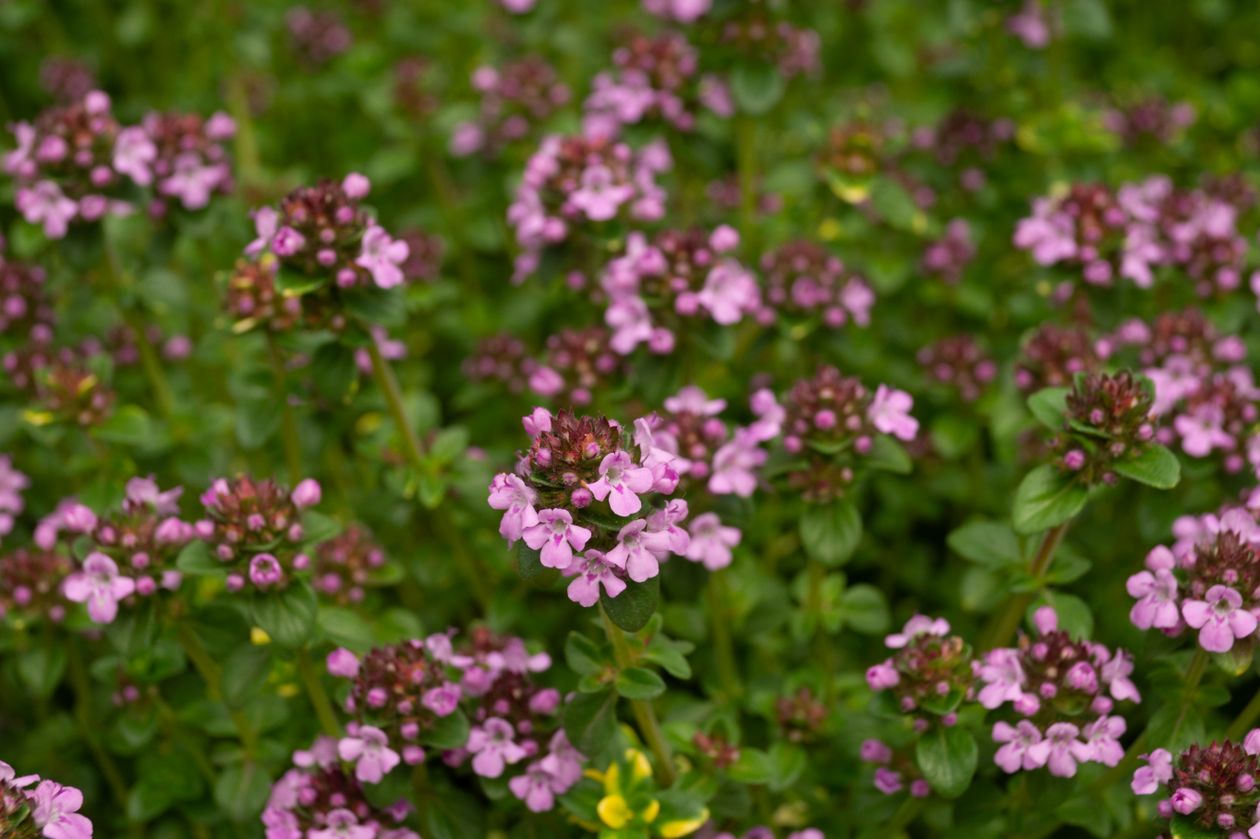
Creeping thyme in bloom spreading between garden stones
Upright culinary thyme goes 12 to 18 inches apart; Penn State Extension thins seed-grown plants to about 12 inches. Creeping thyme for groundcover goes 6 to 12 inches apart, with Illinois Extension recommending 8 to 12 inches. Closer spacing within the creeping range buys faster coverage.
How long does creeping thyme take to fill in?
At 8 to 12 inch spacing, expect a closed mat in about two growing seasons. At 6 inch spacing with good watering in the first summer, plugs can knit together in one season. Weed the gaps in year one, because whatever fills them first wins.
Can thyme be grown in pots?
Yes, and it thrives in terracotta pots with gritty, fast-draining mix. Give one upright plant an 8 to 10 inch pot, water when the top inch is dry, and never let the pot sit in a saucer of water. Potted thyme is the practical option where winters are too cold or soil too wet for in-ground plants.
Why did my thyme die over winter?
Usually wet soil, not cold. Thyme crowns rot in heavy, waterlogged ground during winter. Plant in raised, gravelly soil, space for airflow, avoid mounding mulch against the crown, and choose the sunniest, best-drained spot you have. Drainage is thyme's winter coat.
How many creeping thyme plants do I need per square foot?
At 6 inch spacing, about 4 plants per square foot; at 8 inches, about 2.25; at 12 inches, 1 per square foot. Multiply by your area, or use the planner above, and weigh the plug cost against how many seasons of weeding the gaps you are willing to do.
Photo credits: Unaizat Abdulgamidova (Pexels); Nadin Nandin (Pexels). Photos are served from this site; follow the credit to the library page for the original.