Plant Spacing for Watermelon: Room for the Vines to Run
By the Windchime Walker editorial team
Photo: Vladimir Srajber / Pexels
Watermelon spacing is a land decision. A single vine can run 8 to 12 feet, set leaves the size of dinner plates along the way, and shade out everything it crosses. The University of Georgia Extension bench that powers the planner on this page is 36 to 48 inches between plants within the row and 72 inches between rows; the tool uses 42 inches in-row as the working middle. In a hill system, plant hills 6 to 8 feet apart with 2 to 3 seedlings per hill, thinned to the strongest two.
You will find tighter numbers in some extension publications, and this guide flags that disagreement rather than averaging it away. Utah State and Illinois guidance allows in-row spacing near 2 to 3 feet with rows 4 to 10 feet apart in some systems, and Maryland's hill guidance runs 6 to 8 feet. The differences track variety size, irrigation method, and whether the planting is a commercial field or a home garden. For a home gardener with full-size varieties, the Georgia bench is the safe default this page builds on.
Interactive tool
Plant Spacing Planner: The Watermelon Patch
Watermelon is in the crop list below at 42 inches in the row and 72 inch rows, the working middle of the University of Georgia bench of 36 to 48 inches. Enter your patch size to count plants, and read the flagged disagreement with tighter extension benches in this guide before you shrink the spacing.
8 tomato plants fit this bed
4 plants per row across 2 rows, on a 24 inch grid. Extension spacing for this crop: 24 in between plants, 48 in between rows.
The grid uses the in-row spacing in both directions, the standard square foot layout for raised beds. In open ground, keep the wider row spacing in the note above so you can walk and weed between rows.
Spacing figures: University of Georgia Cooperative Extension, Circular 963, Vegetable Planting Chart, source.
Spacing at a glance
System
In-row spacing
Row spacing
Notes
Rows, full-size varieties
36 to 48 inches (tool uses 42)
72 inches
University of Georgia bench
Hills
2 to 3 plants per hill
Hills 6 to 8 feet apart
Thin to the strongest 2
Compact or icebox varieties
24 to 36 inches
48 to 60 inches
Smaller vines, smaller fruit
Trellised small varieties
18 to 24 inches
48 inches
Only for fruit under about 10 pounds, with slings
Containers
1 plant per 15 to 20 gallon pot
n/a
Compact varieties only; vines spill over
However you plant, the geometry serves one purpose: every leaf in sunlight and every fruit resting on dry ground or mulch, with air moving through the canopy. Watermelon foliage that stays wet and crowded is a powdery mildew farm, and fruit rotting at the soil line is the classic end of a too-tight planting.
Why the sources disagree, and how to choose
Commercial growers plant tighter because they manage fertility, irrigation, and disease on a schedule home gardeners do not, and because a slightly smaller average melon is acceptable when the field is sold by weight. Some extension publications write for those systems. Home garden guidance, including Georgia's, assumes one gardener, a hose, and varieties chosen for size and flavor, and it buys disease insurance with space.
Choose by your constraints. If your garden is small and you grow compact varieties on drip irrigation, the tighter end of the published range can work. If you grow full-size seeded varieties with overhead watering in a humid climate, take the Georgia spacing or wider. What you should never do is average two systems into a number neither source endorsed, which is why this page presents the benches side by side instead of blending them.
Hills versus rows
Hills are the traditional home garden system: mound soil 6 to 8 inches high and 2 feet across, sow 4 to 5 seeds per hill, and thin to the 2 strongest seedlings. The mound warms early, drains after storms, and gives the crown a dry start. Rows suit larger plantings and drip lines, with seeds sown at the in-row spacing and thinned to one plant per station.
Either way, direct seed after all frost danger when soil reaches 70 degrees, or transplant young seedlings with minimal root disturbance. Watermelon roots resent transplanting; peat pots or large cell packs planted whole keep the shock down. Mulch the whole area once vines start to run, because you will not be able to walk in to weed once the canopy closes, and fruit resting on mulch stays cleaner than fruit on bare soil.
Managing the vines inside your spacing
Do not prune watermelon vines to fit a small space; the leaves feed the fruit, and a pruned vine makes small, bland melons. Instead, gently redirect runners to keep paths open and keep vines from climbing fences or smothering the cucumber plants next door. Train them once, early, and they mostly hold the pattern.
Water is the other half of the spacing bargain. Vines at full Georgia spacing still want about 1 to 2 inches of water per week, delivered at the base, with a taper as fruit ripens to concentrate sugars. The watering discipline resembles the one in our guide to how often to water cucumber plants, its cucurbit cousin: deep, at the base, and consistent during fruit fill.
Small gardens: honest options
If you cannot give a full-size watermelon its 42 by 72 inches, change the variety, not the math. Icebox types like 'Sugar Baby' on a trellis with fruit slings, or bush varieties bred for containers, produce real melons in a fraction of the footprint. A full-size variety crammed into 2 feet will produce disappointment on schedule: few fruit, small size, and disease pressure from the crowded canopy.
Vertical growing deserves its warning. Only small-fruited varieties trellis safely, and every fruit needs a sling (a mesh bag or fabric hammock tied to the support) once it passes softball size. The vine's tendrils cannot hold a 15 pound melon, and neither can your optimism.
The season timeline your spacing has to survive
At sowing, a watermelon patch looks absurdly empty: a few seeds in a bare field of mulch. By week 6 the vines are 3 feet long and the geometry starts making sense. By week 9 the canopy closes at Georgia spacing, and from then on the planting is a closed system: no walking in, no weeding, just watering at the edges and watching fruit swell. Every spacing decision in this guide is aimed at that week-9 moment. A patch that closes too early traps humidity for the whole fruiting period; a patch that never closes wastes the ground you gave it and lets weeds own the gaps.
Harvest timing interacts with spacing too. Crowded plants ripen unevenly and hide fruit in the tangle, so melons get missed past their prime. At proper spacing each fruit is visible from the row edge, the tendril nearest the fruit can be checked for the brown, dried curl that signals ripeness, and you can thump and inspect without stepping on vines.
Pollination: the hidden spacing variable
Watermelon flowers need bees, and each female flower needs multiple bee visits carrying pollen from male flowers to set a well-shaped fruit. A patch smothered under row cover too long, or sprayed with insecticide during bloom, sets lopsided, hollow-hearted melons no matter how perfect the spacing is. Keep the patch open to pollinators, water in the morning so flowers are dry and attractive by the time bees work, and avoid spraying anything while flowers are open.
Seedless (triploid) varieties add a planning wrinkle: they produce no viable pollen and need a seeded pollinizer variety interplanted, typically one pollinizer per three seedless plants, within the same row system. Build the pollinizer into your plant count from the start; the planner's count is total plants, and forgetting the pollinizer ratio is a classic cause of a beautiful, fruitless patch.
A worked plant count
For a home garden row 24 feet long at the Georgia bench, 42 inch in-row spacing gives you 7 plants per row, and two rows at 72 inches apart occupy a patch roughly 24 by 12 feet including the outside vine run. Seven healthy plants of a full-size variety typically set 2 to 3 marketable melons each in a decent season, so that two-row patch is 28 to 42 melons: far more than most families eat fresh, which is why one row of 7 is the sane default and the second row is for people with a melon social life. Run your own dimensions through the planner above; the count it returns assumes the vines get the full footprint this guide keeps insisting on, because a watermelon plant count without the land behind it is just a list of future disappointments.
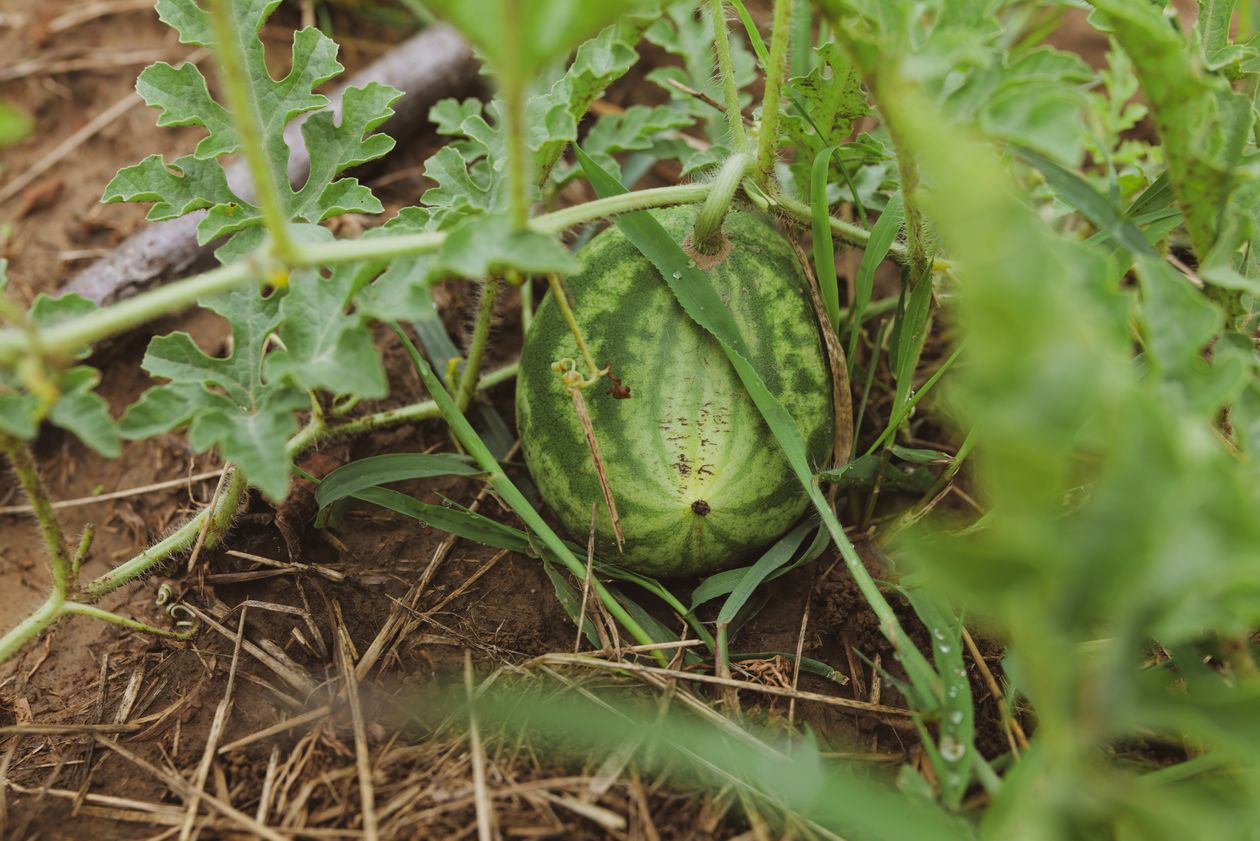
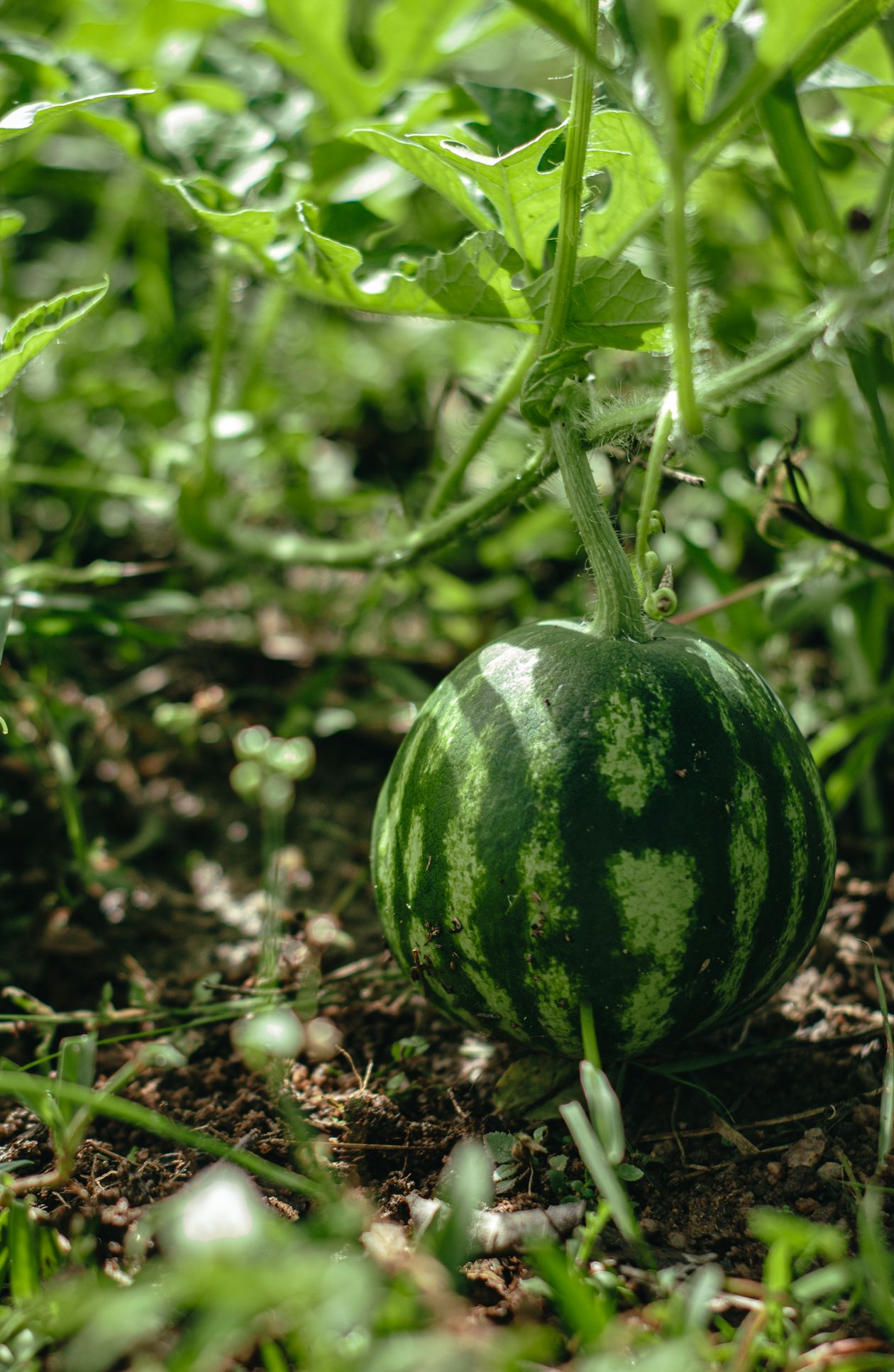
Watermelon vine with a young melon growing in a sunny field
Using the University of Georgia bench, space full-size watermelon plants 36 to 48 inches apart in rows 72 inches apart; our planner uses 42 inches as the working in-row number. In hills, set hills 6 to 8 feet apart with 2 plants per hill after thinning. Compact varieties can go tighter, at 24 to 36 inches in rows 48 to 60 inches apart.
Why do some sources say watermelons can be planted closer?
Some extension guidance written for commercial or irrigated systems allows in-row spacing near 2 to 3 feet. Those systems manage water, fertility, and disease intensively. This guide flags the disagreement instead of averaging it, and recommends the wider Georgia bench for home gardens, especially in humid climates.
How many watermelon plants fit in a 4 by 8 foot raised bed?
Realistically one full-size plant, and even that vine will spill over the edges and root across the paths. A better fit is one compact or icebox variety per bed, trellised at one end with slings for the fruit. Watermelon is the crop where raised bed gardeners most often over-plant.
Can I grow watermelon on a trellis to save space?
Only small-fruited varieties, and every fruit needs a supporting sling once it reaches softball size. Space trellised plants 18 to 24 inches apart along the support. Full-size melons are too heavy; the vine cannot hold them and the fruit will tear free or deform.
Should I thin watermelon seedlings?
Yes. Whether you sow in hills or rows, thin to the final count early, keeping the strongest seedling per station or the strongest two per hill. Crowded seedlings compete from day one and never catch up to properly spaced plants, and pulling extras later tears the roots of the keepers.
Photo credits: Vladimir Srajber (Pexels); Leiliane Dutra (Pexels). Photos are served from this site; follow the credit to the library page for the original.