How Often to Water Cucumber Plants: The 1-Inch Rule and Daily Container Checks
By the Windchime Walker editorial team
Photo: Agung Sutrisno / Pexels
Cucumbers are one of the thirstiest vegetables in the garden, and the short answer is this: give in-ground plants about 1 inch of water per week, and check containers every single day. A cucumber fruit is roughly 95 percent water, so a vine that is setting fruit has to move a lot of water through itself to fill those fruit out. When the supply falls behind, the plant tells you fast, and the fruit tells you in flavor.
This guide covers the schedule for each setup, the wilt test that separates real thirst from afternoon heat stress, and the mistakes that cause bitter fruit and powdery mildew. If you are growing other thirsty crops alongside your cucumbers, the same weekly-inch logic in our guide to how often to water tomatoes is a close cousin, and the container rules here pair well with how often to water tomatoes in pots.
Interactive tool
Watering Schedule Calculator: Cucumbers
Cucumbers want about 1 inch of water a week in the ground, roughly 1 to 1.5 gallons per plant per deep soak, and containers of 8 to 10 gallons need a daily check in fruiting weather. Enter your pot or bed size and climate, then match the result to the wilt test in this guide.
19.9 gallons
For 32 square feet at 1 inch deep. That is about 76 liters, or 10 trips with a standard 2 gallon watering can.
A rain gauge or a straight sided can set in the bed tells you when a sprinkler or soaker hose has actually delivered this depth. Time alone is a guess, because hose pressure varies from house to house.
The conversion is arithmetic, not opinion: one inch over one square foot is 144 cubic inches of water, and a US gallon holds 231 cubic inches, so each square foot at one inch takes 0.62 gallons.
The baseline: 1 inch per week, more when fruiting
University of Maryland Extension puts the general vegetable garden target at about 1 inch of water per week, and cucumbers sit at the demanding end of that range. One inch of water over a square foot of bed is about 0.6 gallons, so a single cucumber plant with a modest 2 square foot root zone needs roughly 1 to 1.5 gallons per week in mild weather. That is the floor, not the ceiling.
Once a vine is flowering and setting fruit in real summer heat, demand climbs sharply. On a 95 degree day, a full-size fruiting vine can transpire close to 1 inch of water in 24 hours. In practice that means the weekly inch gets delivered in two or three deep soakings during spring weather, but during a hot, fruiting stretch you may water every other day and still be behind if your soil is sandy.
Schedule by growing setup
Setup
How often
How much per session
Notes
In-ground bed, loam soil
Every 3 to 4 days
1 to 1.5 gallons per plant
Deep soak to wet the top 6 inches
In-ground bed, sandy soil
Every 2 days
1 gallon per plant
Sand drains fast; mulch is essential
Raised bed
Every 2 to 3 days
1 to 1.5 gallons per plant
Raised beds dry faster than ground beds
Container, 8 to 10 gallons
Daily check, usually daily water
Until 10 percent runs from the drain holes
Never let a fruiting potted vine fully dry
Container, 5 gallons or smaller
Daily, sometimes twice
Until drainage
Small pots are a hard mode for cucumbers
Containers deserve emphasis because they are where most cucumber watering failures happen. An 8 to 10 gallon pot is the practical minimum for one vine, and even that size needs a daily finger check in summer. A 5 gallon bucket can work for a compact bush variety, but expect to water every morning and again on windy afternoons.
The wilt test: thirst or just heat?
Cucumber leaves wilt dramatically on hot afternoons even when the soil is moist. This is the plant protecting itself: the leaves lose water faster than the roots can replace it for a few hours, so they fold to reduce exposure. Watering a plant that is only heat-wilted wastes water and can push disease.
Use this sequence before you reach for the hose:
Check the plant again in the early evening. A heat-wilted vine perks back up as temperatures fall.
If it is still wilted at dusk, push a finger 2 inches into the soil. Dry at that depth means water now.
If the plant is wilted first thing in the morning, it is genuinely dry. Morning wilt is never normal and always means water immediately.
Watch the fruit. Misshapen, tapered, or bitter-tasting cucumbers are the receipt for inconsistent watering over the past week.
How to water: deep, at the base, in the morning
Cucumbers resent wet leaves. Powdery mildew and other fungal problems spread fastest on foliage that stays wet overnight, so water at the base of the plant with a soaker hose, drip line, or a watering can aimed at the soil. Morning is the best window: the plant starts the day charged, and any splash on the leaves dries quickly.
Aim to wet the soil 6 inches deep. Shallow sprinkling trains shallow roots, and shallow-rooted cucumbers are the first to collapse in a heat wave. A 2 to 3 inch layer of straw or shredded leaf mulch over the root zone cuts evaporation dramatically and keeps soil from splashing onto the lower leaves during watering.
Stage by stage adjustments
Seedlings and young transplants need consistently moist (not soggy) soil while their roots establish, usually the first 1 to 2 weeks. Vining and flowering plants need the steady baseline with no dry gaps. During peak fruiting, consistency matters more than volume: swings between dry and soaked are what produce bitter, oddly shaped fruit. As the season winds down and vines tire, you can ease back slightly, but never let a still-producing vine bake dry.
If your cucumbers share a bed with eggplant, the watering rhythms differ more than gardeners expect; our notes on how often to water eggplant explain its own cycle. And for the bed as a whole, how often to water a vegetable garden covers the weekly rhythm the whole planting shares.
Troubleshooting watering problems
Yellow leaves with dry, crispy edges usually mean chronic underwatering. Yellow leaves with soft, soggy soil mean the opposite, and in heavy clay the fix is drainage and patience, not more water. Fruit that is fat in the middle and pinched at the stem end is the classic signature of a dry spell during fruit fill. Bitter skin concentrates when the plant is stressed, so a bitter harvest is a watering diary written in flavor: tighten the schedule, mulch deeper, and the next flush of fruit usually tastes clean.
Rain, heat waves, and the weekly inch
The 1-inch rule is a budget, not a ritual, and rain spends part of that budget for you. A half inch of rain midweek means your next scheduled soak can shrink by half. A simple rain gauge in the bed removes the guesswork, and it matters because cucumbers punish inconsistency more than they punish a slightly low total: three steady weeks of just under an inch will out-yield alternating flood and drought at a higher average.
Heat waves change the math entirely. When daytime highs push past 95 degrees for several days, transpiration can double, and the every-3-to-4-day rhythm collapses. During a heat wave, move in-ground plants to every other day and containers to morning plus late-afternoon checks. The mulch layer earns its keep here: bare soil can lose half its stored moisture to evaporation before the roots ever see it, while a 3 inch straw mulch keeps that water in the root zone where it belongs.
Going on vacation is the other classic cucumber killer. A fruiting vine in a pot will not survive a long weekend unattended in July. A drip line on a battery timer is the reliable fix; a wick system or a filled water reservoir can bridge 3 to 4 days for containers. For in-ground plants, a very deep soak plus fresh mulch the day you leave covers about 5 days in normal summer weather.
A sample week for a fruiting vine
Day
In-ground, loam
Container, 10 gallon
Monday
Deep soak, about 1.5 gallons
Water to drainage in the morning
Tuesday
No water; mulch check
Finger check; water if top inch is dry
Wednesday
No water unless heat wave
Water to drainage
Thursday
Deep soak if no rain this week
Finger check; water if dry
Friday
Finger check at 2 inches
Water to drainage
Saturday
Deep soak to complete the weekly inch
Finger check twice in heat
Sunday
Rain gauge review; adjust next week
Water to drainage
Treat the table as a rhythm to adapt, not a contract. Your soil, your weather, and your variety all bend it. What never bends is the checking habit: 10 seconds with a finger in the soil tells you more than any calendar.
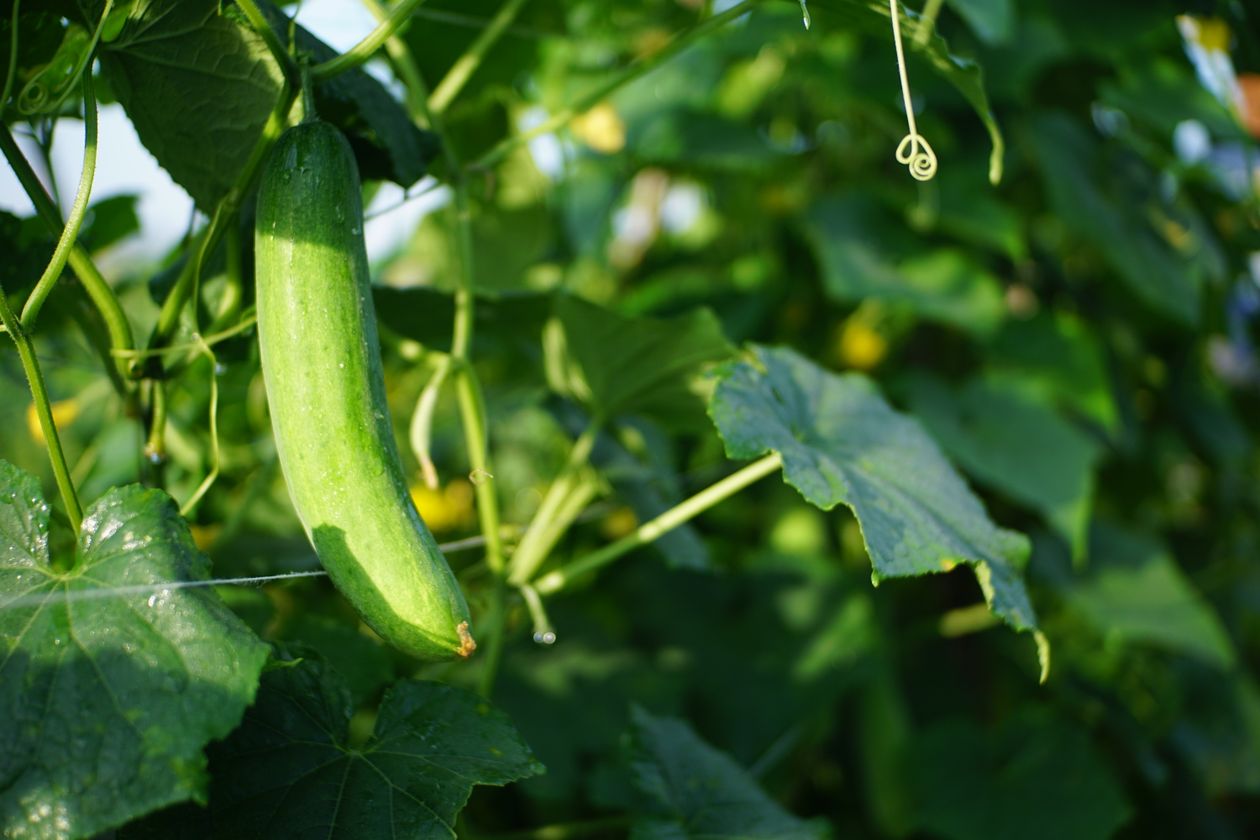
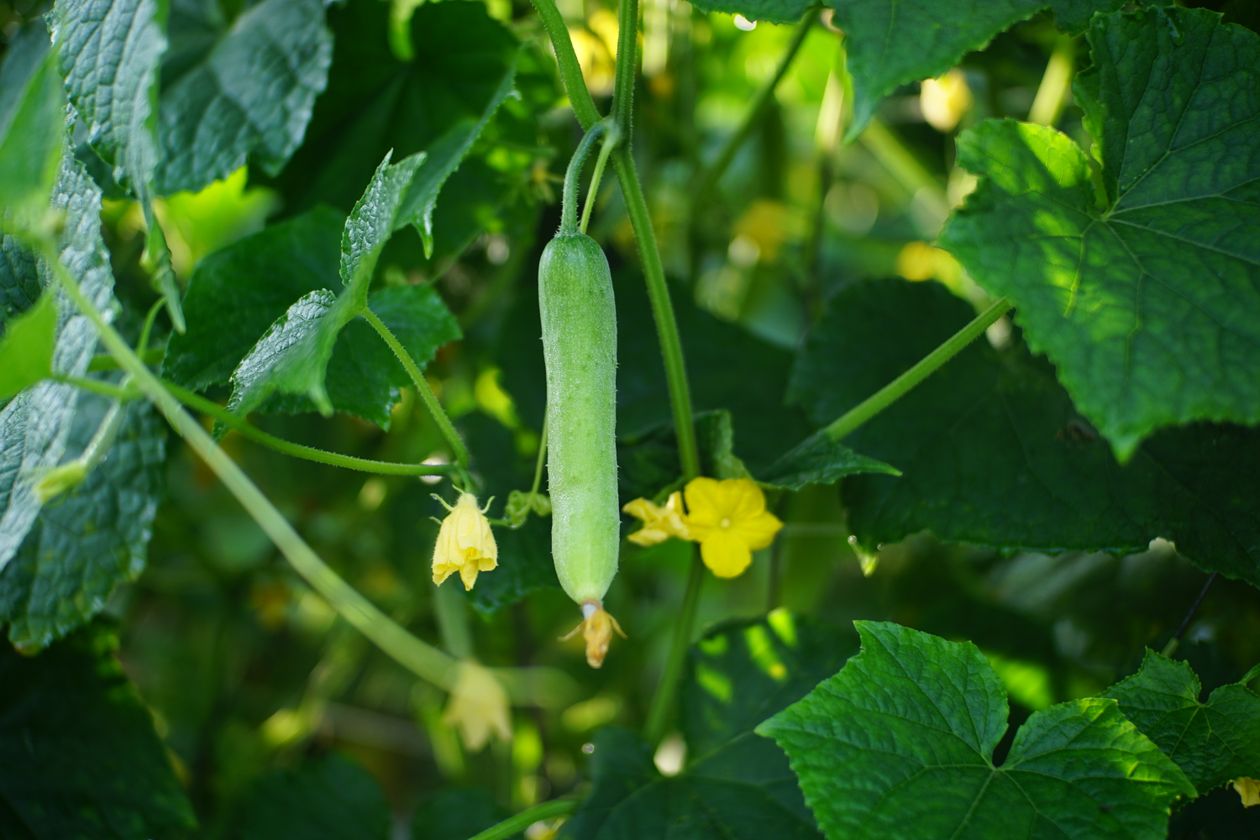
Cucumber vine with young fruit growing in a sunny garden
Check an 8 to 10 gallon container every day and expect to water daily during fruiting weather. Water until about 10 percent of what you pour in runs out of the drainage holes, then empty the saucer. Pots smaller than 5 gallons dry out so fast in summer that twice-daily watering is common.
Should I water cucumbers every day in the ground?
Not usually. In-ground plants in loam do best with a deep soak every 3 to 4 days that totals about 1 inch per week, rising to every 2 days in sandy soil or extreme heat. Daily shallow watering creates shallow roots and more disease, so deep and less often wins.
Why do my cucumber leaves wilt in the afternoon but recover by evening?
That is heat wilt, a temporary defense when leaves lose water faster than roots can supply it during the hottest hours. If the plant recovers by dusk and the soil is moist 2 inches down, do not water. Wilt that persists into the morning is real thirst and needs water right away.
Can overwatering hurt cucumber plants?
Yes. Constantly soggy soil suffocates roots, invites root rot, and produces yellow, weak growth. Cucumbers want steady moisture, not a swamp. If your soil stays wet for days after watering, improve drainage with compost and raised rows, and stretch the interval between soakings.
How do I know my cucumbers got 1 inch of water?
Set a straight-sided can or rain gauge in the bed while you water and measure the depth collected. For hand watering, remember that 1 inch over 1 square foot is about 0.6 gallons, so a plant with a 2 square foot root zone needs roughly 1.2 gallons to receive its inch.
Photo credits: Agung Sutrisno (Pexels); Agung Sutrisno (Pexels). Photos are served from this site; follow the credit to the library page for the original.