Eggplant is a steady drinker with a low tolerance for drama. The bench from extension guidance is 1 to 1.5 inches of water per week, and the second half of the rule matters more than the first: the moisture has to stay even. A bed that cycles between dusty and flooded grows fruit with a black leathery patch on the blossom end and flesh that tastes bitter, while a bed held at a steady, moderate moisture grows glossy fruit on an untroubled plant. That makes eggplant different from the forgiving crops in the vegetable garden watering guide: tomatoes crack when the swing comes at ripening, but eggplant complains earlier, at flowering and fruit set, and it complains in the fruit itself. The schedule below is built around one idea: pick the rhythm your setting needs, then never let the soil swing.
Home / Gardening Basics for Beginners
How Often to Water Eggplant: The Even Moisture Rule
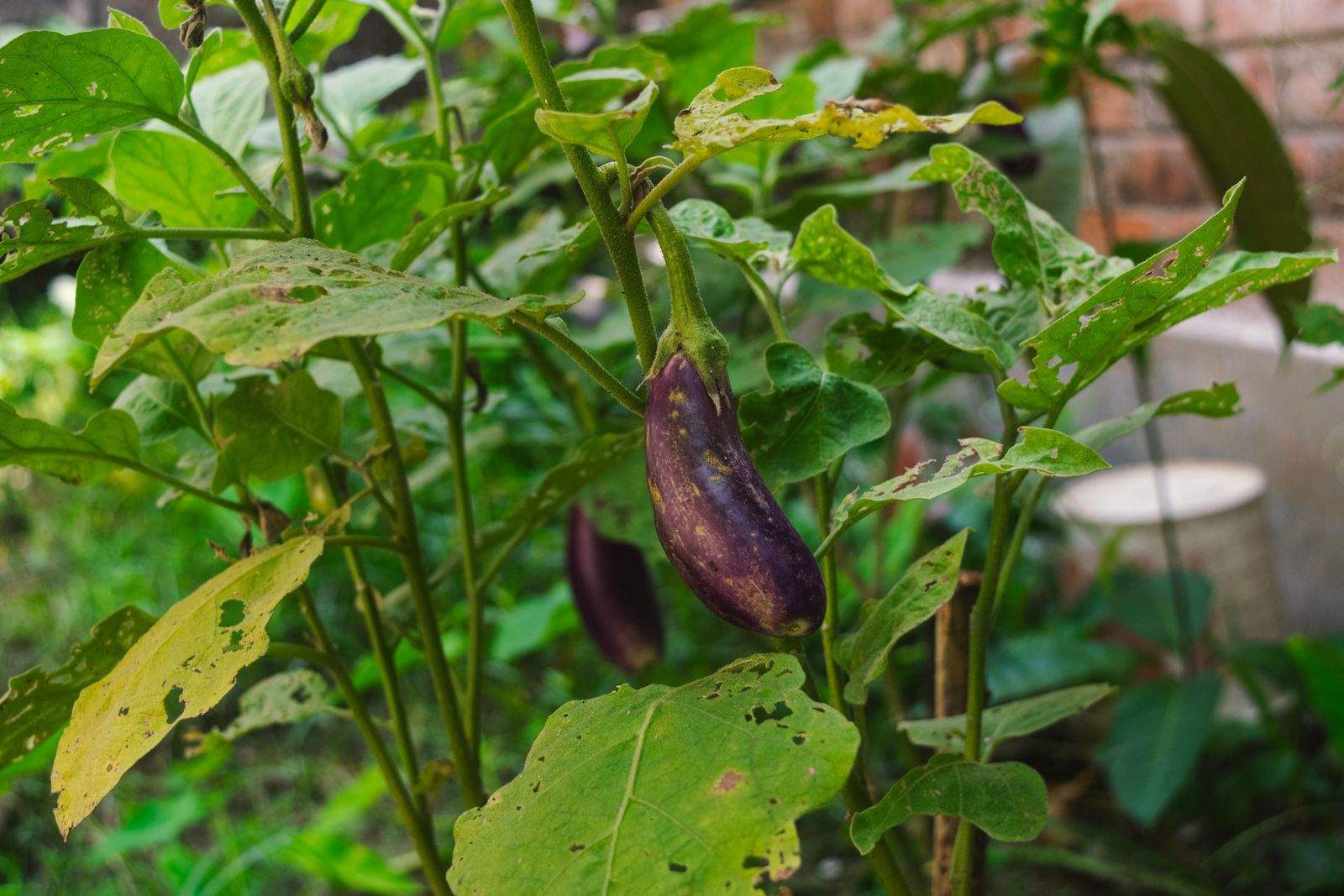
Photo: Biplab Sau / Pexels
Watering Calculator: The Eggplant Even Moisture Audit
Eggplant drinks 1 to 1.5 inches a week, evenly, because swings in soil moisture are what bitter the fruit and start blossom end rot. Enter your bed size below to size the soak, then read the stage by stage table in this article.
19.9 gallons
For 32 square feet at 1 inch deep. That is about 76 liters, or 10 trips with a standard 2 gallon watering can.
A rain gauge or a straight sided can set in the bed tells you when a sprinkler or soaker hose has actually delivered this depth. Time alone is a guess, because hose pressure varies from house to house.
The conversion is arithmetic, not opinion: one inch over one square foot is 144 cubic inches of water, and a US gallon holds 231 cubic inches, so each square foot at one inch takes 0.62 gallons.
The Bench: 1 to 1.5 Inches a Week, Evenly
In the ground, deliver the weekly water in one deep soaking in mild weather and in two soakings, three or four days apart, once days run hot. Deep and less often beats shallow and daily for bedded plants, because eggplant roots run 18 to 24 inches deep on an established plant and a shallow sprinkle trains them to the surface, where the next hot afternoon punishes them. The test that overrides the calendar is your finger or a trowel at 3 to 4 inches: if that layer is dry, water; if it is still cool and damp, wait. In sandy soil the same bench arrives as three lighter waterings, because sand will not hold a full inch and a half in the root zone at once. In clay, one slow soak, ideally through a soaker hose, because clay accepts water slowly and a fast application runs off the surface while the root zone stays dry.
| Setting | Test | Mild weather | Peak heat |
|---|---|---|---|
| In ground, loam | Dry at 3 to 4 inches | 1 inch, once weekly | 1.5 inches, split in two |
| In ground, sand | Dry at 2 to 3 inches | Three lighter waterings | Every other day |
| In ground, clay | Dry at 3 inches, slow soak | 1 inch weekly, soaker hose | Split in two slow soaks |
| Raised bed | Dry at 3 inches | Twice weekly | Every other day |
| Pot, 5 gallon or larger | Dry at 2 inches | Every 2 to 3 days | Daily |
| Pot, under 5 gallon | Dry at 1 to 2 inches | Every 1 to 2 days | Daily, sometimes twice |
Blossom End Rot and Bitter Fruit: The Two Swing Complaints
Blossom end rot on eggplant is a calcium delivery failure, not usually a calcium shortage in the soil. The fruit's far end needs calcium carried in on a steady stream of water; when the stream stops during a dry swing, the blossom end starves even in calcium rich soil, and the sunken dark patch appears. Adding calcium to a bed that swings does nothing; holding the moisture even fixes it on the next fruit. The fruit already marked will not heal, so pick it off and let the plant spend on clean fruit. Bitter fruit runs on the same rail: heat plus moisture stress concentrates the bitter compounds in the flesh, and older, overmature fruit left hanging through a dry spell is the bitterest of all. The prevention for both is the same short list: even water, mulch, and picking fruit young and glossy rather than dull and oversized.
Mulch: The Cheapest Watering Tool You Own
Three to four inches of straw, shredded leaves, or grass clippings under an eggplant does more for even moisture than any schedule change. Mulch cuts evaporation off the soil surface, which is where most of the swing comes from: an unmulched bed loses its top moisture to a single hot windy day, while a mulched bed coasts. It also keeps soil from splashing onto lower leaves during watering, which slows the fungal leaf spots eggplant picks up in humid summers. Lay it after the soil has warmed, since eggplant is a heat lover and cold soil under early mulch slows it; in most gardens that means mulching two to three weeks after transplanting, once the plants are growing strongly. Keep the mulch an inch or two off the stem. Black plastic mulch is the commercial grower's version of the same trick and works in home beds in cool climates, where the extra soil warmth is worth more than the organic matter.
Pots, Grow Bags, and the Daily Drink
Container eggplant plays by pot rules, not bed rules. A 5 gallon pot in full sun in July can dry its top 2 inches in a day, and the plant's large leaves pull hard; daily watering in peak heat is normal and not a sign of failure. Grow bags dry faster still, through their fabric sides, and in a heat wave a bag may want water morning and evening. The disciplines that matter in containers are drainage and completeness: water until it runs from the holes, every time, so the whole root ball wets and salts do not build at the edges, and never let the pot sit in a saucer of standing water, which rots roots in the crop that hates wet feet almost as much as drought. A pot that dries by noon every day is telling you it is too small; moving up a size mid season is rough on the plant, so start eggplant in the biggest container you will give it, 5 gallons minimum and 10 better for the large fruited types. Dwarf and patio varieties are bred for the smaller pot and forgive it.
Reading the Plant: Wilt, Leaf Curl, and Flower Drop
Eggplant talks in three signals. A midday wilt that recovers by evening on a very hot day is the plant closing down against the heat, not necessarily thirst; check the soil before watering, because watering an already moist bed on a hot afternoon is how root rot gets invited. A wilt that is still there in the cool of morning is true thirst, and the answer is a deep soak that day. Leaf curl inward along the edges is the chronic version, a plant living slightly too dry for weeks, and it comes with slow growth and small fruit. Flower drop without fruit set in a heat wave, when nights stay above about 75 degrees or days push past 95, is temperature sterility, not water at all; the plant resumes setting when nights cool, and no watering schedule fixes it in the meantime. The pattern to act on is always the combination: signal plus soil test. Signal alone misleads; the 3 to 4 inch check settles every argument.
Stage by Stage: How the Bench Shifts Across the Season
The weekly bench is an average over a season that is not average at all, and adjusting it by growth stage is the refinement that separates a good eggplant watering hand from a calendar follower. At transplant, the seedling's roots occupy the plug it arrived in, and the rule is the establishment rule of every crop on this site: keep that small root zone evenly moist for the first two weeks, watering lightly every day or two in warm weather, because a transplant that dries at the plug in its first week may never root outward properly. Through the vegetative stage, as the plant builds its frame in early summer, the bench sits at the steady end, an inch a week and the deep rhythm establishing, because this is when the root system that will fund the harvest is being built. At flowering and fruit set, the plant is at its least forgiving: this is the window where a dry swing costs blossom end rot on the first fruit and drops flowers outright, so the even moisture discipline is at its strictest and the split watering in heat is worth its trouble. Through the main harvest, hold the same rhythm and pick relentlessly, since fruit left to overripen slows the plant more than any watering variation. Only in the last weeks of the season, as nights cool and growth slows, does the bench relax back toward an inch and longer intervals. Variety moves the numbers at the margins. The long Japanese and Italian types carry smaller fruit on vigorous plants and run on the standard bench; the giant globe types, growing the heaviest fruit, show moisture stress first and earn the strictest evenness; the small round Thai and Indian types in containers follow pot rules entirely. None of them changes the shape of the season: light and frequent at the start, deep and even through the middle, relaxed at the end.
Related guides
These guides sit closest to this one on the garden path:
- How Often to Water a Majesty Palm: Even Moisture for a Riverbank Plant
- How Often to Water Gardenia: The Moisture Band Behind Bud Drop
Frequently Asked Questions
How often should I water eggplant in the ground?
Give the bed 1 to 1.5 inches of water a week, delivered deeply: once a week in mild weather, split into two soakings in peak heat. Let the soil test referee: water when the layer 3 to 4 inches down has dried, and soak thoroughly when you do. Evenness matters more than the exact day.
Why do my eggplants have a black patch on the bottom?
That is blossom end rot, a calcium delivery failure caused by moisture swings. The fruit end starves when the water stream stops during a dry spell, even in soil with plenty of calcium. Marked fruit will not heal; remove it, mulch the bed, and hold watering even, and the next fruit forms clean.
Why do my eggplants taste bitter?
Bitterness concentrates in fruit that grew through heat and moisture stress, and in fruit left hanging past its glossy prime. Hold the weekly water even, mulch against the swings, and pick fruit while the skin is still shiny and the seeds inside are pale and soft.
How often do potted eggplants need water?
Check the top 2 inches daily in summer. A 5 gallon pot in full sun commonly needs water every day in peak heat, and grow bags can need it twice a day in a heat wave. Water until it drains from the holes each time, and empty any saucer so roots never sit in water.
Should I water eggplant every day in a bed?
No. Daily light watering in a bed trains shallow roots and keeps the surface wet while the root zone stays dry. Bedded eggplant does better on one or two deep soakings a week that wet the full root zone, with mulch holding the moisture between them.
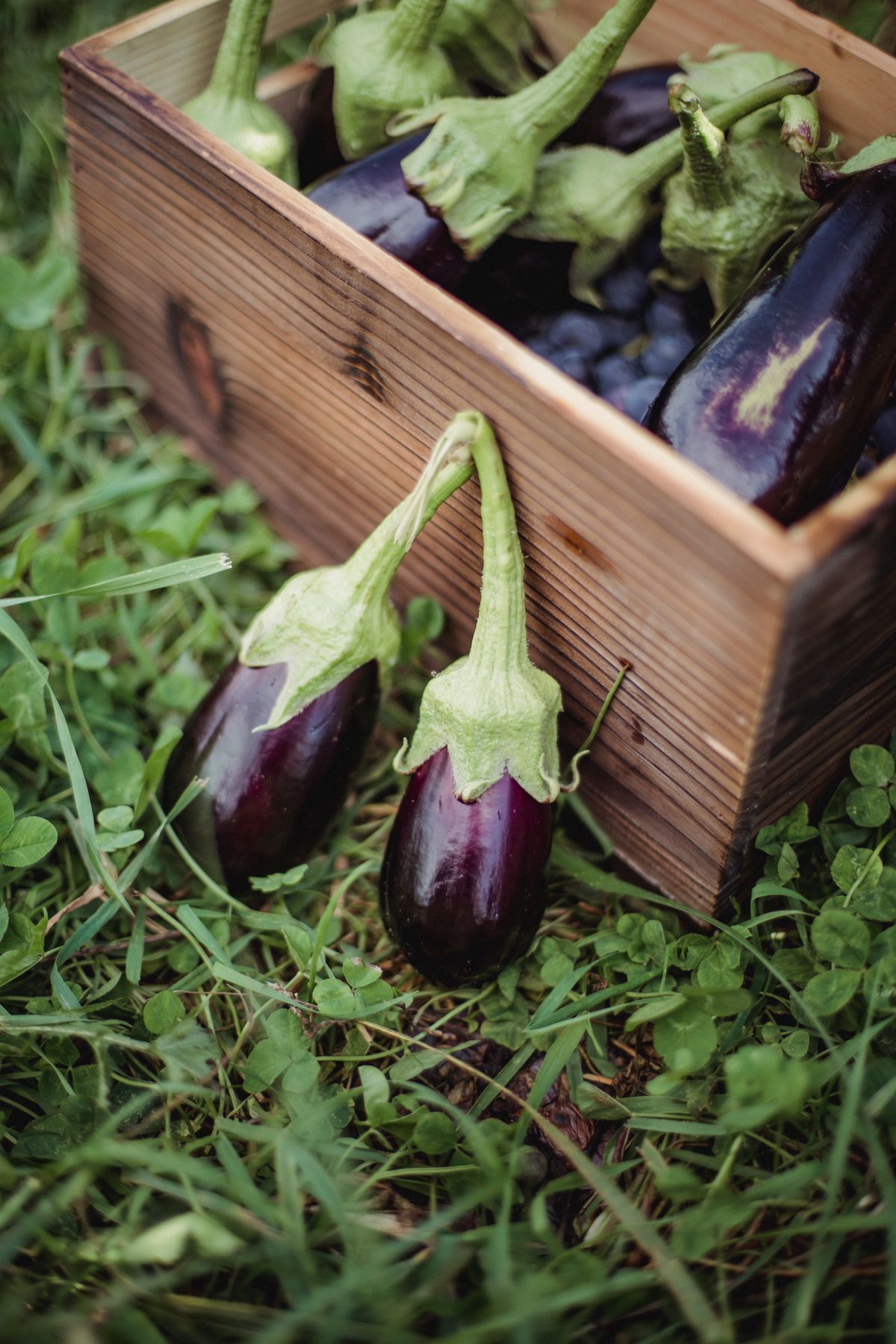
Photo credits: Biplab Sau (Pexels); Zen Chung (Pexels). Photos are served from this site; follow the credit to the library page for the original.