How Often to Water Texas Sage: Weekly to Establish, Then Let the Rain Decide
By the Windchime Walker editorial team
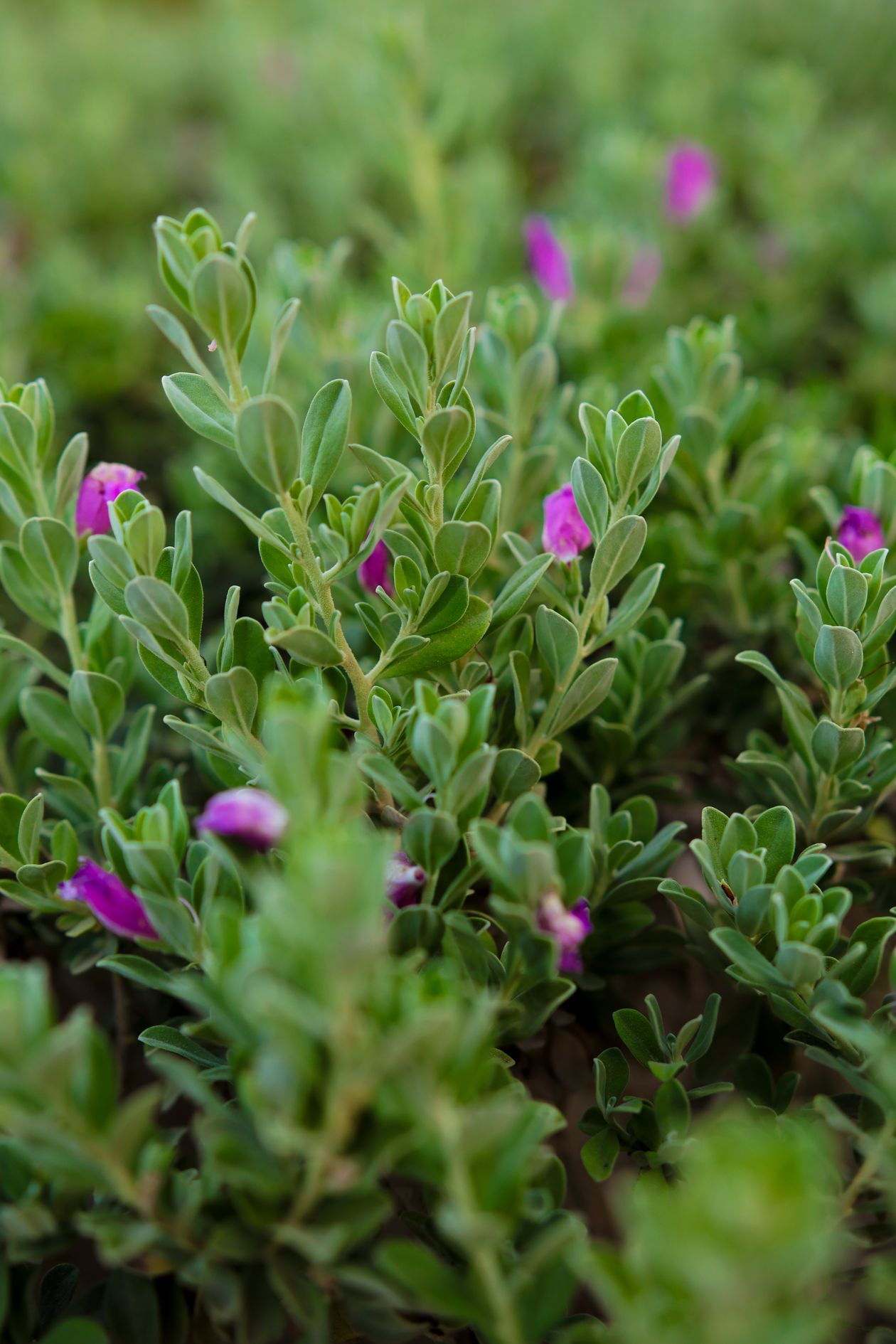
Photo: Anand Somanur issac / Pexels
Texas sage (Leucophyllum frutescens) is a Chihuahuan Desert shrub that blooms in response to rain, and its watering schedule follows that logic: give it regular water for a few weeks while it roots in, then step back and let the weather run the plant. An established Texas sage in the ground needs a deep soak only every 3 to 4 weeks during an extended drought, and nothing at all in months with normal rain. More Texas sage shrubs die from irrigation than from thirst.
The plant goes by purple sage, cenizo, and barometer bush, the last name because flowering follows humidity and rain by about a week. NC State Extension sizes it at 6 to 12 feet tall with an equal spread in the ground, hardy in zones 8 to 11, with bright pink to purple flowers arriving in batches through the warm season. It is a cornerstone shrub for the desert front yards in our Arizona front yard guide, and its watering rhythm is the opposite of the thirsty shrubs in our guide to how often to water rosemary, which still wants a regular dry between cycle.
Interactive tool
Watering Schedule Calculator: Texas Sage
Texas sage is a rain plant: water weekly for the first 4 to 8 weeks after planting, then only every 3 to 4 weeks in drought, or not at all where rain does the job. Enter your setup and treat every result as a ceiling, because overwatering kills more Texas sage than drought does.
19.9 gallons
For 32 square feet at 1 inch deep. That is about 76 liters, or 10 trips with a standard 2 gallon watering can.
A rain gauge or a straight sided can set in the bed tells you when a sprinkler or soaker hose has actually delivered this depth. Time alone is a guess, because hose pressure varies from house to house.
The conversion is arithmetic, not opinion: one inch over one square foot is 144 cubic inches of water, and a US gallon holds 231 cubic inches, so each square foot at one inch takes 0.62 gallons.
The schedule by life stage
Stage
How often
Amount
Notes
First 2 weeks after planting
Every 3 to 4 days
Deep soak of the root ball
Keep the original root ball moist, not the whole bed
Weeks 3 to 8
Once a week
Deep soak to 12 inches
Taper as new growth appears
First full summer
Every 2 weeks in drought
Deep soak to 12 to 18 inches
Skip any week with an inch of rain
Established, year 2 onward
Every 3 to 4 weeks in drought only
Deep soak
Rainfall alone is enough in normal months
Container plant
Every 5 to 7 days in summer heat
Water until it drains
Pots break the desert rules; check the mix
The establishment window is where most losses happen in both directions. A nursery plant set out in June with its roots still in potting mix will wilt fast if it is treated like an established shrub from day one. The opposite error is worse: leaving a drip emitter running twice a week for a full year produces a lush, leggy plant with weak bloom that rots at the crown the first wet winter.
Why overwatering is the named killer
Texas sage evolved in limestone soils that drain in minutes and stay dry for weeks. In garden soil with regular irrigation, the roots stay wet, fungal crown rot moves in, and the plant thins from the center out while the owner waters more, reading the decline as thirst. The diagnosis is in the soil: if the ground 6 inches down is still moist a week after watering and the plant looks tired, water is the problem, not the cure.
The fixes are structural. Plant on a slight mound or slope so water never pools at the crown. Keep mulch thin, 1 to 2 inches, and pull it back from the stems; gravel mulch suits this plant better than bark in hot climates. On drip systems, put Texas sage on its own valve or at the end of the longest interval zone, never on the same schedule as roses, citrus, or a vegetable bed.
The rain bloom cycle, and what irrigation does to it
The shrub sets its flower buds as humidity rises, and a soaking rain or a humid spell triggers a full flush of bloom about 7 to 10 days later. Gardeners who water on a rigid weekly schedule flatten that cycle: the plant grows steadily, blooms weakly and continuously, and never puts on the full display. Gardeners who let the plant dry between drinks get the desert rhythm, long quiet weeks of silver foliage and then a shrub covered in purple for a week.
You can use the cycle deliberately. A deep soak followed by a dry week often triggers a bloom flush in time for a party or a house sale, roughly ten days out. Do not repeat the trick more than once or twice a summer; the plant reads repeated forcing as a wet season and shifts back to growth.
Soil, drainage, and the caliche problem
In the low desert, the soil layer below the topsoil is often caliche, a calcium carbonate hardpan that can sit 6 to 24 inches down and hold water like a bathtub. A Texas sage planted into an unbroken caliche pocket sits in a sump after every irrigation. Break through the pan at planting, or plant on a mound at least 8 inches high, and test drainage before the plant goes in: fill the planting hole with water and confirm it empties within an hour or two.
Alkaline soil is not a problem for this plant; it prefers pH on the high side and grows poorly in acid, heavily amended beds. Skip the compost heavy backfill recipes written for eastern shrubs. Native soil, sharp drainage, and a gravel surface are the whole recipe.
Containers and cold snaps
In a pot, Texas sage behaves like any other container shrub: the mix dries fast, and summer watering lands every 5 to 7 days, with the top 2 inches dry as the trigger. Use a gritty, fast draining mix and a pot with generous drainage holes, and never let it sit in a saucer of water. Container plants are also the only ones that need winter attention in marginal zones: the shrub is hardy to about 10 to 15 degrees Fahrenheit in the ground, but a frozen root ball in a pot can kill it at warmer temperatures, so move pots against a wall before a hard freeze.
Pruning without ruining the bloom
Texas sage punishes the hedge trimmer. Shearing the shrub into a ball forces a shell of foliage over a bare interior, and the flowers, which form on new growth after rain, get trimmed away on a schedule set by the gardener's tidiness rather than the plant's cycle. The plant then blooms weakly and thins inside, and the decline gets blamed on water. Prune instead by hand, once a year in late winter, removing a few of the oldest stems at the base and shortening any wayward branches to a side shoot. The shrub keeps its natural vase shape, its interior stays lit and alive, and the rain bloom arrives on wood the trimmer never touched. A shrub already ruined by years of shearing can be renovated by cutting it back hard in late winter, to 12 to 18 inches, and letting it rebuild for a season on the establishment watering rhythm; it will look bare for months and return as a plant instead of a pom pom.
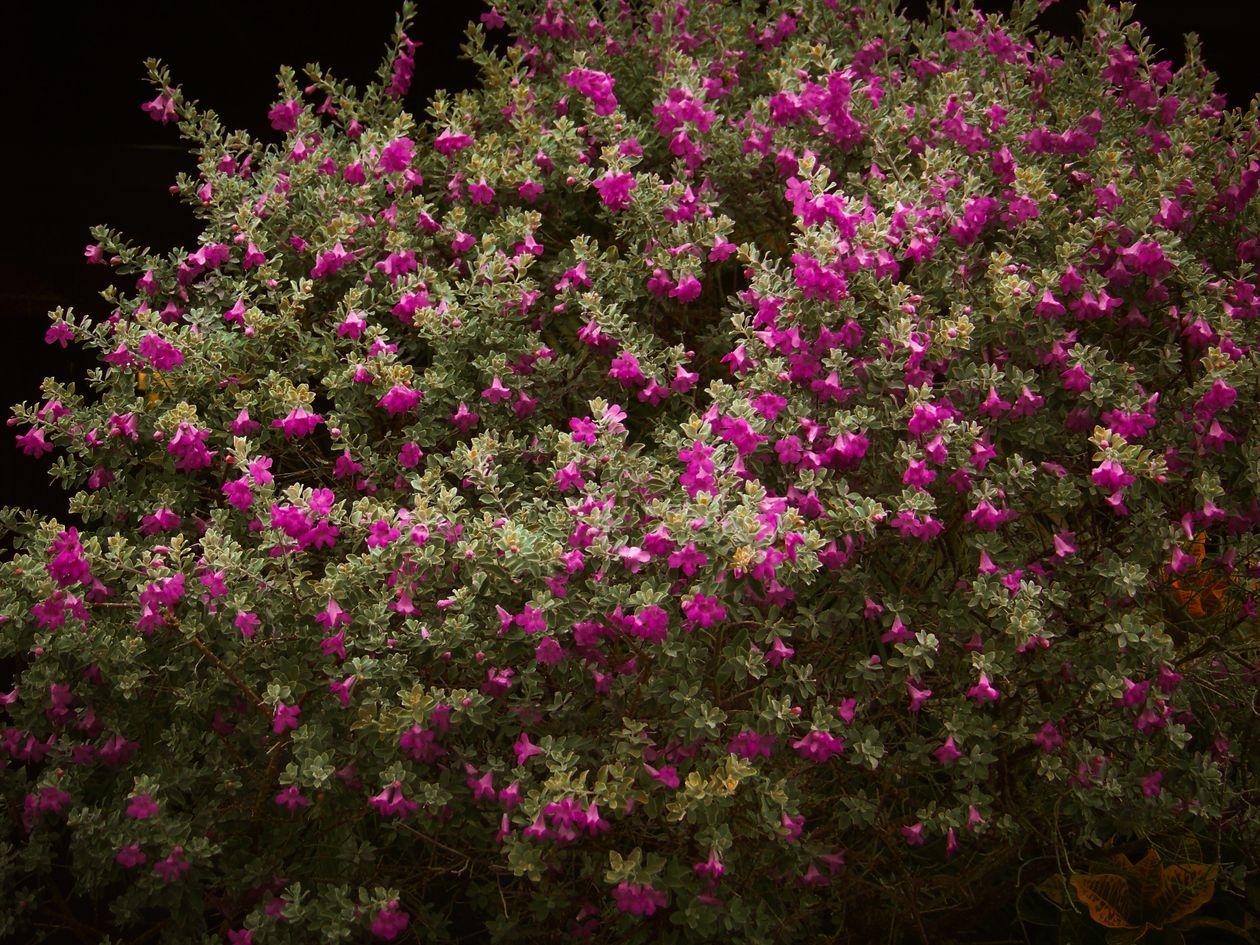
Texas sage shrub covered in magenta purple flowers
Signs you are getting it wrong
Leaf drop with wet soil means too much water. A shrub that grows fast, flops, and barely blooms is overwatered or overfed; Texas sage wants no fertilizer at all in the ground. Gray foliage with no new growth in a dry month is normal dormancy, not distress. And a plant that wilts at noon in its first month but recovers by evening is still establishing: shade it lightly and hold the weekly soak until the roots catch up.
Water every 3 to 4 days for the first two weeks, keeping the original root ball moist, then once a week through week 8. After that, taper to a deep soak every 2 weeks during drought in the first summer. By the second year, an established plant needs water only every 3 to 4 weeks in an extended dry spell, and none at all when rain is normal.
Can you overwater Texas sage?
Yes, and it is the most common way the plant dies in gardens. Roots held in wet soil develop crown and root rot, and the shrub thins from the center while looking thirsty. If the soil 6 inches down is still moist a week after watering, stop. Plant on a mound, keep mulch thin and off the stems, and never put Texas sage on the same drip schedule as thirsty plants.
Why is my Texas sage not blooming?
Usually because it is too comfortable. Weekly irrigation and fertilizer push leafy growth and flatten the rain triggered bloom cycle. Let the plant dry thoroughly between deep soaks, cut out fertilizer entirely, and make sure it gets full sun for at least 6 hours a day. A deep soak followed by a dry week often triggers a bloom flush about 7 to 10 days later.
Does Texas sage need water in winter?
In the ground, almost never. Winter rain is enough in zones 8 to 11, and the plant rests semi dormant in the cold months. In a drought winter with no rain for 6 weeks or more, one deep soak is plenty. Container plants are the exception: check them monthly and water lightly when the mix is dry several inches down.
How big does Texas sage get, and does watering change that?
NC State Extension lists the species at 6 to 12 feet tall with an equal spread, though named compact cultivars stay at 3 to 5 feet. Generous irrigation pushes a plant to the top of its range and beyond, with softer, leggier growth. Lean water keeps it dense, silvery, and closer to the size on the label, which is one more reason to water like the desert.
Photo credits: Anand Somanur issac (Pexels); Moisés Solórzano (Pexels). Photos are served from this site; follow the credit to the library page for the original.