Front Yard Landscaping Ideas for Arizona: Design for the Desert You Actually Have
By the Windchime Walker editorial team
Photo: Marian Florinel Condruz / Pexels
An Arizona front yard is not a normal front yard with cactus added. It is a design problem with its own physics: summers above 110 degrees Fahrenheit in the low desert, less than 10 inches of rain a year, a monsoon season that delivers half of it in six weeks, soil that is alkaline enough to yellow eastern plants on contact, and a hardpan called caliche waiting under the topsoil. The rock front yard systems in our guides to front yard landscaping with rocks and rocks and no grass give the general framework. This page is the Arizona version, and it starts with the split the national advice never makes: the low desert of Phoenix and Tucson is a different country from the high desert of Flagstaff and Prescott, and a plant list that ignores the split fails in both.
Phoenix and Tucson sit in zones 9b to 10a, frost light and furnace hot, where the design enemy is heat reflected off walls and pavement. Flagstaff and Prescott sit in zones 6a to 7b, with real winters, snow, and a summer the rest of the country would call pleasant, where the design enemy is a cold snap killing a low desert palette planted by someone who read the wrong list. Every idea below is tagged to its band.
Interactive tool
Arizona Desert Front Yard Checklist
Check off each step as you finish it. Your progress stays on this page.
0 of 8 complete
0% done
The two deserts, side by side
Factor
Low desert: Phoenix, Tucson
High desert: Flagstaff, Prescott
Zones
9b to 10a
6a to 7b
Summer high
110 degrees F and above
85 to 95 degrees F
Annual rain
Under 10 inches
15 to 22 inches, plus snow
Signature season
Monsoon, July to September
Winter snow, summer monsoon
Palette anchors
Saguaro, palo verde, ocotillo, agave
Pinyon, juniper, blue grama, cold hardy agave
Lawn verdict
Remove it or shrink it to a patch
Buffalograss and blue grama lawns are viable
The monsoon is the shared fact: from July to September, humid air and violent afternoon storms deliver a large share of the year's water in weeks, then the tap closes for months. Designs that assume even rainfall, drip systems sized for average months, and plants that want steady moisture all fail against that rhythm. The desert garden is built for feast and famine: drainage that handles a 2 inch downpour, and irrigation that can hold plants through a 90 day dry spring without pretending the rain is coming.
The ground itself: caliche and alkaline soil
Dig almost anywhere in the low desert and within 6 to 24 inches you hit caliche, a calcium carbonate hardpan that stops shovels, holds water like a bathtub above it, and starves roots below it. Every tree and large shrub planting in caliche country starts with a probe bar and a decision: break through the pan in the planting area, or plant on a mound above it. Trees planted into an unbroken caliche pocket drown slowly in their own irrigation water, which is the leading cause of death for new desert trees and the least diagnosed.
The soil above the pan runs pH 7.5 to 8.5, alkaline enough that acid loving plants, azalea, gardenia, most eastern lawn grasses, yellow with iron chlorosis no matter how they are fed. The Arizona palette does not fight the chemistry; it is built from plants that evolved in it. Amending a planting hole with acidic mixes creates a small pot of foreign soil in an alkaline desert, and roots circle in it rather than leaving. Plant desert natives in native soil, and spend the amendment budget on drainage and mulch instead.
The rules of the game: HOAs, rebates, and the water math
Arizona law shapes what you are allowed to build. Arizona Revised Statutes section 33-1808 bars homeowners associations from prohibiting xeriscape landscaping outright, though associations can still enforce reasonable design standards, so the process is: read your HOA's architectural rules, submit the xeriscape plan, and cite the statute if the answer is a flat no. Several Arizona cities run the incentive in the other direction and pay residents to remove turf, with per square foot rebates for converting lawn to desert landscaping; check your city's water department before you rent the sod cutter, because the rebate usually requires a pre conversion inspection.
The water math justifies the paperwork. A Phoenix lawn drinks on the order of 73 gallons per square foot per year to stay green through the summer. A desert planting on drip, once established, uses a small fraction of that, and the hardscape that replaces the lawn uses none. The design consensus that falls out of the math is a 60 to 70 percent hardscape yard: decomposed granite fields, river rock swales that double as monsoon drainage, paver or flagstone paths, and planting concentrated in pockets and drifts where drip water is spent on plants, not on the whole surface.
The Sonoran palette, planted with intent
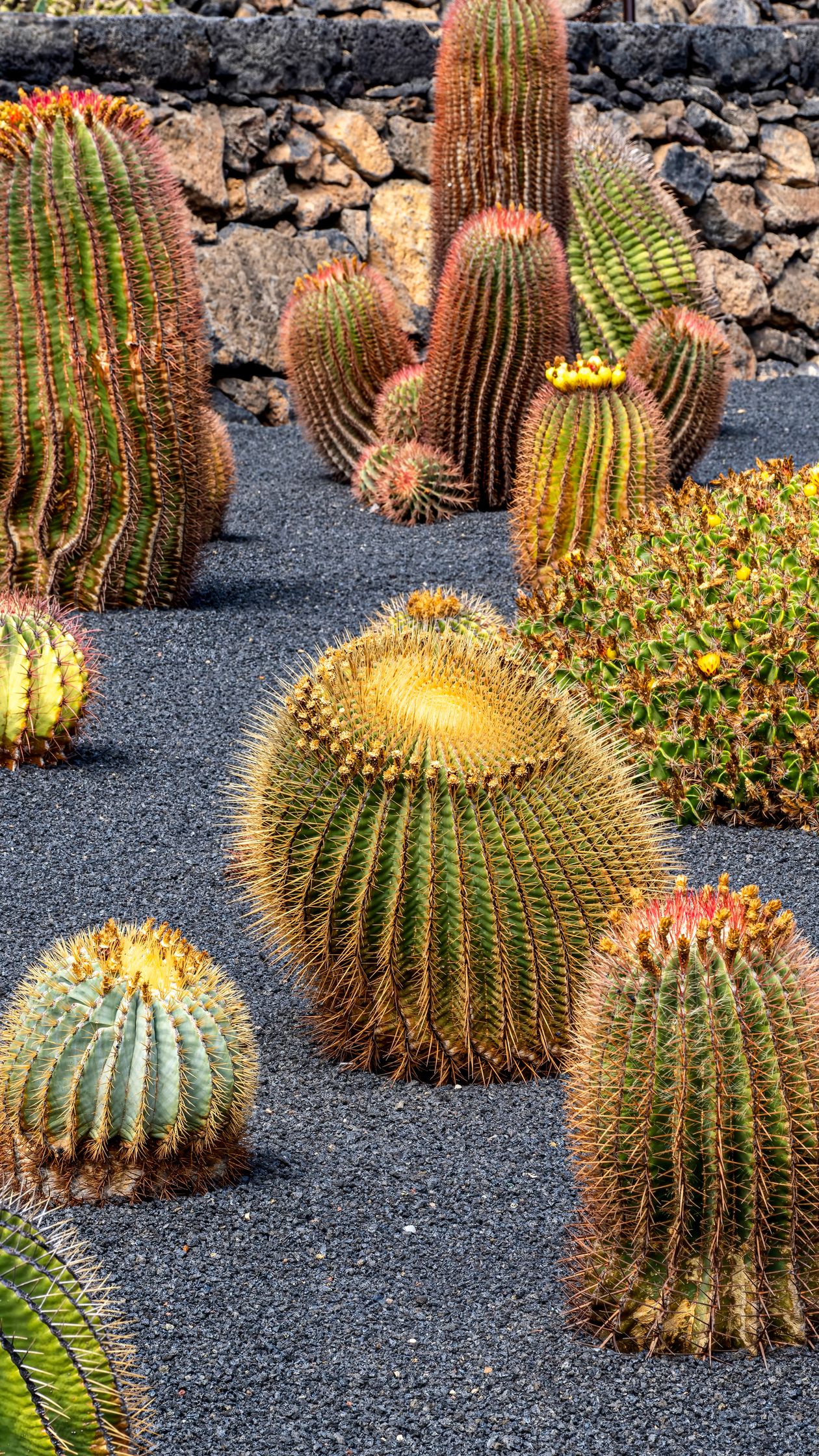
The low desert palette is one of the great regional plant lists: Desert Museum palo verde as the patio tree, flowering without the litter and thorns of its parents; saguaro as the lifetime specimen, bought small and planted once; ocotillo for a living fence of whips that leaf and bloom red after rain; agave in its dozens of forms as the ground level architecture; golden barrel in drifts; red yucca (hesperaloe) for the hummingbird flowers that run all summer; and Texas ranger, the Texas sage of the watering guides, blooming purple after every humid spell. Flowering annuals and perennials for the color beds: desert marigold, brittlebush, fairy duster, and penstemon in its desert species.
Drip is how the palette drinks: 1 gallon per hour emitters, spaced 18 to 24 inches along the lines in the planting pockets, on a separate valve from any remaining turf, run long and infrequent rather than short and daily once plants establish. The high desert edit swaps the palette colder: pinyon and juniper for structure, blue grama and buffalograss as real lawn options at a fraction of bluegrass water, and agaves chosen from the cold hardy species, with the low desert tenders treated as container plants that winter against a south wall.
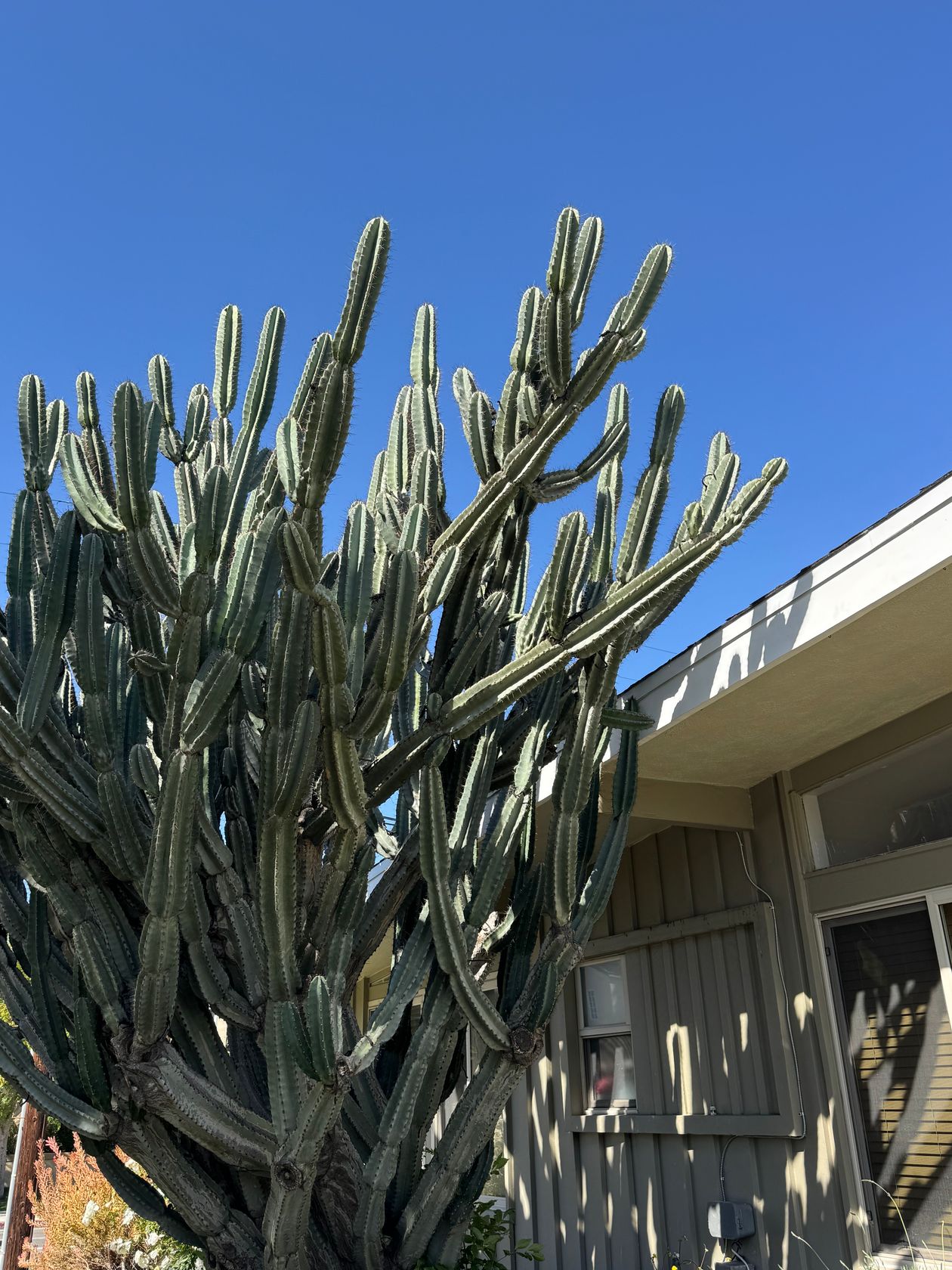
Tall cactus beside a desert style home
Signs you are getting it wrong
A new tree yellowing and drowning in a dry yard is sitting in a caliche bathtub; probe before you plant the next one. A yard of white rock and three cactus is not xeriscape, it is a parking lot with garnish: the hardscape ratio works when the planting pockets are generous and the granite is a warm, natural grade, not glare white. Plants on the same drip valve as the lawn are being watered on the lawn's schedule and dying of kindness. And a Flagstaff yard planted from a Phoenix list loses its stars the first hard winter, every time.
Can my Arizona HOA stop me from xeriscaping my front yard?
Not outright. Arizona Revised Statutes section 33-1808 prevents homeowners associations from banning xeriscape landscaping, though an HOA can still apply reasonable design and maintenance standards through its architectural review. The working process is to submit a real plan, decomposed granite, planting pockets, drip irrigation, rather than simply removing the lawn and waiting. If the association refuses categorically, the statute is the citation your appeal rests on.
What is caliche and why does it matter for planting?
Caliche is a calcium carbonate hardpan that forms in desert soils, often 6 to 24 inches below the surface in the low desert. It stops roots, stops shovels, and worst of all stops drainage, so a tree planted into an unbroken caliche pocket sits in a sump of its own irrigation water and drowns slowly. Probe with a bar before planting anything large; either break through the pan in the planting area or build the planting up on a mound above it.
How much water does a Phoenix lawn actually use?
On the order of 73 gallons per square foot per year to keep turf green through a Phoenix summer, which is why the city and its neighbors run turf removal rebates. A desert planting on drip uses a fraction of that once established, and the hardscape that makes up 60 to 70 percent of a xeriscape design uses none. The conversion is the single largest water saving available to a low desert household, larger than any fixture or appliance change.
What are the best low water plants for a Phoenix front yard?
The Sonoran anchors: Desert Museum palo verde for shade without litter, ocotillo for a flowering living fence, agave species for ground level structure, golden barrel in drifts, red yucca for summer hummingbird flowers, Texas sage for purple bloom after humid spells, and desert marigold, brittlebush, and fairy duster for the color beds. Plant them in pockets on drip at 1 gallon per hour emitters spaced 18 to 24 inches, and water long and infrequently once they establish.
Is Arizona landscaping different in Flagstaff and Phoenix?
Completely, and treating them the same is the classic failure. Phoenix and Tucson are low desert, zones 9b to 10a, with summers above 110 degrees and under 10 inches of rain; the palette is saguaro, palo verde, and ocotillo, and lawn is a liability. Flagstaff and Prescott are high desert, zones 6a to 7b, with snow, cold winters, and 15 to 22 inches of precipitation; pinyon, juniper, and blue grama thrive, buffalograss makes a viable lawn, and the tender low desert plants die in the first hard winter.
Photo credits: Marian Florinel Condruz (Pexels); Petra Nesti (Pexels). Photos are served from this site; follow the credit to the library page for the original.