The front yards that make rocks look bad share one trait: the stone was treated as a topping, a load of river rock spread over fabric where mulch used to be, with a few boulders placed on top like croutons. Within two seasons the fabric shows at the edges, weeds root in the dust that collects between the stones, and the boulders sit on the surface looking dropped from a truck, which they were. Rocks succeed when each one is employed. A stone in a front yard can carry feet along a path, move water through a dry creek, anchor the corner of a bed with geological confidence, or replace thirsty lawn with a gravel field that plants punctuate. This page works those four jobs with the construction details that separate a rock garden from a rock spill, using the checklist tracker to sequence a project. Two material rules run through all of it: angular stone locks together and stays where it is put, while rounded stone rolls, migrates, and escapes into the lawn forever; and every boulder gets buried at least a third of its depth, the Colorado State extension guidance that makes the difference between a stone that looks planted by geology and one that looks parked.
Home / Lawn and Landscape Basics
Front Yard Landscaping Ideas with Rocks: Give Every Rock a Job
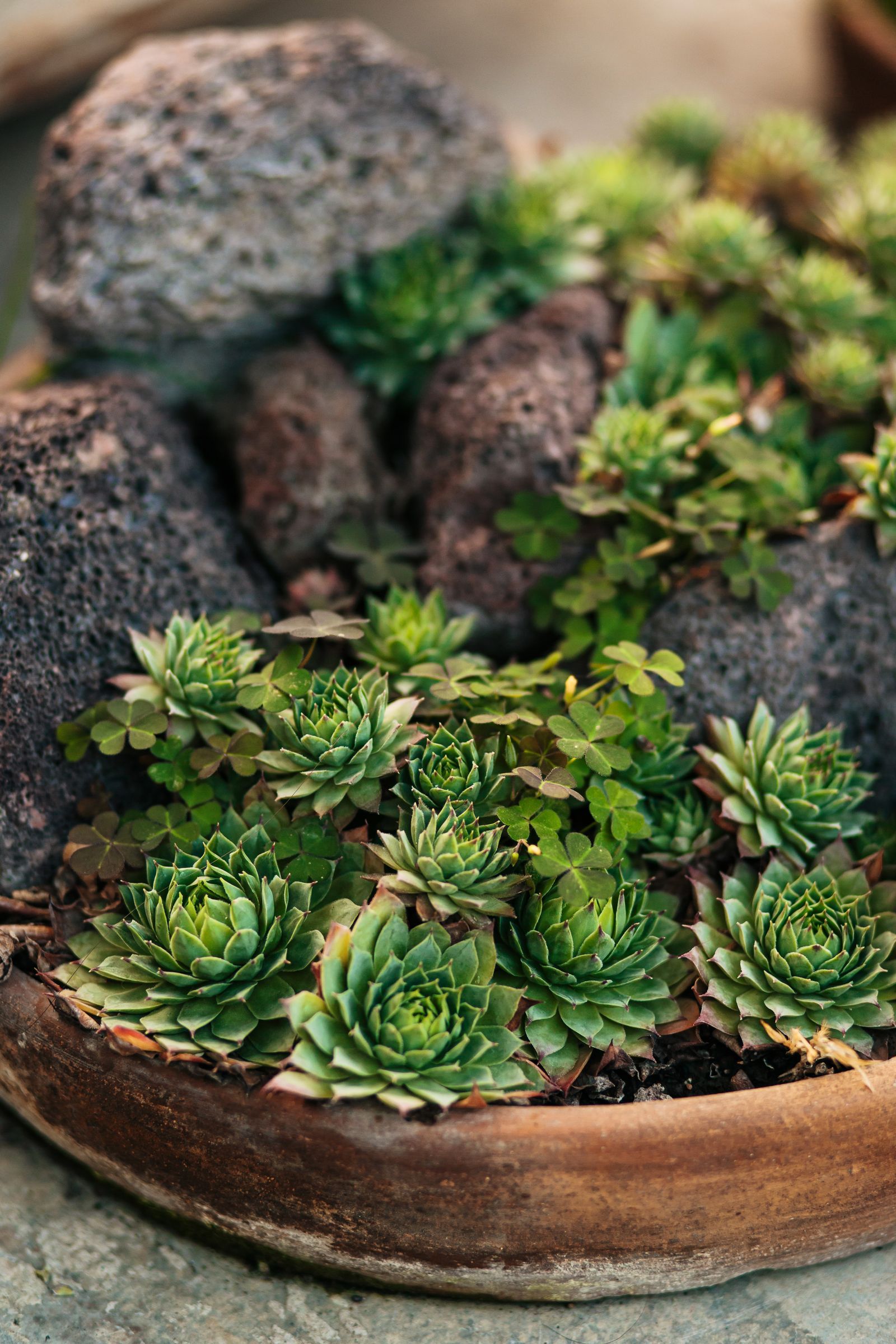
Photo: Anna Khomutova / Pexels
Rock Front Yard Checklist
Check off each step as you finish it. Your progress stays on this page.
0 of 8 complete
0% done
Job One: The Path That Crosses the Yard
A rock path is the most useful front yard structure there is, because it converts the route everyone already walks, from driveway to door, from street to gate, into the design's main line. Build it as a structure, not a scattering: excavate 3 to 4 inches, lay a compacted gravel base, and set large, flat stepping stones, each one bedded so it does not rock underfoot, with gravel or creeping groundcover in the joints. The stones should be big enough for a whole foot and spaced at a walking stride, about 24 to 26 inches center to center for most adults, a measurement worth testing with your own steps before the base hardens. Angular gravel in the joints locks; rounded pea gravel in a path is a ball bearing floor that migrates into the house on shoe treads, and the single most regretted material choice in front yard rock work. A path built this way also solves the mud season, the worn grass line, and the delivery driver's shortcut in one construction, and it gives every other rock feature in the yard a line to relate to.
Job Two: The Dry Creek That Actually Drains
The dry creek is the rock feature with a hidden function: it is a drainage channel wearing a costume. A front yard with a wet corner, a downspout that floods a bed, or a slope that washes mulch into the street has a water problem that a creek shaped swale solves permanently. Dig the channel as a shallow, wide swale, 12 to 18 inches deep and 2 to 4 feet wide with gently sloped sides, line it, and fill the center with river rock in graduated sizes, larger stones armoring the bends and the inlet where water arrives with force, smaller stone and gravel filling between. Bury the edges of the creek under boulders and plantings so it reads as a natural watercourse rather than a ditch. The honest test of a dry creek is the first storm: water should enter, slow, spread, and sink or exit where you planned, without the stones migrating. Plant the banks with the moisture lovers at the low side and drought plants on the shoulders, and the yard gains a feature that visitors admire and that quietly ends the flooding. This is the one place in the yard where rounded river rock is the correct material, because moving water made it that shape, and the eye knows it.
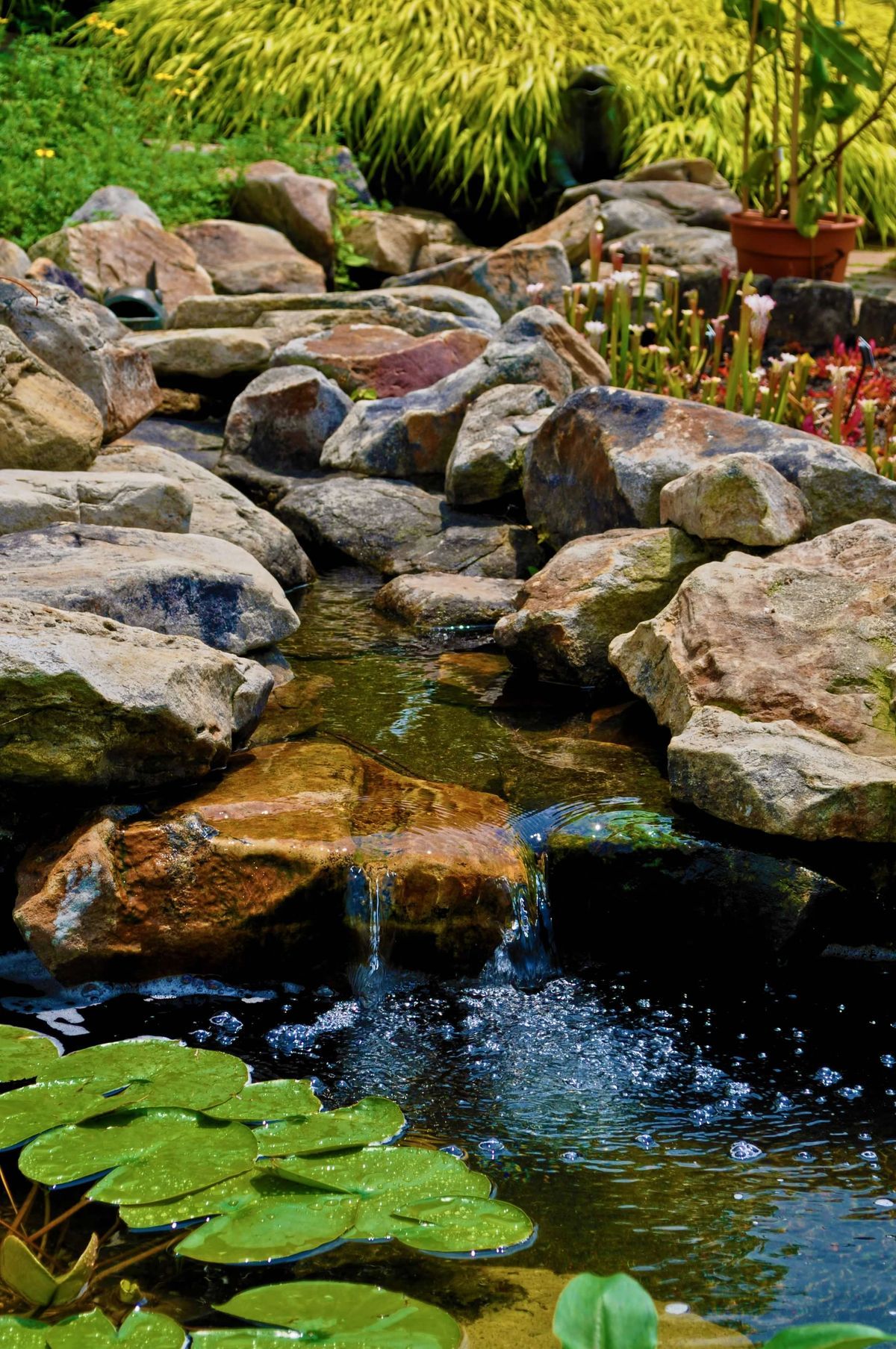
Job Three: Boulders as Anchors, Buried a Third
A boulder is punctuation, and like punctuation it works in small numbers at structural points: the corner of a bed, the turn of a path, the end of the dry creek, flanking the first step of the porch. The placement rules are few and absolute. Bury at least a third of the stone's depth in the ground, more for a tall stone, so it emerges from the earth the way ledge rock does; a boulder resting on the surface reads as cargo at any size. Set the stone's most interesting face forward and its long axis at a slight angle to the house lines, because nature does not do parallel. Group in odd numbers when more than one is used, with sizes that differ clearly, and nestle smaller stones against the big one's base to finish the geology. One 300 pound boulder placed with these rules does more for a front yard than a ton of small rock spread as topping, and it does it forever, asking no water, no pruning, and no replacement, which is the deepest argument for rock in the front yard: the features built from it are the only ones that improve by being ignored.
Job Four: The Gravel Field That Replaces Lawn
The boldest rock job is retiring a section of front lawn into a gravel field planted with drought tolerant specimens, the water saving conversion that dry climate cities now encourage and sometimes subsidize. Done well, it is a garden: a clean gravel plane, decomposed granite or angular crushed stone compacted to a firm walking surface, with planting pockets cut into it for agaves, ornamental grasses, lavender, penstemon, and the other plants that prefer mineral ground, each pocket amended with real soil so roots get a start before they reach the lean subsoil. Done badly, it is a parking lot with cactus, and the difference is planting density and edge discipline: a steel or stone edge that holds the gravel line crisp against the remaining lawn and the sidewalk, and enough plants, at mature spacing, that the composition reads as intended rather than abandoned. The heat warning belongs here and is not a footnote: rock and gravel surfaces store the day's heat and return it at night, raising the temperature around nearby plants and against the house wall measurably. Keep gravel fields away from the shallow roots of plants that dislike heat, keep a planted buffer against sunny walls, and never mulch a heat sensitive plant with white rock, which adds reflected light to stored heat in the combination gardeners call the solar oven.
The Fabric Debate, Answered Honestly
Landscape fabric under rock is sold as the end of weeding, and the honest account is split by job. Under paths and dry creeks, where nothing is planted in the stone itself, a quality fabric or geotextile earns its place: it keeps the gravel from migrating down into the soil and the mud from pumping up, and the structure lasts years longer. Under planted rock mulch, the fabric mostly fails its promise on a delay: dust and organic debris settle into the rock from above, seeds germinate in that debris on top of the fabric, and within a few seasons the gardener is weeding a rock bed whose fabric now prevents pulling roots cleanly and blocks the soil from improving. Most experienced rock gardeners skip fabric under planted areas, lay the stone 3 to 4 inches deep directly on prepared soil so light never reaches the seed bank, and accept a spring weeding pass as the price. Either way, rock is not a no maintenance surface; it is a low maintenance one whose maintenance is different, blowing out leaves, topping up settled areas, and resetting the occasional wanderer, and the gardener who budgets that hour a season keeps a yard that looks designed a decade later. The site's other front yard pages approach the same ground from different budgets and constraints: the low maintenance front yard ideas, the no grass front yard ideas, and the budget front yard ideas each share ground with this one, and the rock jobs above combine with all three.
Budgeting Stone: What a Rock Project Actually Costs in Material
Rock is sold by the ton and the yard, and first time buyers consistently order the wrong amount in both directions. The working conversions: a cubic yard of gravel or crushed stone covers about 100 square feet at 3 inches deep, the standard depth for a planted rock bed, and weighs roughly 1.3 to 1.5 tons depending on the stone. Stepping stones and wall rock price by the piece or the pallet, and boulders by the pound or ton at the stone yard, where choosing your own anchor boulders in person, face by face, is worth the trip in a way ordering sight unseen never is. Delivery dominates the small project's budget: a single delivered yard often costs less than half what two half yard trips in a pickup cost in time and suspension, and stone yards will split a load between gravel and boulders on one truck for one fee if you ask. Order a tenth more than the arithmetic says, because settled gravel always wants a top up and a path always wants one more stone than the drawing showed, and leftover angular gravel keeps forever in a pile behind the garage in a way leftover mulch does not.
Related guides
These related guides round out the picture:
- Low Maintenance Landscaping Ideas: The Hours Audit and the Conversion Order
- Basic Lawn Care for Beginners: The Whole Lawn Year in Five Jobs
- Front Yard Landscaping Ideas With Rocks and Plants
- Front Yard Landscaping Ideas After Tree Removal: Fill the Gap Without Repeating It
- Front Yard Landscaping Ideas for Arizona: Design for the Desert You Actually Have
Frequently Asked Questions
What kind of rock is best for front yard landscaping?
Angular stone for anything you walk on or build with, because it locks together and stays put; rounded river rock for dry creek beds, where it reads as natural because water shaped it. For boulders, choose local stone where possible, set with the best face forward. Avoid rounded pea gravel in paths entirely; it rolls underfoot and migrates everywhere.
How deep should a boulder be buried?
At least a third of its depth, and more for tall stones. A boulder sitting on the surface looks dropped by a truck no matter how handsome it is; buried a third, with smaller stones nestled at its base, it reads as ledge rock that was always there. Set the long axis at a slight angle to the house lines.
Should I put landscape fabric under rocks?
Under paths and dry creeks, yes: it keeps gravel from sinking into soil and mud from pumping up, and nothing is planted in those stones. Under planted rock mulch, mostly no: debris collects on top of the fabric, weeds root in the debris, and the fabric then blocks clean pulling and soil improvement. Depth of stone, 3 to 4 inches, does the light blocking job there.
Do rocks make the yard hotter?
Yes, measurably. Rock and gravel store the day's heat and release it at night, and light colored stone reflects additional light and heat onto nearby plants. Keep gravel fields buffered from sunny house walls, keep rock mulch away from heat sensitive plants, and never mulch a plant that dislikes heat with white rock.
How do I stop weeds in a rock garden?
Depth and housekeeping. Lay stone 3 to 4 inches deep so light never reaches the soil seed bank, blow or rake out leaves and debris each season before they rot into a seed bed between the stones, and pull the few weeds that start while they are small, before their roots thread the stone layer. Rock is low maintenance, not no maintenance.
Photo credits: Anna Khomutova (Pexels); Sedona Ramona (Pexels). Photos are served from this site; follow the credit to the library page for the original.