The front yard rock garden fails in a predictable photograph: a sea of gravel, a few boulders marooned in it, and three struggling plants in holes punched through landscape fabric, the whole thing reading as a parking area with ambitions. The same two materials, stone and plants, arranged by the opposite logic produce the gardens people slow down for: stone laid as structure, walls, edges, steps, and outcrops, with plants massed in deep soil pockets, spilling over edges, and softening every hard line. The difference is ratio and placement. This page is about the planted rock garden specifically; the companion guide, Front Yard Landscaping Ideas with Rocks: Give Every Rock a Job, covers rock as the main material. Here, plants share the billing, and the designs below are organized by the job the combination does in a front yard: the slope it holds, the water it slows, the curb appeal it builds for almost no weekly care.
Home / Lawn and Landscape Basics
Front Yard Landscaping Ideas With Rocks and Plants
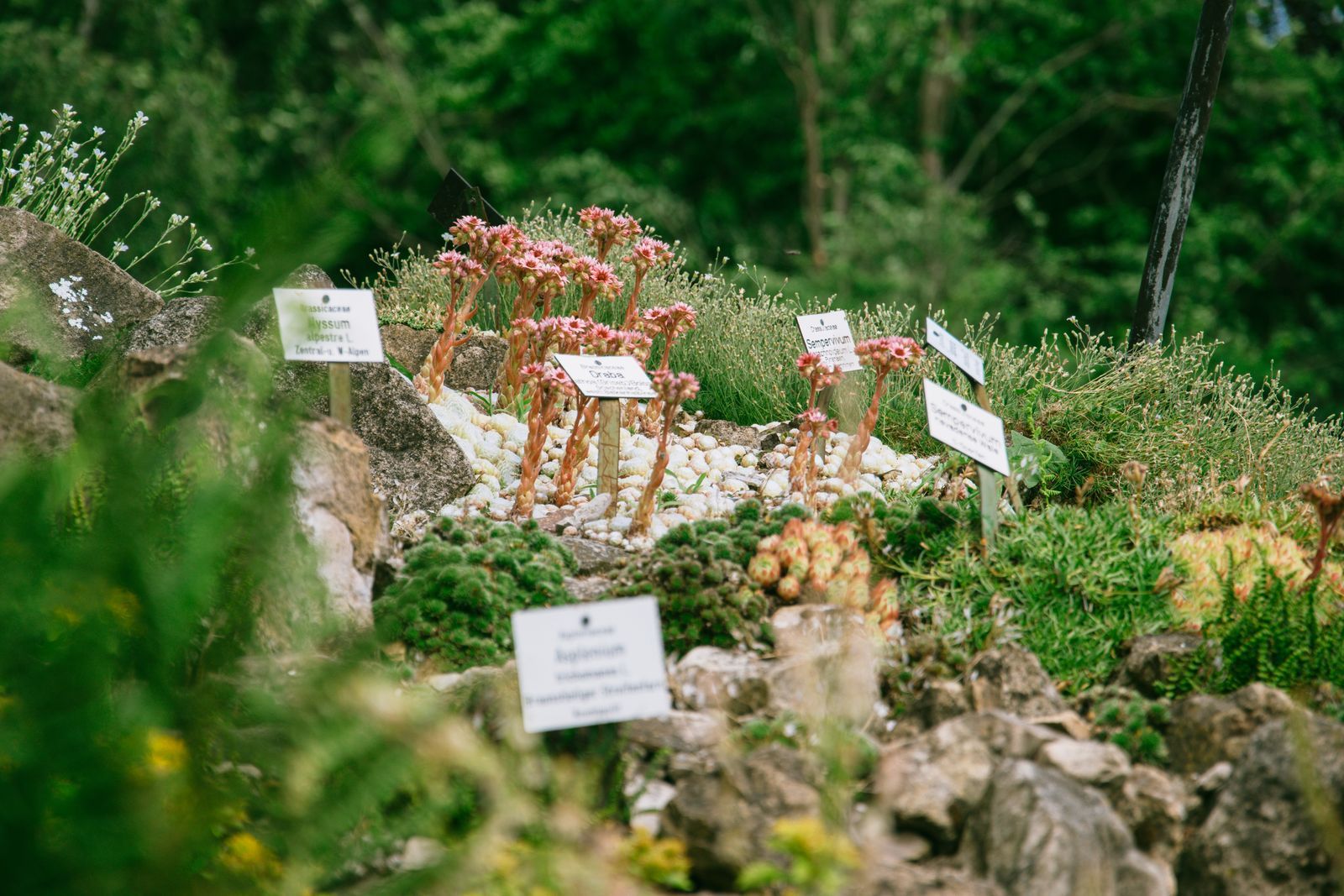
Photo: Laura Link / Pexels
Rocks and Plants Front Yard Checklist
Check off each step as you finish it. Your progress stays on this page.
0 of 8 complete
0% done
The Checklist in Brief
The tracker above walks a planted rock project in the order it actually happens: read the site for slope, sun, and water movement; set the ratio of stone to planting; build the soil pockets before the stone goes down; place the large stones as structure; plant into the pockets with species that want the conditions stone creates; and mulch the pockets with a thin gravel layer that ties the planting visually to the stone. The order is the discipline: pockets before stone, always, because soil added after the rocks are placed is soil poured into cracks, and plants in cracks are the struggling photograph this page opened with.
The Ratio and the Pocket
The working ratio for a planted rock garden is about one third stone visible at maturity, two thirds planting, and the maturity clause matters: a bed that looks balanced on planting day, with small plants among the rocks, is a bed that will look overgrown in three years, which is the correct direction of error, because plants can be cut back and rocks cannot be shrunk. The pocket is the construction underneath the ratio: wherever a plant or a group goes, there is a basin of real soil, at least 12 to 18 inches deep for perennials and more for shrubs, excavated into the slope or built up behind retaining stone, with the surrounding rock placed around and behind it, never under it. Stone under a plant is a heat store and a root barrier; stone behind and beside a plant is a backdrop and a windbreak. Build pockets the way you would build a bed, with compost worked in and the surface finished slightly below the surrounding stone so water runs into the planting, not off it.
Design One: The Outcrop Slope
For the front yard that falls toward the street, the outcrop is the classic answer: large stones set into the slope in groups, buried at least a third of their depth and tilted to follow the slope's geology rather than lined up like teeth, with soil pockets terraced behind each group. Plant the pockets with the cascading and mounding species that read as mountain planting: creeping phlox and candytuft spilling over the stone edges in spring, sedums in the hot shallow pockets, dwarf conifers and ornamental grasses in the deep ones for the year's structure. The outcrop holds the slope against erosion, ends the mowing of a bank, which is the job nobody misses, and flowers in waves from spring to fall if the pockets are planted in succession.
Design Two: The Dry Creek With Planted Banks
A dry creek bed solves a water problem and earns its place even where the problem is mild: a shallow swale lined with river rock and larger stone, following the line water already takes across the yard in a storm, slowing it and sinking it instead of letting it sheet off the lawn. The plants make it a garden rather than a ditch: moisture tolerant species at the creek's edges, iris, sedges, and Joe Pye weed in the low spots where storm water lingers, drought tolerant planting on the upper banks, and a bridge stone or a step crossing where the path meets it. In a dry month the creek reads as a design feature; in a wet one it is visibly working, which is the most satisfying kind of front yard infrastructure there is.
Design Three: The Boulder and Grass Anchor
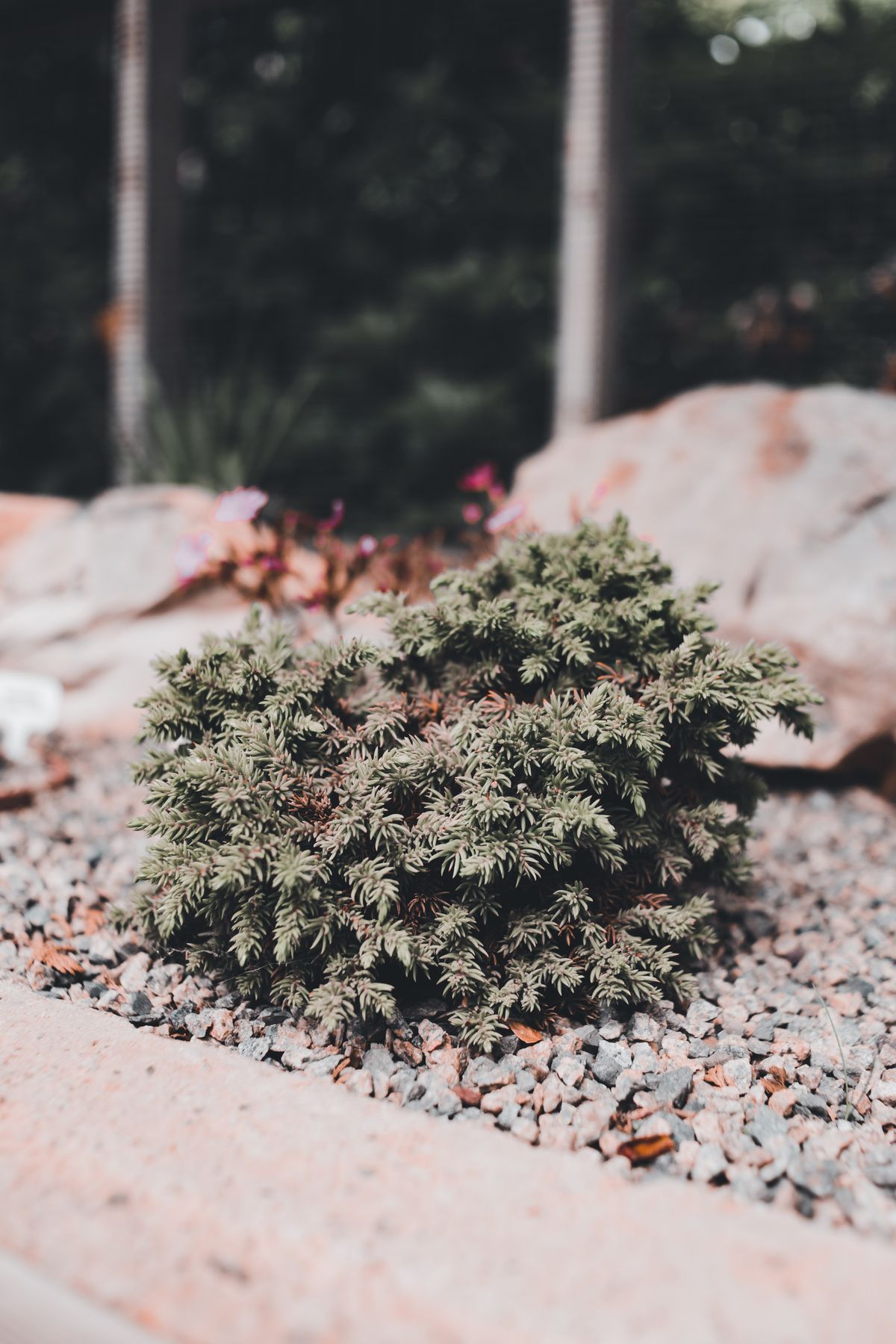
The simplest durable composition in the front yard is one large stone, or a tight group of three, set as an anchor at the corner of the house or the turn of the walk, with ornamental grasses and a flowering shrub planted behind and beside it. The stone gives the planting a permanent center that holds the composition in winter when the grasses are cut and the shrub is bare; the plants give the stone a setting that keeps it from reading as a dropped object. Scale is the whole craft here: the anchor stone should be large enough to look geological rather than decorative, which usually means bigger than the buyer first reaches for, buried a third deep, and set once, by machine or by lever and patience, in its final place.
Design Four: The Gravel Garden, Honestly Maintained
The gravel garden is the design most people mean by rocks and plants: a planted bed surfaced with gravel instead of bark mulch, in the style of the famous dry gardens, planted with the drought tolerant, gravel loving species, lavender, Russian sage, yarrow, sedums, ornamental grasses, that seed themselves into the gravel and make the planting richer each year. It is a beautiful and genuinely water wise design, and its maintenance truth must be stated because the style is sold as no maintenance, which is false. Gravel is a yearly chore: leaves and debris fall into it and cannot be raked out cleanly, weeds seed into the dust that accumulates in it, and the surface wants topping up and a hard rake or a blower on a schedule. Gardeners who love the look accept the chore happily. Gardeners sold the look as labor free sell the house with a weedy gravel pit. Choose it for the beauty, with eyes open, and it will not disappoint.
Design Five: The Rock Edged Cottage Bed
For the traditional front yard, stone as the edge and plants as the show: a low wall or a single course of fieldstone defining a deep bed along the house and walk, planted in the cottage manner with flowering perennials and shrubs at full cottage density. The stone edge does three jobs: it holds the bed's soil and mulch against the lawn, it gives the exuberant planting a crisp frame that keeps abundance from reading as mess, and it ends the edging chore permanently, since a stone edge does not creep, rot, or need re-cutting. This is the design for the gardener who wants the plants to dominate, nine tenths of the picture, with rock in the supporting role the companion article describes, present everywhere and noticed nowhere, which is its own kind of craft.
Design Six: The Modern Grid
The contemporary front yard pairs stone and plant in geometry: large rectangular pavers or a grid of square stone slabs with planting in the joints and the squares between, low groundcovers, mondo grass, creeping thyme, or dwarf sedges in green contrast to the pale stone, and one sculptural plant, a small ornamental tree or a large grass, as the single exclamation. It suits modern house lines, it is the most legible design from the street, and its maintenance is the grid's discipline: the planting must be kept to its squares, because the design is the contrast, and a groundcover allowed to blur the lines has not softened the design, it has erased it. Where the cottage bed forgives, the grid audits, weekly and briefly.
Choosing, and the Street Test
Choose by the site's facts before its style: slope asks for the outcrop or the creek, a water path asks for the creek, a flat traditional yard takes the edged cottage bed or the boulder anchor, a modern house takes the grid, and a hot dry exposure with water restrictions makes the honest gravel garden. Then apply the street test, which is the front yard's real standard: the design is read at driving speed, in a few seconds, in all four seasons. Compositions that survive that reading have a permanent structure, stone, a tree, an evergreen mass, that carries the winter picture, and planting arranged in masses large enough to register at distance. A front yard planted in ones and twos of a dozen species reads as noise from the street and as a collection only from the path. Mass the plants, anchor with stone, and the yard will look designed from every distance at which it is actually seen.
Related guides
These guides sit closest to this one on the garden path:
- Front Yard Landscaping Ideas with Rocks: Give Every Rock a Job
- Front Yard Landscaping Ideas with Hydrangeas: Design by Mature Size
- Front Yard Landscaping Ideas, Low Maintenance: Ideas Ranked by Minutes Saved
- How to Get Rid of Weeds in Your Lawn Permanently: The Honest Answer
- Front Yard Landscaping Ideas After Tree Removal: Fill the Gap Without Repeating It
- Front Yard Landscaping Ideas With Rocks and No Grass: A Complete No-Lawn Design
Frequently Asked Questions
What is the right ratio of rocks to plants in a front yard?
About one third stone visible to two thirds planting, measured at the plants' mature size. Stone is the permanent structure, edges, outcrops, anchors, and paths; plants are the living mass, set in real soil pockets 12 to 18 inches deep or more, never in gravel filled cracks. A bed that looks balanced on planting day will be plant heavy in three years, which is the correct direction of error, since plants can be cut back and rocks cannot be shrunk.
How do plants survive among rocks?
In pockets: excavated basins of real soil, compost worked in, finished slightly below the surrounding stone so water runs in rather than off. Stone goes behind and beside plants as backdrop and shelter, never underneath them, where it stores heat and blocks roots. Choose species that suit the microclimate stone creates, hot and dry at the surface, and the planting thrives where a general perennial would sulk.
Is a gravel garden really low maintenance?
No, and it should be chosen for its beauty rather than its labor promise. Gravel collects leaves and debris that cannot be raked out cleanly, weeds seed into the dust that accumulates in it, and the surface needs periodic raking, blowing, and topping up. Gardeners who love the dry garden look accept the yearly chore gladly. Sold as maintenance free, the same garden becomes a weedy gravel pit within a few seasons.
How big should an anchor boulder be?
Bigger than instinct suggests. An anchor stone must read as geology, not decoration, which usually means a stone large enough to need a machine, a lever, or several people to set, buried at least a third of its depth so it sits in the ground rather than on it. A tight group of three smaller stones can substitute for one large one if they are set together as a single composition.
What plants go best with rocks in a front yard?
Match the plant to the pocket's conditions. Cascading species, creeping phlox, candytuft, and sedums, spill over stone edges. Dwarf conifers and ornamental grasses give the deep pockets year round structure. The dry gravel garden wants lavender, Russian sage, yarrow, and sedums. Moist creek edges want iris, sedges, and Joe Pye weed. In every case, plant in masses large enough to read from the street, not in ones and twos.
Photo credits: Laura Link (Pexels); Erik Mclean (Pexels). Photos are served from this site; follow the credit to the library page for the original.