Search this idea and you get galleries: white mopheads under windows, pink drifts along a fence, a blue hedge by a porch. The photographs are all year one or year two, and they hide the only question that decides whether a hydrangea front yard works: what does it look like when the plants are the size they intend to be? A bigleaf hydrangea is a 4 to 6 foot shrub. A panicle hydrangea is an 8 to 12 foot small tree in waiting. Planted from a gallery photo's spacing, they eat the walkway by year three, swallow the windows by year five, and get butchered back every spring by owners who then wonder why they never bloom. This page designs the hydrangea front yard the other way, from mature size and setbacks outward: which species for which site, the foundation setback that keeps siding and roots healthy, companions placed by the inch, and the bloom succession that carries the front of the house from June to frost. The plant's own culture, soil, pruning, and propagation, lives in the hydrangea growing guide; this page is where to put it.
Home / Lawn and Landscape Basics
Front Yard Landscaping Ideas with Hydrangeas: Design by Mature Size
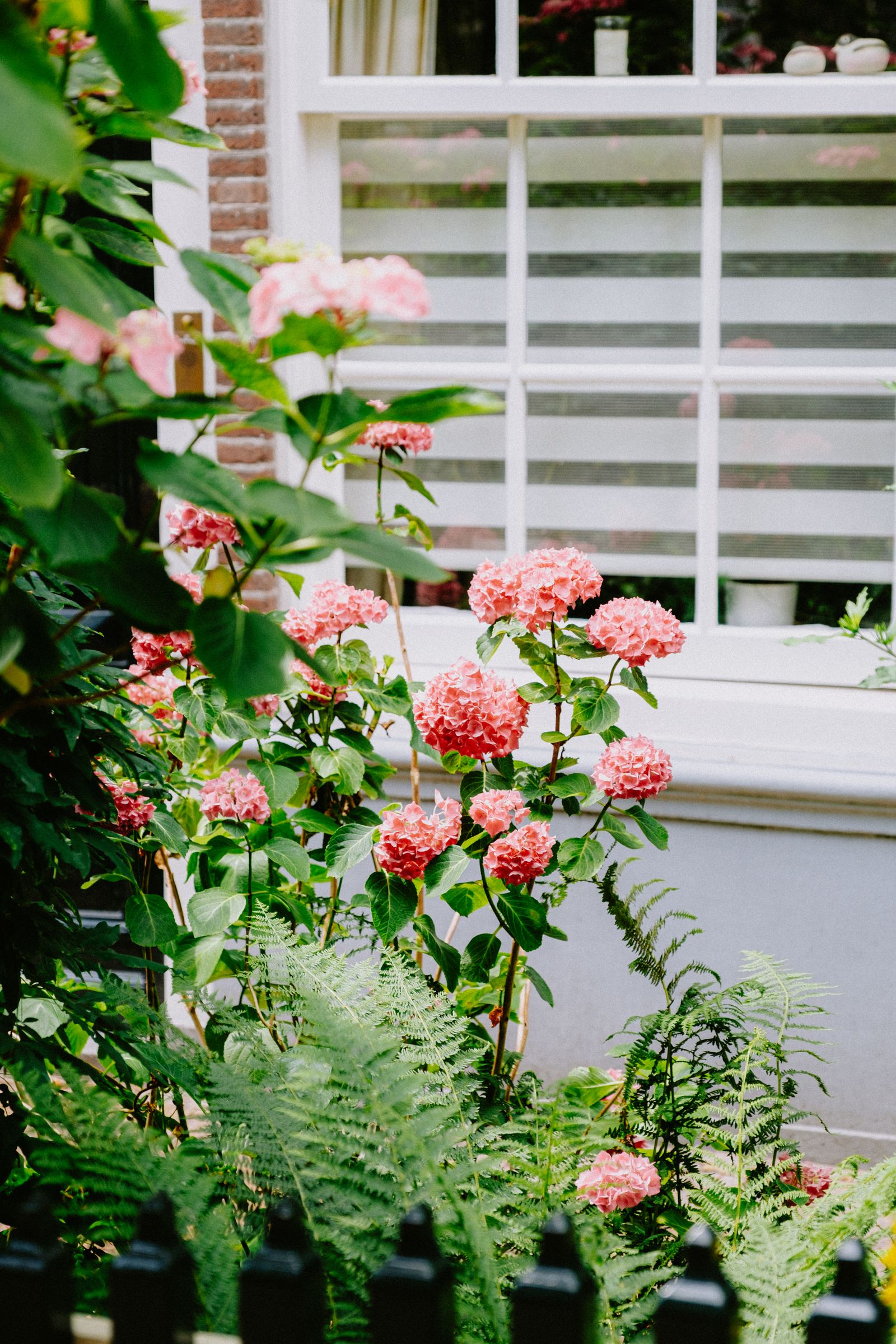
Photo: Mathias Reding / Pexels
Hydrangea Front Yard Checklist
Check off each step as you finish it. Your progress stays on this page.
0 of 8 complete
0% done
Species by Site: The First Decision
Match the hydrangea to the exposure and the space before anything else. Bigleaf hydrangea, the mophead and lacecap of the classic photographs, wants morning sun and afternoon shade and a mature circle of 4 to 6 feet; it is the foundation plant of the sheltered, tree shaded front yard in zones 6 to 9, and it blooms on old wood, which cold winters and late pruning both steal. Panicle hydrangea is the full sun, cold hardy, big space answer, zones 3 to 8, blooming on new wood so no winter can take its flowers, in sizes from the 3 foot dwarf selections to full small trees, and it is the species for the sunny front yard with room. Smooth hydrangea, the 'Annabelle' type, takes shade and cold, spreads by suckers into a colony, and suits a wide, informal front bed in zones 3 to 9. Oakleaf hydrangea brings the best fall color and winter bark of the genus and a 6 to 8 foot frame, for the front yard that wants four season structure. Choosing by mature size and wood type first is the whole design method; everything after is placement.
| Species | Mature size | Light | Blooms on | Best front yard job |
|---|---|---|---|---|
| Bigleaf | 4 to 6 ft wide | Morning sun, pm shade | Old wood | Sheltered foundation beds, zones 6 to 9 |
| Panicle | 3 ft dwarf to 12 ft | Full sun | New wood | Sunny fronts, specimens, small trees |
| Smooth | 3 to 5 ft, spreading | Part shade to shade | New wood | Wide informal beds, colonies |
| Oakleaf | 6 to 8 ft wide | Sun to part shade | Old wood | Four season structure, fall color |
| Climbing | Covers a wall | Shade tolerant | Old wood | North walls, fences, arbors |
Setbacks: The Numbers the Galleries Skip
Three distances decide the mature planting's success. From the foundation, plant the shrub's center at least half its mature width plus a working margin out from the wall; for a bigleaf that lands at about 3 feet from the siding, which leaves an airflow gap behind the mature plant that keeps siding dry, lets you walk behind for maintenance, and keeps the canopy from pressing the house. NC State's Toolbox plant pages are the standing reference for the mature dimensions behind these numbers, and the discipline is to trust the tag's mature width over the pot's current size every time. From a walkway, set the plant so its mature edge, not its planting day edge, clears the path by a foot; a hydrangea at full size leaning over a front walk gets pruned by every passerby's shoulder and resents it. From windows, the rule is the shrub's mature height against the sill: a 5 foot bigleaf under a 4 foot sill is a yearly pruning war, so under low windows go to the dwarf selections bred at 2 to 3 feet, and save the full size plants for the corners and the spaces between windows, where their size is the design.
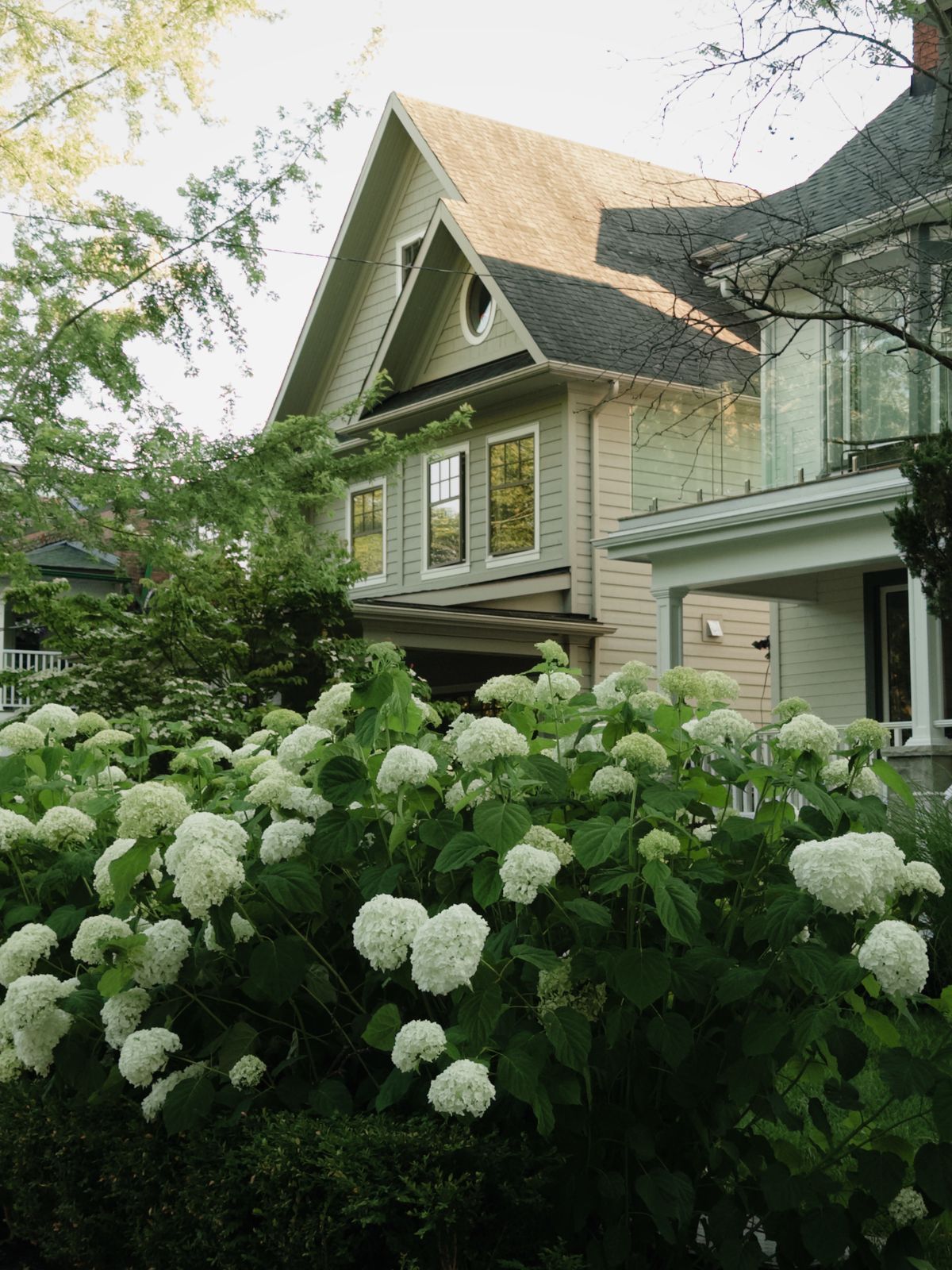
Companions by the Inch: Hostas and the Front Layer
The classic hydrangea companion is the hosta, and the pairing works on measured terms, not just in photographs. Hostas take the same morning sun and afternoon shade, drink the same consistent moisture, and their bold leaves set off the hydrangea's bloom from below. Plant the hosta layer 12 to 24 inches out from the hydrangea's planting center line, in the crescent the shrub's canopy will shade by midsummer but which gets spring sun before the shrub leafs out fully. That band is also where spring bulbs belong, daffodils and early tulips that bloom and ripen their foliage in the light before the hydrangea closes over them, giving the front bed a full extra season at no space cost. At the bed's front edge, a low evergreen or a line of annuals holds the winter picture, because a hydrangea front yard's honest weakness is winter: the deciduous shrubs are bare sticks from November to April, and a front yard designed only for July looks abandoned for five months. Boxwood, inkberry, or a dwarf conifer at the corners and edges carries the structure through the bare season.
Bloom Succession and Color Honesty
A front yard of one hydrangea species blooms for about six weeks. The designed yard sequences them: oakleaf first in late spring, then bigleaf and smooth through early summer, then the panicles opening white in midsummer and aging through pink to rust into fall, carrying color, in dried heads that stand into winter, for nearly half the year. Color honesty matters with bigleaf: its blue is a soil chemistry product, aluminum available in acid soil, and the same plant is pink in alkaline soil, so a design that depends on blue must first confirm the bed's pH and be willing to maintain it, per the culture in the hydrangea growing guide. Panicle color, white aging to pink, is chemistry free and reliable everywhere. The front yard is the most public planting you own; design its colors from what your soil guarantees, not from the nursery's photograph, which was taken in the nursery's soil.
The Five Year Test and Maintenance
Judge every hydrangea front yard plan by walking it in year five. The shrubs are at mature size, the hostas have spread into their band, and the questions answer themselves: can you still walk the path, see out the windows, and get behind the foundation plants with a hose and a pruner? The maintenance that keeps the answer yes is small and specific: prune each species on its own wood rule, bigleaf and oakleaf right after flowering and only as needed, panicle and smooth in late winter freely, since they bloom on new growth; renew the oldest stems out of bigleaf plants every few years rather than shearing the whole shrub, which removes the bloom wood; and hold the setbacks by editing companions, not by cutting the shrubs back to the line they were always going to cross. The general front yard frameworks on this site, low maintenance, no grass, and budget, each take a different constraint as their starting point; the hydrangea yard's constraint is the plant itself, and it repays the deference with the biggest flowers on the street.
The Year in the Hydrangea Front Yard: A Short Calendar
The designed front yard runs on a light calendar, and writing it out shows how little work the mature planting actually asks. In late winter, prune the panicle and smooth hydrangeas, shape, thin, and remove dead wood, and leave bigleaf and oakleaf entirely alone, since their flower buds are sitting on the stems you would be cutting. In spring, as growth starts, feed once if a soil test or pale growth suggests it, refresh the mulch to 2 to 3 inches keeping it off the stems, and check the irrigation before the season's first dry spell rather than during it. In early summer, deadhead the bigleaf's first spent heads to the next strong buds if a second flush is wanted, stake nothing, and simply watch the succession begin. Through summer, water deeply in dry weeks, an inch at a time at the base, and resist the cosmetic pruning urge entirely. In fall, leave the panicle heads standing for their rust colored second season and the winter silhouette, cut the smooth hydrangeas' spent heads if they offend, and plant next year's spring bulbs into the hosta band. In winter, do nothing but enjoy the evergreen frame and the dried heads in frost, and plan any new plant from the mature size table, not from a catalog photograph. Six light touches a year: that is the maintenance reality behind the most admired front yards on the street, provided the setbacks were right on planting day.
Related guides
Keep reading with these guides from the same corner of the garden:
- Front Yard Landscaping Ideas with Rocks: Give Every Rock a Job
- Front Yard Landscaping Ideas: Buildable Layouts With Real Dimensions
- Landscaping for Beginners
- Front Yard Landscaping Ideas With Rocks and Plants
Frequently Asked Questions
How far from the house should I plant hydrangeas?
Center the plant at least half its mature width plus a margin from the wall, which for a bigleaf hydrangea works out to about 3 feet from the siding. The gap keeps airflow behind the mature shrub, protects the siding, and leaves you room to work. Trust the tag's mature width, not the pot's size.
What can I plant in front of hydrangeas?
Hostas are the classic front layer, planted 12 to 24 inches out from the hydrangea line, sharing the same light and moisture. Spring bulbs belong in the same band, blooming before the shrub leafs out. A low evergreen edge, boxwood or inkberry, holds the bed's winter structure when the hydrangeas are bare.
Which hydrangea is best for a sunny front yard?
Panicle hydrangea. It takes full sun, is the hardiest of the genus, and blooms on new wood so winter cold cannot steal its flowers. Sizes run from 3 foot dwarfs for under windows to small tree forms for a specimen, so match the selection's mature size to the space.
Why do hydrangea front yards look overgrown after a few years?
Because they were planted at photograph spacing, the size of the pot, instead of the mature size of the shrub. A bigleaf wants a 4 to 6 foot circle and a panicle far more. When the mature plant crosses the walkway and windows, owners shear it yearly, which on old wood bloomers removes the flowers too.
Can hydrangeas carry a front yard by themselves?
Almost, with species sequencing: oakleaf in late spring, bigleaf and smooth in early summer, panicles from midsummer aging pink into fall. The gap is winter, when all are bare; a few evergreens at the corners and edges carry the structure through the cold months.
Photo credits: Mathias Reding (Pexels); Ozge Alpaslan (Pexels). Photos are served from this site; follow the credit to the library page for the original.