Front Yard Landscaping Ideas After Tree Removal: Fill the Gap Without Repeating It
By the Windchime Walker editorial team
Photo: Marcin Manka / Pexels
Removing a front yard tree changes your property more than planting one ever did. The shade vanishes, the lawn under the canopy is suddenly in full sun and full view, and you are left with a stump, a ring of tired soil, and a hole in the design that everyone on the street can see. The recovery has a sequence: deal with the stump properly, fix the soil the tree left behind, respect the replanting wait, and then design for the sunny yard you actually have now.
The technical facts first, because they constrain every design idea. Stump grinding should take the stump 8 to 12 inches below grade so soil and plants can go over it. The grindings, a mound of wood chips and soil, are not topsoil: as they decompose they immobilize nitrogen, and plants over a fresh grind site yellow from hunger. And if you want another tree, the standard advice is to wait 1 to 2 years before planting in the exact spot, or plant the new tree 6 to 8 feet away from the old stump where the soil is not full of decomposing roots. The checklist below sequences the whole project.
Interactive tool
After Tree Removal Landscaping Checklist
Check off each step as you finish it. Your progress stays on this page.
0 of 8 complete
0% done
Step 1: Finish the removal properly
If the stump is still standing, grinding beats chemical rotting agents and burning on every measure: it is fast, complete, and leaves a plantable site the same week. Specify the depth when you hire it: 8 to 12 inches below grade for a bed or lawn area, deeper if a future tree is planned nearby. Ask for the grindings to be hauled away if you can; a site cleared of chips starts its new life a season ahead of a site buried under them.
Whatever grindings remain on site, use them as path mulch or compost them with a nitrogen source (grass clippings, coffee grounds) rather than tilling them into the planting soil. Fill the grind depression with real topsoil, mounded slightly high, because the buried wood below will keep decomposing and the spot will settle for a year or more. Plan to top it up each season; a sinking circle in the lawn is the signature of a skipped step.
Step 2: Read the new conditions honestly
The ground under a mature tree is shaded, root-filled, dry, and acidic or depleted depending on species. After removal it is sunny, still root-filled for a year or two, and suddenly watered by rain that the canopy used to intercept. Plants that sulked in the dry shade may now thrive; the shade garden under the tree is finished whether you liked it or not.
Sun-loving replacements finally become possible: this is the moment for the flowering bed, the pollinator patch, or the ornamental grass grouping that the old tree's shade forbade. Design for the sun you have. Gardeners who replant the same shade scheme spend years wondering why it fails in a yard that no longer has shade.
Design ideas that work on a removal site
The island bed. Center a kidney-shaped island bed on or beside the old canopy footprint, planted with a small ornamental tree (offset from the stump per the 6 to 8 foot rule), shrubs, and perennials. An island bed converts the scar into the yard's focal point and hides the settling zone inside a mulched bed where a few inches of sink read as topography, not damage.
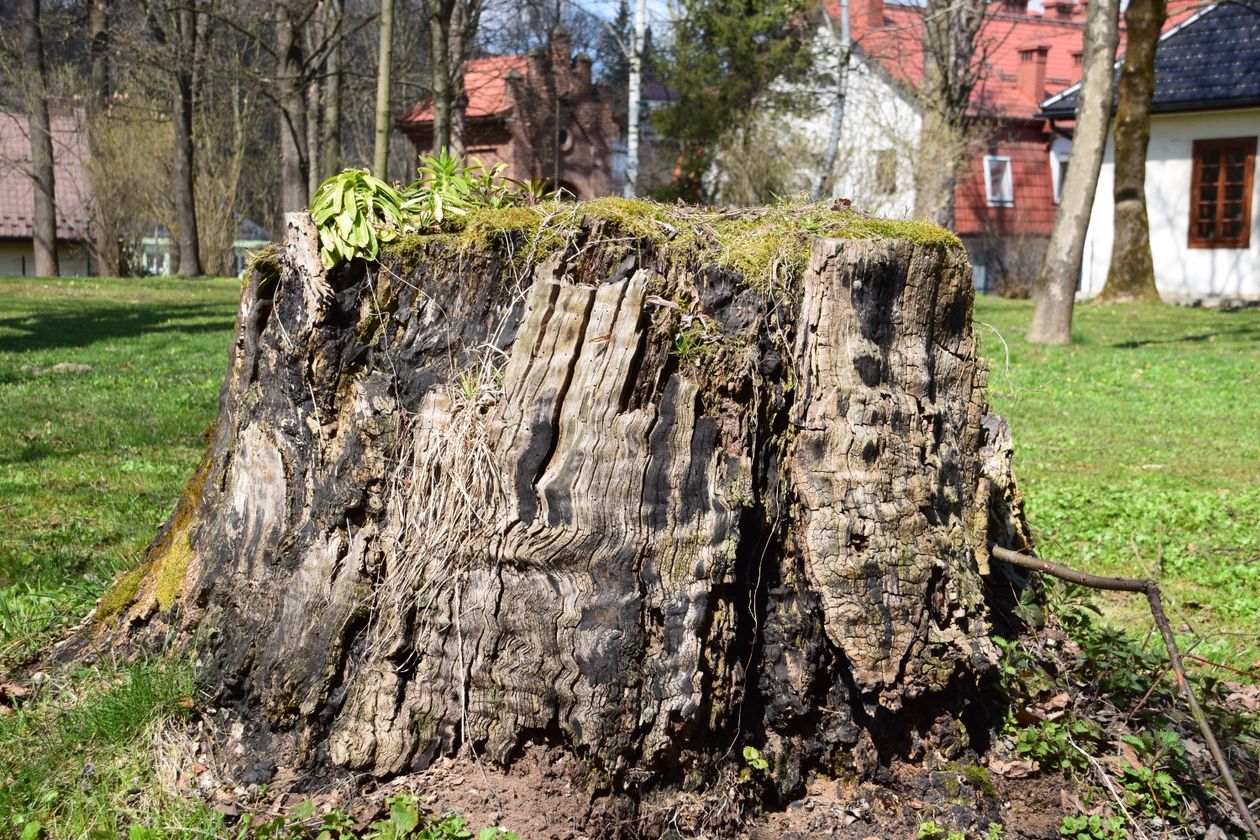
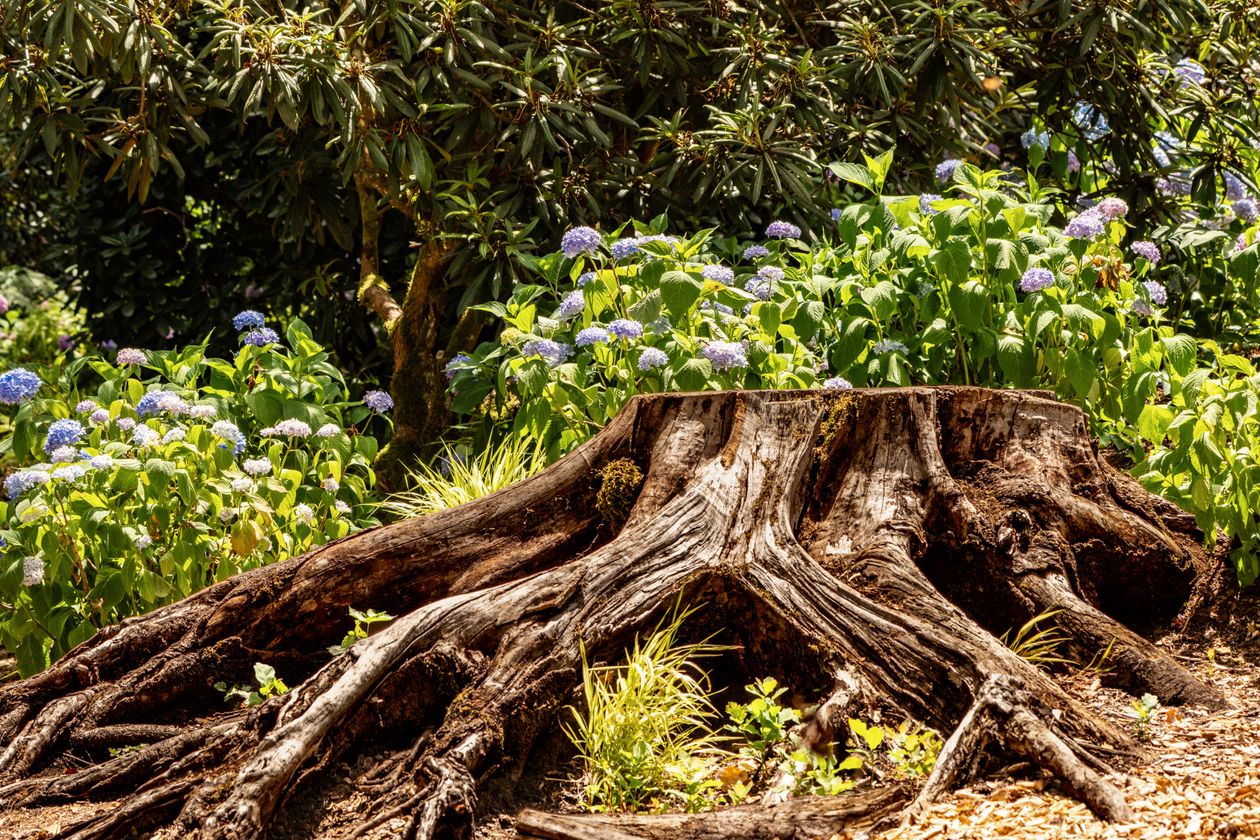
The stump feature. If the stump is handsome or the budget is thin, keep a ground-level stump as a feature: a planter drilled into the top, a birdbath base, or the center of a ring of yarrow and other tough perennials that tolerate the nitrogen-poor soil better than most. Stump planters rot away over 3 to 5 years, gracefully, while the permanent planting matures around them.
The lawn restoration. If the design answer is simply lawn again, do it properly: remove chips, add topsoil, level, and seed with a sun mix. Expect to overseed the spot the following fall as settling continues.
The rock and gravel garden. The sunny, dry, disturbed soil of a removal site is nearly ideal for the gravel garden approach detailed in front yard landscaping ideas with rocks and no grass, and a boulder placed near the old trunk position gives the design the weight the tree used to provide.
The replant decision
If you plant a new tree, offset it 6 to 8 feet from the old stump, choose a species matched to the space at maturity (the original tree's removal was possibly a size mistake made 30 years ago), and plant it at proper depth with a wide mulch ring. If the old tree died of a soil-borne disease, ask your extension service whether the pathogen persists in the old roots before planting a related species anywhere near the spot.
Also reconsider whether the front yard needs a tree at all in the same position. A tree placed to shade the house's west windows does energy work; a tree that merely fills the visual hole may be better replaced by the island bed and a smaller specimen at the property's edge. The ideas in front yard landscaping ideas with rocks can carry a front yard's design weight with no canopy at all.
The first year after removal: a working calendar
Month one is stump and soil: grinding, chip removal, topsoil fill mounded high, and your design decision while the site is bare and honest. Months two and three are planting season for the bed or lawn restoration, with nitrogen fed to anything growing over the old root zone. Through the first summer, water the new plantings as new plantings (deeply, twice a week in dry spells) and watch the footprint for the first settling; top up soil in early fall and overseed lawn areas at the same visit.
By the following spring the site should read as a designed part of the yard rather than a recovery zone. If it still reads as a scar, the usual cause is scale: a timid little bed where a tree used to be. Enlarge the bed, add one substantial element (a boulder, a specimen shrub, a small offset tree), and the composition balances. Front yards forgive bold corrections and punish apologetic ones.
Choosing a replacement tree that will not repeat the story
Most front yard tree removals trace back to a planting decision: a species that outgrew the space, roots that found the sewer line, or a fast, weak-wooded tree planted for quick shade. The replacement is your chance to break the cycle. Start from the mature dimensions, not the nursery pot: give a shade tree a circle of soil at least as wide as its mature canopy, keep it 15 to 20 feet from the house foundation for large species, and check overhead lines before falling in love with anything tall.
Match the species to the soil the old tree left and the climate you actually have, favoring regional natives and disease-resistant selections. If the predecessor died of a root or vascular disease, choose an unrelated species and plant it offset, per the spacing rule above. Plant at the correct depth with the root flare visible, mulch wide and shallow, and water deeply weekly for the first two seasons. A tree planted right at year zero is the cheapest landscaping you will ever own; a tree planted wrong is a removal invoice scheduled for your future self.
A tree stump in a sunny front yard garden ready for replanting around it
How deep should a stump be ground for landscaping over it?
Grind 8 to 12 inches below grade for lawn or planting beds, so there is room for topsoil and roots above the remaining wood. Deeper grinding helps if you plan to plant a new tree nearby. Shallow grinding leaves a hidden stump that resurfaces as the soil settles and blocks planting for years.
Why do plants turn yellow over a ground stump?
Decomposing wood grindings and roots immobilize nitrogen as microbes consume the carbon-rich wood. Plants above a fresh grind site starve for nitrogen even in decent soil. Remove excess grindings, fill with real topsoil, and feed nitrogen in the first season; the effect fades as decomposition completes.
When can I plant a new tree where an old one was removed?
Wait 1 to 2 years before planting in the exact spot, because the soil is full of decomposing roots and grindings that settle and tie up nitrogen. If you want a tree sooner, plant it 6 to 8 feet away from the old stump in undisturbed soil, which avoids the problem entirely.
What can I do with all the stump grindings?
Use them as mulch on paths or ornamental beds where their nitrogen tie-up does not matter, or compost them blended with nitrogen-rich greens like grass clippings. Do not till large amounts into planting soil or use them as the fill for the grind hole; both choices import the nitrogen problem into your new planting.
Will the ground keep sinking where the tree was?
Yes, for a year or more, as buried roots and remaining wood decompose. Mound topsoil slightly high at planting, expect to top up the depression each season, and favor beds over lawn for the exact footprint: settling inside a mulched bed reads as gentle topography, while settling in a lawn reads as a crater.
Photo credits: Marcin Manka (Pexels); Susanne Jutzeler (Pexels). Photos are served from this site; follow the credit to the library page for the original.