Most spacing mistakes are small. A tomato crowded by six inches loses some air and some fruit; a rosemary crowded by two feet loses the plant, because rosemary is not an annual herb that dies politely at frost in the climates where it thrives. It is a woody Mediterranean shrub with a mature width of 3 to 4 feet and a height to match, per the North Carolina State Extension plant profile for Salvia rosmarinus, and it holds that ground for a decade or more. The spacing decision is therefore made once, for years, and it is made from the mature number, not from the size of the pot in your hand. This page gives the specimen, hedge, and container benches, the airflow reasoning that makes rosemary spacing a disease decision as much as a size decision, and the honest options when two mature plants are already crowding each other. The watering partner to this page is How Often to Water Rosemary: The Age Fork, the Dry Between Rule, and the Rot Diagnosis; this page owns the ground plan.
Rosemary Plant Spacing: Set It by Mature Width

Photo: Deeana Arts / Pexels
Plant Spacing Planner: The Rosemary Hedge
Rosemary is in the crop list below at 30 inches, inside the NC State Extension mature width of 2 to 4 feet. Enter your bed or hedge length, then read the specimen, hedge, and low hedge benches in this article.
8 tomato plants fit this bed
4 plants per row across 2 rows, on a 24 inch grid. Extension spacing for this crop: 24 in between plants, 48 in between rows.
The grid uses the in-row spacing in both directions, the standard square foot layout for raised beds. In open ground, keep the wider row spacing in the note above so you can walk and weed between rows.
Spacing figures: University of Georgia Cooperative Extension, Circular 963, Vegetable Planting Chart, source.
The Benches: Specimen, Hedge, and the Tight Cases
The planner above carries rosemary at 30 inches in the row, the working middle of the benches below. Use the row that matches what you are actually building.
| Purpose | Spacing | What you get |
|---|---|---|
| Specimen shrub, full form | 36 to 48 inches | The plant's natural fountain shape, no shearing needed |
| General garden planting | 30 to 36 inches | Full plants that just touch at maturity |
| Closed hedge | About 24 inches | A solid line in 3 to 4 seasons |
| Low sheared hedge or edging | 12 to 18 inches | A formal line that needs clipping two to three times a year |
| Container | One plant per pot, 12 to 16 inches across | A shrub you can move to winter shelter |
The specimen number deserves its reputation. A rosemary given 4 feet in a warm climate becomes a landscape plant, flowering blue in late winter, feeding bees when almost nothing else is open, and supplying the kitchen from one branch a week without ever looking cut. The hedge number trades some of that individual form for a closed line, and the low hedge number is a commitment, not a shortcut: at 12 inches the plants are being held at a fraction of their natural width by the shears, forever, and a low hedge abandoned for two seasons is a row of fighting shrubs.
Why Air Is Half the Spacing
Rosemary's foliage diseases, powdery mildew above all, and its root rots both feed on still, damp air and slow drying. A plant with room around it dries after rain and dew within hours; a plant hemmed in by a wall on one side and a neighbor on the other can hold wet foliage into the afternoon, day after day, and mildew and dieback follow that pattern so reliably that experienced growers read a mildewed rosemary as a spacing or siting report before they read it as a disease. The siting rules that ride with the spacing are these: full sun, which in a warm climate means the plant can take the reflected heat off a south wall that would cook lesser herbs; a gap of at least a foot between the mature canopy and any wall or fence, so air moves behind the plant as well as in front; and no planting in the low pocket of the garden where cold and wet air settle, because that pocket is where the winter losses happen too. In humid climates, take the wide end of every bench on this page. The plant forgives dry; it does not forgive damp stillness.
Varieties Change the Number
The 3 to 4 foot spread is the species default, and named varieties move it in both directions, which is worth a check before you lay out a row of them. Upright types such as Tuscan Blue grow taller than wide and can sit at the tighter end of the specimen bench, around 30 inches, without fighting. Spreading and prostrate types reverse the shape, running 4 feet wide or more at a foot or two tall, and they want the full width and then some; a prostrate rosemary spilling over a wall or bank is planted for exactly that spread. The very cold hardy upright types grown where rosemary is marginal, such as Arp and Hill Hardy, are usually grown a touch tighter and a touch more sheltered, accepting some crowding as the price of the warm microclimate by a wall. Read the tag on the plant in your hand against the benches above: the tag's mature width, where it is given, outranks the general number, and where the tag is silent, the 3 to 4 foot species spread from the NC State profile is the figure to trust.
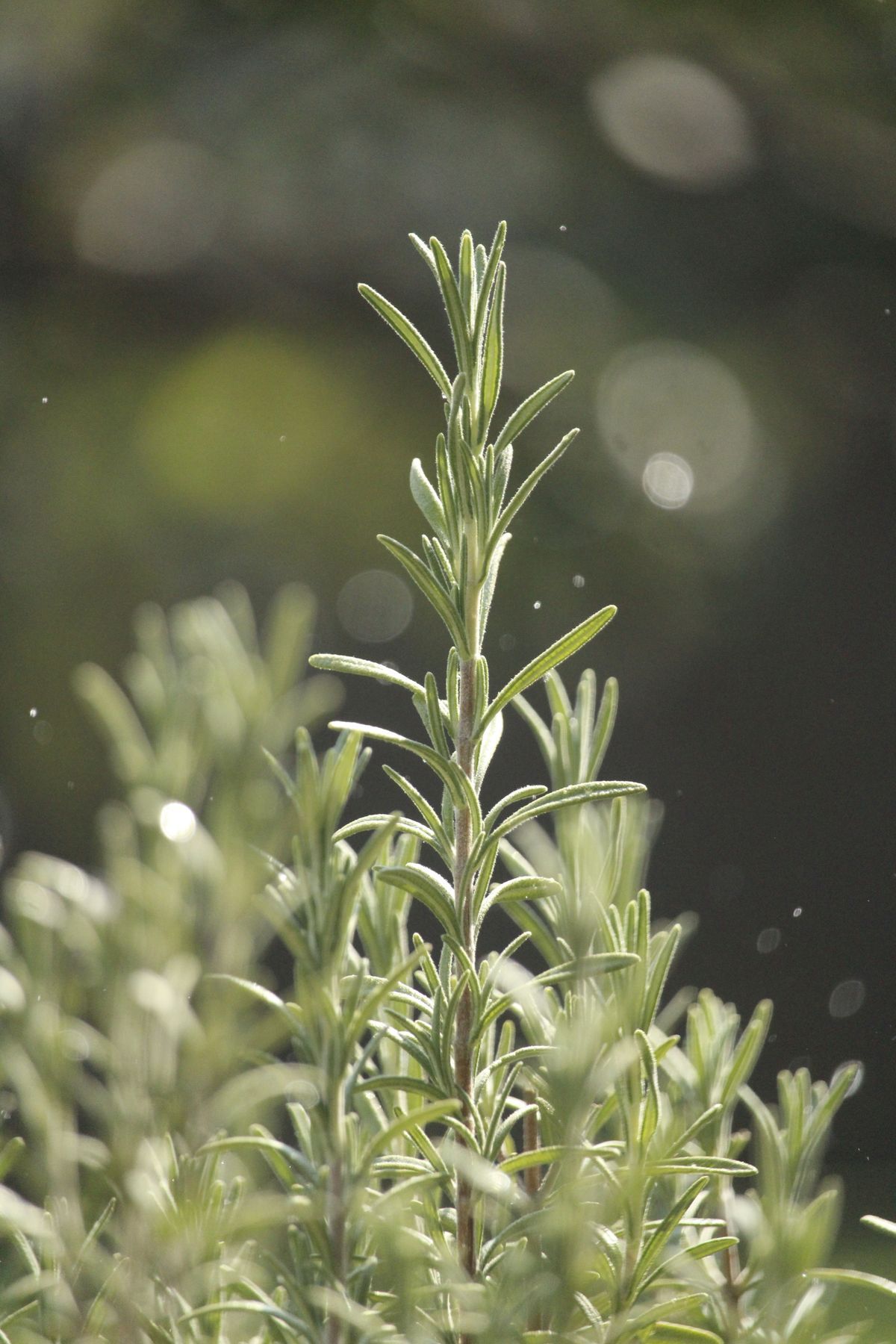
Containers: One Plant, Its Own Pot
Rosemary in a container is spaced by definition: one plant per pot, and the pot sized to the shrub's ambition. A 12 to 16 inch pot carries a plant for its first years; a specimen intended to live in a container permanently wants 18 inches or more and a strong back or a dolly, because a mature potted rosemary in terracotta is a two person lift. Container growing is the standard answer where winters kill the plant in the ground, roughly colder than zone 8, and it changes the spacing question into a placement question: the pot lives in the sunniest spot you have, comes under shelter or indoors to a bright cold place for the worst of winter, and goes back out in spring. What it never wants is a shared planter with thirsty annuals, whose watering rhythm keeps the mix wet at exactly the frequency that rots rosemary roots. If a mixed herb planter is the goal, rosemary is planted with its dry Mediterranean company, thyme, oregano, sage, lavender, and the whole planter is watered on the dry side, or it is not planted with rosemary at all.
When Mature Plants Are Already Crowding
The common inheritance is two rosemary shrubs planted two feet apart by someone who read the pot size instead of the mature width, now five years old and growing into each other. The options, in order of preference: prune for air, opening the touching sides by removing whole branches at their base rather than shearing the surface, which restores airflow and buys years, at the cost of a lopsided season; move the smaller plant, which rosemary tolerates better than its reputation suggests if it is done in mild weather with a generous root ball and watered in on the dry between rule afterward; or take one plant out entirely and propagate it into cuttings for other spots, which sounds ruthless and is what a nursery would do, because one healthy 4 foot shrub outproduces two mildewed crowding ones in the kitchen and outlives both in the garden. What does not work is shearing the pair into a shared hedge shape and hoping; the interior stays damp, the dieback moves in, and the sheared surface hides it until whole sections are dead.
The Kitchen Garden Case
Where rosemary is grown purely as a culinary herb in a cold climate and treated as an annual or a potted plant, the spacing can tighten with a clear conscience, because the plant will never be allowed to reach the size the benches protect against. A row of young plants at 12 to 18 inches, harvested hard through the season and replaced or potted up before frost, is a legitimate system, and it is how many northern herb gardens run rosemary. The honesty rule is simply to know which system you are in. Planting at annual spacing with perennial intentions is the mistake; planting at annual spacing with annual intentions is a plan. Decide at planting, from your zone and your willingness to shelter a pot, and space for the decision you made.
Harvesting Without Ruining the Shape
A rosemary planted for the kitchen is harvested from the day it is established, and the harvest is a pruning decision that interacts with the spacing. Cut sprigs from the outer growth, taking no more than a third of the plant at any one picking, and the shrub replaces the growth from inside its allotted footprint. Cut always from one side, the convenient side by the path, and within two seasons the plant is a lopsided crescent leaning away from the kitchen door, its crowded side mildewing in its own shade. The fix is a harvesting rotation so simple it feels silly until the alternative is visible in the garden: walk around the plant, take a little from every side, and the shrub keeps the fountain shape the specimen spacing was bought to display. Tip growth is the tender harvest for cooking; the woody lower stems are for skewers and the smoker, and cutting them is also the annual tidy that keeps the plant's base open to the air its spacing promised it.
Related guides
Guides in the same spacing family:
- Basil Plant Spacing: The 12 Inch Maryland Standard, the Disease Ladder, and the Pinch Grown Bush
- Parsley Plant Spacing: The 6 Inch Standard, the Wide Alternative, and the Slow Seed
- Plant Spacing for Lavender: English, Lavandin, and the Hedge Bench
- Hydrangea Plant Spacing: By Species and Mature Width
- Plant Spacing for Oregano: Thin Seedlings to 8 to 12 Inches
Frequently Asked Questions
How far apart should I plant rosemary?
By purpose. A specimen shrub that will reach its full 3 to 4 foot spread wants 36 to 48 inches. A general garden planting sits at 30 to 36 inches, the planner figure above is the middle of that bench. A closed hedge closes in a few seasons at about 24 inches, and a low sheared hedge can go to 12 to 18 inches if you accept clipping it forever.
Can rosemary be planted close together as a hedge?
Yes, at about 2 feet for a hedge that closes in 3 to 4 seasons, or 12 to 18 inches for a low formal hedge under regular shearing. The trade is maintenance and air: a tight hedge needs clipping two to three times a year and sits in the damp interior conditions rosemary dislikes, so in humid climates the 2 foot hedge, kept open at the base, outlives the tight formal one.
How big does a rosemary plant get?
The NC State Extension profile lists the species at 3 to 4 feet tall and 3 to 4 feet wide at maturity, and in warm climates with a long life it can exceed that. Upright varieties grow taller than wide; prostrate types run wider than the standard, 4 feet or more at low height. Space for the variety in your hand, and where the tag gives no width, trust the 3 to 4 foot species figure.
How much space does rosemary need in a pot?
Its own pot, always one plant per container, starting at 12 to 16 inches across and rising to 18 inches or more for a permanent specimen. Never share a planter with thirsty annuals; their watering keeps the mix wet at the frequency that rots rosemary. If it must share, plant it with the other dry Mediterranean herbs and water the whole planter on the dry side.
My two rosemary plants are growing into each other. What should I do?
First, prune for air: remove whole branches at the base on the touching sides to reopen airflow, rather than shearing the surface. If that is not enough, move the smaller plant in mild weather with a generous root ball, or remove one and take cuttings from it. Two crowding shrubs mildew and die back in the shared interior; one plant with its full 4 feet will outgrow and outlast the pair.
Photo credits: Deeana Arts (Pexels); Windy Craig (Pexels). Photos are served from this site; follow the credit to the library page for the original.