No genus punishes a guessed spacing like hydrangea, because no common genus hides such different plants behind one name. The gardener who plants "hydrangeas" at a uniform 3 feet has, depending on what was actually in the pots, either wasted ground on dwarfs that will never meet or started a slow collision between a panicle hydrangea and everything near it. The spacing decision is a species decision first: identify which hydrangea you hold, read its mature width, and plant at that width for a specimen, a little under it for a hedge. The NC State Extension profile for the bigleaf species, Hydrangea macrophylla, lists 3 to 6 feet in height and the same in width, which is the middle of the genus's range, and this page works outward from it to the smaller and much larger types. The growing system behind the spacing is in How to Grow Hydrangeas: Buy the Forgiving Type First; this page owns the tape measure.
Hydrangea Plant Spacing: By Species and Mature Width
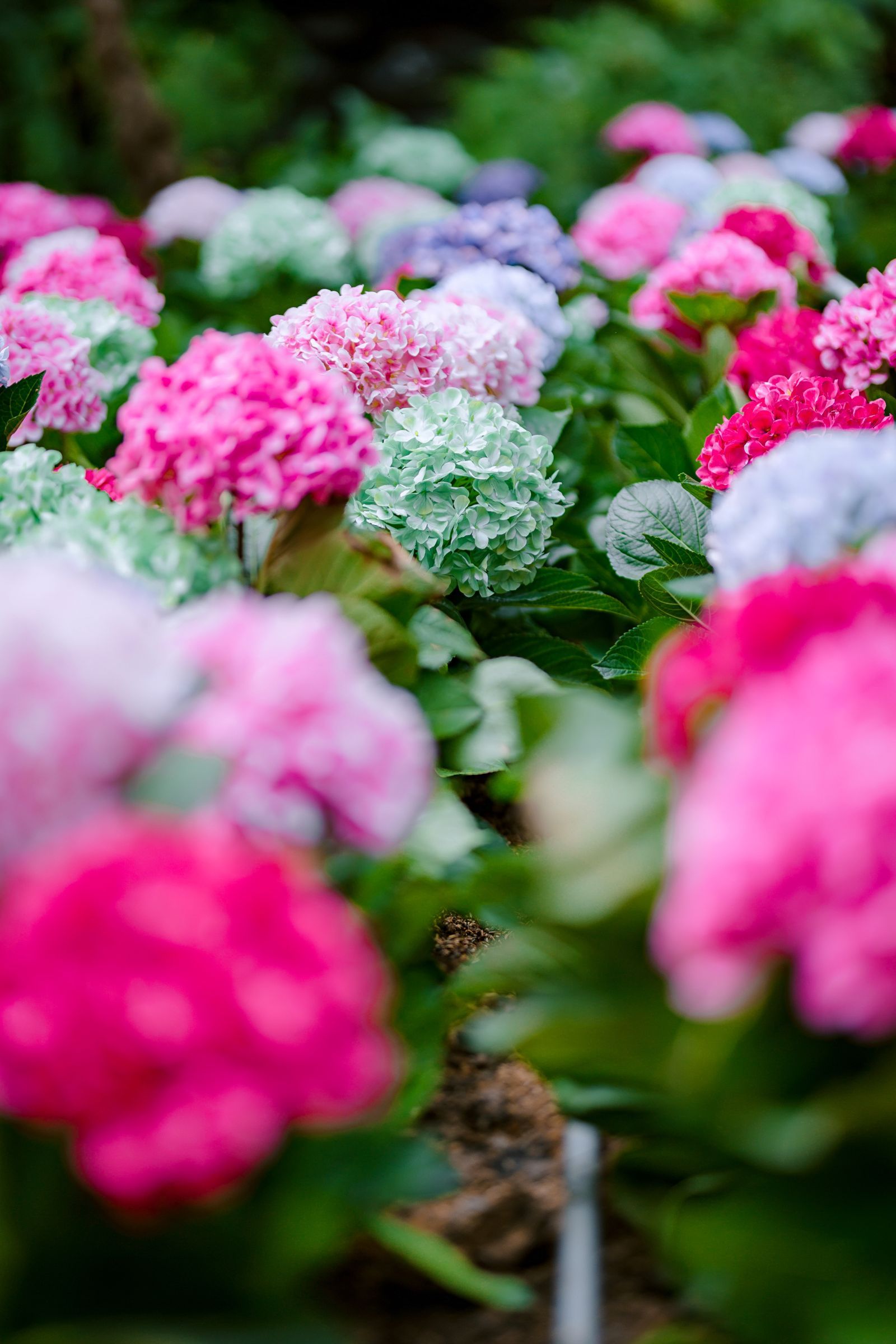
Photo: Nguyễn Tiến Thịnh / Pexels
Plant Spacing Planner: The Hydrangea Row
Hydrangea is in the crop list below at 48 inches, set from the NC State Extension mature width for bigleaf hydrangea. Enter your bed length, then read the dwarf, panicle, and hedge splits in this article.
8 tomato plants fit this bed
4 plants per row across 2 rows, on a 24 inch grid. Extension spacing for this crop: 24 in between plants, 48 in between rows.
The grid uses the in-row spacing in both directions, the standard square foot layout for raised beds. In open ground, keep the wider row spacing in the note above so you can walk and weed between rows.
Spacing figures: University of Georgia Cooperative Extension, Circular 963, Vegetable Planting Chart, source.
The Species Table: The Only Honest Way to Space a Hydrangea
| Hydrangea type | Mature width | Space at | Notes |
|---|---|---|---|
| Bigleaf (macrophylla), standard mophead and lacecap | 4 to 6 feet | 4 to 5 feet | NC State lists the species at 3 to 6 feet wide |
| Bigleaf, dwarf and reblooming minis | 2 to 3 feet | 2.5 to 3 feet | The only hydrangeas that belong at 3 feet |
| Smooth hydrangea (arborescens, Annabelle type) | 3 to 5 feet | 3 to 4 feet | Spreads by suckers beyond the planted width |
| Oakleaf (quercifolia) | 6 to 8 feet | 5 to 7 feet | A large shrub; dwarfs run 3 to 4 feet |
| Panicle (paniculata) | 6 to 10 feet | 6 to 8 feet, more for tree form | Limelight class plants are small trees |
| Climbing hydrangea | A wall, not a width | One plant per 15 to 20 feet of wall | Spacing is measured along the surface |
The planner above carries hydrangea at 48 inches, the standard bigleaf bench, and it is the right default for the most commonly planted type. It is the wrong number, sometimes by a factor of two, for everything else in the table, which is why the first move with any hydrangea spacing question is never the tape. It is the tag, and where the tag is lost, the leaf and flower: oakleaf is unmistakable by its foliage, panicle by its cone shaped flower heads and woody frame, smooth hydrangea by its soft stems that often need cutting back, and bigleaf by the classic mophead or lacecap on a rounded shrub.
Hedges, Foundations, and the Air Question
A hydrangea hedge is planted at about three quarters of the specimen spacing, 3 to 4 feet for standard bigleaf, so the plants meet and knit in three to four seasons without being forced into each other's centers. Planting a hedge at half spacing to get the closed look in year one buys exactly the problem this genus is prone to: hydrangeas, bigleaf above all, suffer powdery mildew and leaf spot in still damp air, and a hedge planted tight is a hedge whose interior never dries. The foundation planting version of the same error is the shrub set a foot from the wall under the eave, where it gets neither rain nor air, and grows out toward the light in a lopsided wedge while its back half mildews. Set foundation hydrangeas so the mature canopy clears the wall by a foot or more, which usually means the plant's center sits 3 feet from the siding, and let the eave's rain shadow be handled by the watering can rather than by crowding the plant into the weather.
The Half Day Rule and Micro Siting
Spacing in a hydrangea bed is partly a negotiation with sun. Bigleaf and oakleaf hydrangeas want morning sun and afternoon shade in hot climates, full sun in cool ones, and their placement relative to trees and each other decides who gets which. A bigleaf planted at correct spacing on the east side of an oakleaf will be shaded by the larger shrub by midsummer afternoon, which in Georgia is a kindness and in Minnesota is a theft. Read spacing together with the sun's path: the taller types, panicle and oakleaf, go on the north and west sides of the bed where their mature height shades nothing smaller at the wrong hour, and the dwarfs go to the front south edge where nothing will ever be planted in front of them. Panicle hydrangea is the exception that takes the most sun of the genus and the most room, and it earns both: given 8 feet and full sun it becomes the August centerpiece of the whole garden, and given 4 feet and shade it becomes a leggy disappointment leaning over its neighbors.
When the Plants Are Already Too Close
The rescue ladder for a hydrangea bed planted tight, in order: first, prune for air, removing the oldest stems at the base of the most crowded plants in late winter, which opens the interior and postpones the reckoning by years; bigleaf owners must prune with the wood rule in mind, since the standard types bloom on old wood and a hard late winter pruning costs a summer of flowers, so the air pruning on bigleaf is thinning, never shearing. Second, move the youngest or smallest plant in the collision, in early spring before leaf out, with the largest root ball you can lift; hydrangeas move well when dormant and watered in faithfully for their first season at the new spacing. Third, accept the hedge: if two standard bigleaf shrubs are growing together and both are healthy and flowering, the honest option is often to prune them as one mass, keep the interior thinned, and stop apologizing for a planting that has become a hedge by accident. What fails is the annual shear, which produces a dense green shell over a dead, mildewed interior, the worst version of every option.
Containers and the Small Garden Answer
Where the garden cannot give a hydrangea its width, the dwarf types and the pot are the honest answers, and both are real gardening rather than compromise. The reblooming dwarf bigleaf series finish at 2 to 3 feet and hold that size in a bed or a 16 to 18 inch pot, one plant per pot, which makes them the only hydrangeas that belong on a small patio or in a tight foundation bed. A standard type in a pot is a young plant on its way somewhere, not a solution, because the pot defers the width question by two seasons and then asks it again with a root bound plant attached. Choose the plant whose mature width fits the ground you actually have, and the spacing question answers itself; choose the flower you fell for and measure later, and you will be reading the rescue section of this page in five years, holding a spade.
Measuring From the Right Point, and the Young Plant Illusion
Two measuring habits prevent most spacing errors before they happen. The first is to measure plant to plant from center to center, never from edge to edge: a spacing of 4 feet means the stems stand 4 feet apart, and the canopies of two young plants will look absurdly distant on planting day, which is the correct look, because the second habit is to judge the spacing at the plant's five year size, not its nursery size. A hydrangea in a 3 gallon pot is a foot wide and asking to be planted a foot from its neighbor; the same plant in five years is 5 feet wide and asking where its neighbor went. Experienced planters lay the spacing out with stakes and a tape and then stand back and imagine the mature shrubs as solid masses, because the imagination is the only tool that shows the future bed. Where the imagination fails, the species table at the top of this page is the corrective, and it is kinder to trust the table than to develop the imagination at the price of a crowded bed and a spring spent moving shrubs.
The young plant illusion has a productive use, though: the empty ground between young hydrangeas is real ground for the first two or three seasons, and it can be worked. Annuals and short lived fillers planted between young shrubs give the bed a finished look while the shrubs grow, provided the fillers are genuinely temporary and are removed the moment the shrubs ask for the room. The failure version is the permanent underplanting, the hosta ring or the daylily clump that establishes itself as the shrubs close, and then competes with them at the root for the rest of the bed's life. Fill the young bed with what you are willing to compost in year three, and the spacing you set today survives its own success.
Related guides
Guides in the same spacing family:
- Plant Spacing for Hibiscus: Which Hibiscus, How Much Room
- Plant Spacing for Dahlias: Spacing by Size Class, With Stakes at Planting
- Rosemary Plant Spacing: Set It by Mature Width
- How to Care for a Hydrangea Plant in a Pot
- Emerald Green Arborvitae Spacing: 3 to 4 Feet for a Hedge That Fills In
Frequently Asked Questions
How far apart should hydrangeas be planted?
By type, because the genus spans 3 to 10 feet of mature width. Standard bigleaf hydrangeas go at 4 to 5 feet, dwarfs at 2.5 to 3 feet, smooth hydrangeas at 3 to 4 feet, oakleaf at 5 to 7 feet, and panicle hydrangeas at 6 to 8 feet or more. The planner's 48 inches is the standard bigleaf bench from the NC State profile range. Identify the type first; the number follows.
Can I plant hydrangeas 3 feet apart?
Only the dwarf bigleaf types, which mature at 2 to 3 feet wide, are correctly planted at 3 feet. A standard mophead at 3 feet will meet its neighbor in a few seasons and begin the mildew and crowding problems of a tight bed. If the tag does not say dwarf, assume the plant wants 4 feet at the least, and give oakleaf and panicle types considerably more.
How close to a house can I plant a hydrangea?
Set the plant so its mature canopy clears the wall by a foot or more, which for a standard bigleaf means the center of the plant about 3 feet from the siding. A shrub jammed against the wall under the eave gets neither rain nor moving air, grows lopsided toward the light, and mildews on its sheltered side. The watering can handles the eave's rain shadow; the spacing handles the air.
My hydrangeas are crowded. Should I move one?
If one plant is clearly younger or smaller, moving it in early spring before leaf out, with a large root ball and a faithful first season of watering, is the clean fix. If both are established and flowering, first try thinning the oldest stems at the base to open the interior, and consider simply managing the pair as a hedge mass. Avoid the annual shear, which seals a dense shell over a dead interior.
Which hydrangea is best for a small garden?
A dwarf reblooming bigleaf, at 2 to 3 feet mature width, planted at 2.5 to 3 feet or alone in a 16 to 18 inch pot. It is the only class of hydrangea whose finished size honestly fits small ground. A standard type in a pot is only a postponement; the width question returns in two seasons with a root bound plant attached.
Photo credits: Nguyễn Tiến Thịnh (Pexels); Magda Ehlers (Pexels). Photos are served from this site; follow the credit to the library page for the original.