Spacing a hibiscus starts with a question the watering page on this site also has to ask: which hibiscus? The genus sells a tropical pot plant, Hibiscus rosa-sinensis, that comes indoors for winter in most of the country, and a hardy perennial, Hibiscus moscheutos, that dies to the ground and returns each summer with dinner plate flowers. They share a name and a flower shape and almost nothing about size or siting. Tropical hibiscus in the ground in frost free climates, or in its summer pot, spaces at 2 to 3 feet. Hardy hibiscus, the bigger and wider plant, spaces at 3 to 5 feet. Use bends both numbers: planted as a hedge, either type pulls in to 2 to 3 feet for a continuous wall; planted as a specimen, a hardy plant earns 5 to 6 feet so its full dome can form. NC State's entry for the hardy species puts it at 2 to 6 feet tall and 2 to 5 feet wide, and the spacing bench is simply that width plus working air. The hibiscus watering guide covers the two plants' very different thirst; this page is their room.
Plant Spacing for Hibiscus: Which Hibiscus, How Much Room
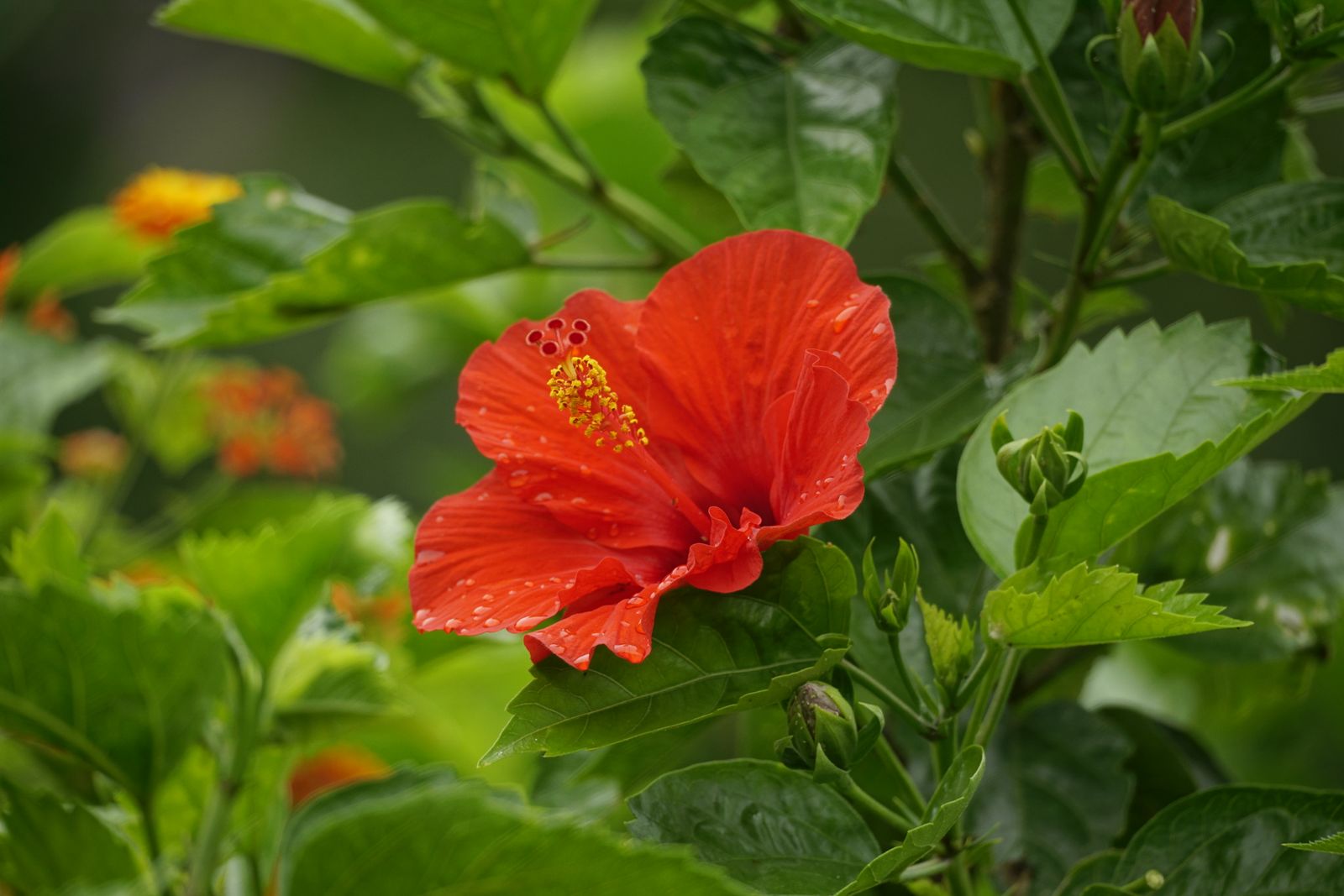
Photo: Duy Le Duc / Pexels
Plant Spacing Planner: The Hibiscus Row
Hardy hibiscus is in the crop list below at 48 inches, set from the NC State Extension mature width of 2 to 5 feet. Enter your bed length, then read the tropical, hedge, and specimen benches in this article.
8 tomato plants fit this bed
4 plants per row across 2 rows, on a 24 inch grid. Extension spacing for this crop: 24 in between plants, 48 in between rows.
The grid uses the in-row spacing in both directions, the standard square foot layout for raised beds. In open ground, keep the wider row spacing in the note above so you can walk and weed between rows.
Spacing figures: University of Georgia Cooperative Extension, Circular 963, Vegetable Planting Chart, source.
Spacing by Type and Use
Hardy hibiscus is the spacing trap, because it spends half the year invisible. A gardener plants the bare crown or the small spring pot at what looks like generous spacing, and by August a 5 foot dome of foliage and 10 inch flowers is shouldering into its neighbors. Trust the mature width, 2 to 5 feet, and give the common large cultivars 4 to 5 feet of center to center room in a border, 3 feet only for the compact selections bred down for small gardens. Tropical hibiscus grows as a rounded shrub 4 to 8 feet tall in the ground where it is hardy, and 2 to 3 feet of spacing gives a full but separate shrub; in pots, spacing is pot edge to pot edge on the patio, and the plant's thirst, not its width, is the management problem. Rose of Sharon, the third hibiscus relative in gardens, is an upright shrub or small tree and spaces like one, 6 feet or more, with its own care covered on its rose of Sharon page.
| Plant and use | Spacing | Mature size | Notes |
|---|---|---|---|
| Hardy hibiscus, border | 4 to 5 feet | 2 to 6 ft tall, 2 to 5 ft wide | Compact types at 3 feet |
| Hardy hibiscus, hedge | 3 feet | Continuous screen by year two | Late to leaf out in spring |
| Tropical hibiscus, in ground | 2 to 3 feet | 4 to 8 ft shrub | Frost free climates only |
| Tropical hibiscus, hedge | 2 to 3 feet | Dense flowering wall | Shear lightly after flushes |
| Specimen, either type | 5 to 6 feet | Full natural dome | Room to walk and view around |
| In pots | Pot's own footprint | Sized by the pot | One plant per pot, always |
The Invisible Plant Problem
Hardy hibiscus is famously the last perennial to emerge, often showing nothing until late spring when the soil is properly warm, weeks after its border neighbors are in full leaf. Every year, gardeners plant annuals into the apparently empty space, dig into the sleeping crown while weeding, or worse, dig the plant up as dead. Spacing discipline for hardy hibiscus therefore includes marking: a label or a ring of stones at the crown, and a plan that treats the full mature circle as occupied from planting day, even while it looks vacant. The summer payoff justifies the faith: no other hardy perennial produces flowers of that size, up to 10 or 12 inches across on the dinner plate types, and a plant given its 4 to 5 feet becomes the August centerpiece of the border. Companions planted at its feet should be spring performers, bulbs and early perennials that finish before the hibiscus canopy closes over them.
Sun, Soil, and the Wet Footnote
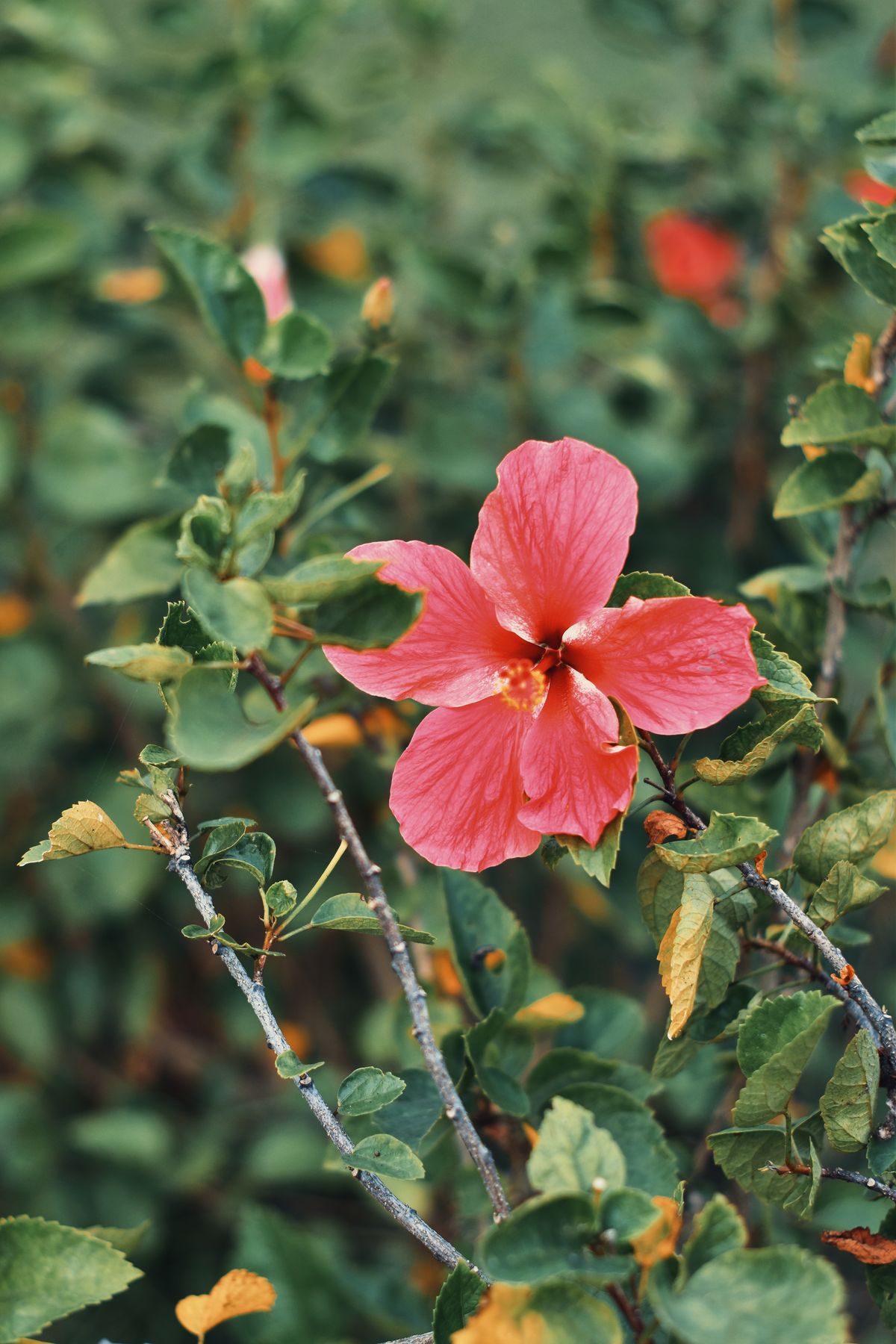
Spacing interacts with siting for this genus. NC State lists the hardy species for wet to moist soils and full sun, which it needs for best bloom and for the disease resistance that keeps its foliage clean. A hardy hibiscus in a damp low spot can be spaced at the tight end of its bench, because the plant stays lush and upright; the same plant in dry soil grows smaller, and gardeners sometimes crowd it to compensate, which works visually for a season and then fails as the plants reach for their real size in a wet year. Full sun is not negotiable for flower count: a spaced correctly plant in half shade gives you green dome and a rumor of bloom. Tropical hibiscus wants the same sun and a richer, evenly moist soil, and in the ground it appreciates the wide end of its spacing where summers are humid, for the same airflow reasons that govern the whole site's spacing advice.
Hedges and Screens
A hibiscus hedge is a summer screen, and choosing it means accepting its calendar. Hardy hibiscus at 3 feet makes a 5 foot flowering wall from July to frost and a row of bare crowns from November to May; against a pool fence or a summer patio that trade is excellent, and against a front property line it is a hedge that vanishes for half the year. Tropical hibiscus hedges in frost free climates keep their leaves and flower nearly year round, spaced at 2 to 3 feet and sheared lightly after each flush rather than hard pruned once, which would remove the wood the next flush blooms on. Either way, plant a hedge row straight and at one spacing, because a mixed rhythm of gaps shows in a hedge more than anywhere else in the garden, and fill a failed plant with the same cultivar, since a substitute's different height and flower will read as a missing tooth all summer.
When the Spacing Fails
A hardy hibiscus that has outgrown its room announces it by shading out its neighbors and by a bare, leggy center as the dome's interior loses light. The plant is too big to move casually, but it divides well in spring just as growth starts: lift the clump, cut it into sections with a spade or saw, and replant at full spacing, which converts one overcrowded plant into next year's correctly spaced pair. Tropical hibiscus outgrowing a pot is the easier fix, a size up at repotting time, and a plant outgrowing its ground space in a warm climate takes hard pruning in early spring, removing up to a third of the oldest wood, better than it takes moving. The lesson the genus teaches is the site's spacing lesson in general: the number on planting day is a promise about the plant at maturity, and hibiscus, invisible half the year and enormous the other half, tests whether you believed it.
Plant Counts for Common Runs
Spacing becomes a shopping list with a little arithmetic, and hibiscus's wide benches make the arithmetic forgiving. For a hedge or border row, divide the run's length in feet by the spacing in feet and add one plant for the end: a 20 foot hardy hedge at 3 feet takes 7 plants plus the end plant, 8 in total; the same run as a border at 4 feet takes 6. For a massed group, the plant's mature circle is the unit: a hardy hibiscus at full size covers roughly 12 to 20 square feet of bed, so a 60 square foot August bed is a three plant composition, not the six that fit there as spring pots, and the space between them belongs to the spring performers and the ground level companions that finish before the canopy closes. Tropical hibiscus bought as a summer patio plant follows the pot rule from the table, one per container, and a row of matching pots reads as a hedge at whatever spacing the patio sets, 2 to 3 feet between pot centers being the range where the canopies meet without merging. Gardeners dividing an established hardy clump in spring, per the failure section above, should count the divisions against these same numbers: a big clump typically yields three to five plantable sections, which at border spacing is 12 to 25 feet of new border, a fact worth knowing before the spade comes out, since divisions nobody has room for are just a slower kind of compost.
Related guides
The closest companions to this guide:
- Brussels Sprouts Plant Spacing: Room for a Two Foot Plant With a Fall Job
- Collard Greens Plant Spacing: Room for the Leaf by Leaf Harvest
- Hydrangea Plant Spacing: By Species and Mature Width
Frequently Asked Questions
How far apart should I plant hibiscus?
Tropical hibiscus at 2 to 3 feet, hardy hibiscus at 3 to 5 feet, with 4 to 5 feet for the large hardy cultivars in a border. As a hedge either type goes at 2 to 3 feet; as a specimen, give a hardy plant 5 to 6 feet. NC State sizes the hardy species at 2 to 5 feet wide, and the spacing follows the width.
How wide does hardy hibiscus get?
Two to five feet wide and 2 to 6 feet tall, depending on cultivar, per NC State's species entry. The dinner plate flowered types sit at the large end. The trap is that the plant is invisible until late spring, so its circle looks empty when you are tempted to plant into it.
Can I plant hibiscus closer for a hedge?
Yes, that is the one deliberate exception: 2 to 3 feet for tropical and about 3 feet for hardy gives a continuous flowering screen by the second summer. Remember a hardy hedge is bare from late fall to late spring, so site it where a summer only screen serves.
Why is my hibiscus not up yet in spring?
Because it is a hardy hibiscus, most likely, and late emergence is its normal habit, often not until the soil warms in late spring. Scratch at the crown for firm, living tissue before concluding anything, mark the spot, and do not dig in its circle while you wait.
Can two hibiscus share a large pot?
No. One plant per pot, always. Both types are vigorous, thirsty in pots, and quick to tangle roots into a single stressed unit that neither waters nor feeds evenly. A large pot suits one hibiscus beautifully; a pair in it will fight all summer.
Photo credits: Duy Le Duc (Pexels); Tarikul Raana (Pexels). Photos are served from this site; follow the credit to the library page for the original.