Rose of Sharon is the midsummer workhorse of the shrub border, a Hibiscus syriacus that waits until the garden's June glory is spent and then opens fresh flowers every morning from July into September. It is also a shrub with three traps built into its nature, and most of the questions it generates come from owners who have met one of them. The first trap is its late spring start, the latest of any common shrub, which convinces gardeners their plant died over winter. The second is its seeding: a fertile rose of Sharon sows itself into every mulch bed and pavement crack in reach, and the gardener who does not know this meets the care task of the plant a hundred seedlings at a time. The third is size: sold small in a gallon pot, it finishes 8 to 12 feet tall and nearly as wide, a small tree wearing a shrub's label. The checklist tracker on this page sequences the year's care; the sections below take the traps in order, then the routine. One pleasant fact belongs up front, because it decides plantings near animals: the ASPCA lists Hibiscus syriacus as non toxic to dogs, cats, and horses, a welcome exception in a genus family where the tropical hibiscus carries cautions.
Home / Flowers and Houseplants
How to Care for Rose of Sharon: The Late, Patient Shrub
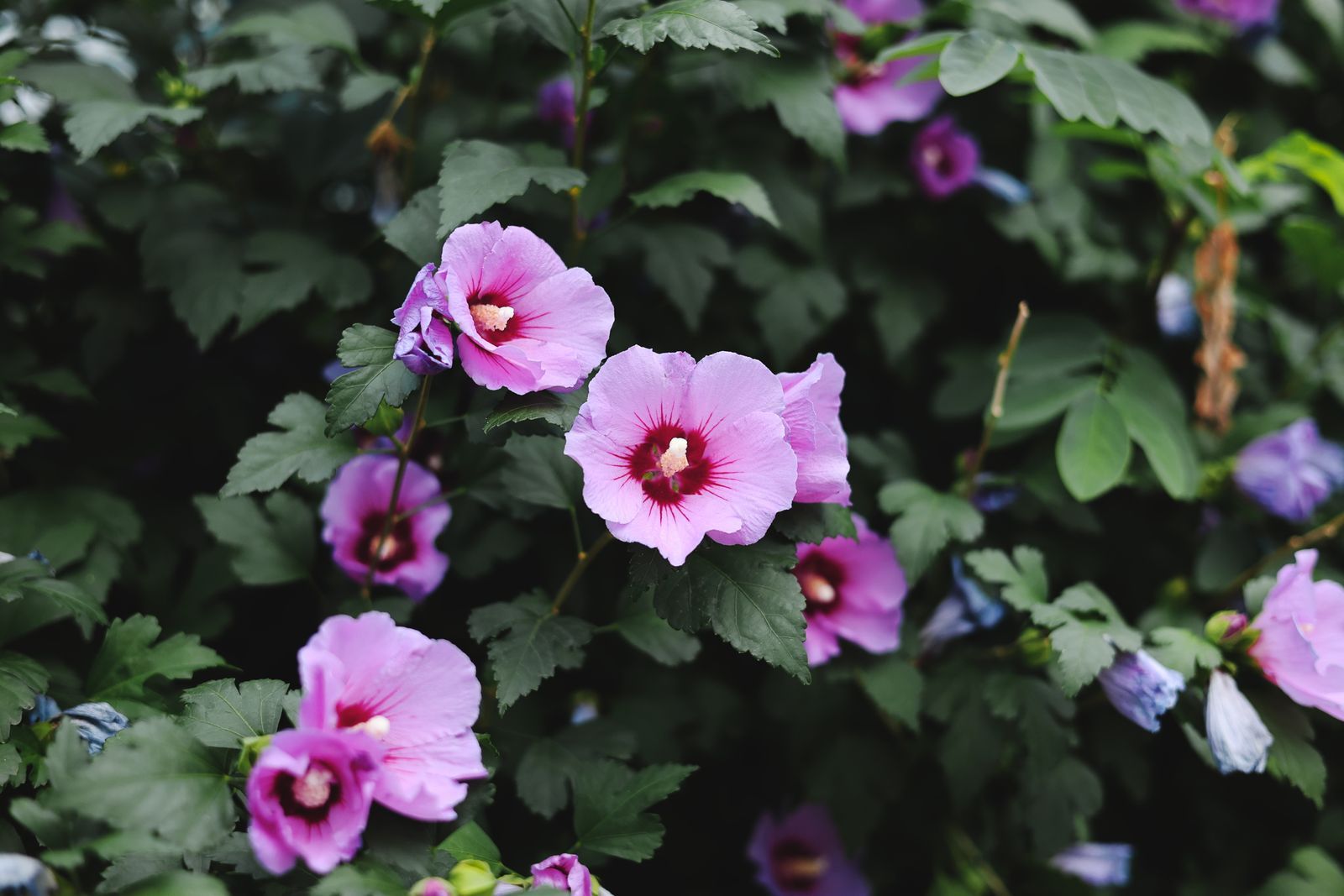
Photo: Ivan Georgiev / Pexels
Rose of Sharon Care Checklist
Check off each step as you finish it. Your progress stays on this page.
0 of 8 complete
0% done
The Late Leaf Out: Do Not Dig Up a Sleeping Shrub
Rose of Sharon breaks dormancy later than almost any plant in the border, routinely showing no green until late spring, weeks after the lilacs and spireas are in full leaf, and in a cold spring it can sit bare into the edge of summer. Every year, healthy plants are dug up and composted in April by owners who reasonably concluded they were dead. The tests take thirty seconds. Scratch a thumbnail along a young stem: green and moist under the bark means alive, whatever the calendar says. Bend a thin twig: a living one flexes, a dead one snaps. Then wait. The plant's late start is not a flaw to correct but a trait to schedule around; it leafs late partly because it comes from a warm summer lineage, and the same trait means it is never caught by the late frosts that burn early starters. Mark the plant's position in fall if you garden among the impatient, and judge it by the scratch test, not by its neighbors. Once growth starts it is fast, and a plant that showed nothing in mid May can be in full leaf by mid June and budding by July, flowering on the new wood it just made, which is the subject of the next section.
Pruning: New Wood, Late Winter, Real Forgiveness
Rose of Sharon blooms on the current season's growth, and that single fact organizes its pruning completely. Cut it in late winter or early spring, before growth starts, and every cut stem answers with new wood that flowers the same summer; there is no old wood bud bank to protect and no wrong month catastrophe of the kind that haunts the mophead hydrangeas. The routine cut removes dead, crossing, and weak wood, thins the center for air, and can take the plant back by a third to shape it. The size of the flowers answers to the severity of the cut in a reliable trade: prune hard, to a few strong buds per stem, and the plant produces fewer, dramatically larger blooms; prune lightly and it carries a cloud of smaller ones. It also trains willingly into a small single trunked tree, a common street and patio form, by selecting one stem and clearing the lower branches over several springs. The one cut to avoid is the late summer shearing that removes the wood currently flowering and seeds a thicket of weak regrowth at the shear line; shaping is winter's job. Compare the sister plant on this site: the Limelight hydrangea page runs the same new wood, late winter logic for the other great midsummer bloomer, and the two share a pruning day well.
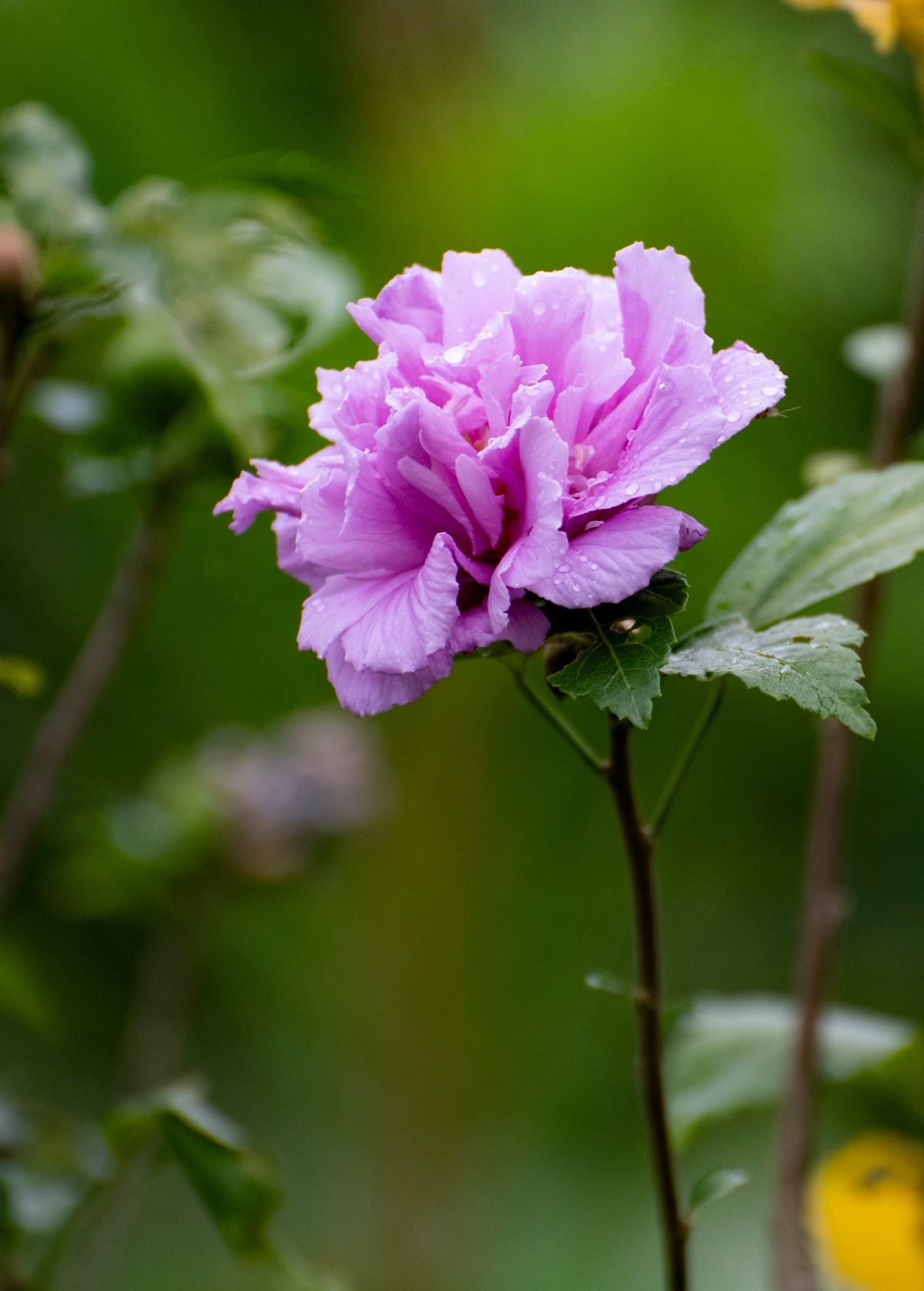
The Seeding Problem: Deadheads, Sterile Cultivars, and the Hoe
A fertile rose of Sharon in a mulched bed is a plant running a nursery. Each flower can set a capsule of seed, the seed falls and overwinters, and the following springs bring up seedlings by the dozen in the shrub's own shade and every bed downhill of it. The seedlings are easy to pull when small and genuinely troublesome at a foot tall, with a taproot that resists. Three levels of defense exist, and honest care names all of them. The lightest is the hoe and the mulch: a thick mulch layer suppresses most germination, and a monthly pass pulling seedlings at 2 inches keeps a planting clean with minutes of work. The middle defense is deadheading, removing spent flowers before capsules ripen, effective but tedious on a 10 foot shrub in full bloom. The structural defense is the cultivar: modern sterile and near sterile selections, bred and triploid forms sold under names like the Chiffon, Satin, and Lil' Kim series and their kin, set little or no viable seed and end the problem at the nursery. A gardener planting new today, anywhere near beds they value, should buy the sterile genetics and consider the question closed; a gardener inheriting a fertile plant should budget the monthly pulling pass as part of the plant's care, the way one budgets deadheading for a rose.
Siting and Spacing: Zones 5 to 9, Feet Not Inches
Rose of Sharon grows in USDA zones 5 to 9, in full sun for the real flower show, tolerating light afternoon shade in the hottest zones at the cost of fewer blooms. It is famously adaptable to soil, taking clay, sand, urban pollution, and roadside conditions that defeat choosier shrubs, asking only that the ground not stay waterlogged. The spacing figure that matters is 6 to 10 feet from its neighbors and from the house, because the mature plant is 8 to 12 feet tall and spreads 6 to 10 feet wide, and a row of them planted as a flowering hedge wants centers at the tight end of that range, about 6 feet, so the canopies merge without crushing. Planted at foundation spacing of 3 feet, a rose of Sharon becomes a decade of corrective pruning, and the plant always wins on points. Water deeply through the first season, about an inch a week in dry weather, then leave it alone: established plants are notably drought tolerant, though a deep drink in a dry blooming season keeps the flower size up and reduces the bud drop that drought stressed plants show in August. Feed lightly or not at all; a spring compost dressing is the whole menu for most soils, and nitrogen pushed at this shrub buys leaves at the price of the late summer show it was planted for.
Pests, Bud Drop, and the Non Toxic Note
The shrub's pest list is short and mostly cosmetic. Aphids crowd the growing tips and flower buds in early summer, excreting the honeydew that blackens leaves with sooty mold; a strong hose blast every few days breaks the colony, and the lady beetles usually finish it. Japanese beetles chew the flowers in their season in the eastern states, a hand picking and drop into soapy water problem rather than a spraying one. Bud drop in a dry August is the plant rationing: buds are expensive, and a drought stressed shrub sheds a share of them, which the deep watering above prevents in most years. The disease list in most gardens is nearly empty, leaf spots in wet years that defoliate a few lower branches and change nothing about the plant's future. The pet and livestock note bears repeating in full, because it is unusual: the ASPCA lists rose of Sharon, Hibiscus syriacus, as non toxic to dogs, cats, and horses, which makes it one of the safer large flowering shrubs for yards where animals graze and chew, a distinction it does not share with every relative in the mallow family, and one worth verifying plant by plant when a planting is chosen for a pet run or a paddock fence. The hibiscus watering page on this site covers its tropical and hardy cousins, including the toxicity cautions that apply to them and not to this shrub.
Related guides
These related guides round out the picture:
- How to Care for a Rosemary Plant: The Established Shrub Calendar
- How to Care for Mini Roses: Rescuing the Gift Plant
Frequently Asked Questions
Why has my rose of Sharon not leafed out in spring?
Because it is rose of Sharon. It is the latest common shrub to break dormancy, often showing nothing until late spring. Scratch a young stem for green, moist tissue under the bark, and bend a thin twig to check that it flexes rather than snaps. If both tests pass, the plant is alive and simply on its own schedule; do not dig it up.
When should rose of Sharon be pruned?
In late winter or early spring, before growth starts. It blooms on new wood, so spring pruning costs no flowers. Remove dead, crossing, and weak wood, thin the center, and cut back by up to a third for shape. Harder pruning produces fewer, larger flowers; lighter pruning produces more, smaller ones.
How do I stop rose of Sharon from spreading everywhere?
The spread is seedlings, not suckers. Mulch thickly to suppress germination, pull seedlings monthly at 2 inches tall before their taproots set, and deadhead if you can reach. For new plantings, choose a sterile modern cultivar, the Chiffon, Satin, or Lil' Kim type selections, which set little or no viable seed and end the problem permanently.
How big does rose of Sharon get, and how far apart should it be planted?
Eight to 12 feet tall and 6 to 10 feet wide at maturity, hardy in zones 5 to 9. Space plants 6 to 10 feet apart: about 6 feet for a merged flowering hedge, the wider end for specimens. It is routinely planted too close to foundations and becomes a lifelong pruning argument; the mature size on the tag is real.
Is rose of Sharon safe around dogs and horses?
Yes, on the ASPCA's listing: Hibiscus syriacus is non toxic to dogs, cats, and horses. That makes it one of the safer big flowering shrubs for pet yards and pasture fences. The caution that applies to some other hibiscus does not apply to this species, though any plant eaten in quantity can upset a stomach mechanically.
Photo credits: Ivan Georgiev (Pexels); Cuong Duy (Pexels). Photos are served from this site; follow the credit to the library page for the original.