There are three rosemary questions, and they belong to three different pages. How to get a plant started, from cuttings, seed, or a nursery pot, is the guide to growing rosemary. How much to water it is the rosemary watering bench, and the short version is: far less than you think. This page is the third question, the one that arrives in year two, when the plant is a woody shrub the size of a beach ball and the question is no longer survival but upkeep: how to prune it without killing the wood, how much you may harvest at once, when to feed (almost never), and whether it will live through your winter outdoors. Established rosemary is one of the lowest maintenance plants in the garden, and nearly every way to harm it comes from treating it like something needier: rich soil, regular fertilizer, hard pruning into old wood, and a watering can that visits too often.
Home / Flowers and Houseplants
How to Care for a Rosemary Plant: The Established Shrub Calendar
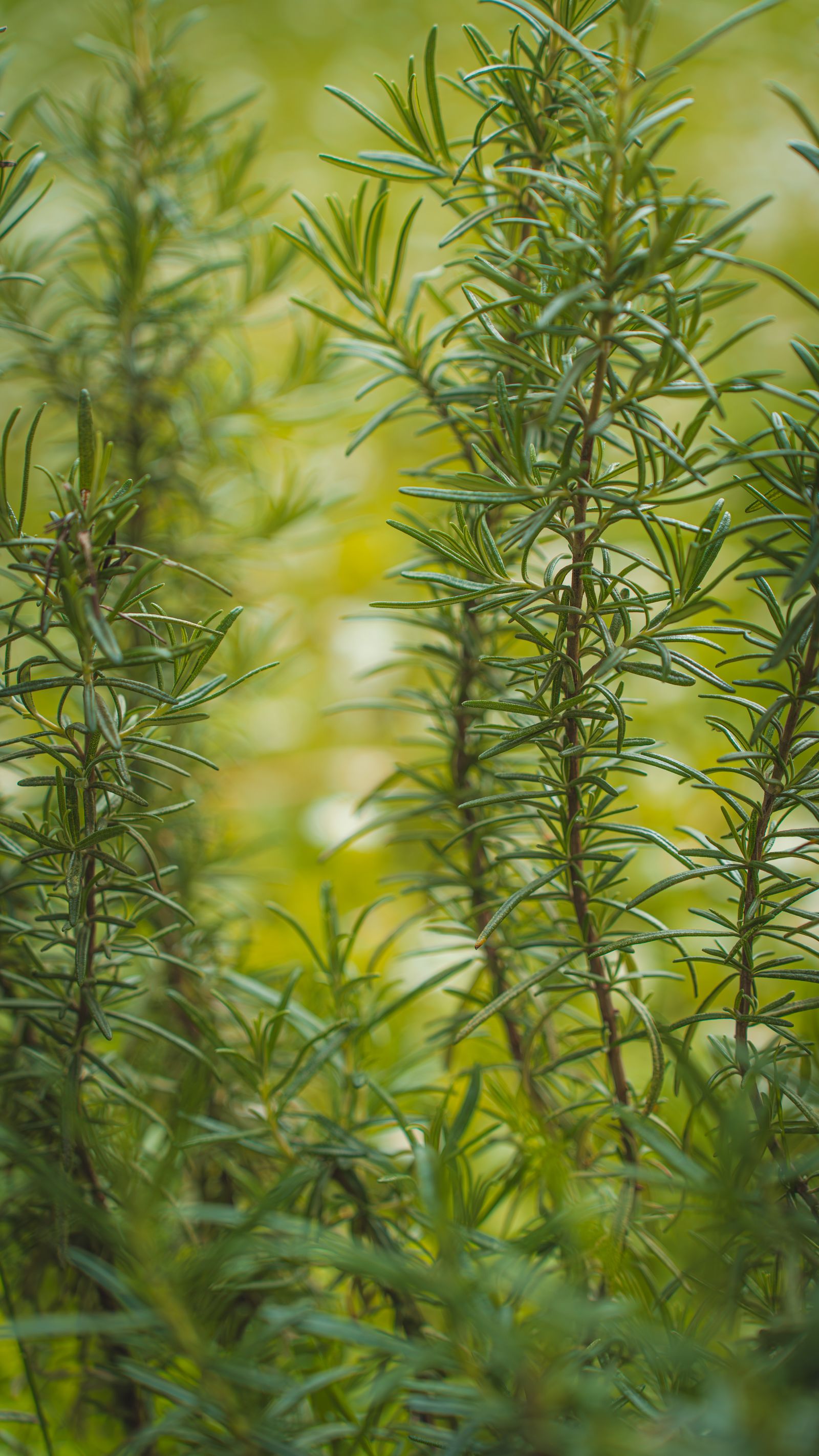
Photo: Christian Gazzabini / Pexels
Rosemary Plant Care Checklist
Check off each step as you finish it. Your progress stays on this page.
0 of 8 complete
0% done
Pruning: Green Wood Only
The one rule that governs rosemary pruning is absolute: never cut back into old, leafless wood and expect regrowth. Rosemary, like lavender, does not reliably break new shoots from bare brown stems; a branch cut behind its last green growth is usually a branch removed. So the calendar runs on light, frequent shaping instead of renovation. After the main spring flowering, shear or snip the plant lightly all over, taking the spent flower stems and an inch or two of green tip, which keeps the shrub dense and delays the legginess that tempts owners into the fatal hard cut. Through the season, harvest pruning, taking sprigs from around the plant evenly, is all the shaping a healthy shrub needs. If a plant has already gone leggy, the honest options are modest: shorten the green ends, accept the shape, and take cuttings for its replacement, because a woody, open rosemary rarely refills its center. Stop all pruning six to eight weeks before your first fall frost, so no tender regrowth meets the cold.
Harvest: The Flagged Limit
How much of the plant may you take at once? Extension sources give two numbers, and they are shown here side by side rather than averaged. University of Wisconsin guidance puts the safe harvest at about 20 percent of the plant at one time. A widely repeated nursery and grower figure allows up to a quarter of a branch's length per cutting session, a different unit that can amount to more or less than the Wisconsin figure depending on how you apply it. The safe practice that satisfies both is to work to the tighter reading: never take more than about a fifth of the plant's green growth in one session, spread the cuts around the whole shrub rather than stripping one side, and always cut to a point just above a leaf node on green wood, which is where the regrowth buds sit. A mature shrub in season can spare that fifth every few weeks without noticing; a young plant in its first year should give up only a few sprigs. Harvest in the morning after dew dries, when the oils that are the entire point of the herb run strongest.

Feeding and Soil: The Virtue of Neglect
Established rosemary wants almost no fertilizer, and overfeeding is an active harm: it pushes soft, sappy growth with diluted flavor and poor cold hardiness. In the ground, a plant in average soil needs nothing beyond an optional light spring application of a balanced fertilizer or a top dressing of compost if growth looks pale and thin, and pale growth more often traces to wet roots or low light than to hunger. In pots, where watering leaches the mix, a half strength liquid feed two or three times across the growing season is the ceiling, not the floor. The soil requirement never relaxes: sharp drainage is the plant's life insurance. A shrub that sits in wet winter soil dies of roots, not cold, in most of the borderline zone gardens where it is lost. If your soil is clay, the shrub belongs on a mound, in a raised bed, or in a pot, and the care calendar cannot substitute for that siting decision.
Winter Hardiness: The Flagged Zone Line
Whether rosemary overwinters outdoors is a cultivar question with a genuinely fuzzy border, and sources draw it a zone apart. Nebraska extension guidance places rosemary's outdoor survival at about zone 7, while Wisconsin guidance draws the line at zone 8, with both agreeing that the hardy named cultivars, 'Arp' and 'Madeline Hill' foremost, survive a zone colder than seedling or unnamed plants. The discrepancy is not an error to split: winter survival turns on drainage, snow cover, wind exposure, and the winter's actual lows, so a zone 7 garden with gravelly soil and a sheltered wall can carry 'Arp' for years while a zone 8 garden in wet clay loses plants every winter. The practical reading: in zone 8 and warmer, plant named hardy cultivars in drained soil and expect permanence. In zone 7, plant them against south facing masonry, mulch the root zone after the ground cools, and hold a cutting grown backup indoors. In zone 6 and colder, rosemary is a pot plant that winters inside, which is its own discipline and has its own page in the indoor rosemary care guide.
Pests, Diseases, and the Short List
An established rosemary in sun and drainage has a remarkably short problem list. Root rot from wet soil is the chief killer and shows as a plant wilting and greying while the soil is still wet; there is no cure past the early stage, only prevention and cuttings taken from any still healthy tips. Powdery mildew appears on stressed plants in humid, still air, the same microclimate logic as everywhere on this site, and answers to airflow and spacing rather than sprays. Spittlebugs leave their white foam in the branch forks in spring and are a cosmetic nuisance washed off with a hose. Aphids gather on soft new growth after heavy feeding, one more reason the fertilizer stays in the shed. A shrub that browns in patches after a hard winter has cold damage: wait until growth resumes in late spring, then prune out only the dead wood, cutting back to where green shows in the stem, because plants that look ruined in March often regrow from the base and lower branches once the soil warms.
Rosemary as a Hedge and Landscape Shrub
In the climates where it is fully hardy, rosemary graduates from herb to structure, and the care calendar scales with it. A rosemary hedge, the upright varieties planted at 18 to 24 inches in a row, is sheared once after spring flowering and tipped lightly again in midsummer, always staying in green wood, and it holds a fragrant, evergreen, drought proof line that asks for no water once established and no feeding ever. The hedge's failure mode is the same as the single shrub's, magnified: one hard renovation cut into the bare interior wood leaves a permanent hole in the line, so hedge owners prune on the little and often rule with real discipline. In the landscape, rosemary's companions should be its fellow Mediterraneans, lavender, sage, thyme, and the silver leaved plants that share its drainage and drought expectations, because a rosemary planted in a thirsty perennial border gets watered on the border's schedule and rots in the kindness, the same mismatch the watering guide warns about indoors and out. On a slope, a mass of rosemary is genuine erosion infrastructure, its roots knitting dry banks where little else establishes, planted at 2 feet and left alone. The herb garden plant and the landscape shrub are the same organism at different scales, and the calendar on this page, green wood pruning, modest harvest, near zero feeding, drainage above all, serves both without amendment.
Related guides
More from the same bed, bench, and border:
- How to Care for Rose of Sharon: The Late, Patient Shrub
- How to Care for Dahlias: The In Season Calendar From Sprouts to Storage
- How to Plant Tulips: Planting Day, Done in the Right Order
Frequently Asked Questions
How do you care for an established rosemary plant?
Keep it in full sun and sharp drainage, prune lightly and often rather than hard and rarely, harvest modestly and evenly, feed almost nothing, and water sparingly per the rosemary watering bench. The established shrub's calendar is mostly restraint: nearly every harm comes from rich soil, heavy feeding, or cutting into old wood.
Can I cut rosemary back hard to reshape it?
No, not into the bare wood. Rosemary does not reliably regrow from leafless brown stems, so a hard renovation cut usually removes those branches permanently. Shape by tipping green growth after spring flowering and by harvest pruning. A leggy plant is best replaced from cuttings while the old plant finishes its service.
How much rosemary can I harvest at once?
Work to about a fifth of the plant's green growth per session. Wisconsin extension guidance gives roughly 20 percent at one time; a common grower figure of a quarter of a branch's length also circulates, and the tighter reading satisfies both. Spread cuts around the shrub and cut just above a node on green wood.
Will rosemary survive winter in my garden?
It depends on cultivar, drainage, and zone, and sources draw the line a zone apart, about zone 7 in Nebraska guidance and zone 8 in Wisconsin's, with 'Arp' and 'Madeline Hill' the hardiest named forms. Wet soil kills more borderline plants than cold does. Zone 6 and colder should winter rosemary in pots indoors.
Why is my rosemary turning brown in patches?
After winter, patchy browning is usually cold damage; wait for late spring growth before pruning out dead wood. Browning on a plant in wet soil, with wilting despite moisture, points to root rot instead. The soil test separates them: cold damaged plants sit in drained soil and regrow from the base; rotted plants sit wet and do not.
Photo credits: Christian Gazzabini (Pexels); Rafael Rodrigues (Pexels). Photos are served from this site; follow the credit to the library page for the original.