The hibiscus question has a fork in it that most answers never mention. One hibiscus is the tropical flower of hotel courtyards, Hibiscus rosa-sinensis, grown in pots across most of the country and overwintered indoors, thirsty, fast growing, and dramatic when dry. The other is the hardy hibiscus, Hibiscus moscheutos, a perennial that dies to the ground in winter, returns late in spring, and descends from plants of swamps and riverbanks, which tells you most of what you need about its thirst. A third relative, rose of Sharon, shares the genus and has its own care page on this site. Water the tropical like the hardy and it wilts daily; water the hardy like the tropical and it sulks in wet soil it tolerates but does not need. The benches are simple once the fork is named. Tropical: water when the top 1 to 2 inches of mix dry, thoroughly, and expect that to mean every 1 to 2 days in a pot in peak summer. Hardy: about an inch a week in the ground in dry weather, with far more patience between drinks. Bud drop, the complaint that brings most hibiscus owners to a search engine, sits downstream of both.
Home / Gardening Basics for Beginners
How Often to Water Hibiscus: Two Plants Share the Name
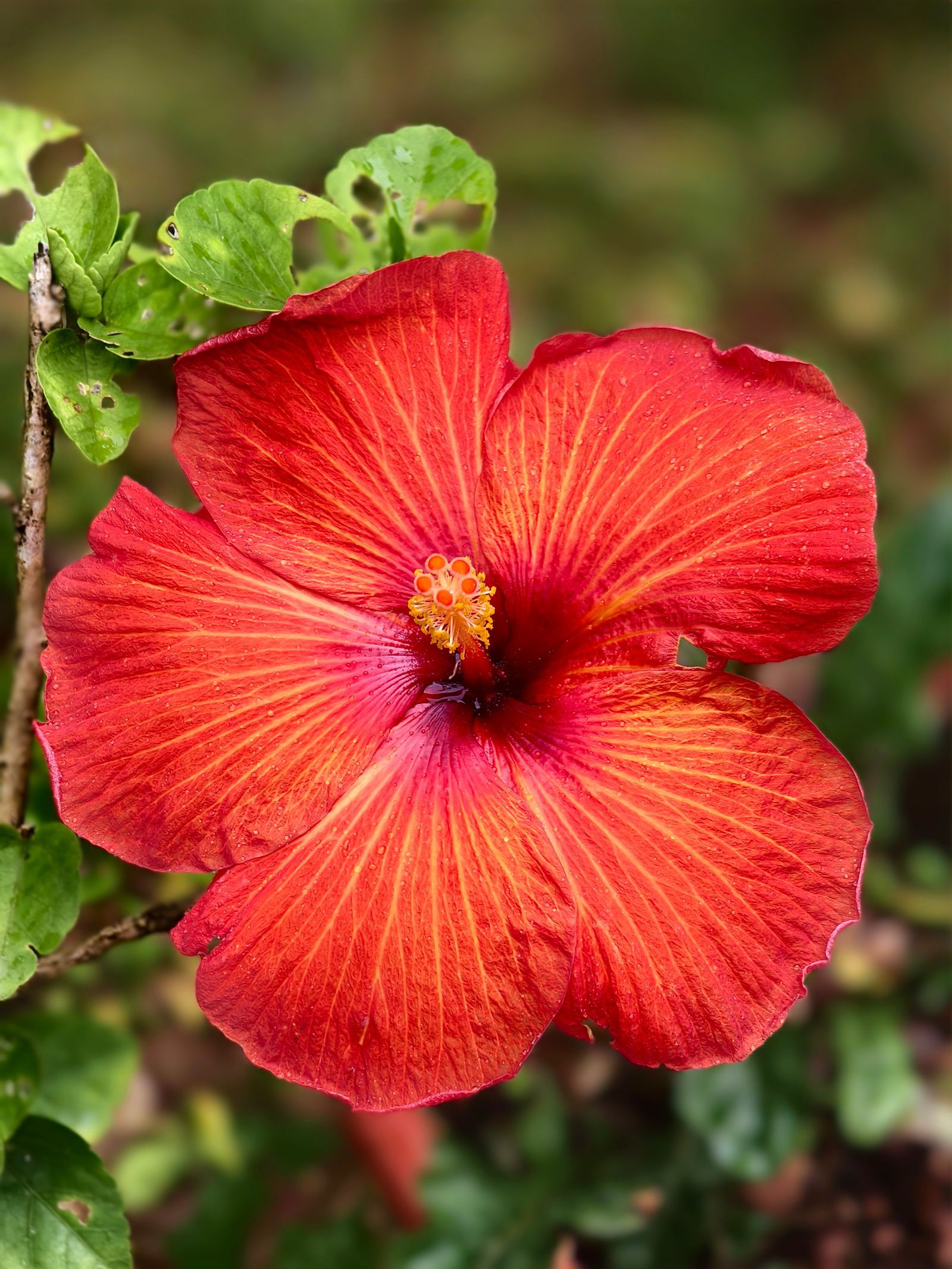
Photo: Neeraj Anoop / Pexels
Watering Calculator: The Hibiscus Split Audit
Tropical hibiscus in pots can drink every 1 to 2 days in peak summer while hardy in ground plants run about weekly. Enter your pot or bed size below, then read the two species bench in this article before you water either one.
19.9 gallons
For 32 square feet at 1 inch deep. That is about 76 liters, or 10 trips with a standard 2 gallon watering can.
A rain gauge or a straight sided can set in the bed tells you when a sprinkler or soaker hose has actually delivered this depth. Time alone is a guess, because hose pressure varies from house to house.
The conversion is arithmetic, not opinion: one inch over one square foot is 144 cubic inches of water, and a US gallon holds 231 cubic inches, so each square foot at one inch takes 0.62 gallons.
Tropical Hibiscus: The Thirsty Pot Plant
A tropical hibiscus in full summer growth is one of the thirstiest common patio plants: big soft leaves, constant new growth, and a flower budget that opens a new bloom, each lasting a day, every morning. In a pot, the program is a check with your finger at 1 to 2 inches, and water, thoroughly, until it drains, the moment that layer is dry. In peak heat that is every 1 to 2 days for a standard pot in full sun, and a plant in a small pot on a hot deck can want water daily without anything being wrong. The wilt is the backup alarm: tropical hibiscus wilts visibly and fast when the mix dries through, and a plant watered within hours of the wilt usually recovers completely by evening, which makes it an honest plant to learn on. Repeated hard wilts, though, are paid for in buds, the subject of the next section. In the ground in frost free climates, the tropical plant runs slower, the top 2 inches dry test resolving to every 3 to 4 days in summer in most soils. Indoors over winter, growth nearly stops in household light, and the same test may not call for water for a week or more; the winter error is keeping the summer tempo running into a resting plant in wet mix, which rots roots quietly until spring reveals a skeleton.
| Plant and setting | Test | Summer rhythm | Winter rhythm |
|---|---|---|---|
| Tropical, pot in sun | Top 1 to 2 inches dry | Every 1 to 2 days | Every 5 to 10 days indoors |
| Tropical, in ground | Top 2 inches dry | Every 3 to 4 days | Rain fed in frost free zones |
| Hardy, in ground | Soil at 4 inches | About 1 inch weekly in dry spells | Dormant, no water |
| Hardy, first season | Keep root zone moist | Twice weekly in dry weather | Dormant, no water |
| Hardy, large pot | Top 2 inches dry | Every 2 to 3 days | Dormant or stored, barely moist |
Hardy Hibiscus: The Wetland Perennial
Hardy hibiscus inverts the tropical routine. It is a big, late, hungry perennial planted in the ground, and its ancestry in wet places means it wants consistent moisture without the daily attention the tropical plant demands. The bench is about an inch of water a week in dry weather, delivered deeply, with mulch over the root zone to hold it, and the plant tolerates soil that stays moist far better than its tropical cousin tolerates drought. First season plants, still building roots, get the establishment version, twice weekly checks in dry weather. Two hardy specific behaviors save their owners unnecessary panic. The first is the late start: moscheutos is famously the last perennial in the garden to emerge, often not until late spring when the soil is properly warm, and gardeners dig up living plants every year in April believing them dead; scratch the crown for green before condemning one. The second is size: a happy hardy hibiscus drinks in proportion to a canopy that can reach 5 feet across, so a plant that wilts at noon in a heat wave is usually just big and thirsty, and a deep evening watering, not a new schedule, is the answer. In large pots, hardy hibiscus follows the pot rules in the table, drying faster than in the ground and wanting the top 2 inch test every 2 to 3 days in summer.
Bud Drop: Both Ends of the Scale
Hibiscus buds are the plant's expense account, and they are the first thing cut when the budget fails, in either direction. A tropical plant that dries to a wilt between waterings commonly drops the buds that were forming during the drought, even if it is rescued in time to save the leaves, which is why the pot program aims to water at the dry test, before the wilt, through the blooming season. The wet end drops buds too: a plant kept soggy, especially indoors in winter or in a pot without drainage, yellows its lower leaves, drops buds unopened, and grows the fungus gnats that announce root trouble. Between the two, the diagnosis is the soil at depth and the season: summer buds dropping on a plant that wilts weekly means water sooner; winter buds dropping on a plant in wet mix means water far less and give light. Bud drop also follows change itself, a move indoors in fall, a repot, a sharp cold snap, and that drop is a protest, not a diagnosis, resolving when conditions stabilize. The steady plant, watered on its test, in bright light, unmoved, is the one that carries its buds to flower, which is the entire secret of the florists' plants that seem to bloom without pause.
Feeding, Light, and the Honest Limits
Water is half the tropical plant's appetite; the other half is food, because a plant flowering daily in a pot is spending at a rate few ornamentals match. Feed tropical hibiscus lightly and often through the growing season, a balanced or bloom oriented fertilizer at the label's regular rate every 2 weeks or at quarter strength with every watering, and flush the pot with plain water monthly to clear salt buildup, which shows as white crust on the mix and burned leaf edges. Hardy hibiscus wants one spring feeding as growth starts and the moisture bench, and little else. Light governs both plants' thirst more than any schedule: a tropical hibiscus in the brightest sun you can give it drinks twice what the same plant uses in bright shade, and grows twice the flowers for it, so the test interval in the table assumes the sun the plant wants. A final honest note on the tropical plant indoors: without a genuinely bright window or a grow light, it will hold its leaves, drink slowly, and wait out the winter without flowering, and that is success. Chasing winter blooms with water and fertilizer in dim light produces the wet mix problems above. The rose of Sharon care page covers the third hibiscus, the shrub form, and the geranium watering page runs the other great daily flowering patio plant, whose thirst makes an instructive comparison.
Pruning, Size, and What They Do to Thirst
The watering benches assume a plant at the size its keeper maintains, and pruning is how that size is set. A tropical hibiscus cut back hard in spring pushes a season of vigorous new stems, and its water use climbs with the canopy; the same plant left unpruned for years grows leggy, shades its own pot, and drinks less while flowering worse, which is why the spring prune and the summer watering tempo belong to the same program. Hardy hibiscus is cut to the ground each late winter or early spring, all of its growth is new each year, and its thirst scales with the heat of the season rather than the age of the plant: a moscheutos in July is a 5 foot fountain of leaves built in 10 weeks, and the weekly inch has to fund all of it. Container size closes the loop for both. A hibiscus of either kind in a pot it has filled with roots is a plant whose reservoir is mostly root, and it will cycle from wet to wilted in a day in summer no matter how carefully it is watered; potting up one size, in spring, is the durable fix, and it changes the watering rhythm more than any schedule adjustment can.
Related guides
These related guides round out the picture:
- How Often to Water a Chinese Money Plant: The Two Inch Check, the Winter Spread, and the Leaf Signals
- How Often to Water Philodendron: One Test, Two Habits, and Where Xanadu Fits
- How Often to Water Plumeria: Soak Deeply, Then Let It Dry Out Completely
Frequently Asked Questions
How often do I water a hibiscus in a pot?
For tropical hibiscus, water when the top 1 to 2 inches of mix have dried, thoroughly until it drains. In full sun in peak summer that is every 1 to 2 days in a standard pot, and daily is normal for small pots on hot decks. Indoors in winter the same test may not call for water for a week or more.
Why does my hibiscus keep dropping its buds?
Bud drop comes from both ends of the water scale. A plant that dries to wilting between waterings drops the buds forming during the drought; a plant kept soggy drops buds along with yellowing lower leaves. Check the soil at depth: summer drop with weekly wilt means water at the dry test, sooner; winter drop in wet mix means water much less.
How much water does hardy hibiscus need?
About an inch a week in the ground during dry weather, delivered deeply and held with mulch. Hardy hibiscus descends from wetland plants and tolerates consistently moist soil well. First season plants need checks twice a week in dry weather. It emerges very late in spring, so do not dig it up as dead in April.
Should I water hibiscus every day?
A tropical hibiscus in a pot in peak summer heat may genuinely need water every day, and that is normal for the plant in that setting. In the ground, or indoors, or in winter, daily watering is far too much. The test, top 1 to 2 inches dry, decides; the calendar only predicts how often the test will say yes.
Why are my hibiscus leaves turning yellow?
Read the pattern. Lower leaves yellowing on a plant in constantly wet mix point to overwatering and root trouble. Even yellowing with a wilt cycle points to drought stress. A plant in a pot that has been fed little and watered thoroughly all season may simply be hungry; hibiscus are heavy feeders, and a light regular feeding in season is part of the program.
Photo credits: Neeraj Anoop (Pexels); Subhrajyoti Paul (Pexels). Photos are served from this site; follow the credit to the library page for the original.