How Often to Water Plumeria: Soak Deeply, Then Let It Dry Out Completely
By the Windchime Walker editorial team
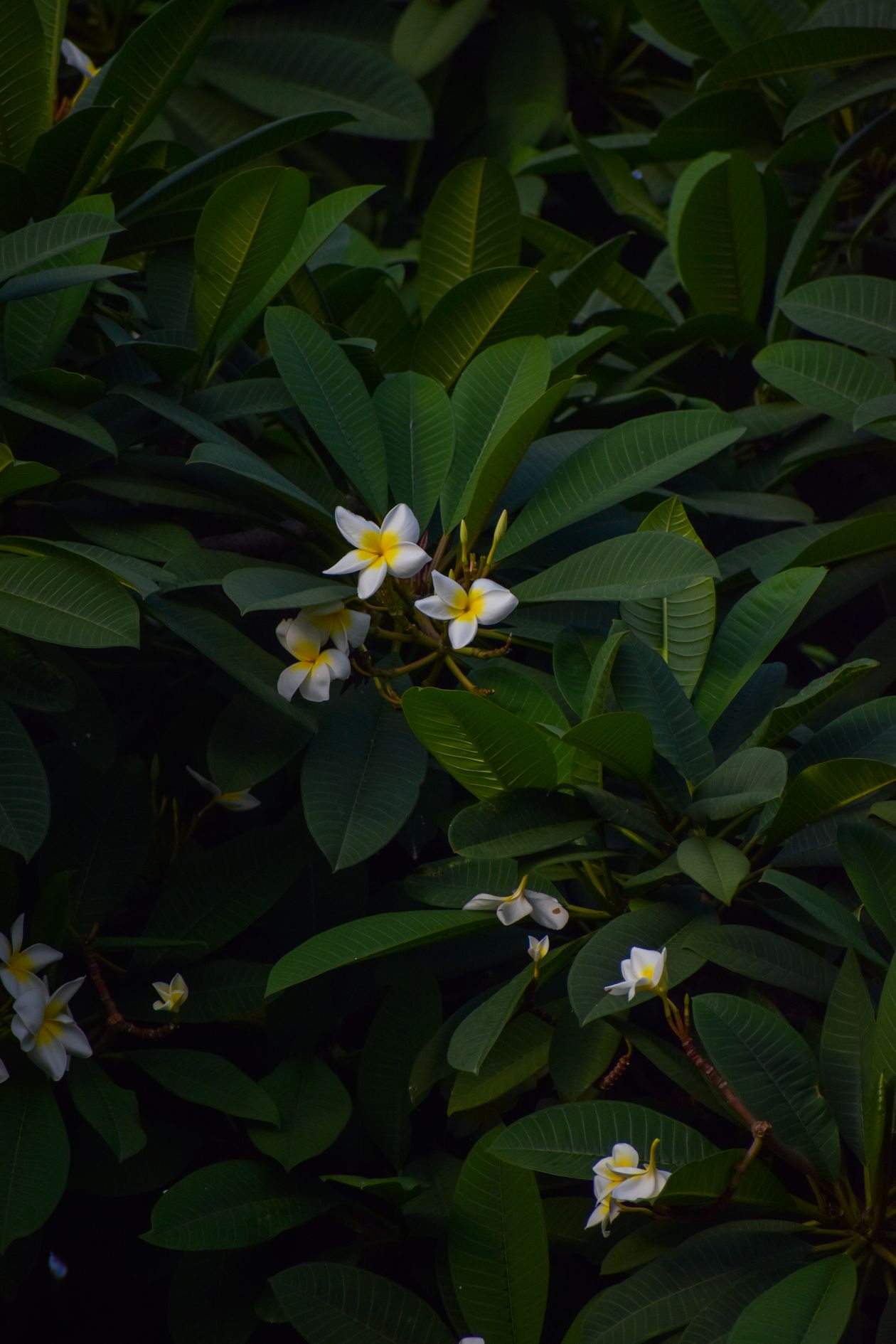
Photo: Yaw Ansu-Kyeremeh / Pexels
Plumeria (frangipani) is the opposite of a thirsty tropical. It stores water in its thick stems, rots quickly in wet soil, and wants a full dry-out between drinks. The schedule in one line: water deeply, let the top 2 to 3 inches of soil dry completely, then water deeply again. In active summer growth that works out to every 7 to 10 days for in-ground trees and every 3 to 7 days for containers in peak heat. In winter dormancy, cut back to about once a month or less.
The single most expensive plumeria mistake is watering an unrooted cutting. A fresh cutting has no roots to drink with, so wet soil only rots the base. Everything in this guide flows from respecting that dry rhythm. If you grow other dry-cycle plants, compare the dormancy rules here with how often to water ponytail palm, the other great water-storing trunk in this batch.
Interactive tool
Watering Schedule Calculator: Plumeria
Plumeria runs on a dry rhythm: a deep soak, then a full dry-out of the top 2 to 3 inches. That is every 7 to 10 days in the ground in summer and every 3 to 7 days in containers, dropping to about monthly in winter dormancy. Enter your setup and treat the result as a ceiling, not a quota.
19.9 gallons
For 32 square feet at 1 inch deep. That is about 76 liters, or 10 trips with a standard 2 gallon watering can.
A rain gauge or a straight sided can set in the bed tells you when a sprinkler or soaker hose has actually delivered this depth. Time alone is a guess, because hose pressure varies from house to house.
The conversion is arithmetic, not opinion: one inch over one square foot is 144 cubic inches of water, and a US gallon holds 231 cubic inches, so each square foot at one inch takes 0.62 gallons.
The schedule by season and setup
Situation
How often
Trigger
In ground, summer growth
Every 7 to 10 days
Top 2 to 3 inches dry
Container, summer growth
Every 3 to 7 days in peak heat
Top 2 to 3 inches dry
Spring leaf-out
Every 10 to 14 days
Soil mostly dry
Fall slowdown
Every 2 to 3 weeks
Soil fully dry
Winter dormancy, leafless
About monthly, or none
A light drink only if stems shrivel
Unrooted cutting
Never
Wait until roots and leaves form
Rooted cutting, first season
Lightly, every 10 to 14 days
Top half of the pot dry
The container numbers surprise people who treat plumeria like a houseplant. A plumeria in a gritty, fast-draining mix in a terracotta pot on a hot patio genuinely needs water twice a week in July, because the mix stores almost nothing. The dry-out rule still applies: it is the dryness of the top 2 to 3 inches, not the calendar, that gives permission.
Why the dry-out is non-negotiable
Plumeria stems are water tanks. The plant evolved to bridge dry spells by spending stored water, and its roots are built to grab a deep drink and then breathe. Roots kept constantly wet suffocate and rot, and rot in a plumeria travels up the stem as a soft, dark collapse that pruning rarely saves. A full dry-out between soakings is what keeps the root zone oxygenated and the stem firm.
The firmness test is your backup gauge. A well-hydrated plumeria stem feels hard and resists a gentle squeeze. A thirsty stem feels slightly spongy and may show fine wrinkles. A stem that feels soft and mushy at the base is not thirsty, it is rotting, and more water is the worst possible response. Cut mushy tissue back to clean, firm wood and let the plant dry out hard.
Cuttings: the no-water rule
Plant a fresh cutting in barely moist, very gritty mix (perlite and coarse sand with a little potting soil), stand it in bright indirect light, and leave it alone. Do not water it. The cutting will push leaves using stored energy, and roots follow. Watering before roots form is the number one cause of cutting failure, because the buried stem sits in moisture it cannot use and rots from the bottom up.
Once the cutting has rooted and is leafing out steadily, begin light watering, letting the top half of the pot dry between drinks. Rooting hormone, bottom heat, and patience all help, but dryness is the foundation. Expect 6 to 10 weeks before a cutting is ready for a normal schedule.
Dormancy: the winter rules
Plumeria drops its leaves as days shorten and temperatures fall, and a leafless plant barely drinks. In-ground trees in frost-free zones can go the whole winter on rainfall alone. Potted plants brought indoors need only a light drink about once a month, just enough to keep stems from shriveling, and many growers give none at all in a cool, humid garage.
The winter danger is the combination of wet and cold. Soil that stays wet around dormant roots in a 50 degree room is a rot incubator. When spring warmth returns and leaf tips start to swell, resume watering gradually: one moderate drink, wait for real leaf growth, then move to the summer rhythm. If your plumeria shares a winter rest with a ponytail palm, note that the palm keeps its leaves and a minimal thirst all winter; the comparison is spelled out in how often to water ponytail palm.
Repotting, rain, and other adjustments
Freshly repotted plumeria get one settling drink, then a dry week while damaged roots callus. Summer rain counts fully against the schedule: a week of afternoon storms means you skip watering entirely and simply confirm drainage. Fertilizer changes nothing about frequency, but a high-phosphorus bloom feed during the growing season is wasted on a plant that is rotting from overwatering, so fix the rhythm first.
Young in-ground trees in their first summer need a slightly kinder schedule than established trees, roughly every 5 to 7 days, because their root systems are still small. By the second year they join the standard 7 to 10 day rhythm. In very sandy Florida-style soils, even established trees may sit at the frequent end of the range.
Signs of trouble
Leaf drop in fall is normal dormancy, not a watering emergency. Leaf drop in midsummer with wet soil points to root trouble. Rust-colored spots under leaves are rust fungus, a foliage disease of humid conditions that improves with airflow and dry leaves. Whiteflies and mealybugs colonize stressed plants first, so a pest outbreak is often a symptom of a plant already unhappy about its water. Black, soft stem tips after a cold snap are freeze damage; prune to firm wood in spring and expect regrowth from below.
Water and blooming: the connection
Plumeria flowers form on the tips of branches, and tip health is where watering shows up first. A plant on a correct dry rhythm holds firm tips that swell and push inflorescences through the warm months. A plant kept too wet often grows lush leaves but sulks about flowering, because energy goes to surviving soggy roots instead of blooming. A plant kept too dry at the peak of summer may drop buds before they open.
The practical bloom recipe is boring and reliable: full sun, a deep soak when the top 2 to 3 inches dry, a complete dry-out between soakings, and a low-nitrogen, high-phosphorus feed during active growth. If your tree leafs out beautifully year after year but never flowers, audit sun hours first (six or more is the real requirement), then check whether your watering has drifted too frequent. Slightly stressing a healthy, well-rooted tree toward the dry end in early summer is a classic grower trick to encourage bud set, but it only works on established plants, never on cuttings or first-year trees.
Plumeria by climate: how your zone bends the rules
In frost-free tropics and subtropics (zones 10 to 11), in-ground trees mostly water themselves with rainfall, and your job is drainage, not irrigation. In zone 9, winter cold snaps make the wet-plus-cold combination the main killer, so plant in the best-draining spot you have and let winter rain be the only winter water. In zones 8 and colder, plumeria is a container plant that summers outside and winters indoors, which means the dormancy rules above run your life from first frost to last.
Desert growers face the mirror-image problem: air so dry and sun so fierce that pots can need water every 3 days even with the dry-out rule respected. The test never changes, only the calendar does. Coastal growers with marine layer mornings get slower dry-outs and more rust pressure, so wider spacing between drinks and strict morning watering protect the foliage.
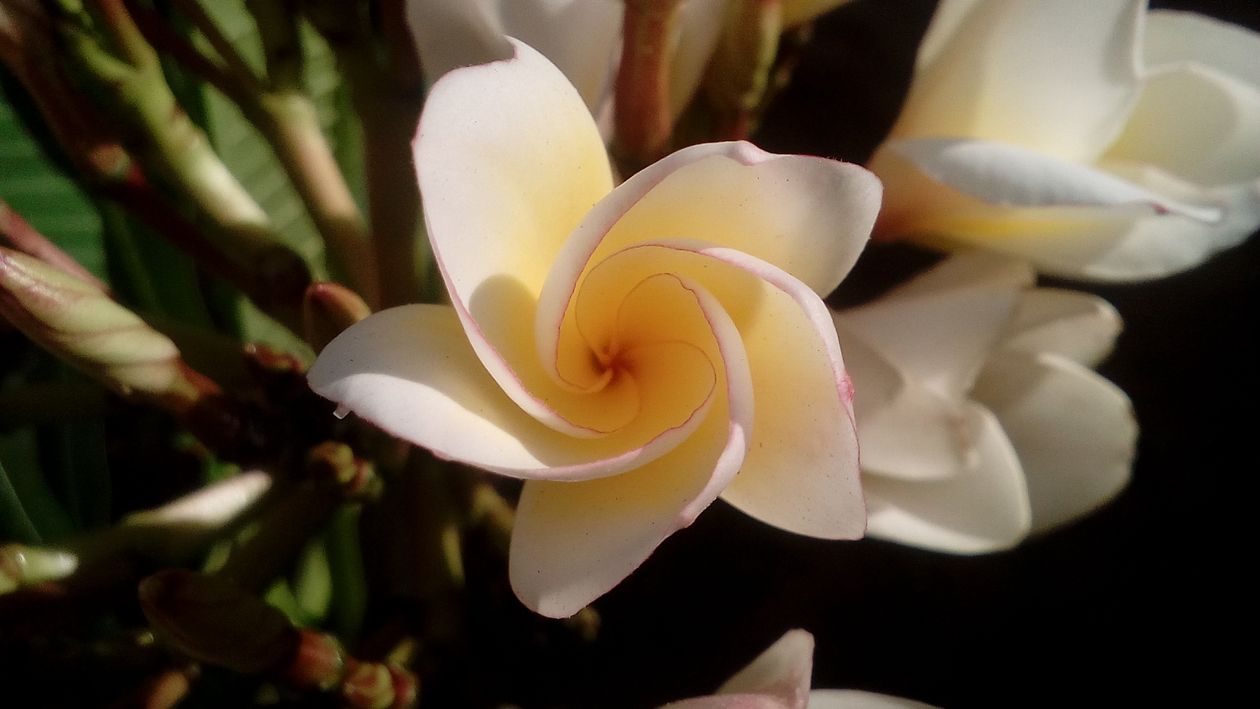
Pink and white plumeria flowers blooming on a tree in bright sunlight
In summer growth, every 3 to 7 days in peak heat, always letting the top 2 to 3 inches of mix dry completely first. In a gritty mix and a hot patio that can mean twice a week. In winter dormancy, drop to a light drink about once a month or none at all.
Should you water plumeria cuttings?
No. An unrooted cutting cannot drink, and wet soil rots the buried stem. Set the cutting in barely moist, gritty mix and do not water until it has rooted and is pushing steady leaf growth, usually 6 to 10 weeks. Then start light watering with a dry-out between drinks.
How do I know if my plumeria needs water?
Check that the top 2 to 3 inches of soil are fully dry, then squeeze the stem gently. Firm and hard means the plant still has reserves; slightly spongy with fine wrinkles means it is ready for a deep soak. A soft, mushy stem base means rot, not thirst.
Can plumeria survive without water in winter?
Yes. A dormant, leafless plumeria lives on water stored in its stems and can go a month or more without a drink, especially in a cool indoor space. Give a small drink only if stems begin to shrivel, and never keep dormant roots in wet, cold soil.
Why is my plumeria stem soft?
A slightly spongy stem in a dry pot is thirst. A soft, dark, mushy stem, especially at the base, is rot from overwatering. For rot, stop watering, unpot the plant, cut away all mushy tissue to firm white wood, let cuts callus for several days, and repot into dry gritty mix.
Photo credits: Yaw Ansu-Kyeremeh (Pexels); Ritesh Kumar (Pexels). Photos are served from this site; follow the credit to the library page for the original.