How Often to Water Ponytail Palm: The Bulb Stores the Water for You
By the Windchime Walker editorial team
Photo: Magda Ehlers / Pexels
The ponytail palm (Beaucarnea recurvata) is not a true palm at all. It is a drought-adapted succulent relative whose swollen trunk base, the caudex, is a water tank. That single fact writes the whole schedule: water thoroughly when the top 2 to 3 inches of soil have dried, which usually means every 2 to 4 weeks during the growing season and every 4 to 8 weeks or more in winter. If you are unsure whether to water, the answer is almost always wait.
More ponytail palms die of kindness than neglect. Weekly watering on a houseplant schedule fills the caudex's surroundings with constant moisture, the trunk base rots, and by the time the plant looks sick the damage is months old. This guide covers the schedule indoors and out, the honest disagreement among expert sources about summer frequency, and the trunk test that tells you the plant's real water status. It pairs with our guide to how often to water plumeria, the other great stem-storing plant in this batch.
Interactive tool
Watering Schedule Calculator: Ponytail Palm
The caudex is a water tank, so this plant waits: every 2 to 4 weeks in the growing season and every 4 to 8 weeks in winter, only when the top 2 to 3 inches are dry. Enter your pot size and climate, and when the answer feels soon, trust the trunk test in this guide instead.
19.9 gallons
For 32 square feet at 1 inch deep. That is about 76 liters, or 10 trips with a standard 2 gallon watering can.
A rain gauge or a straight sided can set in the bed tells you when a sprinkler or soaker hose has actually delivered this depth. Time alone is a guess, because hose pressure varies from house to house.
The conversion is arithmetic, not opinion: one inch over one square foot is 144 cubic inches of water, and a US gallon holds 231 cubic inches, so each square foot at one inch takes 0.62 gallons.
The schedule by season and setting
Setting
Growing season
Winter
Trigger
Indoor pot, bright light
Every 2 to 3 weeks
Every 4 to 6 weeks
Top 2 to 3 inches dry
Indoor pot, lower light
Every 3 to 4 weeks
Every 6 to 8 weeks
Top half of pot dry
Outdoor container, hot climate
Every 1 to 2 weeks
Every 4 weeks
Top 2 to 3 inches dry
In ground, zones 9 to 11
Every 2 to 4 weeks
Rainfall only
Soil dry several inches down
Small young plant
Every 1 to 2 weeks
Every 3 to 4 weeks
Top 2 inches dry
Young plants need the frequent end of every range because their caudex is small and stores little. A mature specimen with a trunk base a foot across carries weeks of reserve and can be astonishingly patient. Size your expectations to the trunk, not the leaf fountain: the leaves are the plant's solar panels, the caudex is its canteen.
An honest note: expert sources disagree on summer frequency
If you research this plant you will find genuinely different advice, and this guide will not pretend otherwise. HGTV's guidance puts summer watering at every 7 to 14 days for potted plants in bright conditions. Gardeners' World, by contrast, suggests watering roughly every 4 to 6 weeks year-round. Both come from experienced growers, and the gap is real.
The disagreement dissolves once you see the hidden variables: pot size, mix drainage, light, and climate. A small pot of gritty mix on a blazing patio can honestly need water every 10 days. A large pot of dense mix in a British greenhouse (the Gardeners' World context) honestly needs it every month. The trunk test below cuts through all of it, because it reads your plant in your conditions instead of borrowing someone else's calendar.
The trunk and soil tests
Two checks, used together, never lie. First, the soil: push a finger or a wooden skewer 2 to 3 inches into the mix. Water only when it comes out dry and clean. Second, the trunk: squeeze the caudex gently. A hydrated caudex is rock firm. A plant drawing on its reserves still feels firm, because it spends stored water slowly. A caudex that feels soft, spongy, or wrinkled at the surface has been dry a long time and needs a deep soak. A caudex that feels mushy is rotting, which is an overwatering emergency, not a watering cue.
Brown leaf tips are the symptom everyone blames on thirst, but on this plant they more often mean low humidity, fertilizer salts, or fluoride in tap water. Do not respond to brown tips with extra water until the soil test says the plant is actually dry. That one discipline prevents most ponytail palm deaths.
How to water when you do
Water slowly and thoroughly until it runs from the drainage holes, then empty the saucer or cache pot completely. This plant must never sit in standing water. A deep soak refills the soil evenly and encourages the caudex to stay plump. Between waterings, let the mix dry properly; a moisture meter buried at root depth can help beginners, but the skewer test is just as reliable.
Use a gritty, fast-draining mix: standard potting soil cut with a third to a half perlite, pumice, or coarse sand. A pot one size too large holds a moat of wet mix around a small root ball and is a classic rot setup, so pot up gradually. Terracotta suits this plant well because it breathes and dries evenly.
Light, growth, and why they change the schedule
Ponytail palms grow slowly, and they grow slowest in dim rooms. A plant in low light transpires little, drinks little, and needs the longest intervals in the table. The same plant moved to a sunny south window or a summer patio can double its water use within weeks. Any time you change the plant's light, re-learn its rhythm with the soil test for the first month rather than carrying the old calendar to the new spot.
Growth happens mostly in spring and summer. A plant pushing a flush of new leaves from the crown is spending water and deserves the attentive end of its range. In winter, even a plant that keeps its leaves (this species is evergreen) slows to a crawl, and the 4 to 8 week winter interval is not neglect, it is the correct reading of a resting plant.
Troubleshooting
Mushy caudex base with yellowing leaves: rot from overwatering. Unpot, cut away soft tissue to firm wood, let the plant dry bare-root for several days, repot in dry gritty mix, and wait a week before the first light watering. Crispy brown tips with dry soil throughout: the plant finally is thirsty, so soak it deeply. A wrinkled, slightly soft caudex after a long dry spell recovers within days of a proper drink. Pests such as mealybug in the leaf crown usually colonize plants already weakened by wet roots, so check your watering before reaching for treatments.
If the ponytail palm's patience appeals to you, the same storage logic governs how often to water snake plant, and for a genuinely opposite houseplant, how often to water prayer plant covers a species that wants the opposite treatment in almost every respect.
Repotting without triggering rot
Repot a ponytail palm only every 2 to 3 years, and only one pot size up. The classic failure is a small plant placed in a grand pot where the unused mix stays wet for weeks after each watering. Keep the caudex planted at the same depth as before, with its base at or slightly above the soil line; burying the caudex deeper invites the exact rot this guide keeps warning about.
Water lightly once after repotting to settle the mix, then return to the dry test. If you damaged roots during the move, wait a full week before that first drink so cut surfaces can callus. Spring is the best repotting season because the plant is entering active growth and recovers fastest.
Outdoor and landscape plants
In frost-free climates (zones 9b to 11), ponytail palms become striking landscape specimens that eventually reach small-tree size with massive bases. Established in-ground plants are among the most drought-tolerant ornamentals you can own: rainfall alone carries them in most years, with a deep supplemental soak every 3 to 4 weeks only during extended rainless heat. Young landscape plants need a first-year rhythm of a deep drink every 1 to 2 weeks while roots spread.
The outdoor killers are cold and wet together. A plant that sails through a dry 28 degree night can die in a wet 34 degree week, because saturated soil chills and rots the caudex. Plant high, mulch with gravel rather than moisture-holding bark near the trunk, and never let irrigation sprinklers hit the base daily. In marginal zones, containers that can move under cover for winter storms are the safer life for this plant.
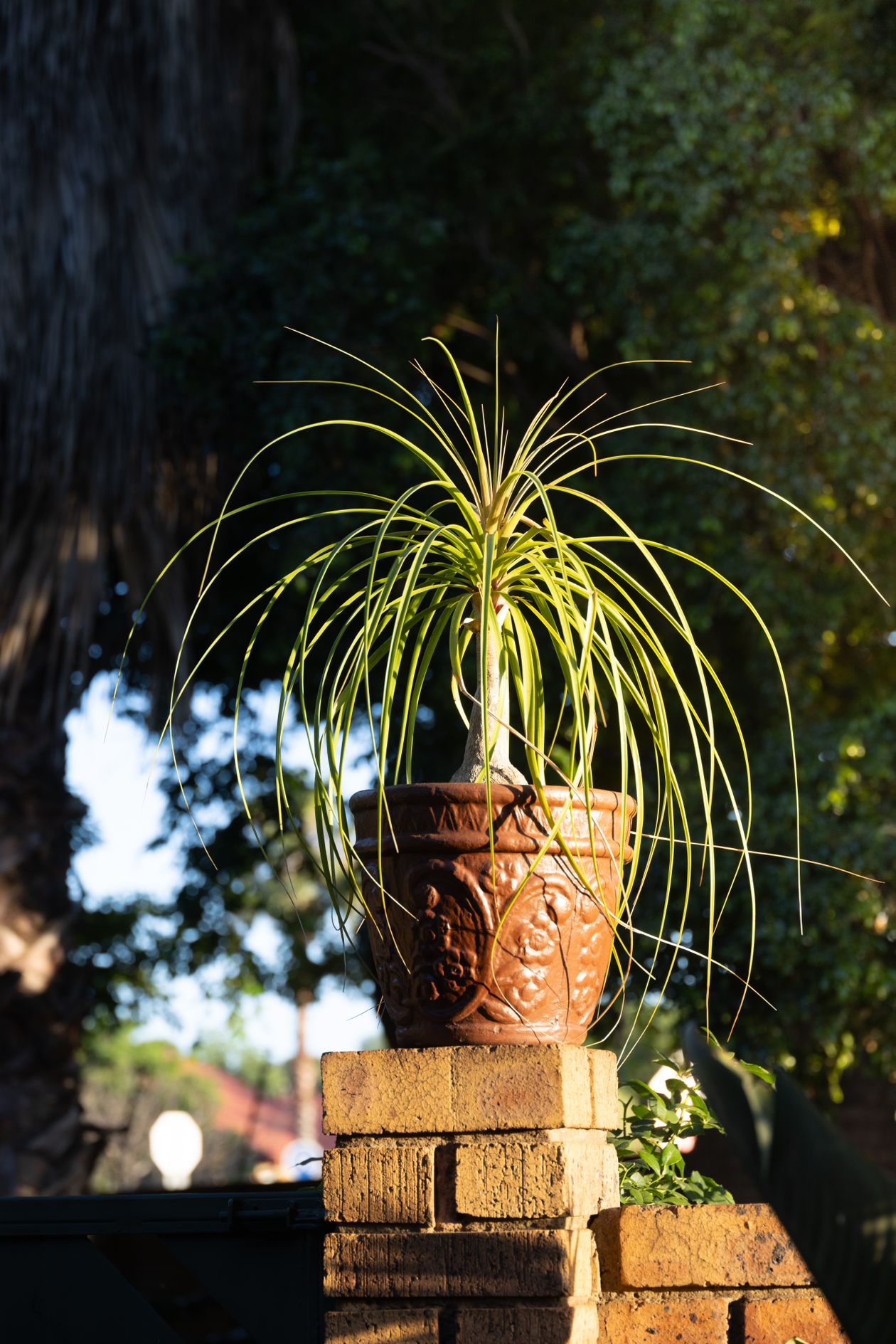
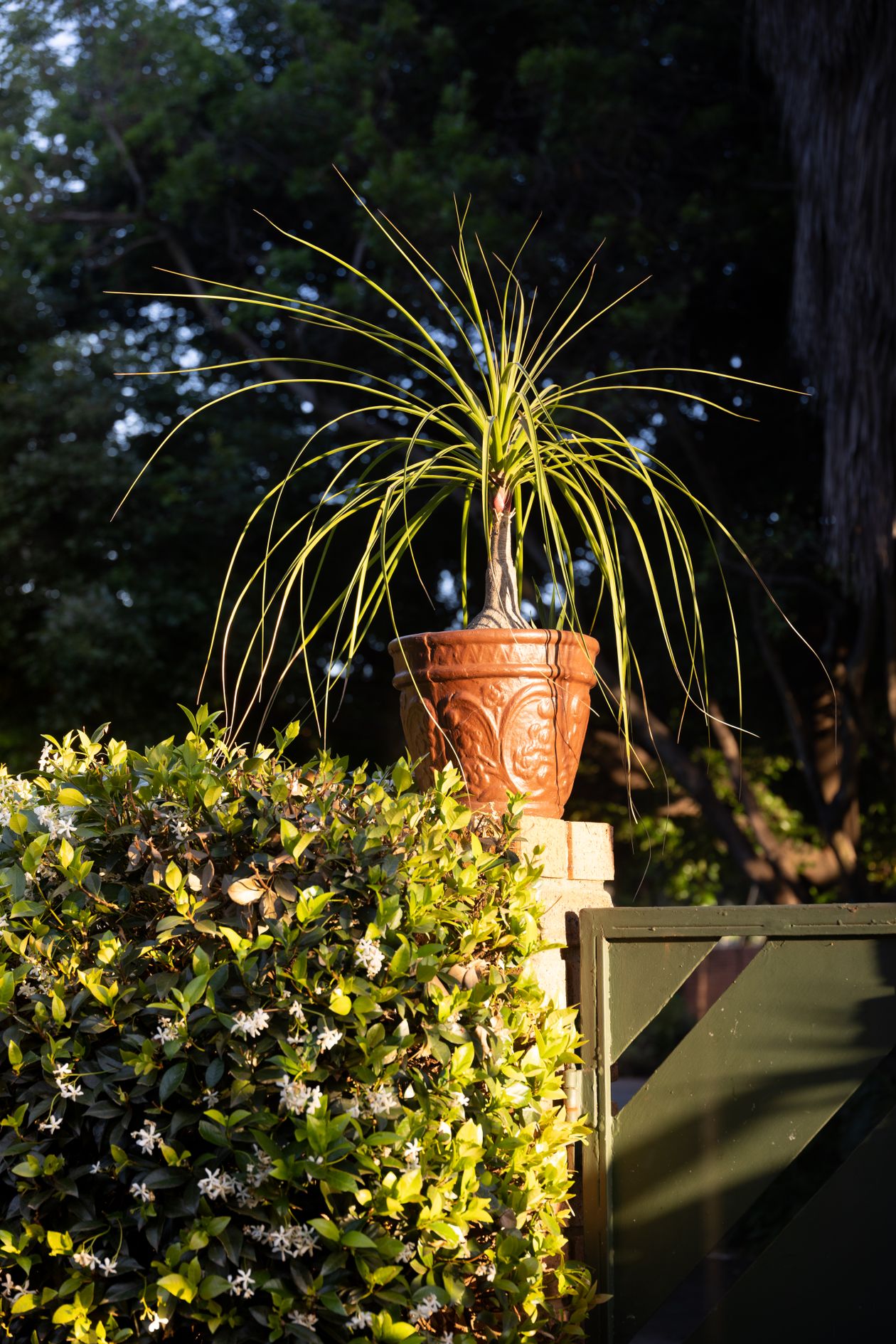
Ponytail palm with its swollen water-storing trunk base in a terracotta pot
How often should I water my ponytail palm indoors?
About every 2 to 4 weeks in the growing season and every 4 to 8 weeks in winter, always checking first that the top 2 to 3 inches of mix are dry. Bright light shortens the interval; a dim room stretches it. When in doubt, wait another week. This plant forgives drought far more readily than wet soil.
How do I know if my ponytail palm needs water?
Use the soil test and the trunk test together. If the top 2 to 3 inches of soil are dry and the caudex feels firm but the plant has gone weeks without a drink, water deeply. A slightly wrinkled or less plump caudex confirms thirst. A soft or mushy caudex means rot from too much water, not too little.
Why are the tips of my ponytail palm brown?
Usually not thirst. Brown tips most often come from low indoor humidity, accumulated fertilizer salts, or fluoride and chlorine in tap water. Flush the soil with rainwater or distilled water occasionally, trim the brown tips with clean scissors, and only increase watering if the soil test shows the root zone is genuinely dry.
Can a ponytail palm recover from overwatering?
Often yes, if the rot has not consumed the caudex. Unpot the plant, remove all mushy tissue and rotted roots, let it air-dry for several days, and repot into fresh gritty mix in a pot with drainage. Wait a week before watering lightly. A caudex that is soft all the way through rarely recovers.
How long can a ponytail palm go without water?
A mature plant with a large caudex can go 6 to 8 weeks or longer in winter conditions, living on stored water. Young plants with small trunk bases manage 2 to 3 weeks. The storage is the whole point of the plant's shape, so long dry stretches in the cool season are normal and healthy.
Photo credits: Magda Ehlers (Pexels); Magda Ehlers (Pexels). Photos are served from this site; follow the credit to the library page for the original.