How Often to Water Prayer Plant: Consistently Moist, Never Soggy
By the Windchime Walker editorial team
Photo: Madison Inouye / Pexels
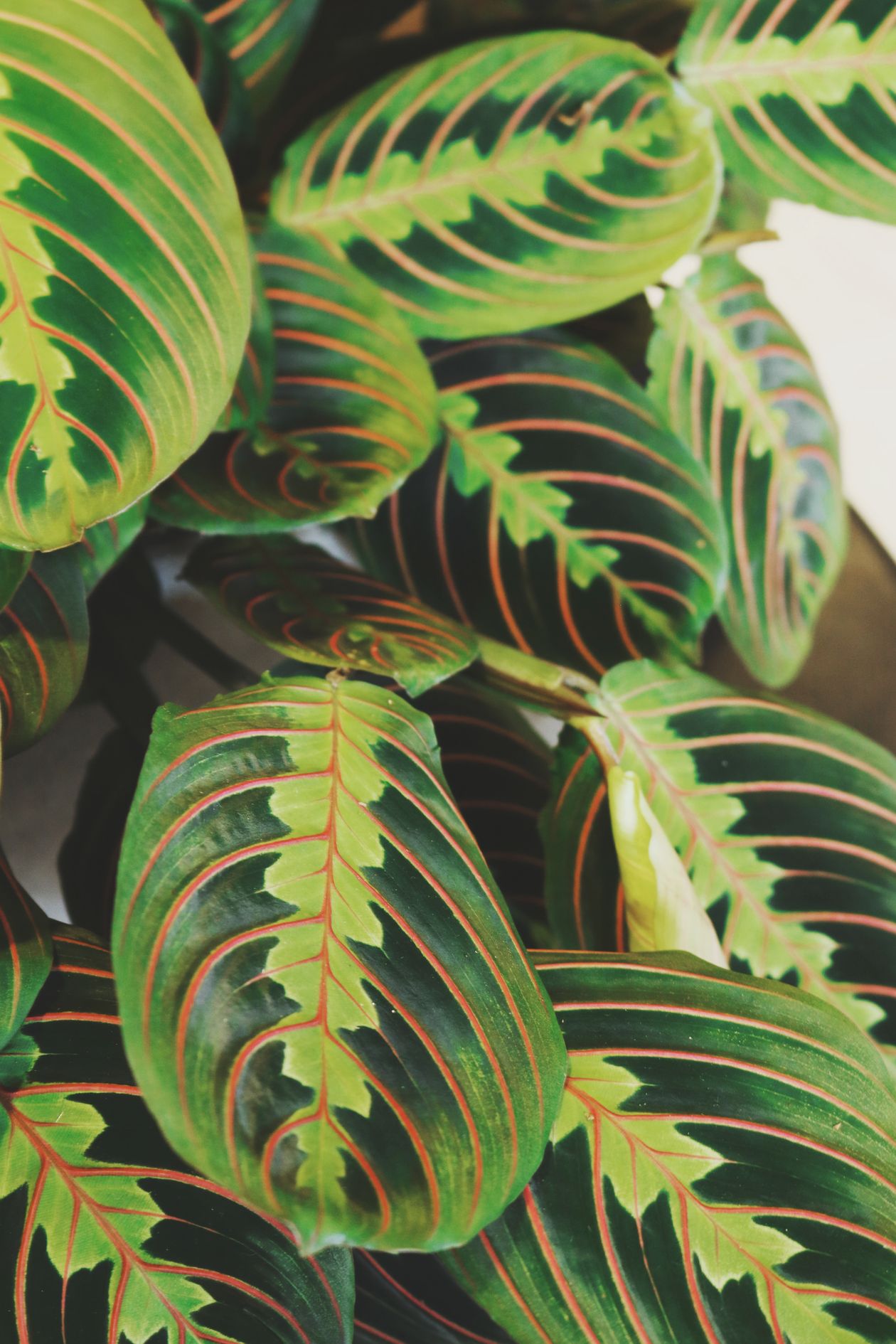
The prayer plant (Maranta leuconeura) folds its leaves up at night and spreads them flat by day, and it expects its water to be as reliable as that daily rhythm. Keep the soil consistently moist but never soggy: water when the top inch of mix has dried out, which usually means every 5 to 7 days during the growing season and every 10 to 14 days in winter. Let it dry further and the leaf edges crisp; keep it wetter and the roots rot.
Two things separate prayer plant watering from generic houseplant advice. First, water quality matters unusually much, because Maranta is sensitive to fluoride, chlorine, and dissolved salts, which burn leaf edges even on a perfect schedule. Second, humidity is half the watering equation: this rainforest floor plant wants 50 to 60 percent humidity, and dry indoor air will crisp its leaves no matter how well you water. For the opposite houseplant philosophy, compare how often to water ponytail palm, which stores water and waits weeks between drinks.
Interactive tool
Watering Schedule Calculator: Prayer Plant
Prayer plant wants the opposite of a desert rhythm: consistently moist, never soggy. Water when the top inch dries, about every 5 to 7 days in growth and every 10 to 14 in winter, and use rainwater or distilled water if your tap supply crisps the leaf edges.
19.9 gallons
For 32 square feet at 1 inch deep. That is about 76 liters, or 10 trips with a standard 2 gallon watering can.
A rain gauge or a straight sided can set in the bed tells you when a sprinkler or soaker hose has actually delivered this depth. Time alone is a guess, because hose pressure varies from house to house.
The conversion is arithmetic, not opinion: one inch over one square foot is 144 cubic inches of water, and a US gallon holds 231 cubic inches, so each square foot at one inch takes 0.62 gallons.
The schedule by season and setting
Setting
Growing season
Winter
Trigger
Bright indirect light, 4 to 6 inch pot
Every 5 to 7 days
Every 10 to 14 days
Top inch dry
Lower light
Every 7 to 10 days
Every 2 weeks
Top inch dry, mix barely moist below
Hanging basket
Every 4 to 6 days
Every 10 days
Top inch dry; baskets dry fast
Self-watering pot
Refill reservoir weekly
Refill every 2 weeks
Keep mix evenly moist
High humidity room (60 percent plus)
Every 7 days
Every 2 weeks
Top inch dry
The trigger column matters more than the day counts. A prayer plant on a bright bathroom windowsill with steamy showers lives in a different water world from the identical plant in a dry, heated living room. The top-inch test translates between them: when the surface inch is dry but the mix below still holds slight moisture, water.
Water quality: the hidden variable
Prayer plants are the canaries of tap water. Fluoride, chlorine, chloramine, and accumulated fertilizer salts all concentrate in the leaf margins and produce the brown, crispy edges that owners misdiagnose as thirst. If your plant crisps on a correct schedule, suspect the water before the schedule.
The fixes, in order of effort: let tap water sit uncovered for 24 hours (this vents chlorine, though not chloramine or fluoride); collect rainwater, which Maranta loves; or use distilled water for at least every other watering. Flush the pot monthly by running plain water through it for a minute to wash out accumulated salts, and fertilize at half strength during the growing season only, because full-strength feeding adds salts faster than this plant tolerates.
Humidity: the other half of watering
Maranta evolved on the shaded floor of Brazilian rainforests, where the air itself is wet. Indoor air at 30 percent humidity in a heated winter home pulls moisture from the leaves faster than the roots can replace it, and the plant responds with curled leaves and brown edges despite moist soil. Target 50 to 60 percent humidity.
A small humidifier near the plant is the only fix that reliably works. Pebble trays raise humidity a few points in the immediate area and are better than nothing. Misting raises humidity for minutes and can spot the leaves, so it is cosmetic at best. Grouping tropical plants together creates a shared microclimate that genuinely helps, which is one reason prayer plants thrive in a cluster with ferns and calatheas. Our guide to how often to water ferns covers the other classic humidity lover in that cluster.
How to water
Water thoroughly until it drains from the base, then empty the saucer after 15 minutes; the roots want moisture around them, not a pond under them. Lukewarm water is kinder than cold, which can shock tropical roots. Bottom watering works well for prayer plants and keeps the crown dry: set the pot in a tray of water for 20 minutes, let it drink, then drain.
Never let the mix dry completely. A prayer plant that wilts from drought usually recovers after a soak, but repeated drought cycles leave permanent brown edges on leaf after leaf, and the plant's whole charm is its foliage. Consistency is the entire game with this species.
Reading the leaves
The leaves report water status daily if you know the language. Leaves that fail to fold at night, or fold weakly, often signal a stressed plant, and water is the first variable to check. Curling leaves with dry mix mean thirst. Curling leaves with wet mix mean root trouble or cold. Yellowing lower leaves in soggy soil mean overwatering; unpot and check for black, mushy roots, trim them, and repot in fresh mix. Pale, washed-out leaves usually mean too much direct sun rather than a water problem at all.
New growth is the scorecard. A happy prayer plant pushes new leaves steadily through spring and summer, each one unfurling clean and unmarked. If new leaves emerge smaller, paler, or pre-browned at the edges, work through the checklist in order: soil moisture consistency, water quality, humidity, then light.
Potting and mix
Use a peat or coir based mix with perlite for drainage that still holds even moisture; a standard houseplant mix with an extra handful of perlite suits it. The pot must have drainage holes. Prayer plants spread by creeping rhizomes and appreciate a pot slightly wider than deep. Repot in spring when roots circle the base, one size up, and expect a brief sulk followed by a growth flush if the moisture stays steady through the move.
Propagation is a kind bonus: stem cuttings with a node root readily in water, and divisions at repotting time multiply your plants for free. Keep cuttings in bright indirect light and change the water weekly.
Prayer plant relatives: same family, slightly different thirst
The plants sold as prayer plants and their close cousins share the Marantaceae family and most of this care, with small differences worth knowing. True Maranta leuconeura, including the red-veined and kerchoveana forms, is the benchmark in this guide and the most forgiving of the group. Calathea species want the same moist consistency but are even more sensitive to water quality and will crisp on tap water that a Maranta tolerates. Stromanthe and Ctenanthe sit between the two in fussiness. Goeppertia (sold as Calathea for years) follows calathea rules.
All of them share the non-negotiables: never bone dry, never standing in water, humidity above 50 percent if you want clean leaf edges, and soft water if your tap supply is hard. If you keep several members of the family, water them as a group on the same checking round; their rhythms converge even when their exact intervals differ by a day or two.
A seasonal care calendar
Spring is the growth ignition: as light increases, check moisture twice a week, resume half-strength feeding, and repot or divide crowded plants. Summer is peak thirst; expect the short end of every interval in the table, especially for baskets and plants near bright windows. Fall is the transition most owners miss: as days shorten, the plant drinks more slowly, and holding the summer schedule into October is how roots end up sitting in wet, cooling soil. Let the top-inch test stretch intervals naturally.
Winter indoors is a humidity battle more than a watering one. Heating systems crush indoor humidity exactly when the plant is drinking least, so leaves can crisp while the soil is perfectly moist. That is the season the humidifier earns its shelf space. Keep the plant away from heating vents and cold window glass alike; both extremes stress the foliage faster than any watering mistake.
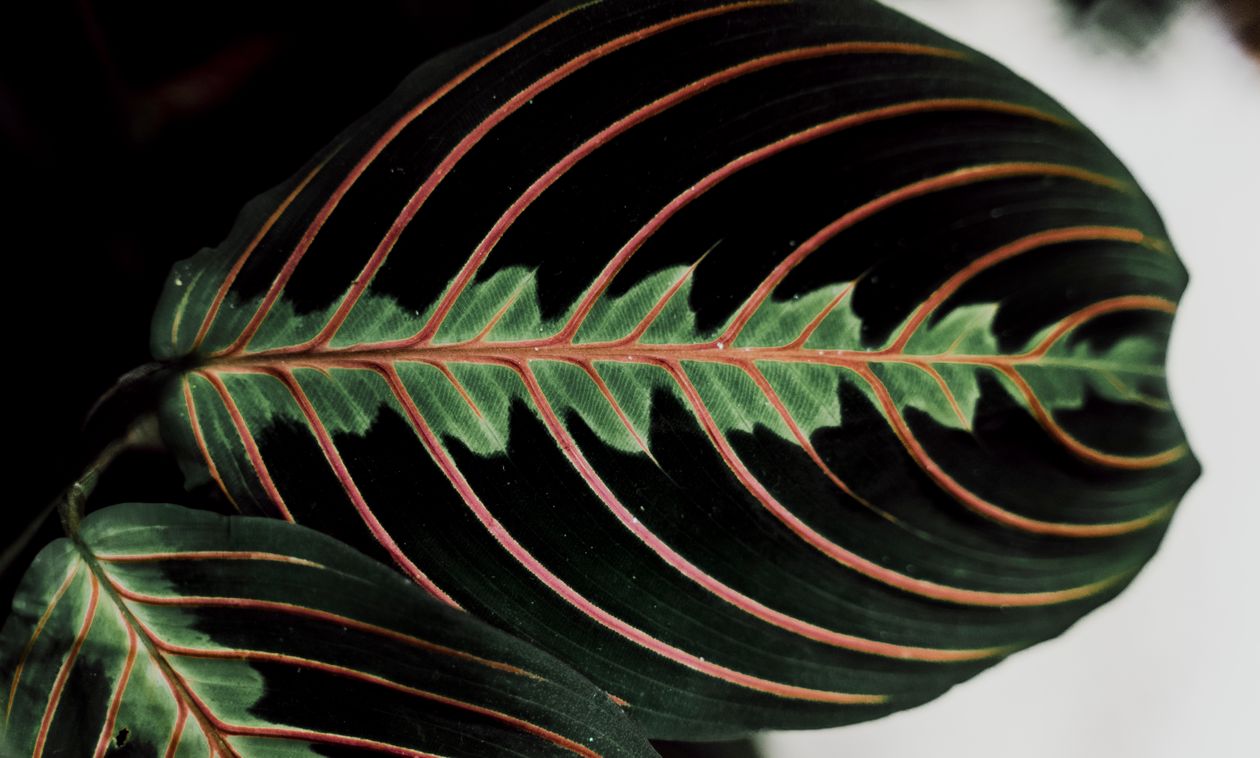
Prayer plant leaves with bold red veins folded in their evening position
Every 5 to 7 days in the growing season and every 10 to 14 days in winter, using the top-inch rule: water when the top inch of mix is dry but the soil below is still slightly moist. Never let the pot dry out completely, and never leave it standing in water.
Why are my prayer plant leaves turning brown at the edges?
The most common causes are low humidity and tap water chemistry. Prayer plants are sensitive to fluoride, chlorine, and salt buildup, all of which burn leaf margins. Switch to rainwater or distilled water, raise humidity toward 50 to 60 percent, and flush the soil monthly to remove accumulated salts.
Should I mist my prayer plant?
Misting gives a brief humidity bump but does not solve dry air, and wet leaves can develop spots. A small humidifier, a pebble tray, or grouping the plant with other tropicals works far better. If you mist, use distilled water so the leaves do not collect mineral deposits.
Why is my prayer plant not folding its leaves at night?
Weak or absent nyctinasty (the nightly fold) is an early stress signal. Check soil moisture first: a plant that is too dry or root-bound in soggy soil often stops moving. Also check light, since prayer plants need a clear day and night cycle to keep the rhythm; constant artificial light can blur it.
Can a prayer plant recover from underwatering?
Usually yes. A wilted, curled prayer plant in dry soil typically perks up within hours of a thorough soak. Cut away leaves whose edges have fully crisped, since that damage does not reverse, and return to the consistent top-inch schedule to keep new growth clean.
Photo credits: Madison Inouye (Pexels); David Bartus (Pexels). Photos are served from this site; follow the credit to the library page for the original.