Type "hydrangea plant" into a search and the plant in the results is not a landscape shrub. It is a pot: the florist hydrangea wrapped in foil at Easter and Mother's Day, the young bigleaf growing on in a container on a patio, the gift plant its new owner is trying not to kill. That plant lives by rules the in ground shrub never meets, because a pot is a small, fast changing world: it dries in a day, its soil chemistry swings with a handful of amendments, and its roots feel every degree of a heat wave or a freeze. This page is the pot system whole: the container and soil, the watering discipline, the famous color control that only a pot makes precise, feeding and pruning, and the dormant rest that decides whether a florist hydrangea is a one season bouquet or a permanent plant. The landscape shrubs have their own pages, the general hydrangea care guide and the spacing guide in this batch; this page owns the pot.
Home / Flowers and Houseplants
How to Care for a Hydrangea Plant in a Pot
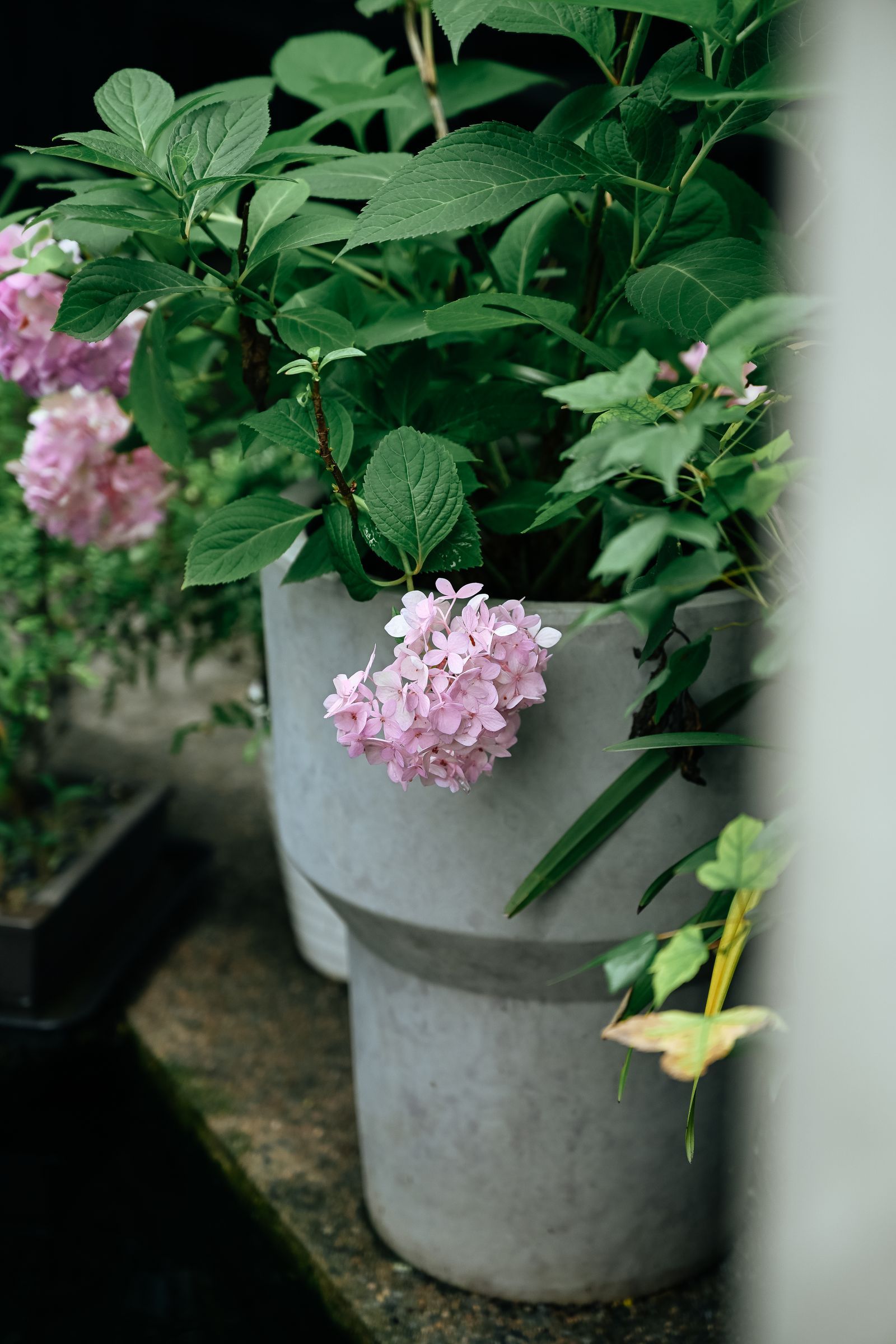
Photo: Cheng Shi Song / Pexels
Potted Hydrangea Plant Care Checklist
Check off each step as you finish it. Your progress stays on this page.
0 of 8 complete
0% done
The Checklist in Brief
The tracker above runs the system: get the plant into a 12 to 18 inch pot with drainage and a peat based, lime free mix; place it in bright light with morning sun; water deeply the moment the surface dries, always before the leaves flag; feed monthly at dilute strength through the growing season; set flower color deliberately with soil pH if the plant is a bigleaf; prune only dead wood and spent heads in season; and give the plant a cool dormant rest in winter if you want it to bloom again. Each step is expanded below, and the order matters: most potted hydrangea deaths are watering deaths, and most non flowering years are dormancy that never happened.
The Pot and the Mix
A florist hydrangea arrives in a pot sized for the greenhouse bench, not for your house, and the first job is a bigger home: 12 inches across for a standard gift plant, up to 18 for a plant you intend to keep and grow on for years. The pot needs drainage holes without exception; a hydrangea standing in its own runoff in a decorative cachepot is being drowned on a schedule. The mix is a standard peat based potting soil, and for this plant the usual warning reverses: do not add lime, and avoid mixes pre loaded with it, because the soil's acidity is the color lever described below, and a limed mix spends the season fighting you. Set the plant at the same depth it grew, water it in until the mix settles, and top the pot with a light mulch of bark to slow the surface drying that drives the watering treadmill in summer.
Water: Before the Wilt, Every Time
A potted hydrangea is one of the thirstiest plants in the house, and it announces thirst theatrically, collapsing its leaves in an afternoon and recovering within an hour of watering. The drama tempts owners to use the wilt as the watering signal, and that is the habit to break: a plant that wilts daily is being damaged daily, in its leaf edges, its buds, and its root tips, and a plant in flower that wilts hard can drop the bloom entirely. Water instead on the surface test, deeply, when the top of the mix has dried, and in summer heat expect that to mean every day and occasionally twice, which is normal for a large leafed plant in a modest pot in July, not a sign of failure. The full rhythm, including the two pass soak that wets a dry peat ball properly, is laid out in How Often to Water Hydrangeas in Pots: The Daily Summer Rhythm, the Two Pass Soak, and the Wilt That Lies. Morning watering suits the plant best, and a saucer under the pot is fine as a catch tray provided it is emptied; the plant wants the drink, not the bath.
Color Control: The Pot Is a Laboratory
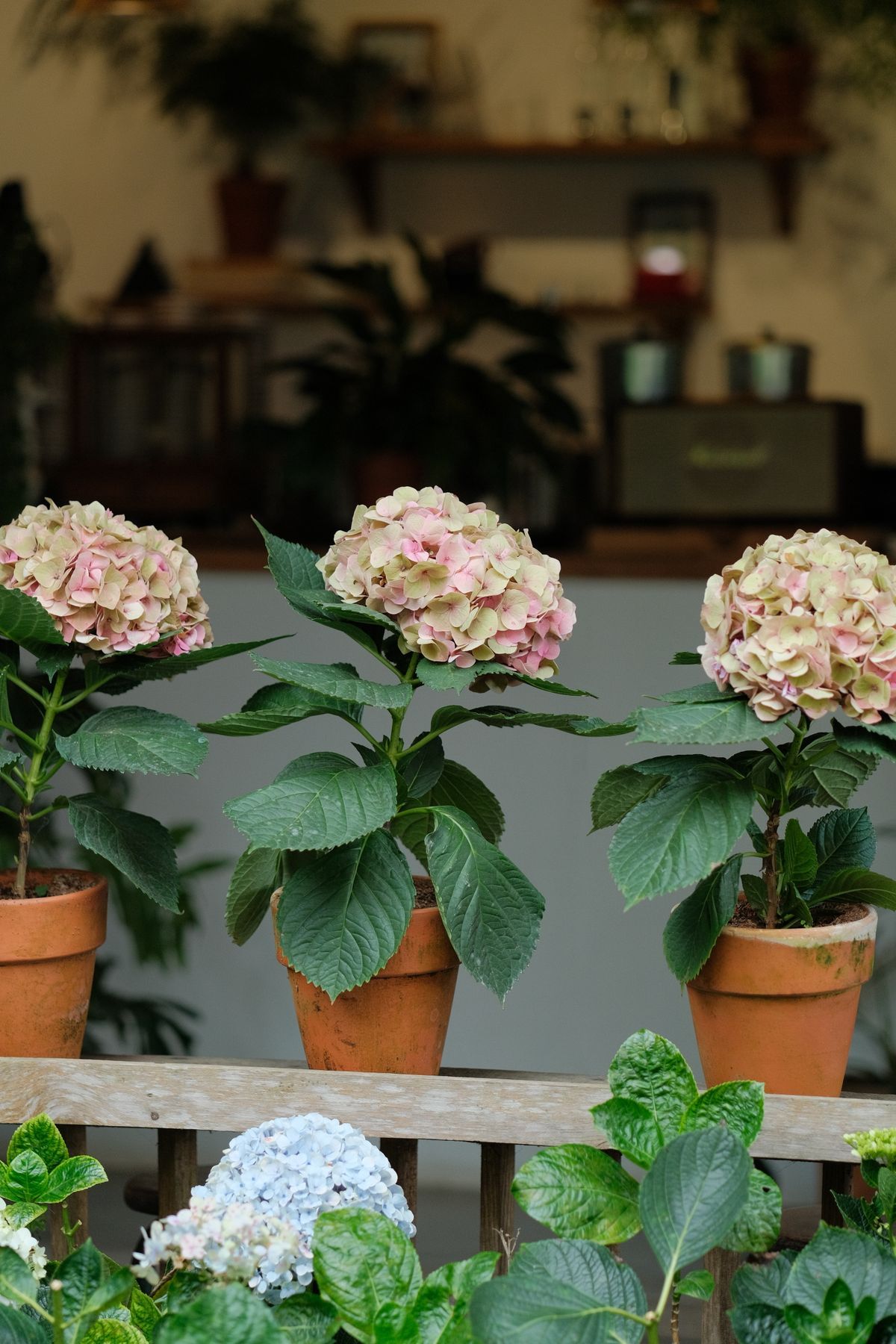
The bigleaf hydrangea's famous trick, blue flowers in acid soil and pink in alkaline, is a garden curiosity in the ground, where a whole bed's chemistry moves slowly, and a precise instrument in a pot, where you control every cup of soil the plant owns. For blue: keep the mix acidic, around pH 5.2 to 5.5, and supply aluminum, which is what actually pigments the flower, with aluminum sulfate applied per its label through the season before bloom. For pink: raise the pH toward 6.0 to 6.5 with a little garden lime worked into the mix, and the aluminum locks away and the flowers come pink. White varieties stay white regardless, and the lacecaps follow the same rules as the mopheads. Two cautions keep the laboratory honest. The change is made in the season before the bloom, because the pigment decision happens as the flower forms inside the bud, so a plant bought in blue flower will finish that bloom blue whatever you do. And more is not faster: aluminum sulfate overdosed burns roots, so the label rate, repeated, beats the heroic single dose every time.
Feeding, Deadheading, and In Season Pruning
Feed a potted hydrangea monthly from spring growth to late summer with a balanced fertilizer at half the label strength, dilute and often being the right register for a plant in a small volume of soil, where full strength doses swing the chemistry and burn the root tips. Stop feeding by the end of summer; soft late growth goes into winter tender and the plant needs to harden, not grow. Deadhead spent blooms by cutting to the first strong pair of leaves below the flower, which tidies the plant and, on reblooming types, encourages the next set. The pruning rule that protects next year's flowers is the wood rule from the main care guide: standard bigleaf hydrangeas bloom on last year's wood, so in season you remove only dead stems, cutting them at the base when the plant leafs out and the dead wood declares itself, and you never shear the plant into a ball in fall or spring. A florist plant being kept for next year is pruned like a shrub, not like a houseplant, however small it looks.
The Dormant Rest: Where Next Year's Flowers Are Decided
A bigleaf hydrangea forms its flower buds in late summer and fall, and those buds must then pass through a cold rest, roughly 35 to 45 degrees for about six weeks, before they can open properly. This is the step the gift plant almost never gets, kept as it is in a warm living room, and it is why the standard story of a florist hydrangea is one glorious spring and then green leaves forever. The rest is easy to give once you know it exists: after the leaves drop in fall, or after you move the plant out of display, put the pot in an unheated garage, a cold frame, or against a sheltered wall in mild climates, keep the mix barely moist, and leave it in the cold and dark for six to eight weeks. Then bring it back to light and warmth, resume watering, and the plant leafs out and blooms on its spring schedule. In ground gardeners in cold climates do the same job with mulch and burlap over the planted shrub; the pot simply makes the cold portable. A plant that received its rest, its water before the wilt, and its monthly dilute feed is not a disposable gift. It is the longest lived flowering plant most houses ever own.
Moving a Pot Plant Into the Ground
A kept florist hydrangea can graduate to the garden, with two conditions understood. First, hardiness: florist plants are bigleaf hydrangeas, hardy roughly to zone 6, and in colder country the pot life is not a phase, it is the arrangement, with the garage rest as its winter. Second, timing: plant out in spring after frost, or in early fall with six weeks before the ground freezes, at the spacing the spacing guide gives for a standard bigleaf, and water the first season like a plant whose roots still live in a pot sized world, because until they run into the surrounding soil, they do. The color rules follow the plant into the ground, only slower: the bed's native chemistry takes over across a season or two, and the pot's precise laboratory control is traded for the shrub's permanence. Many growers keep their best plant in the pot forever for exactly that reason, and there is no rule that says the plant minds.
Troubleshooting the Pot Plant
The common reports, in the order they arrive. Leaves wilting every afternoon in a plant that recovers by morning: the pot is too small for the plant and the weather, and the answer is the bigger pot and the before the wilt watering discipline, not a mister. Leaf edges browning and crisping: the accumulated damage of repeated hard wilts, or of fertilizer at full strength in a small soil volume; cut the feed to half strength and water earlier. No flowers on a healthy green plant: the dormant rest was skipped, or the plant was pruned at the wrong season and the old wood carrying the buds was removed; give it this winter's rest and prune only dead wood. Flowers fading to green quickly: normal aging on many varieties, hastened by hot nights; the plant is not failing. Yellowing leaves with green veins on a plant being pushed blue: the acid program has overshot, and the mix should be allowed to drift back toward the middle before the next application. Nearly every entry on the list is a water, rest, or chemistry entry, which is the pot system's whole character: a small world, quickly changed, and quickly corrected once the dial responsible is identified.
Related guides
These guides sit closest to this one on the garden path:
- How to Care for Hydrangeas: Start With the Wood It Blooms On
- How Often to Water Hydrangeas in Pots: The Daily Summer Rhythm, the Two Pass Soak, and the Wilt That Lies
- Hydrangea Plant Spacing: By Species and Mature Width
- How to Grow Hydrangeas: Buy the Forgiving Type First
Frequently Asked Questions
How do you care for a potted hydrangea plant?
As a pot system: a 12 to 18 inch pot with drainage and a lime free peat based mix, bright light with morning sun, deep watering whenever the surface dries and always before the leaves wilt, a monthly half strength feed from spring to late summer, only dead wood pruned out in season, and a cool dormant rest in winter. The steps are simple; the discipline is doing the watering before the wilt instead of after it.
How often should I water a hydrangea in a pot?
Whenever the top of the mix has dried, which in summer heat is often daily and sometimes twice a day for a full sized plant in a modest pot. Water deeply, using a second pass after the first soaks in, because a dry peat root ball sheds the first watering down its sides. Empty the saucer afterward; the plant wants the drink, not a standing bath.
How do I keep a florist hydrangea alive and blooming next year?
Give it the dormant rest it was bred to expect. After leaf drop in fall, hold the pot at roughly 35 to 45 degrees, an unheated garage or cold frame, with the mix barely moist, for six to eight weeks. The flower buds formed the previous summer need that cold to open properly. Then return it to light and warmth, resume watering and monthly feeding, and it blooms on schedule. Skipping the rest is why gift hydrangeas so often stay green forever.
Can I change my hydrangea's flower color in a pot?
Yes, more precisely than in the ground, because you control the whole soil volume. For blue, hold the mix around pH 5.2 to 5.5 and apply aluminum sulfate at label rate through the season before bloom; for pink, raise the pH toward 6.0 to 6.5 with a little garden lime. The change is decided as buds form, so this season's treatment sets next season's color. White varieties do not change.
Should I plant my potted hydrangea in the garden?
You can, if your winters fit a bigleaf hydrangea, roughly zone 6 and warmer, planting in spring after frost or in early fall. Water the first season as if it were still potted, until its roots run into the garden soil. In colder zones, keep the pot life permanently, with the garage rest each winter. Either way, the plant is a perennial, not a disposable gift, once its rest and watering are right.
Photo credits: Cheng Shi Song (Pexels); Pew Nguyen (Pexels). Photos are served from this site; follow the credit to the library page for the original.