Dianthus, the pinks and carnations, are small plants with one big demand: air. Crowded dianthus holds wet foliage for hours after every rain and dew, and wet dianthus foliage is where rust, leaf spot, and crown rot start. That is why the spacing bench for this genus is really a drying bench. The core range across types is 6 to 12 inches, with the split by plant size: dwarf and alpine types at about 6 inches, the common border pinks at 10 to 12 inches, and full carnations, grown for cutting, at 14 to 16 inches. NC State's Extension Gardener Plant Toolbox entry for the genus gives mature widths from under a foot to as much as 3 feet depending on type, and brackets spacing from under 12 inches up to 3 feet, which matches the bench: measure the type, not the genus name on the seed packet. Use the planner below with your type's number, and then read the airflow section before you tighten anything up for a fuller look.
Plant Spacing for Dianthus: Room to Breathe Is the Whole Game
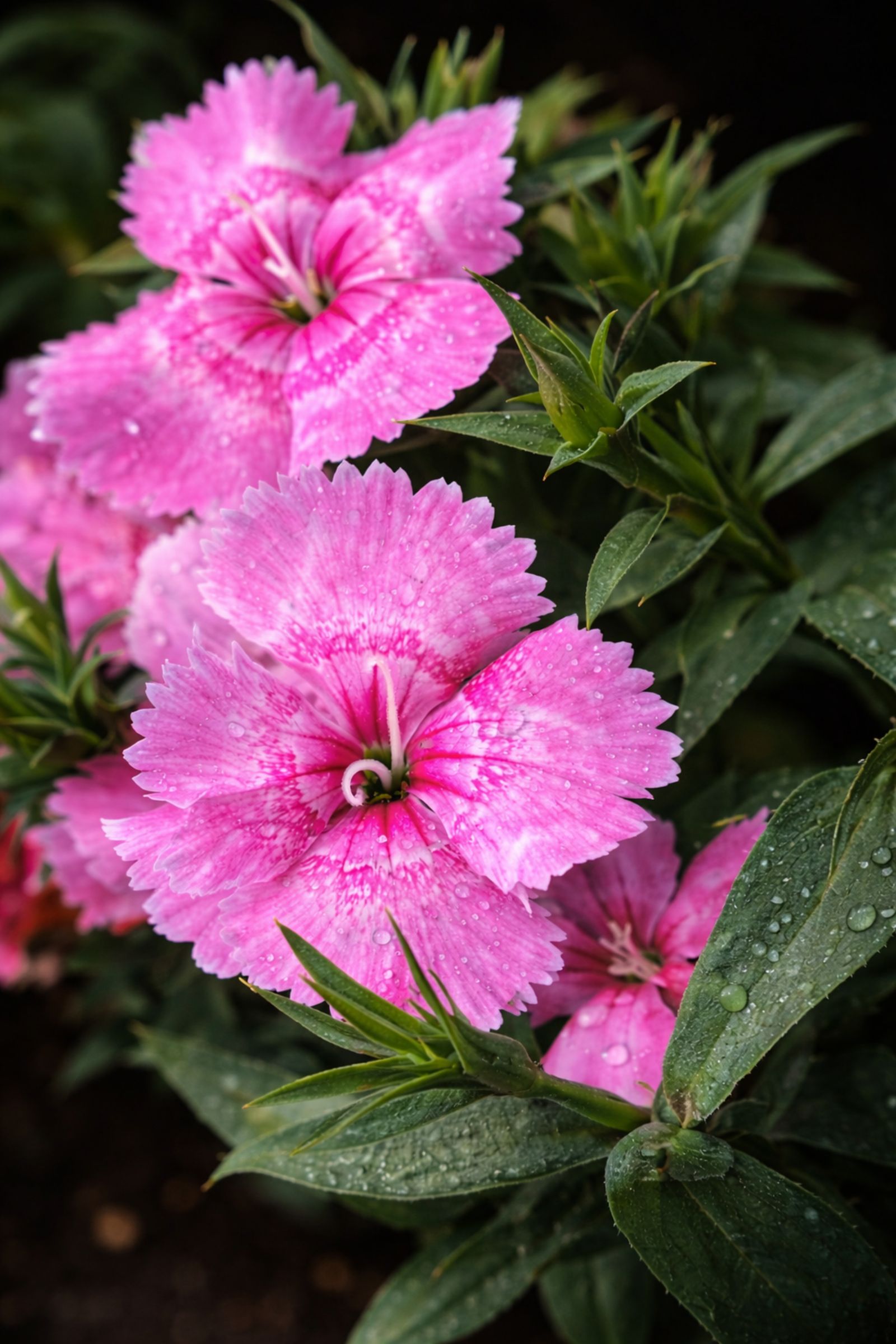
Photo: Nikhil Singh Rajput / Pexels
Plant Spacing Planner: The Dianthus Border
Dianthus is in the crop list below at 12 inches, the middle of the NC State Extension dimensions for the genus. Enter your border length, then read the dwarf, border, and carnation split in this article before you plant.
8 tomato plants fit this bed
4 plants per row across 2 rows, on a 24 inch grid. Extension spacing for this crop: 24 in between plants, 48 in between rows.
The grid uses the in-row spacing in both directions, the standard square foot layout for raised beds. In open ground, keep the wider row spacing in the note above so you can walk and weed between rows.
Spacing figures: University of Georgia Cooperative Extension, Circular 963, Vegetable Planting Chart, source.
Spacing by Type
The genus covers ground hugging alpine cushions and 2 foot cutting carnations, so one number cannot serve it. Dwarf types such as the cheddar pinks and maiden pinks form mats 6 to 10 inches across; space them at 6 inches for a woven edging or 8 inches where you want to see individual plants. Border pinks, the cottage garden Dianthus plumarius types and their hybrids, make mounds 10 to 14 inches wide; 10 to 12 inches keeps the mounds just touching at maturity, which is the fullest safe density. Carnations, Dianthus caryophyllus, grown upright for stems, get 14 to 16 inches so air and your hands can move between plants for disbudding and cutting. Sweet William, the biennial Dianthus barbatus, is usually grown in a block for cutting or mass color; 9 to 12 inches serves it, and since it is spent after its second year flowering, a slightly tighter hand costs less than it would on a permanent perennial.
| Type | Spacing | Mature width | Use |
|---|---|---|---|
| Dwarf and alpine pinks | 6 to 8 inches | 6 to 10 inches | Edging, rock garden, mats |
| Border pinks | 10 to 12 inches | 10 to 14 inches | Cottage borders, front of bed |
| Carnations for cutting | 14 to 16 inches | 12 to 18 inches | Cutting rows |
| Sweet William | 9 to 12 inches | 10 to 12 inches | Biennial blocks, cutting |
| In pots | One plant per 8 to 10 inch pot | Fills the pot | Patio, steps |
Why Airflow Sets the Number
Every fungal problem dianthus is famous for needs leaf wetness to start. Rust pustules, Alternaria leaf spot, and Fusarium crown rot all move into plantings where foliage stays damp into the afternoon, and spacing is the cheapest control you will ever apply: an extra 2 inches between mounds can cut hours off drying time after a wet night. The companion habits multiply the spacing: water at the base in the morning, never overhead in the evening; site in full sun, which NC State lists as the genus's requirement for its best performance and which dries dew fastest; and keep mulch thin and off the crowns, because a dianthus crown buried in wet mulch rots in any spacing. In humid climates, take the wide end of every range in the table. In dry climates with moving air, the tight end behaves. This is also why dianthus fails in rich, crowded, heavily watered borders and thrives in lean, gritty, open ones: the plant is built for poor soil and moving air, and spacing is how you give it both in a garden bed.
Edging, Massing, and the Temptation to Crowd
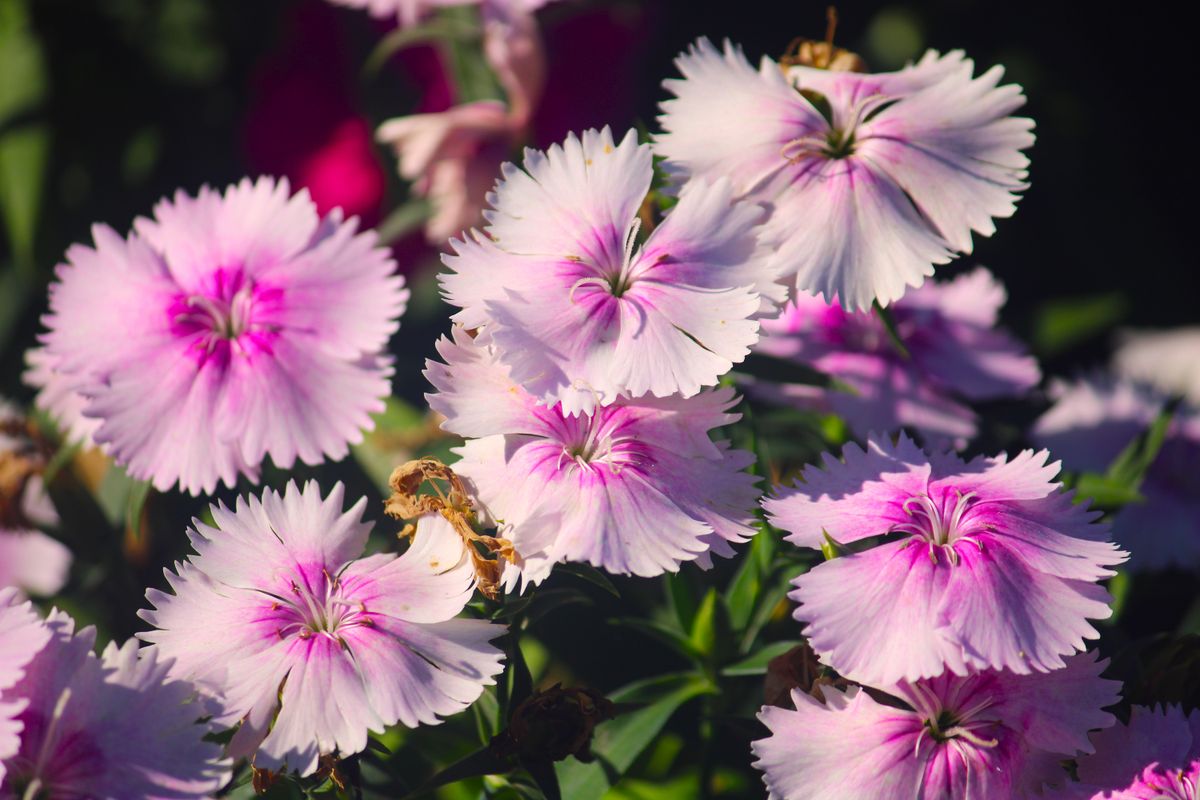
A new dianthus planting looks sparse, and the urge to halve the spacing for instant fullness is the genus's most common spacing error. Dianthus grows fast in its first season: a border pink planted at 12 inches in spring is touching its neighbors by midsummer, and a dwarf mat at 6 inches is a continuous carpet by fall. Planting at half spacing buys about six weeks of extra fullness and then delivers a crowded planting in year two, exactly when the clumps are mature enough for disease to matter, with division and replanting as the only way back. If a bed must look finished on day one for an event, the honest cheat is annual fillers between the perennials, pulled when the dianthus closes, not extra dianthus. For a deliberate groundcover effect with dwarf types, 6 inches on a grid is the tightest defensible density, and even there, take every third plant out if a wet summer brings rust into the mat.
Pots, Troughs, and Rock Gardens
Container dianthus wants its own pot more than it wants company: one plant per 8 to 10 inch pot, in a gritty, sharply draining mix, because the crown rot risk that spacing manages in beds becomes a drainage question in pots. In troughs and rock gardens, where dwarf types belong, space at the dwarf bench and lean harder on the grit: a top dressing of coarse gravel keeps the crown dry and mimics the scree the alpine types evolved in. Rock garden plantings can run slightly tighter than bed plantings at the same type, because the stone environment dries foliage and crowns faster than soil and mulch do. What never changes is the crown rule: in every setting, plant with the crown at or slightly above the surface, never buried, and keep anything wet, mulch, soil, or a neighbor's foliage, from sitting against it.
Dividing and Respacing Mature Clumps
Perennial dianthus tells you when its spacing has expired: the center of the clump dies out, flowering thins to a ring at the edges, and the mat goes woody and open in the middle. That is the plant at year three to five asking for division. Lift in early spring or early fall, pull or cut the clump into fist sized pieces with roots and green growth, discard the dead center, and replant the pieces at the full bench spacing for the type, as if they were new plants, because they are. A bed of border pinks renewed this way on a four year cycle never reaches the crowded, diseased stage that makes gardeners give up on the genus. Carnations grown for cutting are usually replaced from cuttings or layers rather than divided, but the spacing discipline on the new row is the same 14 to 16 inches.
Annual, Biennial, and Perennial: The Calendar Changes the Risk
The genus's three life spans bend the spacing rules differently, because the cost of crowding depends on how long the plant must live with your decision. The annual dianthus, the China pinks sold in spring six packs, live one season and can be planted at the tight end, even a touch tighter for bedding displays, because they will be pulled before the second year crowding diseases arrive; their spacing is a flower show calculation, and 6 to 8 inches for a solid sheet of color is a fair trade. The biennial Sweet William is planted in summer or fall, overwinters as a rosette, and flowers the following spring, which means its spacing must survive a winter: wet winter soil in a crowded planting rots rosettes wholesale, so fall planted blocks earn the full 9 to 12 inches and the best drainage on the site, and a block that goes into winter at half spacing often comes out of it at full spacing, thinned by rot in the pattern of its own mistake. The true perennials, border pinks and carnations, are the plants the main bench is written for, with years at stake and division as the reset. Winter wet, more than cold, is the perennial dianthus killer across all zones, and it is a spacing and siting story again: a plant with air around it and grit at its crown dries after every winter rain, while a plant buried in a crowded, mulched, rich bed sits in the wet it cannot abide. Gardeners in rainy winter climates grow border pinks in raised beds and gravel gardens for exactly this reason, at the wide end of the bench, and lose almost none.
Related guides
These guides sit closest to this one on the garden path:
- Brussels Sprouts Plant Spacing: Room for a Two Foot Plant With a Fall Job
- Plant Spacing for Hibiscus: Which Hibiscus, How Much Room
Frequently Asked Questions
How far apart should I plant dianthus?
By type: dwarf and alpine pinks at 6 to 8 inches, border pinks at 10 to 12 inches, carnations at 14 to 16 inches, and Sweet William at 9 to 12 inches. The core bench across the genus is 6 to 12 inches, and airflow, not looks, is what sets the number.
Can I plant dianthus closer together for a fuller bed?
You can, and it will punish you in year two. Dianthus fills fast on its own; halving the spacing buys a few weeks of fullness and then produces crowded, wet foliage where rust and leaf spot thrive. In humid climates, use the wide end of every range instead.
How wide does dianthus get?
From under a foot for dwarf types to as much as 3 feet across for the largest, per NC State's genus entry; most border pinks mature at 10 to 14 inches wide. Match the spacing to the type's mature width, not to the size of the plant in the pot at the garden center.
Why did my dianthus rot in the center?
Crown rot, usually a wet crown problem: planted too deep, mulch piled against the crown, crowded spacing holding wet foliage, or overhead evening watering. Dianthus wants its crown at the surface, dry air around it, and water at the base in the morning.
How often should dianthus be divided?
Every three to five years, when the center dies out and flowering retreats to the edges. Divide in early spring or early fall, replant fist sized pieces at full bench spacing, and discard the woody dead center.
Photo credits: Nikhil Singh Rajput (Pexels); Manoj Poosam (Pexels). Photos are served from this site; follow the credit to the library page for the original.