Echeveria looks like a plant that wants to be left alone, and mostly it does, but the watering it wants is a specific rhythm, not neglect. The method is called soak and dry, and extension succulent guidance from sources such as UC Agriculture and Natural Resources and NC State Extension is built on exactly it: when you water, you water completely, until the whole root ball is wet and water runs from the drainage holes; then you do not water again until the soil has dried completely, top to bottom. Every echeveria failure traces back to breaking one of those two halves. Watering in frequent sips keeps the top damp and the roots shallow and starved. Watering on a fixed weekly calendar keeps a slow drying pot permanently wet at the bottom, and the plant rots from below while the rosette still looks perfect. This page walks the rhythm, the seasonal spread, and the one handling rule that matters as much as the water itself.
Home / Gardening Basics for Beginners
How Often to Water Echeveria: Soak, Dry Completely, Repeat
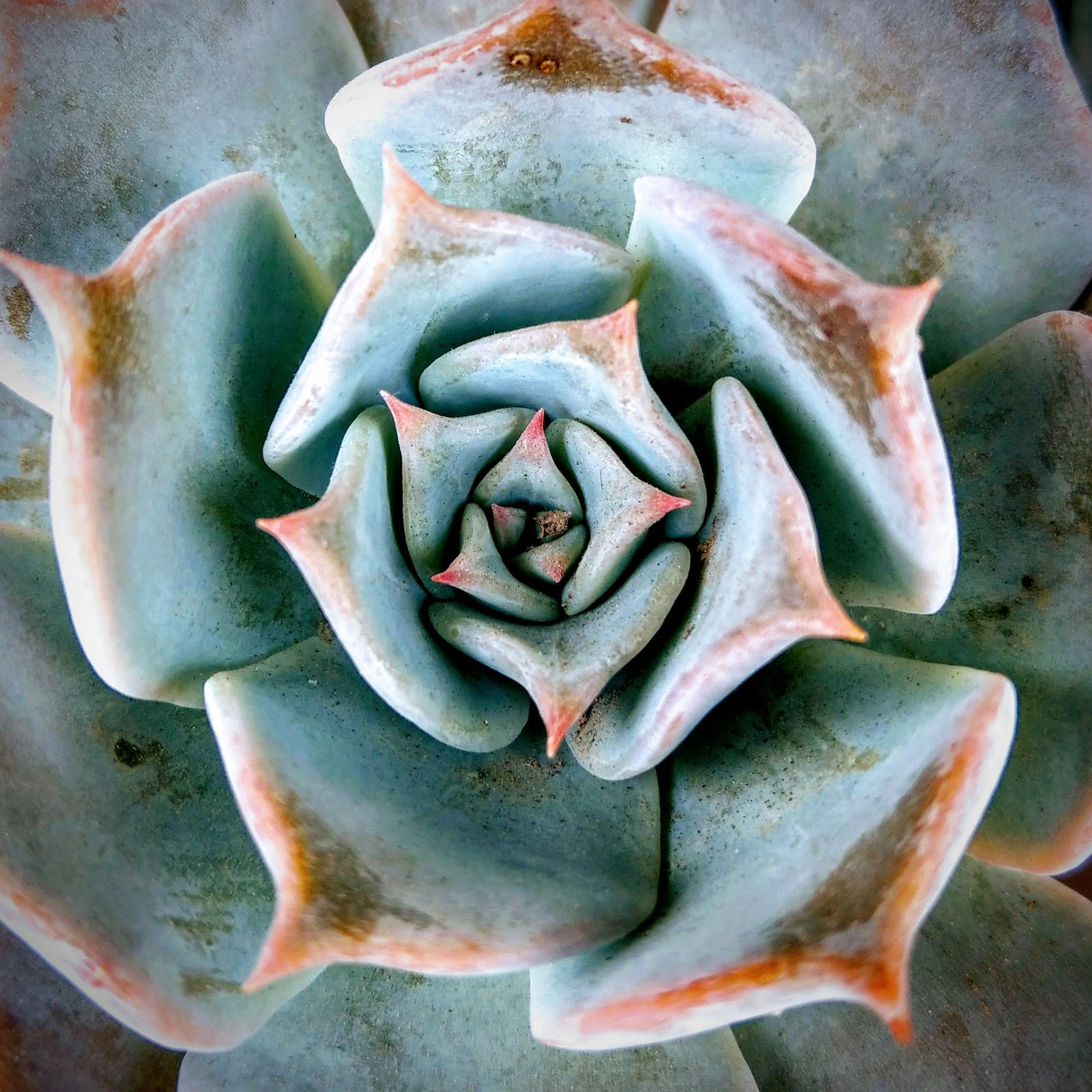
Photo: TU HAN-WEI / Pexels
Watering Calculator: The Echeveria Pot Audit
Echeveria runs soak and dry: a full drink, then nothing until the mix is dry all the way through. Enter your pot diameter as both length and width below and a depth of about 1 inch to size that one soak, and keep every drop out of the rosette while you pour it.
19.9 gallons
For 32 square feet at 1 inch deep. That is about 76 liters, or 10 trips with a standard 2 gallon watering can.
A rain gauge or a straight sided can set in the bed tells you when a sprinkler or soaker hose has actually delivered this depth. Time alone is a guess, because hose pressure varies from house to house.
The conversion is arithmetic, not opinion: one inch over one square foot is 144 cubic inches of water, and a US gallon holds 231 cubic inches, so each square foot at one inch takes 0.62 gallons.
The Soak and Dry Rhythm, Step by Step
First, the dry check, and for this plant a finger is not enough. The top inch of a succulent mix dries in days while the bottom stays wet for a week, so check deep: a wooden skewer pushed to the bottom of the pot should come out clean and dry, with no damp mix clinging, before the plant is watered. Second, the soak: water slowly and thoroughly, ideally from the bottom by standing the pot in water for 10 to 15 minutes, or from the top with care to keep the rosette dry, until the mix is wet through. Third, the drain: the pot comes out of the water, drains fully, and never sits in a saucer of runoff. Fourth, the wait: the plant goes back to its bright spot and is not touched again until the skewer says the mix is dry all the way down. In a typical indoor pot in growth, that full cycle usually runs about 2 to 3 weeks. In a small terracotta pot in summer sun it can run 10 days. In a large glazed pot in winter it can run 6 weeks. The skewer knows; the calendar does not.
| Setting | Full dry down typically takes | What changes it |
|---|---|---|
| Small terracotta pot, bright window, growth season | About 10 to 14 days | Fast drying pot, high light, active growth |
| Standard plastic or glazed pot indoors, growth | About 2 to 3 weeks | The average case most guides assume |
| Winter rest, cool room, low light | 3 to 6 weeks, see the flag below | Slow evaporation and a plant barely drinking |
| Outdoor pot in summer heat | About 7 to 10 days | Heat and wind strip moisture fast |
Never Let Water Sit in the Rosette
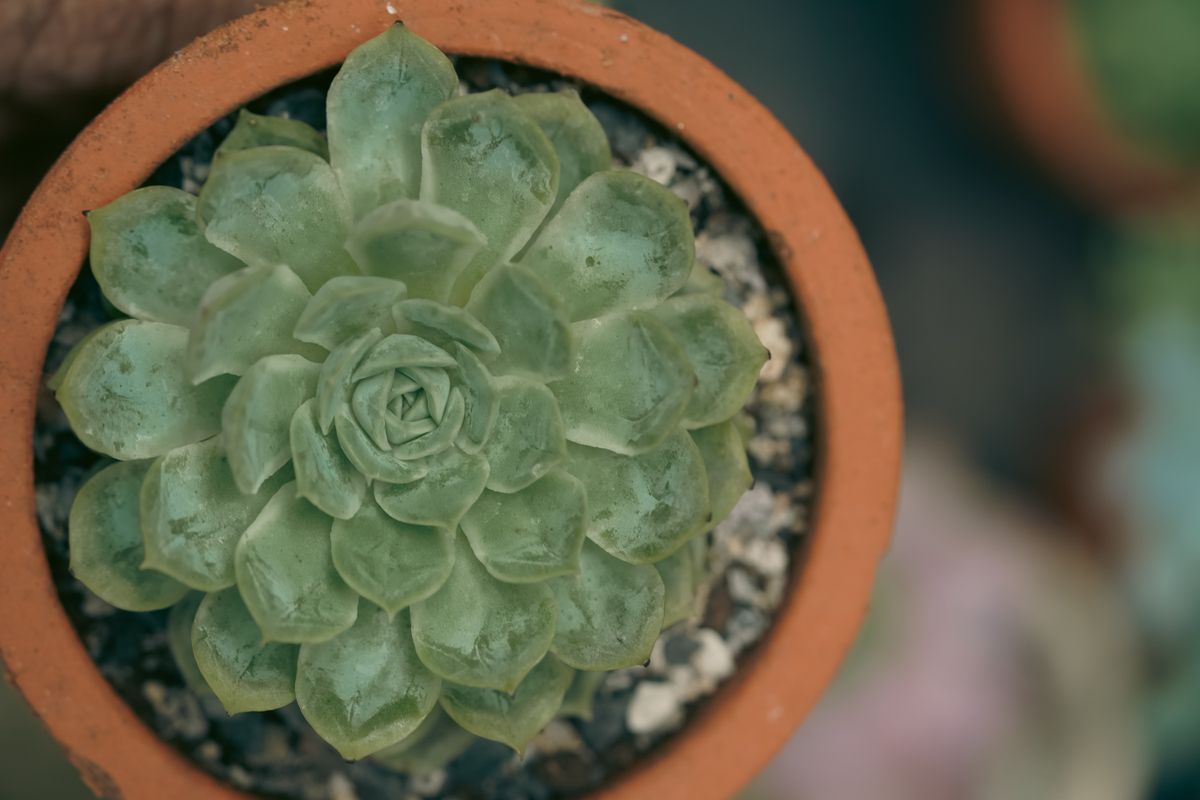
The rosette is a funnel, and it is shaped to catch water and hold it against the crown, which in the wild is offset by wind, slope, and fierce sun. Indoors, water pooled in the center of an echeveria sits there for days, and the crown rots quietly under a plant that still photographs well. This is the mechanical reason bottom watering suits this genus so well: the mix wicks up, the leaves stay dry, and the crown never holds a pool. If you water from the top, aim at the soil, use a narrow spout, and blow or tip out any water that lands in the center. A plant that has already started crown rot shows blackening or mush at the very center, and it is usually lost; the save is to pull healthy outer leaves for propagation before the rot reaches them. Leaves for propagation, by the way, root and sprout best when the mother plant was watered on this rhythm, plump and turgid, not shriveled from drought or soft from excess.
The Winter Interval, Flagged Honestly
Published winter watering intervals for echeveria do not agree, and this page flags the disagreement rather than averaging it into a number nobody published. One set of guides waters about every 3 to 4 weeks in winter. Another set stretches it to every 4 to 6 weeks, and some growers in cold, dark rooms water once in a winter month or less. The variable is the room, again: a plant resting cool at 50 to 60 F in low light is nearly dormant and drinks almost nothing, while a plant on a warm, bright windowsill is still growing slowly and cycles faster. The skewer test dissolves the argument. However long your plant takes to dry completely is its winter interval, and in most houses that lands somewhere inside the published 3 to 6 week spread. The error to avoid is not picking the wrong end of the spread. It is watering a plant whose mix is still damp at the bottom because a calendar, any calendar, said it was time.
Reading the Leaves: Thirst and Excess
An echeveria carries its water gauge in its leaves. A well watered plant holds plump, firm leaves that resist a gentle squeeze. A thirsty plant shows its lowest leaves thinning, wrinkling, and eventually crisping, which is the plant spending its savings in order, oldest leaves first; a soak restores the plumpness of the upper leaves within a day or two, though spent lower leaves do not recover. An overwatered plant shows the opposite signature: leaves that turn translucent, yellow, and soft, dropping at a touch, often with a stem that has gone dark at the base. Translucent leaves do not recover either, and the rescue is to unpot, cut the stem above every trace of rot, let the cut dry for several days, and set the rosette on dry mix to reroot. The distinction that matters is wrinkled versus translucent. Wrinkled and firm means water it. Soft and translucent means stop watering and inspect the stem.
Soil, Pot, and Light Set the Interval
The rhythm assumes the setup that makes it possible. The mix should be at least half mineral, a succulent base cut with perlite, pumice, or grit, so that a soak drains in seconds and the dry down actually completes. In a dense, peaty mix the bottom may never fully dry, and soak and dry degrades into soak and stay damp, which is rot on a delay. The pot needs a drainage hole, full stop; echeveria in a holeless pot is a countdown. Terracotta is the forgiving choice for heavy handed waterers because it breathes moisture out through its walls and shortens every cycle. Light is the third leg: echeveria in low light drinks slowly, stretches pale and leggy toward the window, and needs water far less often than the same plant in full sun. If your plant is stretching, the fix is light first; watering a light starved plant on a sun plant's schedule is how the rot starts. Pet owners can grow this genus without worry: echeveria is listed as non toxic to cats and dogs by the ASPCA, one of the genuinely pet safe succulents.
Offsets, Repotting, and the Crowded Rosette
A happy echeveria multiplies, pushing offsets around its base until the pot holds a cluster instead of a rosette, and the cluster changes the watering in one direction only: it dries the pot faster, because several crowns are drinking and shading the surface unevenly, so the skewer test matters more, not less, in a crowded pot. Offsets can be left to form the cluster, which many growers prefer, or separated at repotting by cutting the connecting stem, letting the cut dry for a few days, and potting each rosette on its own. Repotting itself follows the rhythm: move the plant when the mix is dry, into a pot one size up with fresh gritty mix, and wait several days before the first soak, so any roots torn in the move seal over dry instead of sitting cut in wet soil. That waiting rule, water late after any root disturbance, applies to beheading a leggy plant as well: the stem stump and the cut rosette both rest dry until callused, then resume the soak and dry cycle as if nothing happened, which, if the dry down rule held, nothing has.
Related guides
More from the same bed, bench, and border:
- How Often to Water Succulents: The Soak and Dry Rule, Tuned to Your Own Pot
- How Often to Water a Cactus: The Soak and Dry Cycle, the Forest Exception, and the Winter Rest
- How Often to Water String of Pearls: Read the Pearls, Not the Calendar
Frequently Asked Questions
How often should I water my echeveria?
When the soil is completely dry, all the way to the bottom of the pot, then soak it fully. That cycle usually runs about 2 to 3 weeks indoors during growth, as short as 7 to 10 days for a pot in summer heat, and 3 to 6 weeks in winter depending on the room. Check with a wooden skewer pushed to the bottom: if it comes out with damp mix on it, wait.
Why do winter watering guides disagree, from 3 to 4 weeks to 4 to 6?
Because winter is not one condition. A plant resting in a cool, dim room barely drinks and sits at the long end; a plant on a warm, bright sill keeps growing slowly and sits at the short end. This page flags the spread instead of averaging it. The complete dry down is the real interval, and the skewer test measures it directly in your room.
Can I mist my echeveria instead of watering?
No. Misting wets the rosette, which is the one place water must never sit, and it does not wet the root ball at all. It delivers the rot risk with none of the drink. Water the soil deeply, by bottom watering or a careful narrow spout, and keep the crown dry.
What does an overwatered echeveria look like?
Leaves turn yellow, translucent, and soft, and drop at a light touch; the stem may darken at the base. That is rot, not thirst, and more water finishes the plant. Unpot, cut the stem back to clean, firm tissue, let it dry for several days, and set it on dry mix to reroot. Wrinkled, firm, thinning leaves are the thirst signal; soft and translucent is the excess signal.
Is echeveria safe around cats and dogs?
Yes. The ASPCA lists echeveria as non toxic to cats and dogs, which makes it one of the safer succulents for pet households. The watering rules are unchanged, but a nibbled leaf is a cosmetic problem, not a vet visit.
Photo credits: TU HAN-WEI (Pexels); Atul Mohan (Pexels). Photos are served from this site; follow the credit to the library page for the original.